Home
The Vampire Beast Craves Blood (1968)/Curse of the Blood Ghouls (1962) in the PNW
- Details
- Written by: Mortado
- Category: The 1970s in Northwest Cinemas
- Hits: 809
This is a collection of media from the initial runs of "The Vampire Beast Craves Blood" (1969) in the Pacific Northwest. Also running were "Curse of the Blood Ghouls" (1962) and "Bloody Pit of Horror" (1965).
Click on images for larger versions.
The Vampire Beast Craves Blood (AKA "The Blood Beast Terror," 1968)
“The Vampire Beast Craves Blood” is one of those late sixties British horror curiosities that feels like it wandered out of a foggy backlot already exhausted with itself. The film dresses up its creature feature premise with the usual Gothic trappings, but everything about it carries the weary air of a genre running on fumes. It moves through its story with a kind of dutiful resignation, as if everyone involved knows the formula by heart and is simply going through the motions because the cameras are already rolling. The result is a film that tries to conjure menace but mostly radiates a tired melancholy, the kind that comes from watching once potent horror ideas drained of their vitality.
At its core, the film revolves around a string of grisly killings that leave the authorities baffled and the countryside uneasy. The investigation circles around a reclusive entomologist whose genteel exterior barely conceals the rot underneath. The film leans into the tension between scientific curiosity and moral decay, but it does so with a bluntness that strips the material of any real mystery. You can feel it reaching for atmosphere, yet the mood is more stagnant than sinister, like a Victorian parlor that hasn’t been dusted in decades.
The creature itself is an oddity, both conceptually and visually, and the film treats it with a straight face that borders on accidental comedy. But beneath the awkwardness is a faintly tragic undercurrent, a sense that the monster is less a terror and more a symptom of human arrogance gone rancid. The violence is framed not as shocking but as inevitable, the natural consequence of people meddling with forces they barely understand. Even the investigators seem worn down by the whole affair, trudging through the plot with the grim acceptance of men who know they’re not going to like what they find.
What gives “The Vampire Beast Craves Blood” its rough charm is the way it unintentionally exposes the cracks in its own facade. The film wants to be chilling, but its real power lies in its bleak portrayal of obsession, exploitation, and the slow collapse of genteel respectability. It’s a horror film that feels hollowed out from the inside, its scares replaced by a kind of cynical resignation. And in that emptiness, it accidentally becomes more interesting than it ever intended to be.
Director: Vernon Sewell
Writer: Peter Bryan
Stars: Peter Cushing, Robert Flemyng, Wanda Ventham
Buy "The Vampire Beast Craves Blood" (1968) bluray on Amazon (SPONSORED)
Buy "The Vampire Beast Craves Blood" (1968) DVD on Amazon (SPONSORED)
Curse of the Blood Ghouls (1962)
“Curse of the Blood Ghouls” slinks through its early sixties gothic setup with the kind of weary determination you see in a film that knows it is recycling old European horror furniture but hopes the shadows will hide the seams. It is a story built on the illusion of aristocratic grandeur rotting from the inside, a place where the castle walls look like they were painted to impress tourists rather than terrify them, and every character seems vaguely aware they are trapped in a world that has already moved on. The film leans into that tension, letting its atmosphere do the heavy lifting while the narrative trudges forward with a grim sense of obligation.
The mood is thick with the kind of artificial gloom that Italian and German genre cinema of the era specialized in, all torchlit corridors and suspiciously clean cobwebs. What gives “Curse of the Blood Ghouls” its bite is the way it treats its supernatural threat less as a creature of myth and more as a symptom of human decay. The so-called ghouls feel like an extension of the castle’s own moral collapse, a physical manifestation of the selfishness, denial, and cowardice simmering beneath the polite surface. The film never says this outright, but it lingers in the way characters avoid eye contact, the way they speak in half-truths, the way the castle seems to swallow their voices.
There is a cynical streak running through the whole thing, a sense that the living are far more pathetic than the undead. The supposed heroes stumble through the plot with a kind of resigned confusion, as if they know they are outmatched not by monsters but by the inertia of tradition and the suffocating expectations of old-world respectability. The film’s pacing mirrors this, drifting from scene to scene like a bad dream you cannot quite wake from, where every revelation feels less like progress and more like confirmation that the rot was always there.
Visually, the film is a patchwork of atmospheric ambition and budgetary compromise. The castle interiors are drenched in moody lighting that almost convinces you something sinister is lurking just out of frame. At the same time, the exteriors betray their limitations with a kind of charming clumsiness. Yet that mismatch becomes part of the film’s texture. It feels like a world pretending to be grand, dangerous, and alive. The pretense is the point.
Director: Roberto Mauri
Writer: Roberto Mauri
Stars: Walter Brandi, Dieter Eppler, Graziella Granata
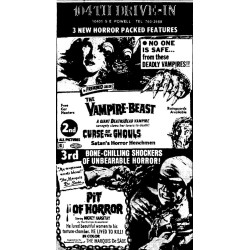
February 11, 1970 ad (Portland)
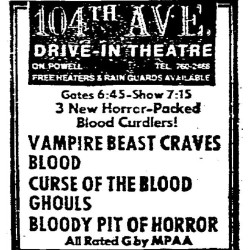
February 12, 1970 ad (Portland)
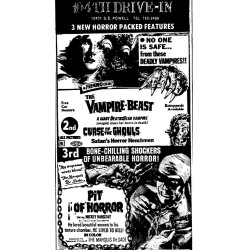
February 13, 1970 ad (Portland)
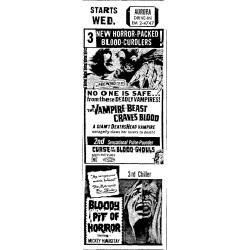
March 17, 1970 ad (Seattle)
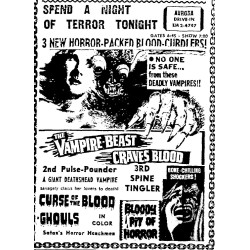
March 18, 1970 ad (Seattle)
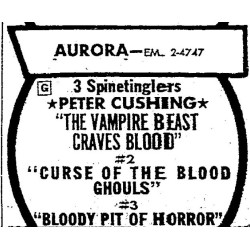
March 19, 1970 ad (Seattle)
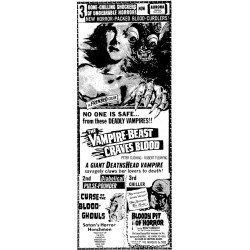
March 20, 1970 ad (Seattle)
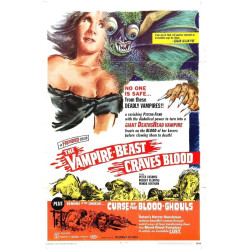
The Vampire Beast Craves Blood (1968) triple-feature poster
The Vampire Beast Craves Blood (1968) trailer
Buy "The Vampire Beast Craves Blood" (1968) bluray on Amazon (SPONSORED)
Buy "The Vampire Beast Craves Blood" (1968) DVD on Amazon (SPONSORED)
Curse of the Blood Ghouls (1962) trailer
Shark (1969) in the PNW
- Details
- Written by: Mortado
- Category: The 1970s in Northwest Cinemas
- Hits: 583
This is a collection of media from the initial runs of "Shark" (1969) in the Pacific Northwest. This one didn't seem to make it to Seattle.
Click on images for larger versions.
Shark (1969)
Shark” is one of those late‑sixties adventure thrillers that feels like it was assembled from sun‑bleached scraps, held together mostly by the stubborn charisma of its lead and the film’s own misplaced confidence. It moves through its Red Sea setting with the swagger of a pulp novel that doesn’t realize the world has already grown tired of its bravado. The film circles around a drifter who treats danger like a currency he’s always short on, drifting into a job that promises quick money and delivers the usual cocktail of moral rot, double‑dealing, and heat‑struck desperation. What gives the film its bite isn’t the sharks so much as the human opportunism circling beneath every interaction.
There’s a constant sense that the production is wrestling with itself, as if the filmmakers wanted a gritty, hard‑edged thriller but kept tripping over their own limitations. The atmosphere is thick with sweat, suspicion, and the kind of casual cruelty that defined a lot of late‑sixties genre cinema trying to look tougher than it actually was. The characters move through the story like they’re all hiding something, but the film never digs deep enough to make their secrets feel dangerous—just grimy. Even the action has a strangely fatalistic quality, as if everyone involved knows the world they inhabit is too indifferent to reward heroism.
What lingers is the film’s rough, unvarnished texture. “Shark” feels like a relic from a cinematic moment when adventure films were shedding their glossy optimism and embracing a more cynical worldview, but hadn’t yet figured out how to make that cynicism meaningful. It’s a story about people chasing profit in a place that devours the greedy and the desperate alike, and the film’s own ragged edges end up reinforcing that theme more effectively than its plot ever does.
Directors: Samuel Fuller
Writers: Samuel Fuller, John T. Dugan, Victor Canning
Stars: Burt Reynolds, Arthur Kennedy, Barry Sullivan
Buy "Shark" (1969) bluray on Amazon (SPONSORED)
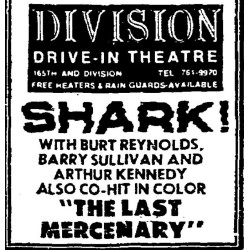
January 22, 1970 ad (Portland)
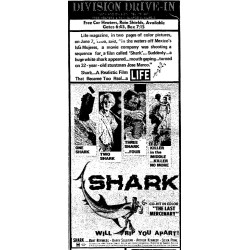
January 21, 1970 ad (Portland)
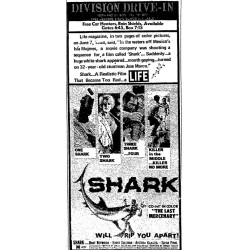
January 23, 1970 ad (Portland)
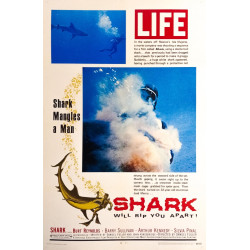
Shark (1969) poster
Shark (1969) trailer
Buy "Shark" (1969) bluray on Amazon (SPONSORED)
Page 9 of 14