This is a collection of media from the initial runs of "Dracula Has Risen from the Grave" (1968) in the Pacific Northwest.
Click on images for larger versions.
Dracula Has Risen from the Grave (1968)
"Dracula Has Risen from the Grave" (1968) stands as one of Hammer Studios’ most visually striking Gothic horror entries, a film that thrives less on narrative complexity than on atmosphere, mood, and symbolic resonance. Directed by Freddie Francis, it carries the studio’s signature blend of lurid color, baroque set design, and heightened melodrama, but also introduces a more self-conscious layering of religious imagery and psychological tension. The story unfolds in a world where faith and superstition collide, and the film’s central conflict is as much about belief and doubt as it is about the vampire’s predatory menace. Francis, a cinematographer turned director, uses his eye for composition to saturate the frame with stained-glass hues, candlelit shadows, and claustrophobic interiors, creating a visual palette that feels both sacred and sinister.
What makes "Dracula Has Risen from the Grave" distinctive within Hammer’s cycle is its exploration of generational and cultural anxieties. The film situates Dracula not only as a physical threat but as a symbolic force pressing against the boundaries of tradition and morality. The clash between religious authority and youthful skepticism mirrors the broader tensions of the late 1960s, when established institutions were being questioned and the allure of rebellion carried both danger and fascination. The vampire here becomes a figure of corruption and seduction, but also a catalyst for exposing the fragility of human conviction.
Christopher Lee’s presence, though restrained compared to earlier outings, imbues Dracula with an almost elemental quality—he is less a character than a looming embodiment of dread. The supporting cast, particularly Rupert Davies and Veronica Carlson, provide the human dimension, grounding the film’s operatic visuals in emotional stakes. Yet it is Francis’s direction that elevates the material, using camera angles and lighting to transform ordinary settings into spaces of uncanny menace.
Ultimately, "Dracula Has Risen from the Grave" is less about plot mechanics than about the interplay of image, atmosphere, and cultural subtext. It exemplifies Hammer’s ability to fuse Gothic tradition with contemporary resonance, offering a horror experience that is both sensorially rich and thematically suggestive. The film’s legacy lies in its ability to capture the tension between sacred order and profane disruption, making it a vivid artifact of its era and a compelling chapter in the Dracula mythos.
Director: Freddie Francis
Writer: Anthony Hinds
Stars: Christopher Lee, Rupert Davies, Veronica Carlson
Buy "Dracula Has Risen from the Grave" (1968) bluray on Amazon (SPONSORED)
Buy "Dracula Has Risen from the Grave" (1968) DVD on Amazon (SPONSORED)
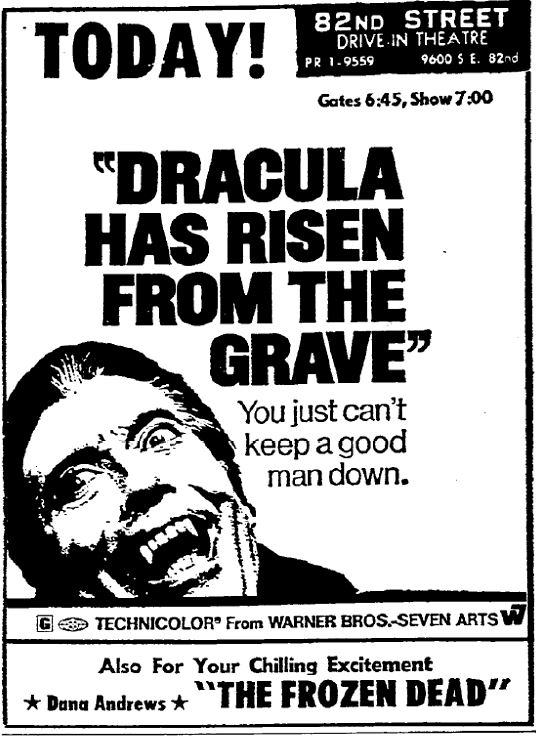
March 12, 1969 ad (Portland)
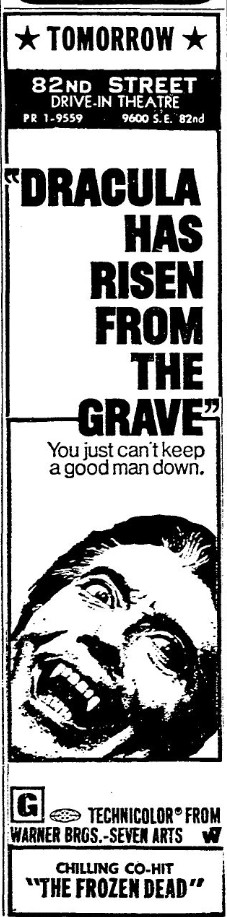
March 11, 1969 ad (Portland)
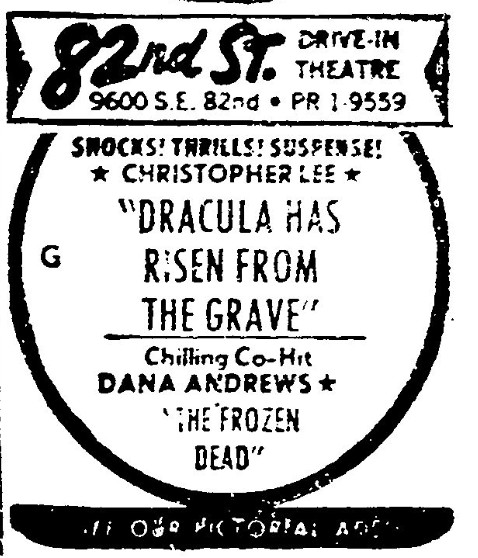
March 13, 1969 ad (Portland)
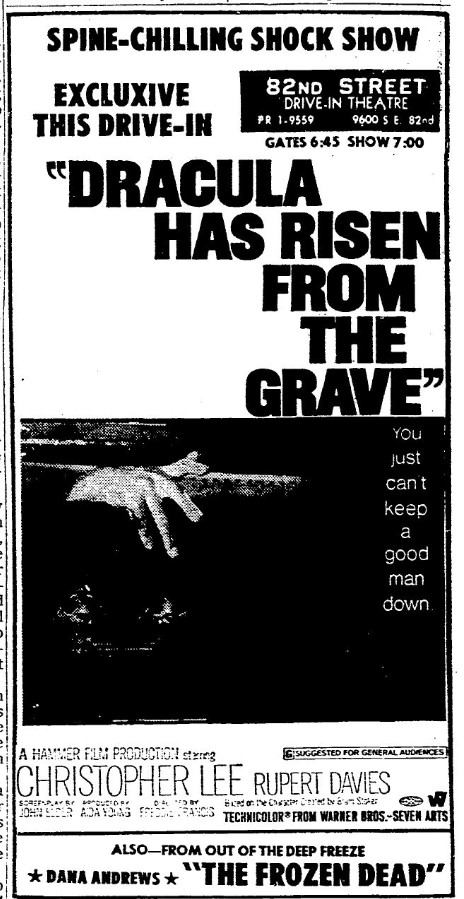
March 14, 1969 ad (Portland)
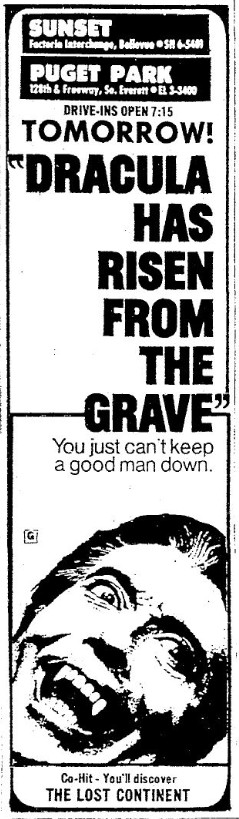
April 29, 1969 ad (Seattle)
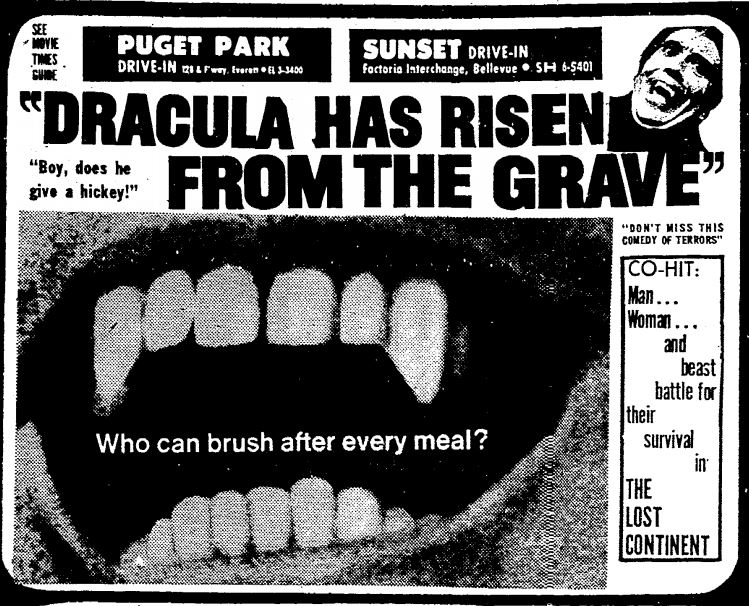
April 30, 1969 ad (Seattle)
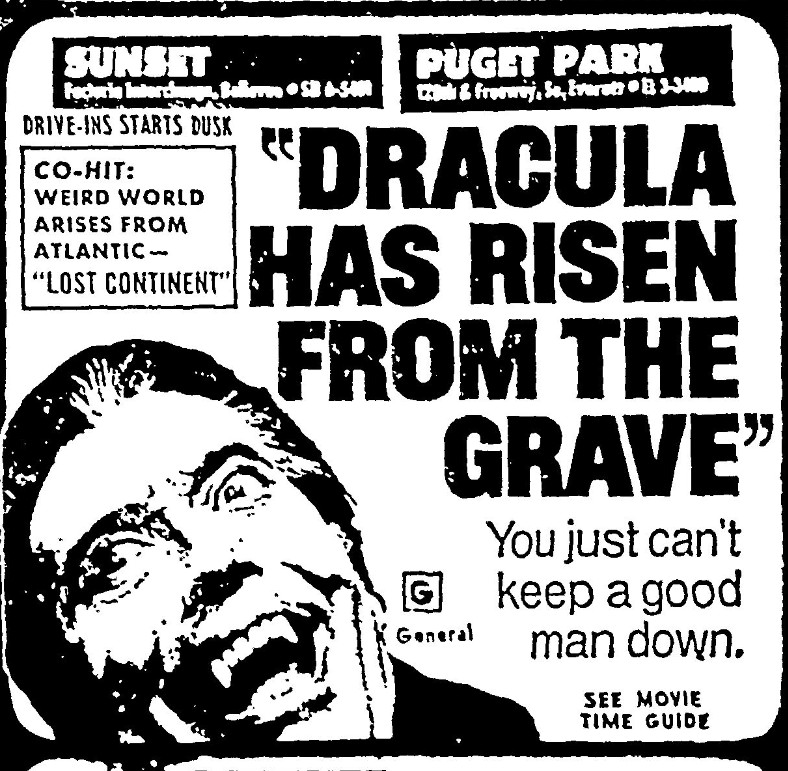
May 1, 1969 ad (Seattle)
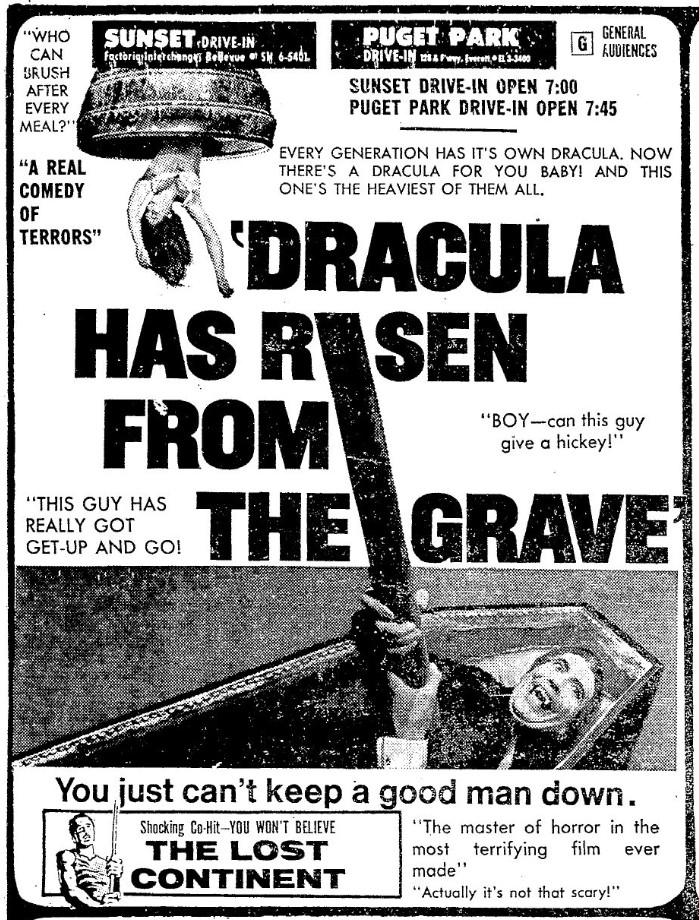
May 2, 1969 ad (Seattle)
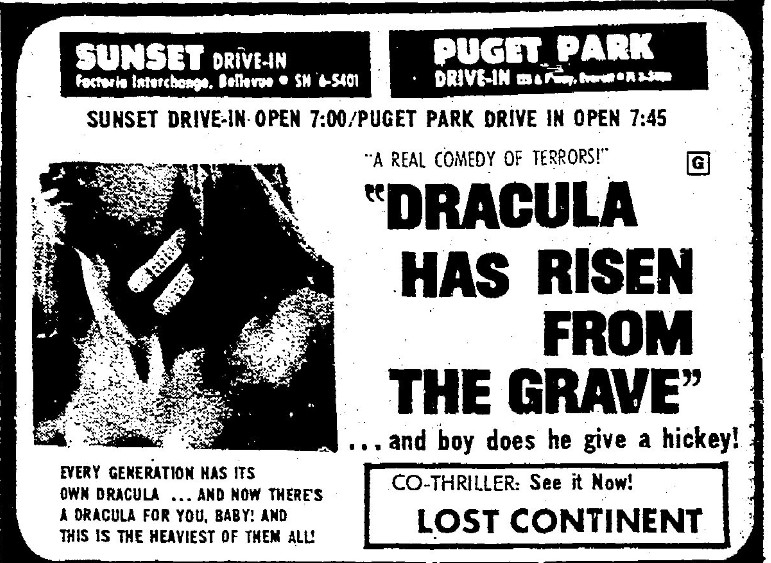
May 3, 1969 ad (Seattle)
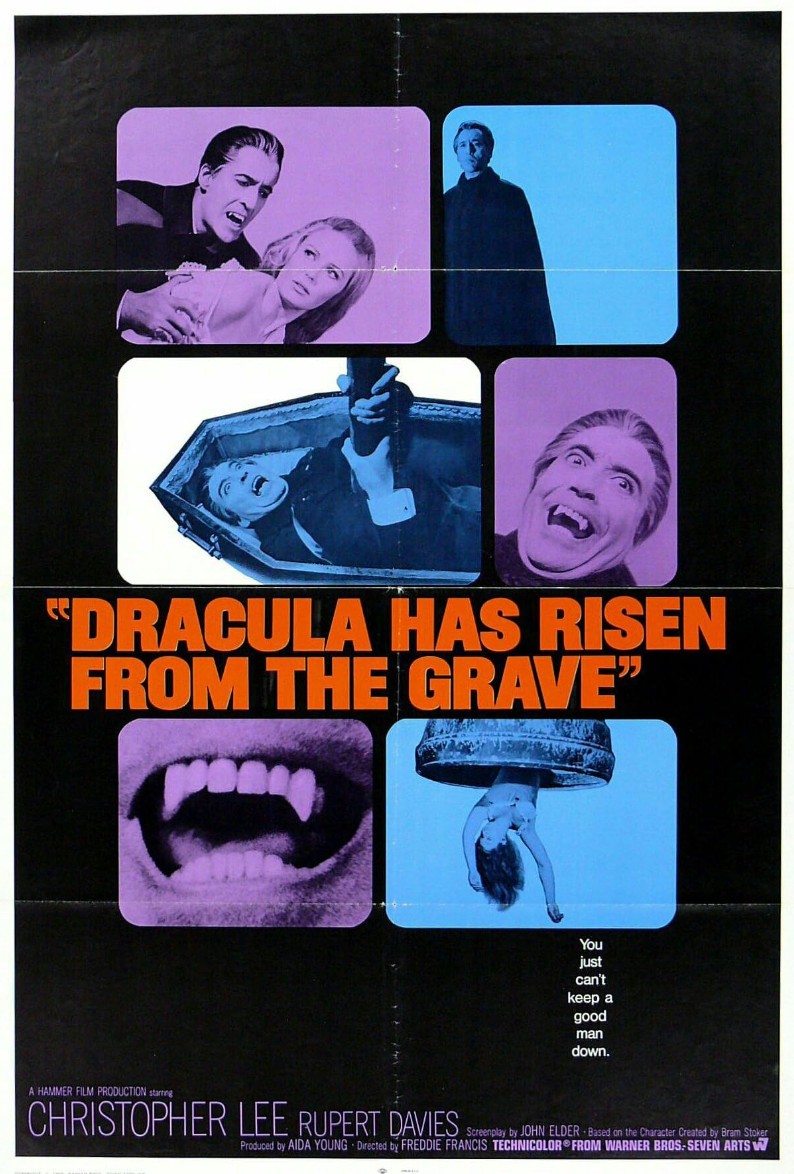
Dracula Has Risen from the Grave (1968) poster
Dracula Has Risen from the Grave (1968) trailer
Buy "Dracula Has Risen from the Grave" (1968) bluray on Amazon (SPONSORED)
Buy "Dracula Has Risen from the Grave" (1968) DVD on Amazon (SPONSORED)
