Home
Night of the Witches/Dr. Frankenstein on Campus (1970) in the PNW
- Details
- Written by: Mortado
- Category: The 1970s in Northwest Cinemas
- Hits: 81
This is a collection of media from the initial runs of "Night of the Witches" and "Dr. Frankenstein on Campus" (1970) in the Pacific Northwest.
Click on images for larger versions.
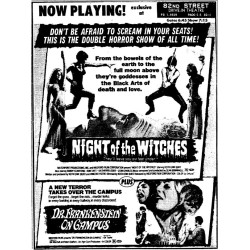
October 16, 1970 ad (Portland)
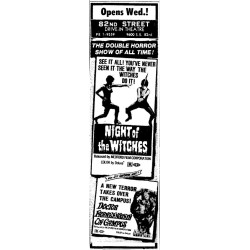
October 13, 1970 ad (Portland)
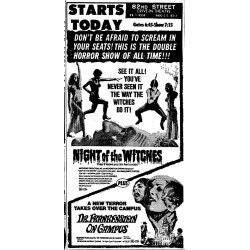
October 14, 1970 ad (Portland)
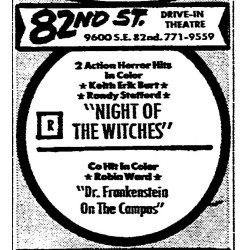
October 15, 1970 ad (Portland)
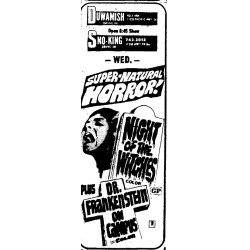
November 9, 1970 ad (Seattle)
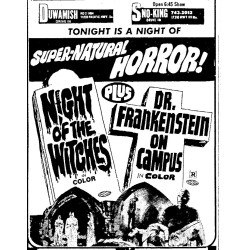
November 10, 1970 ad (Seattle)
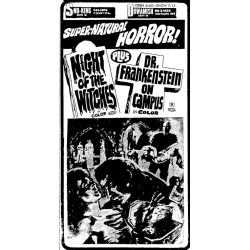
November 12, 1970 ad (Seattle)
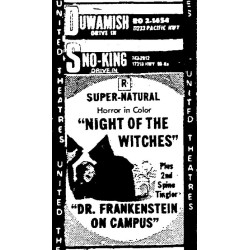
November 13, 1970 ad (Seattle)
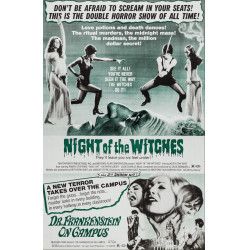
Night of the Witches/Dr. Frankenstein on Campus (1970) poster
Night of the Witches/Dr. Frankenstein on Campus (1970) trailer
Buy "Dr. Frankenstein on Campus" (1970) DVD on Amazon (SPONSORED)
Free Grass (1969) in the PNW
- Details
- Written by: Mortado
- Category: The 1970s in Northwest Cinemas
- Hits: 32
This is a collection of media from the initial runs of "Free Grass" (AKA "Scream Free," 1970) in the Pacific Northwest. I could find no evidence of this running in Seattle under either of its titles. "Sidehackers" (1969) was back as the second feature.
Click on images for larger versions.
Free Grass (AKA "Scream Free," 1969)
Free Grass is a 1969 film that, on the surface, appears to be a straightforward narrative, but beneath its veneer lies a set of contradictions that make it both compelling and frustrating. The story follows a group of characters navigating a world where personal freedom is constantly under threat and the line between autonomy and control blurs. The central conflict, whether a man struggles to reclaim his life or a collective fight against an oppressive system, plays out in a way that feels both urgent and muddled, depending on how you look at it.
The film’s structure is one of its most telling flaws. It moves with a loose, almost accidental progression, with scenes that connect thematically but rarely cohere into a whole. This gives the impression of a story that was meant to be something more, but was left half-baked. The pacing is uneven, with moments of tension that feel earned and others that drag, leaving the audience to wonder if the director was more interested in exploring ideas than in delivering a satisfying narrative arc
The performances are mixed, with some leads delivering work that feels authentic and others coming across as wooden or overacted. The chemistry between characters is there in flashes, but the emotional beats often feel forced, as if the actors were trying to hit marks rather than inhabit the roles. This inconsistency mirrors the film’s broader thematic messiness—there’s a sense of “trying too hard” that undermines the authenticity of the story
Thematically, Free Grass grapples with the tension between individual liberty and systemic control, but it does so in a way that feels more like a set of half-formed observations than a fully developed argument. The film’s symbolism is there, but it’s not always clear what it’s meant to convey, leaving the viewer to fill in the gaps. This ambiguity can be appealing, but in this case, it also feels like a missed opportunity to make a stronger statement
The cinematography and sound design have their moments, but they’re often overshadowed by the narrative’s lack of focus. There are scenes where the visual language works in harmony with the mood, but in others, the imagery feels disconnected from the story, adding to the sense of a film that was never fully polished.
Overall, Free Grass is a film that rewards close attention but punishes casual viewing. It’s a work that feels like it was built on a foundation of potential, but the construction is uneven and the finishing touches are missing. It’s a film that can be fascinating to dissect, but one that ultimately leaves you with more questions than answers.
Directors: Bill Brame, John Lawrence
Writers: Gerald Carson, Paul Stevenson, James Gordon White
Stars: Richard Beymer, Russ Tamblyn, Lana Wood
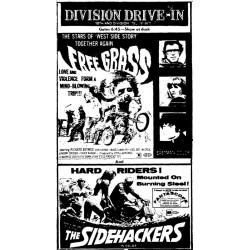
October 7, 1970 ad (Portland)
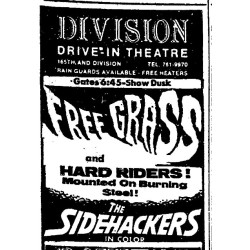
October 7, 1970 ad (Portland)
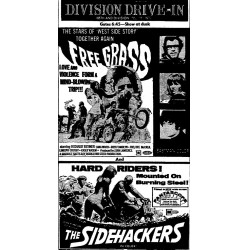
October 7, 1970 ad (Portland)
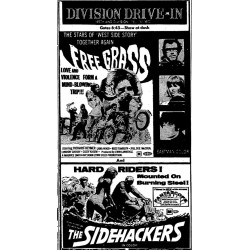
October 7, 1970 ad (Portland)
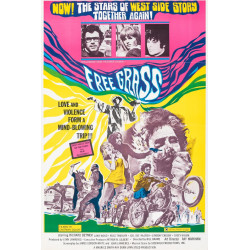
Free Grass (1969) poster
Page 1 of 8