Home
Cherry, Harry & Raquel! (1969) in the PNW
- Details
- Written by: Mortado
- Category: The 1970s in Northwest Cinemas
- Hits: 427
This is a collection of media from the initial runs of "Cherry, Harry & Raquel!" (1969) in the Pacific Northwest.
Click on images for larger versions.
Cherry, Harry & Raquel! (1969)
"Cherry, Harry & Raquel!" is one of those Russ Meyer curiosities where the film feels less like a coherent narrative and more like a feverish rummage through whatever obsessions he had lying around that week. It drifts through the California desert with the same cracked, sun‑bleached energy as a half‑remembered dream, stitched together from scraps of sex, paranoia, and counterculture posturing. The whole thing has the vibe of a director who’s bored with the usual grindhouse formula and decides to see how far he can push the audience before they stop pretending they’re watching a movie.
The plot, such as it is, circles around a corrupt sheriff, a drug runner, and a pair of women who seem to exist mostly as symbols of freedom, temptation, or whatever vague notion Meyer was chasing. But the film never settles long enough to make any of that feel grounded. Instead, it lunges from one fragment to another, as if Meyer is daring you to complain about continuity in a world where nothing is meant to be stable. The desert becomes a kind of moral wasteland, a place where authority is a joke and desire is the only real currency. Characters talk tough, pose tough, and crumble just as quickly, all while the camera leers with a kind of shameless enthusiasm that borders on self‑parody.
What keeps it interesting is the strange, almost accidental poetry that emerges from the chaos. Meyer shoots bodies and landscapes with the same blunt fascination, turning flesh and rock into interchangeable monuments. The editing is jagged, impatient, sometimes outright confrontational, giving the film a rhythm that feels like someone flipping channels during a heatstroke. And yet, buried under all the exploitation trappings, there’s a faint sense of cultural exhaustion — a late sixties hangover where rebellion has curdled into opportunism, and everyone is too sunburned to pretend otherwise.
"Cherry, Harry & Raquel!" isn’t polished, or profound, or even particularly coherent. But it’s honest in its grime. It’s a film that doesn’t care whether you think it’s trash or art, because it’s too busy reveling in its own cracked worldview. In that way, it becomes a strange little time capsule: a reminder that the counterculture wasn’t all idealism and revolution, but also a lot of sweaty, disorganized flailing in the desert, hoping something meaningful might accidentally happen.
Director: Russ Meyer
Writers: Russ Meyer, Tom McGowan
Stars: Linda Ashton, Charles Napier, Larissa Ely
Buy "Cherry, Harry & Raquel! " (1969) DVD on Amazon (SPONSORED)
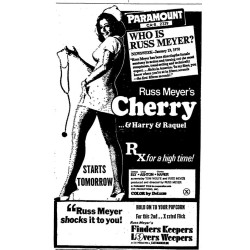
September 15, 1970 ad (Portland)
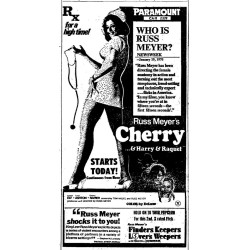
September 16, 1970 ad (Portland)
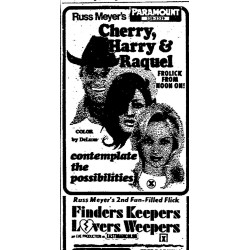
September 17, 1970 ad (Portland)
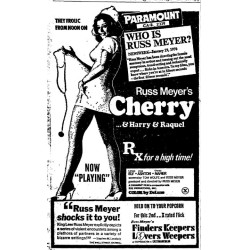
September 18, 1970 ad (Portland)
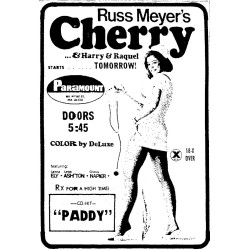
October 6, 1970 ad (Seattle)
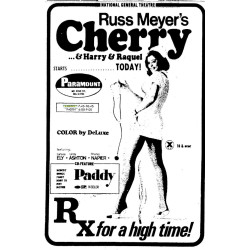
October 7, 1970 ad (Seattle)
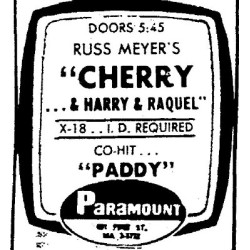
October 8, 1970 ad (Seattle)
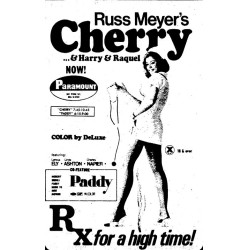
October 9, 1970 ad (Seattle)
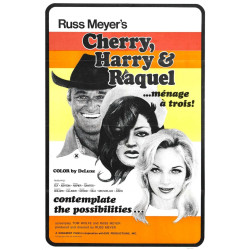
Cherry, Harry & Raquel! (1969) poster
Angel Unchained (1970) in the PNW
- Details
- Written by: Mortado
- Category: The 1970s in Northwest Cinemas
- Hits: 339
This is a collection of media from the initial runs of "Angel Unchained" in the Pacific Northwest. "The Cycle Savages" was second.
Click on images for larger versions.
Angel Unchained (1970)
“Angel Unchained” is one of those late-era biker pictures that pretends it’s shedding its skin while still clinging to every dusty trope it inherited. You can feel the exhaustion in its bones. The film follows a biker who drifts away from his gang, not because he’s had some grand revelation, but because the whole lifestyle has curdled into a dead end. He wanders into a commune of wide-eyed idealists who think peace is something you can plant in the dirt and watch bloom. The movie treats them with a kind of bemused contempt, as if their optimism is just another brand of delusion, but it also knows the biker’s world is no better. What unfolds is a collision between two fading fantasies: the outlaw myth that’s already rotting from within, and the counterculture dream that’s too fragile to survive contact with reality.
The film’s cynicism is baked into its pacing. Every attempt at harmony feels temporary, every gesture of goodwill undercut by the looming threat of violence. The biker himself is a man who wants change but doesn’t know how to live without the old reflexes, and the commune wants salvation but doesn’t understand the cost of inviting chaos into their sanctuary. The movie never pretends these worlds can merge cleanly. Instead, it watches them scrape against each other, throwing sparks that don’t illuminate anything; they burn.
Visually, “Angel Unchained” leans into the dust, the sun glare, the sense of a country that’s already tired of its own rebellion. It’s not a triumphant film. It’s a shrugging one. A story about people who think they’re breaking free but are really just circling the same worn-out track, hoping the scenery will change.
Director: Lee Madden
Writers: Jeffrey Alan Fiskin, Lee Madden
Stars: Don Stroud, Luke Askew, Larry Bishop, Tyne Daly
Buy "Angel Unchained" (1970) bluray on Amazon (SPONSORED)
Buy "Angel Unchained" (1970) DVD on Amazon (SPONSORED)
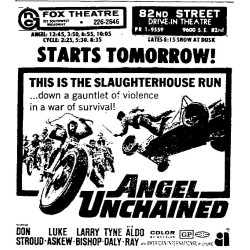
September 1, 1970 ad (Portland)
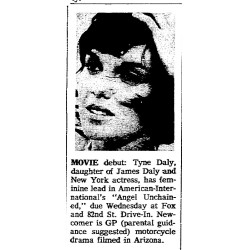
September 1, 1970 ad (Portland)
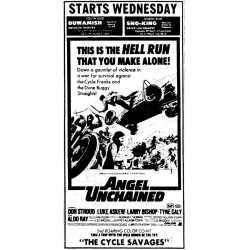
September 1, 1970 ad (Seattle)
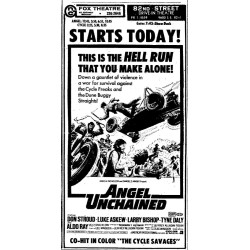
September 2, 1970 ad (Portland)
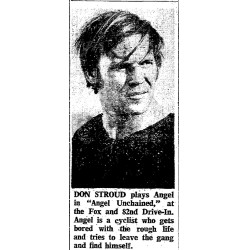
September 2, 1970 ad (Portland)
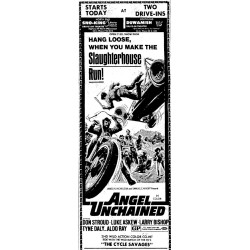
September 2, 1970 ad (Seattle)
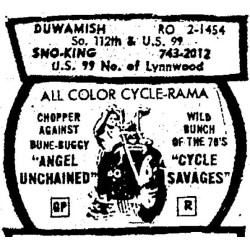
September 3, 1970 ad (Seattle)
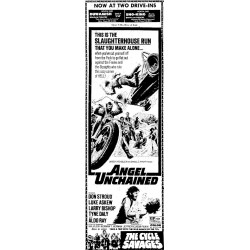
September 4, 1970 ad (Seattle)
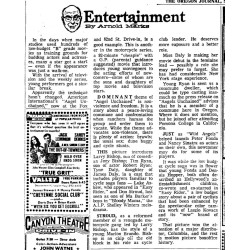
September 5, 1970 review (Portland)
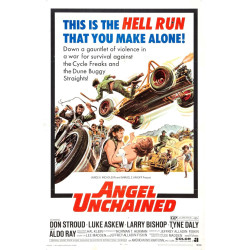
Angel Unchained (1970) poster
Angel Unchained (1970) trailer
Buy "Angel Unchained" (1970) bluray on Amazon (SPONSORED)
Buy "Angel Unchained" (1970) DVD on Amazon (SPONSORED)
Page 7 of 8