This is a collection of media from the initial runs of "Change of Mind" (1969) in the Pacific Northwest.
Click on images for larger versions.
Change of Mind (1969)
"Change of Mind" is a 1969 science‑fiction drama that uses a sensational premise as a framework for examining identity, race, and social perception during a period of intense cultural upheaval. Directed by Robert Stevens, the film centers on a groundbreaking medical experiment whose implications extend far beyond the operating room, forcing its characters—and by extension the audience—to confront uncomfortable questions about how identity is constructed and recognized. Rather than leaning into spectacle, the film adopts a sober, almost clinical tone, positioning itself closer to social drama than conventional genre entertainment.
The narrative’s strength lies in its willingness to treat its speculative concept as a moral and psychological inquiry rather than a gimmick. The film repeatedly interrogates whether consciousness alone defines the self, or whether identity is inseparable from physical appearance and the social assumptions attached to it. These questions are explored through intimate personal relationships as well as public institutions, revealing how quickly empathy, trust, and authority can shift when outward identity changes. The script is earnest and direct, sometimes to a fault, but its seriousness reflects a genuine desire to engage with contemporary debates about race and equality rather than exploit them.
Performances play a crucial role in grounding the film’s ambitious themes. Raymond St. Jacques delivers a restrained and dignified portrayal that anchors the story emotionally, conveying both intellectual clarity and deep personal disorientation. Susan Oliver provides a nuanced counterbalance, embodying the strain placed on personal bonds when identity becomes unstable. Supporting performances, including a notably unsympathetic turn by Leslie Nielsen, help sketch a social landscape shaped by prejudice, skepticism, and institutional rigidity. While the dialogue occasionally veers into didactic territory, the actors’ commitment lends credibility to the film’s moral concerns.
Visually, "Change of Mind" favors functional realism over stylistic flourish. The direction emphasizes faces, conversations, and procedural spaces—courtrooms, hospitals, offices—reinforcing the film’s interest in systems of power and judgment. The cinematography is unadorned but effective, allowing the performances and ideas to remain central. A jazz‑inflected score attributed to Duke Ellington and Orchestra adds an unexpected layer of melancholy and irony, subtly underscoring the emotional weight of the film’s ethical dilemmas.
The film’s limitations stem largely from its structure. After establishing a provocative personal and social conflict, it shifts focus toward legal and institutional debates that dilute some of the earlier emotional intimacy. This transition can feel abrupt, as though the film is torn between being a character study and a courtroom parable. As a result, its thematic ambitions sometimes outpace its narrative cohesion, leaving certain ideas more asserted than fully explored.
Despite these shortcomings, "Change of Mind" remains a compelling artifact of late‑1960s American cinema. Its willingness to confront racial identity through speculative storytelling reflects both the era’s anxieties and its aspirations for social progress. While its approach may feel dated to modern viewers, the film’s sincerity and intellectual curiosity give it lasting historical and cultural interest. It stands as an earnest attempt to use genre cinema as a mirror for societal self‑examination, revealing both the possibilities and the constraints of its time.
Director: Robert Stevens
Writers: Seeleg Lester, Dick Wesson
Stars: Raymond St. Jacques, Susan Oliver, Janet MacLachlan
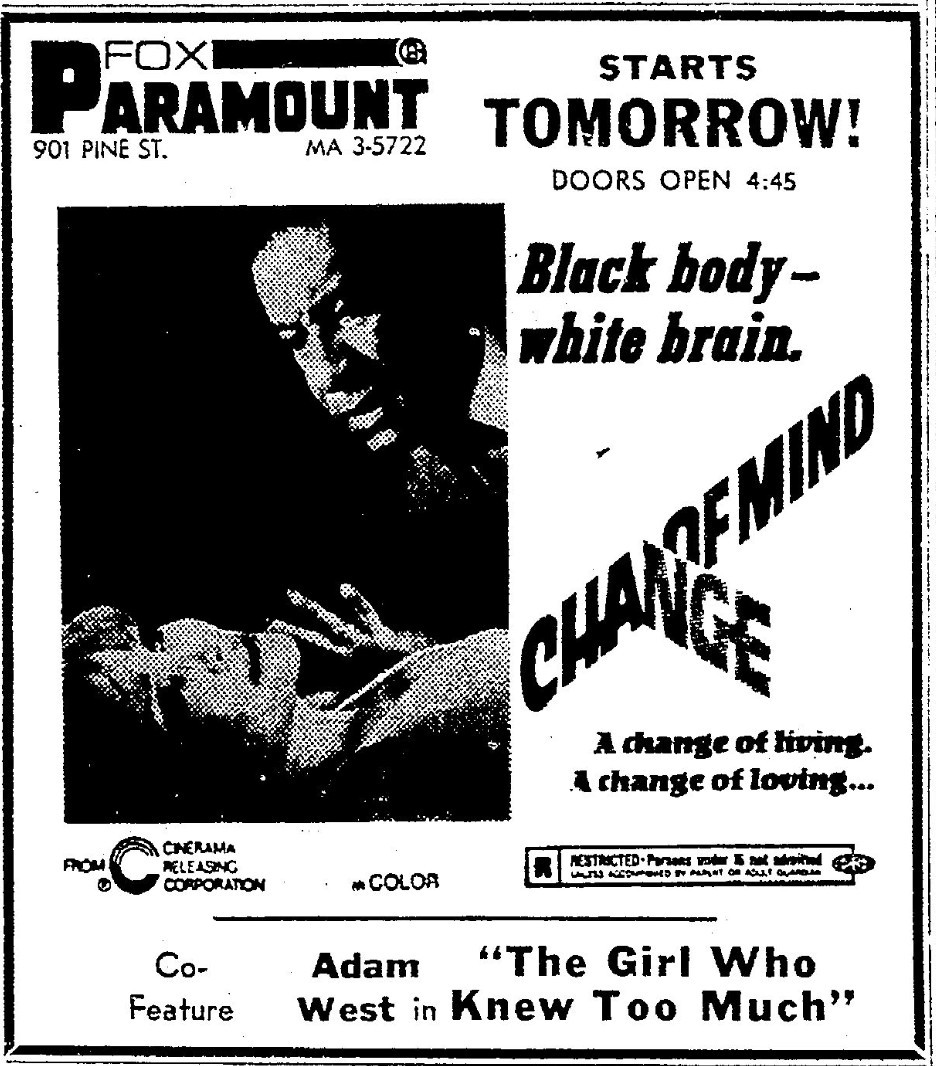
November 11, 1969 ad (Seattle)
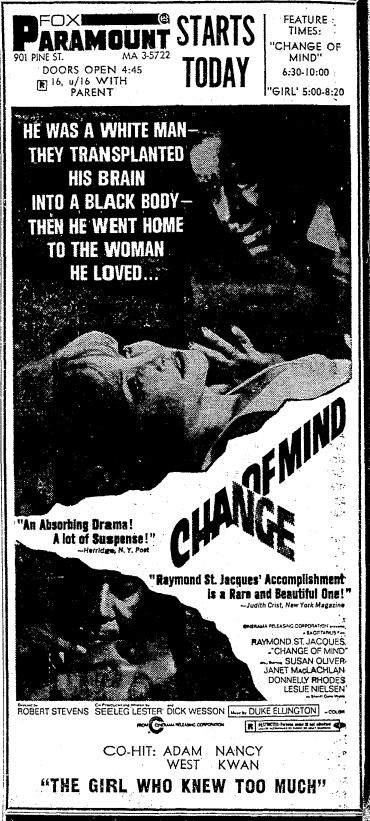
November 12, 1969 ad (Seattle)
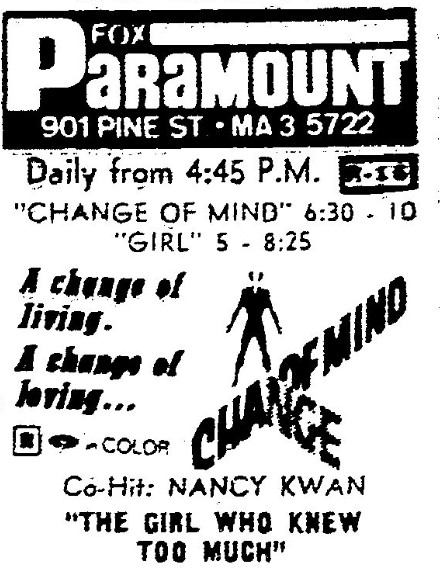
November 13, 1969 ad (Seattle)
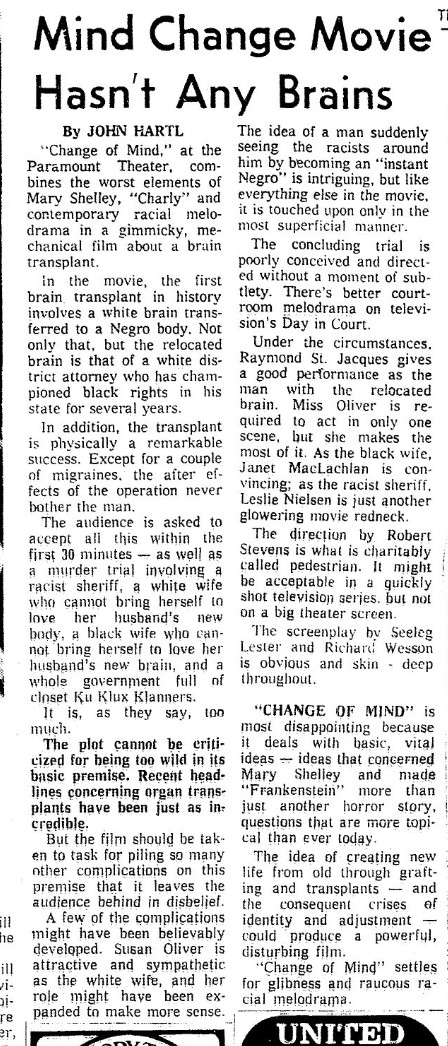
November 13, 1969 article (Seattle)
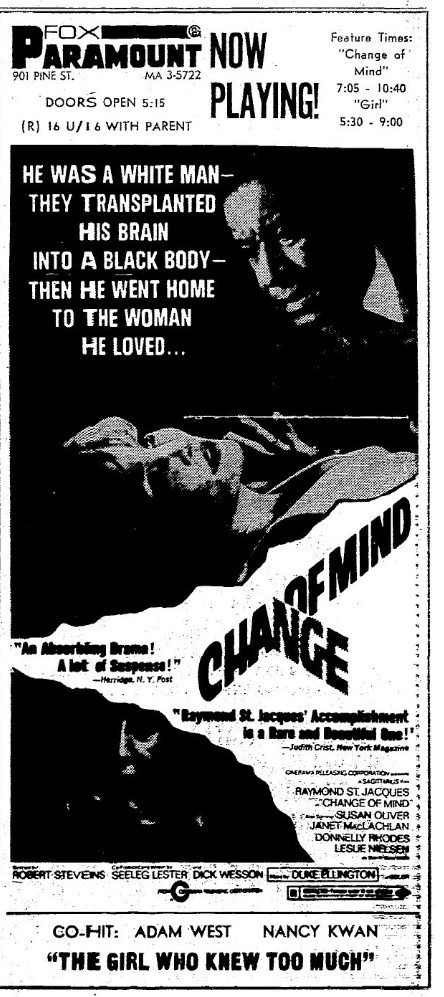
November 14, 1969 ad (Seattle)
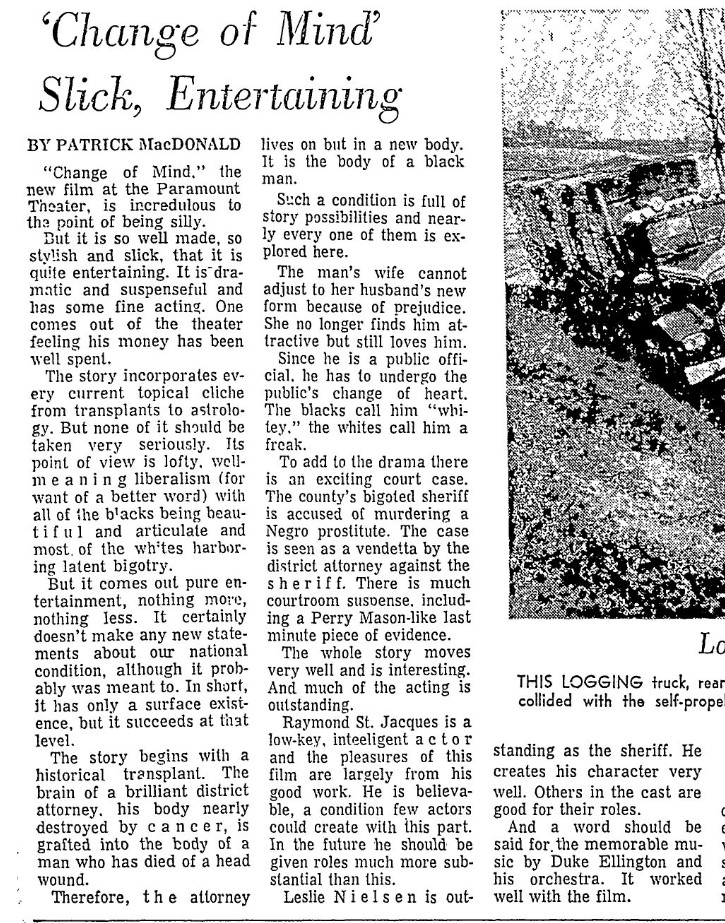
November 14, 1969 article (Seattle)
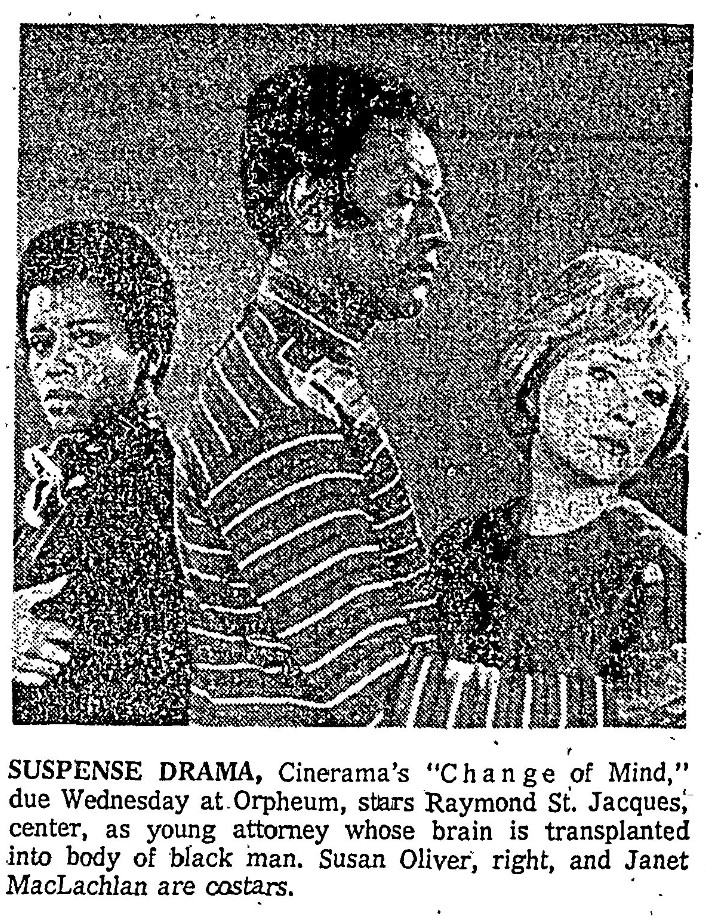
December 8, 1969 photo (Portland)
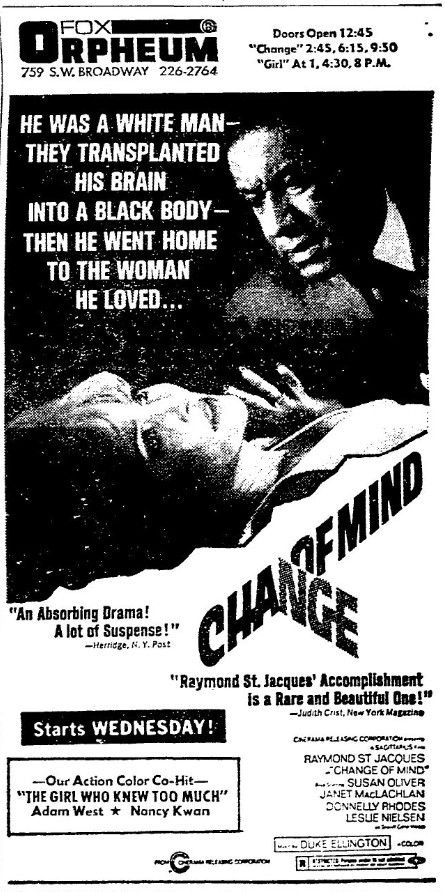
December 9, 1969 ad (Portland)
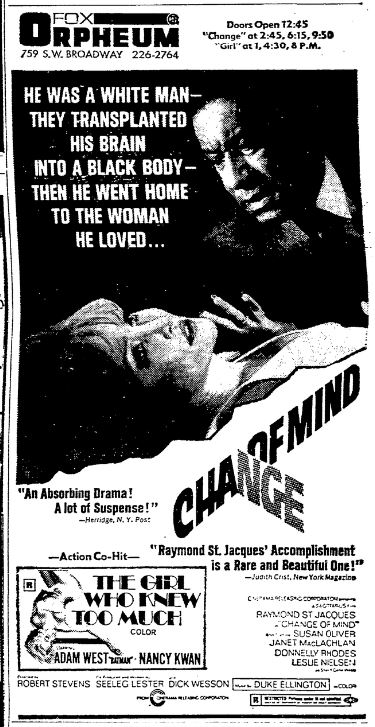
December 10, 1969 ad (Portland)
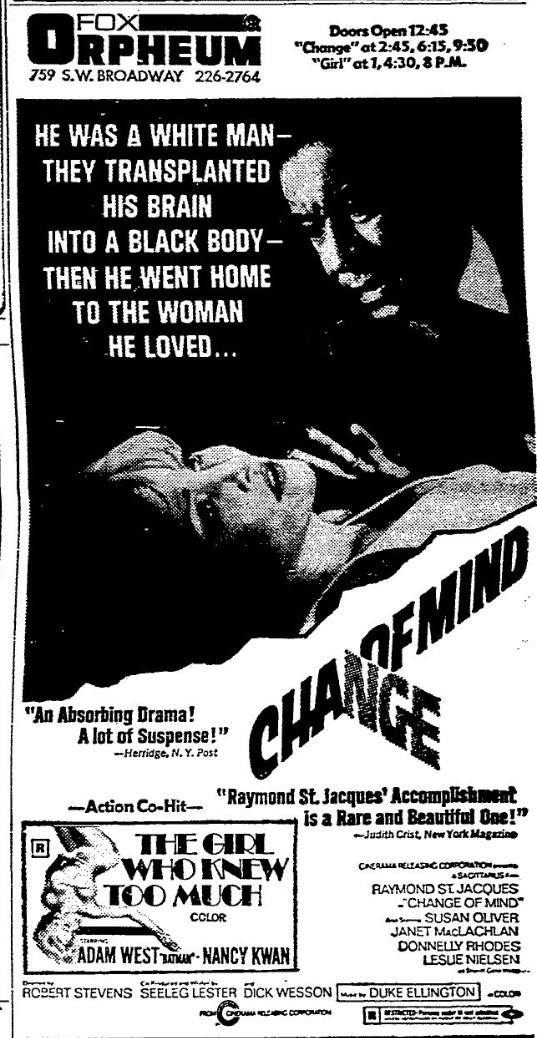
December 12, 1969 ad (Portland)
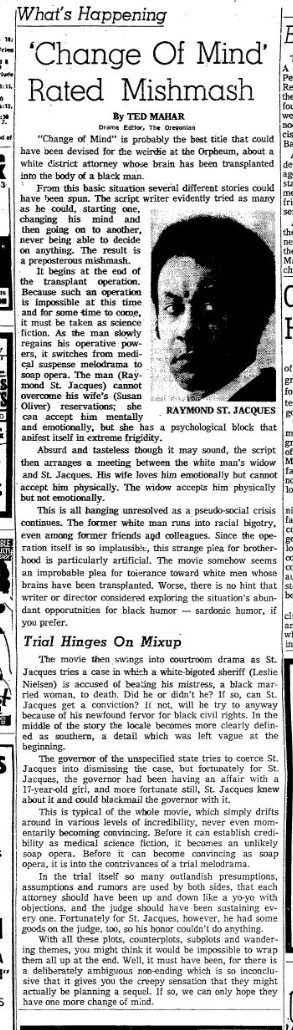
December 15, 1969 article (Portland)
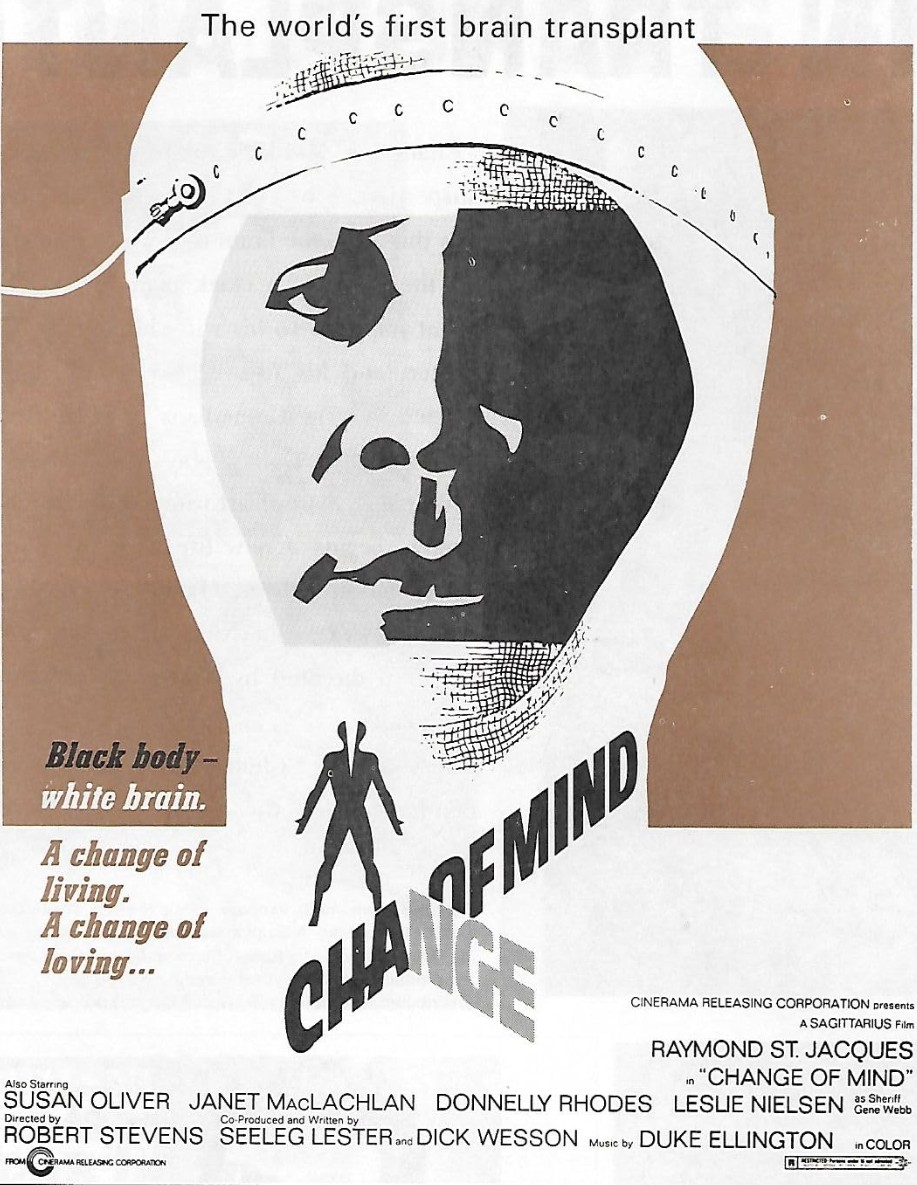
Change of Mind (1969) poster
