This is a collection of media from the initial runs of "Mad Doctor of Blood Island" (1969) and "Blood Demon" (1967) in the Pacific Northwest.
Click on images for larger versions.
Mad Doctor of Blood Island (1968)
“Mad Doctor of Blood Island” stands as one of the most notorious entries in late-1960s exploitation cinema, a film whose reputation rests as much on its lurid atmosphere and sensational imagery as on its place within the evolving landscape of international horror. Produced in the Philippines and marketed aggressively to Western audiences, the film reflects a moment when genre cinema was pushing against censorship boundaries, embracing vivid color, graphic suggestion, and a confrontational tone that distinguished it sharply from earlier Gothic traditions.
Set against a humid jungle backdrop, the film unfolds in an isolated medical outpost where scientific ambition and moral restraint are in constant tension. The narrative draws heavily on classic mad scientist archetypes, but reframes them through a distinctly modern lens, emphasizing bodily transformation and the fragility of human identity. Rather than relying on supernatural explanations, the horror emerges from misguided experimentation and the unsettling implications of unchecked medical authority. This grounding in pseudo-scientific logic gives the film a grim plausibility that heightens its sense of unease.
Visually, the film is defined by its bold use of color and texture. The tropical setting becomes an oppressive presence, its lush greenery contrasting sharply with stark interiors and shocking splashes of red that were heavily emphasized in promotional materials. These visual choices are not subtle, but they are effective, creating a heightened, almost hallucinatory atmosphere that aligns with the film’s themes of physical corruption and psychological decay. The cinematography favors close, invasive framing, reinforcing the sense that bodies and minds alike are under constant threat.
Tonally, “Mad Doctor of Blood Island” occupies a space between serious horror and exploitation spectacle. Its performances often lean toward heightened melodrama, yet this exaggeration feels intentional, amplifying the film’s nightmarish quality rather than undermining it. Dialogue and characterization serve primarily to propel the film toward its most disturbing ideas, prioritizing mood and shock over nuanced realism. This approach reflects the era’s grindhouse sensibility, where impact and immediacy mattered more than polish.
Beyond its surface thrills, the film can be read as a reflection of contemporary anxieties surrounding science, colonial power dynamics, and the ethics of experimentation. The remote setting and international cast subtly underscore fears of medical overreach and cultural displacement, themes that resonate beneath the film’s sensational exterior. While it may lack refinement, its rawness is part of its enduring appeal.
Ultimately, “Mad Doctor of Blood Island” endures not because of narrative sophistication, but because of its unapologetic embrace of transgression. It captures a pivotal moment when horror cinema was shedding restraint, testing audience tolerance, and redefining what could be shown on screen. As both a product of its time and a catalyst for future exploitation trends, the film remains a striking, if abrasive, artifact of genre history.
Directors: Gerardo de Leon, Eddie Romero
Writer: Reuben Canoy
Stars: John Ashley, Angelique Pettyjohn, Ronald Remy
Buy "Mad Doctor of Blood Island" (1968) bluray on Amazon (SPONSORED)
Buy "Mad Doctor of Blood Island" (1968) DVD on Amazon (SPONSORED)
Blood Demon (AKA "The Torture Chamber of Dr. Sadism," 1967)
“Blood Demon” occupies a curious and often overlooked corner of late-1960s European horror, a film that blends Gothic tradition with the era’s growing appetite for psychological unease and moral ambiguity. Emerging at a time when genre cinema was shifting away from classical restraint toward more introspective and unsettling territory, the film reflects a transitional moment in horror storytelling, where atmosphere and implication carry as much weight as overt menace.
Set within a decaying aristocratic environment steeped in secrecy and inherited guilt, the film draws heavily on Old World imagery. Crumbling estates, shadowed corridors, and candlelit interiors establish a mood of lingering dread, suggesting a world trapped between past sins and present consequences. Rather than relying on constant shocks, the film allows tension to accumulate gradually, using silence, suggestion, and visual composition to create a sense of inescapable doom. The setting itself becomes a psychological landscape, mirroring the internal conflicts of its characters.
At its core, “Blood Demon” explores themes of obsession, repression, and the corrosive effects of unchecked desire. The narrative unfolds with deliberate pacing, emphasizing emotional states over plot mechanics. Characters are defined less by heroic or villainous archetypes than by their vulnerabilities and moral compromises, lending the film a somber, almost tragic tone. This focus on inner turmoil aligns the film more closely with psychological horror than with straightforward monster cinema, even as it borrows iconography from Gothic horror traditions.
Visually, the film favors stark contrasts and expressive lighting, using shadow to obscure as much as it reveals. Faces emerge from darkness, architectural details loom ominously, and the camera often lingers just long enough to make the viewer uneasy. These stylistic choices reinforce the film’s preoccupation with hidden truths and suppressed impulses. The restrained use of color and careful framing give the film a somber elegance, distinguishing it from more sensational contemporaries.
Performances are measured and introspective, contributing to the film’s brooding atmosphere. Dialogue is sparse and purposeful, allowing glances, gestures, and pauses to convey emotional weight. This understated approach may feel austere to viewers expecting more explicit thrills, but it serves the film’s thematic goals, drawing the audience into a slow-burning descent rather than a rapid escalation of horror.
Ultimately, “Blood Demon” stands as a moody, reflective entry in 1960s horror cinema, one that prioritizes atmosphere and psychological depth over spectacle. Its power lies not in what it shows, but in what it suggests, making it a film that lingers in memory through tone and implication rather than overt shock. As such, it remains a compelling example of how horror in this period began to probe deeper anxieties beneath its Gothic surface.
Director: Harald Reinl
Writers: Manfred R. Köhler
Stars: Lex Barker, Karin Dor, Christopher Lee
Buy Blood Demon (AKA "The Torture Chamber of Dr. Sadism," 1967) bluray on Amazon (SPONSORED)
Buy Blood Demon (AKA "The Torture Chamber of Dr. Sadism," 1967) DVD on Amazon (SPONSORED)
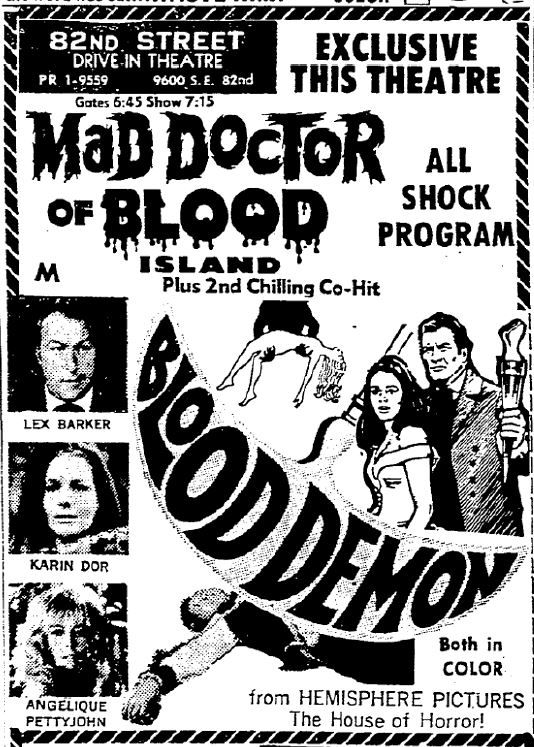
November 12, 1969 ad (Portland)
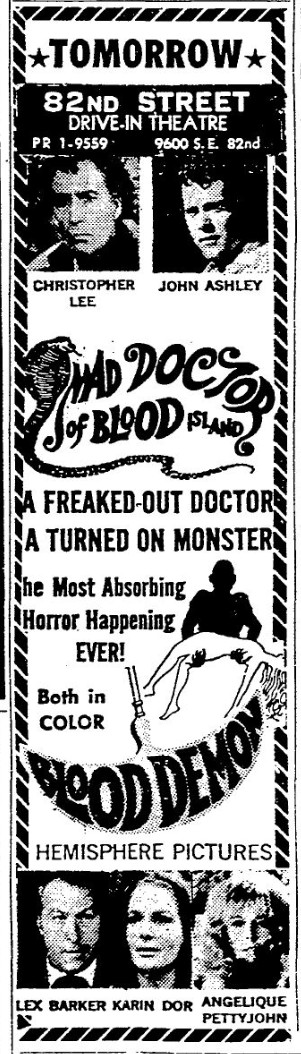
November 11, 1969 ad (Portland)
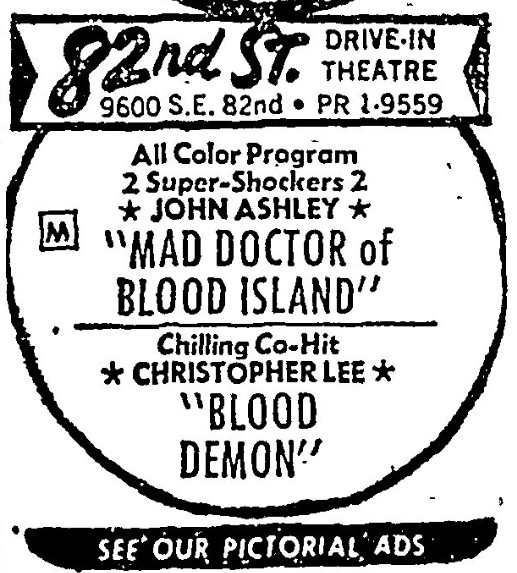
November 13, 1969 ad (Portland)
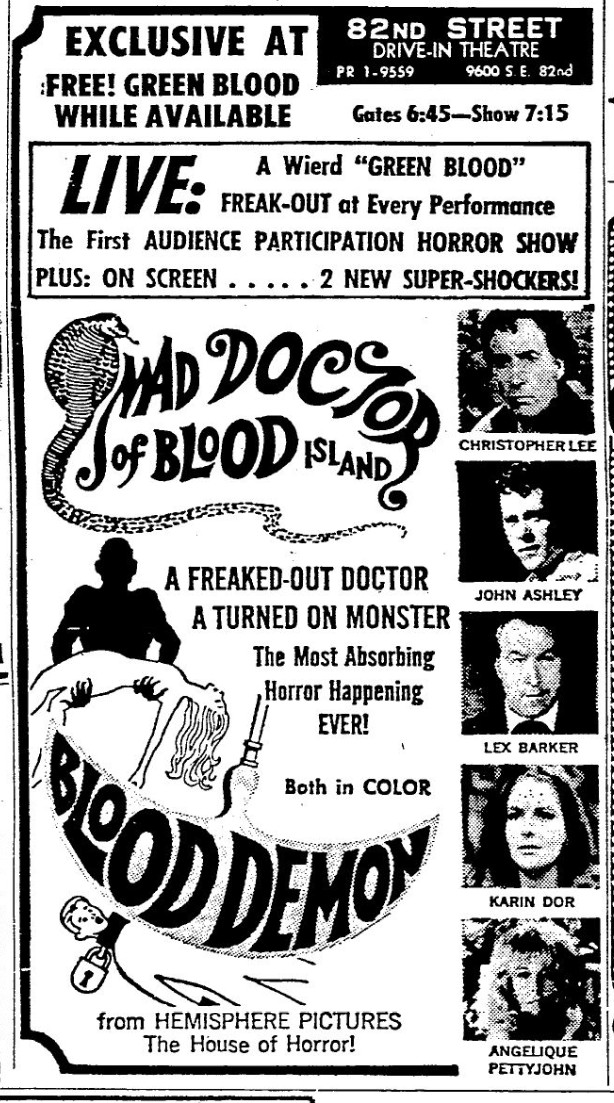
November 14, 1969 ad (Portland)

December 18, 1969 ad (Seattle)
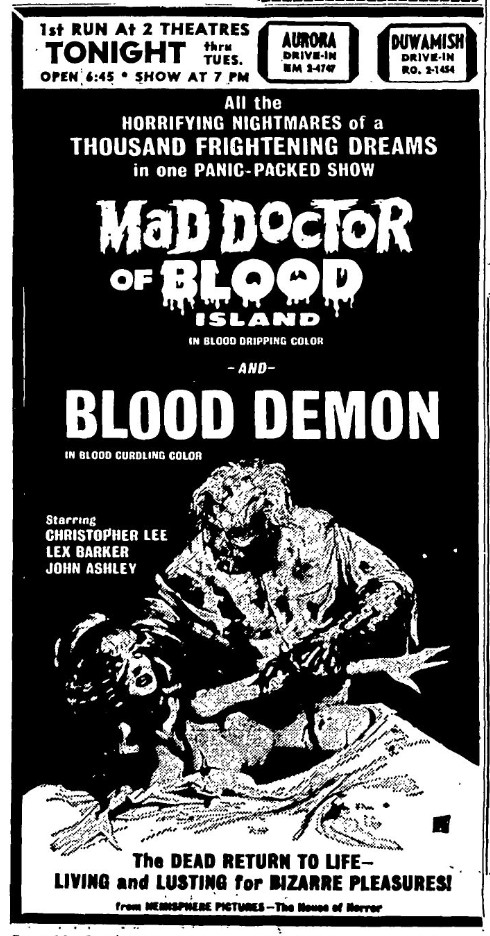
December 19, 1969 ad (Seattle)
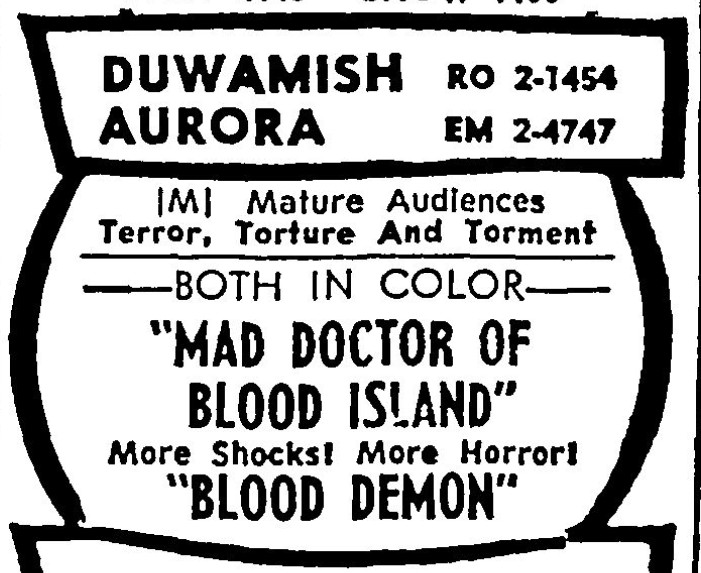
December 21, 1969 ad (Seattle)
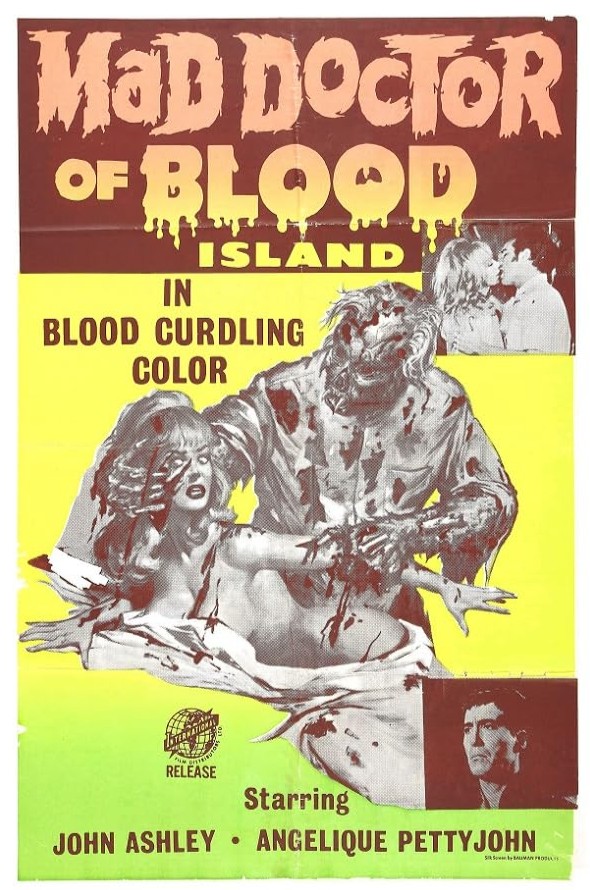
Mad Doctor of Blood Island (1968) poster
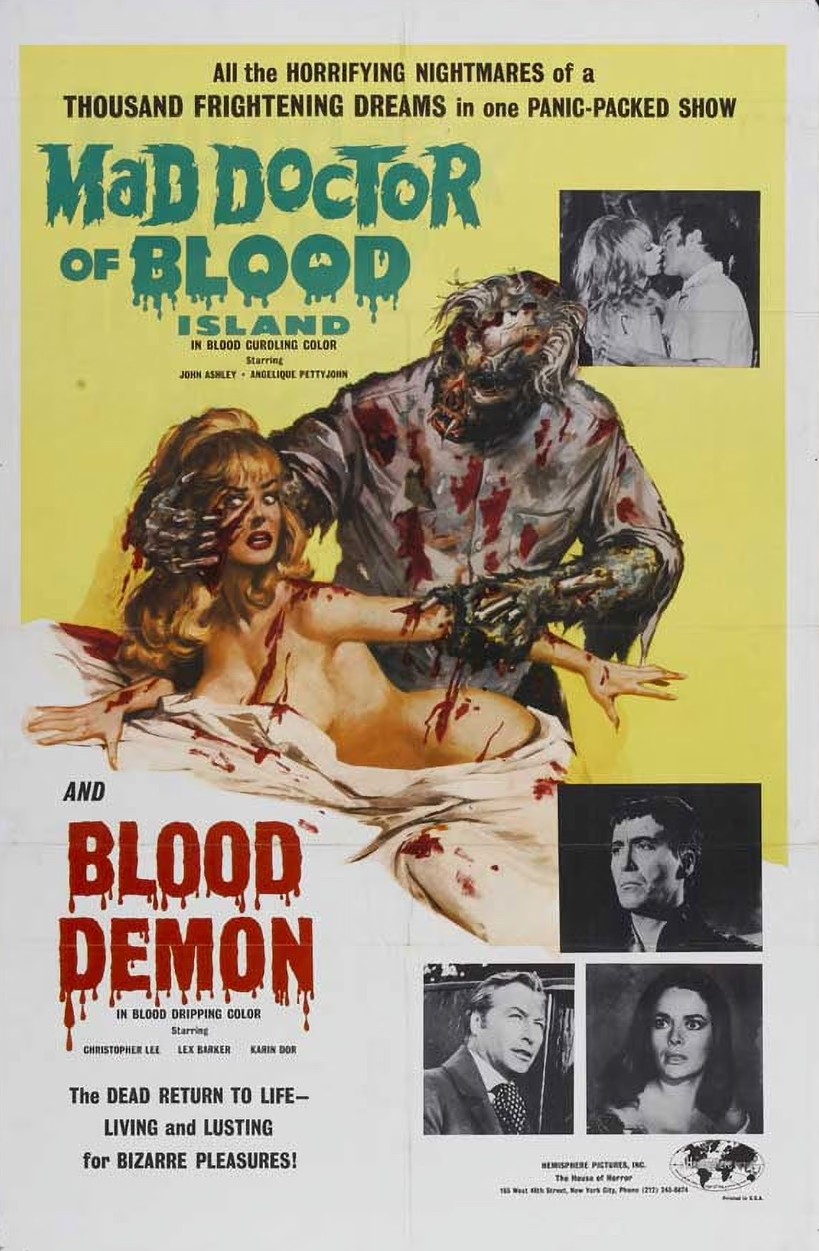
Mad Doctor of Blood Island (1968)/Blood Demon (1967) poster
Mad Doctor of Blood Island (1968) trailer
Buy "Mad Doctor of Blood Island" (1968) bluray on Amazon (SPONSORED)
Buy "Mad Doctor of Blood Island" (1968) DVD on Amazon (SPONSORED)
Blood Demon (1967) trailer
Buy Blood Demon (AKA "The Torture Chamber of Dr. Sadism," 1967) bluray on Amazon (SPONSORED)
Buy Blood Demon (AKA "The Torture Chamber of Dr. Sadism," 1967) DVD on Amazon (SPONSORED)
