This is a collection of media from the initial runs of "Take the Money and Run" (1969) in the Pacific Northwest.
Click on images for larger versions.
Take the Money and Run (1969)
"Take the Money and Run" marks a pivotal moment in Woody Allen’s early career, crystallizing a comic persona and stylistic approach that would evolve significantly over the following decade. Presented as a mock documentary chronicling the life of an inept criminal, the film adopts a deliberately deadpan tone that contrasts sharply with its subject’s grandiose self-image. This tension between aspiration and reality becomes the engine of the comedy, allowing Allen to satirize not only crime narratives but also the conventions of biographical storytelling itself.
The film’s humor is rooted in understatement and structural playfulness rather than punchline-driven gags. By framing the story through interviews, archival-style footage, and authoritative narration, Allen borrows the language of serious nonfiction cinema and repurposes it for absurd ends. The straight-faced delivery of increasingly ridiculous details creates a cumulative effect, where the comedy arises from the refusal of the film’s form to acknowledge the incompetence it documents. This approach anticipates later mockumentaries, but here it feels especially fresh, reflecting a late-1960s skepticism toward institutions, expertise, and heroic mythmaking.
Visually, the film is modest and unadorned, often resembling television reportage more than traditional narrative cinema. This aesthetic choice reinforces the illusion of authenticity while keeping the focus squarely on performance and timing. Allen’s central character is defined less by criminal menace than by social awkwardness and misplaced confidence, traits that would become hallmarks of his screen presence. The supporting cast, often playing their roles with earnest seriousness, further sharpens the contrast between the film’s documentary posture and its comic content.
Beneath the surface humor, "Take the Money and Run" reflects a broader cultural moment in which authority figures and success stories were increasingly viewed with irony. The film’s protagonist is not a rebel in any meaningful sense; he is a figure of quiet futility, undone by his own limitations rather than by external forces. In this way, the film gently mocks the romanticism of outlaw narratives, suggesting that failure and mediocrity are far more common than legend would have us believe.
While later Allen films would delve more deeply into psychology, romance, and moral ambiguity, this early work stands as a concise and confident experiment in form. Its influence can be felt in subsequent generations of comedians and filmmakers who embraced faux-documentary techniques as a means of social satire. Seen today, "Take the Money and Run" remains a sharp, economical comedy that captures the beginnings of a distinctive cinematic voice, one already attuned to the humor found in human pretension and the gap between how lives are lived and how they are remembered.
Director: Woody Allen
Writers: Woody Allen, Mickey Rose
Stars: Woody Allen, Janet Margolin, Marcel Hillaire
Buy "Take the Money and Run" (1969) DVD on Amazon (SPONSORED)
November 5, 1969 ad (Seattle)
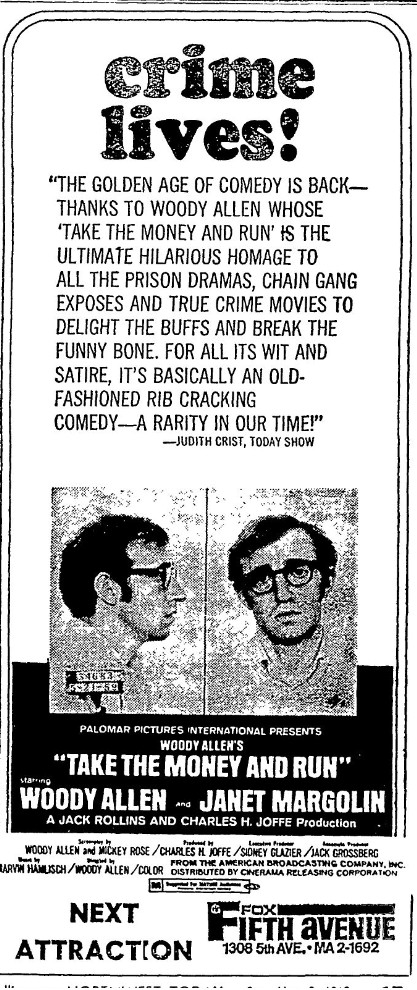
November 2, 1969 ad (Seattle)
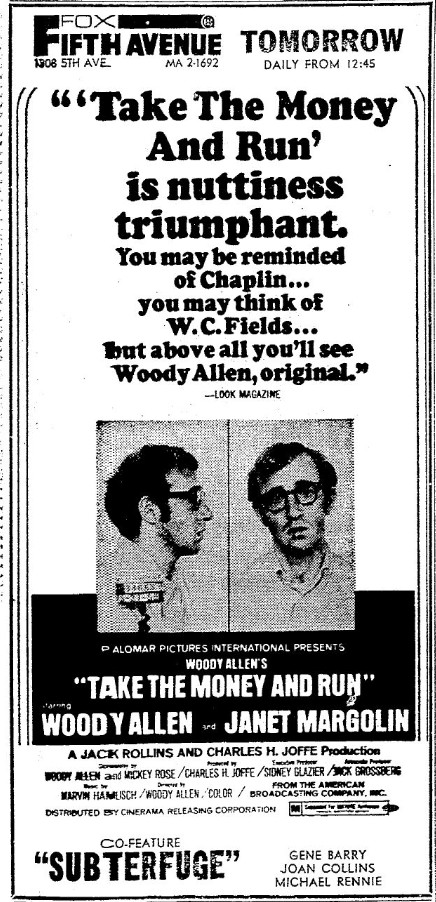
November 4, 1969 ad (Seattle)
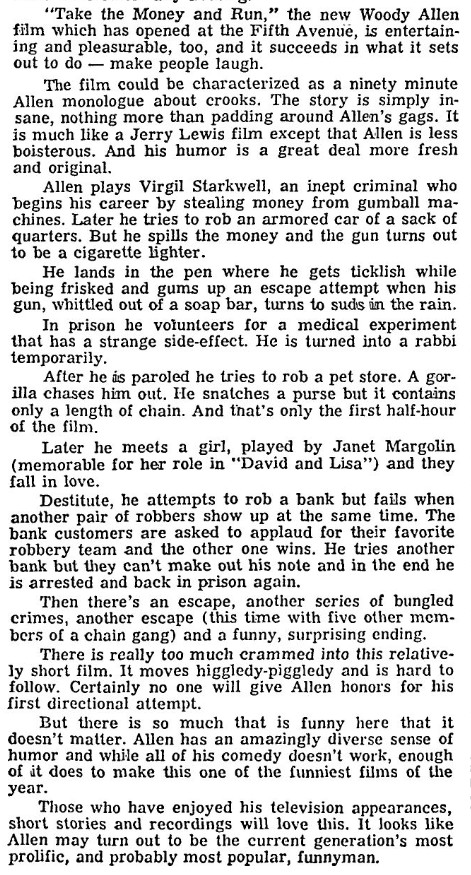
November 7, 1969 review (Seattle)
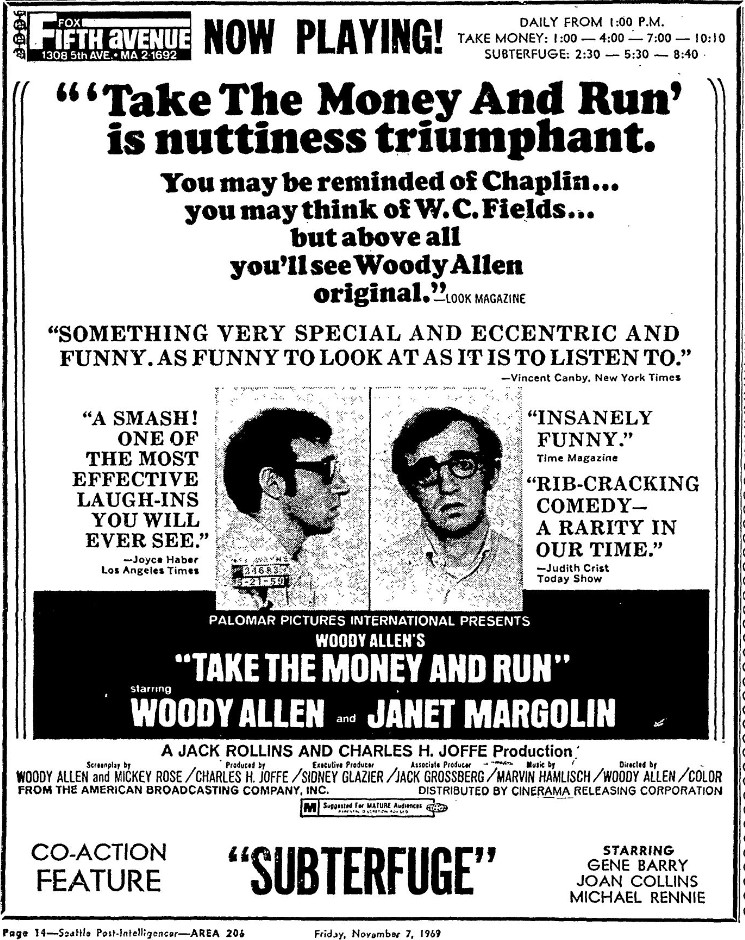
November 7, 1969 ad (Seattle)
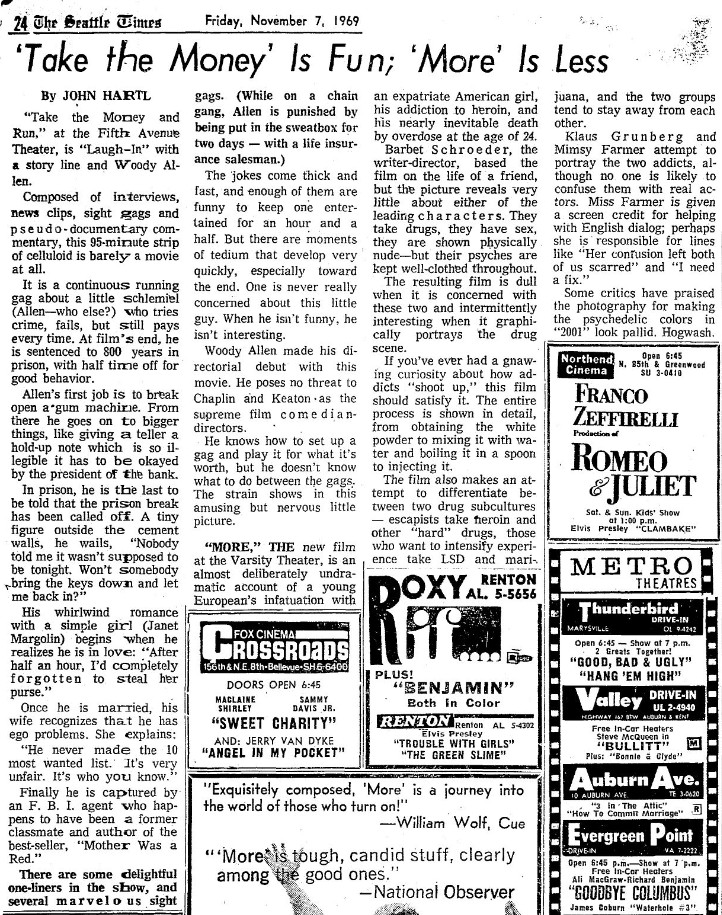
November 7, 1969 review (Seattle)
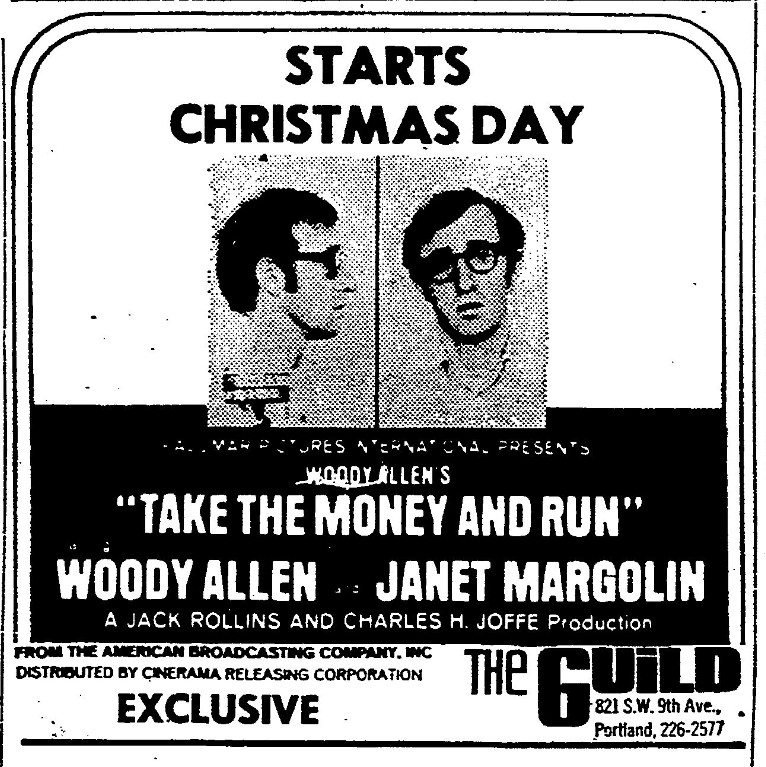
December 21, 1969 ad (Portland)
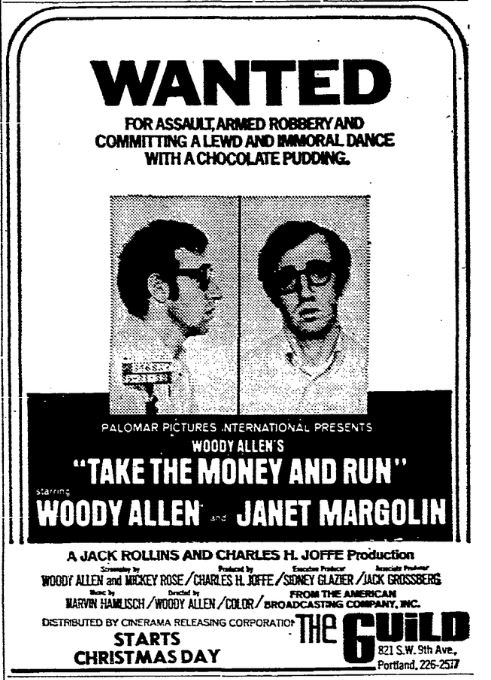
December 24, 1969 ad (Portland)
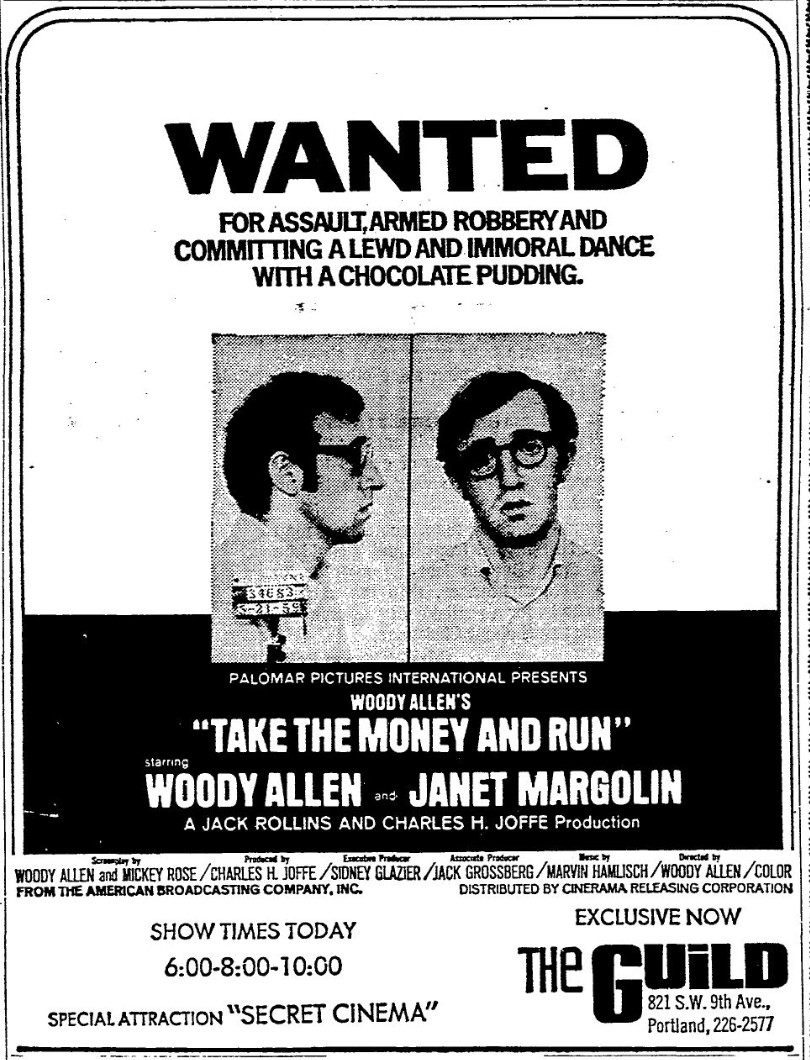
December 25, 1969 ad (Portland)
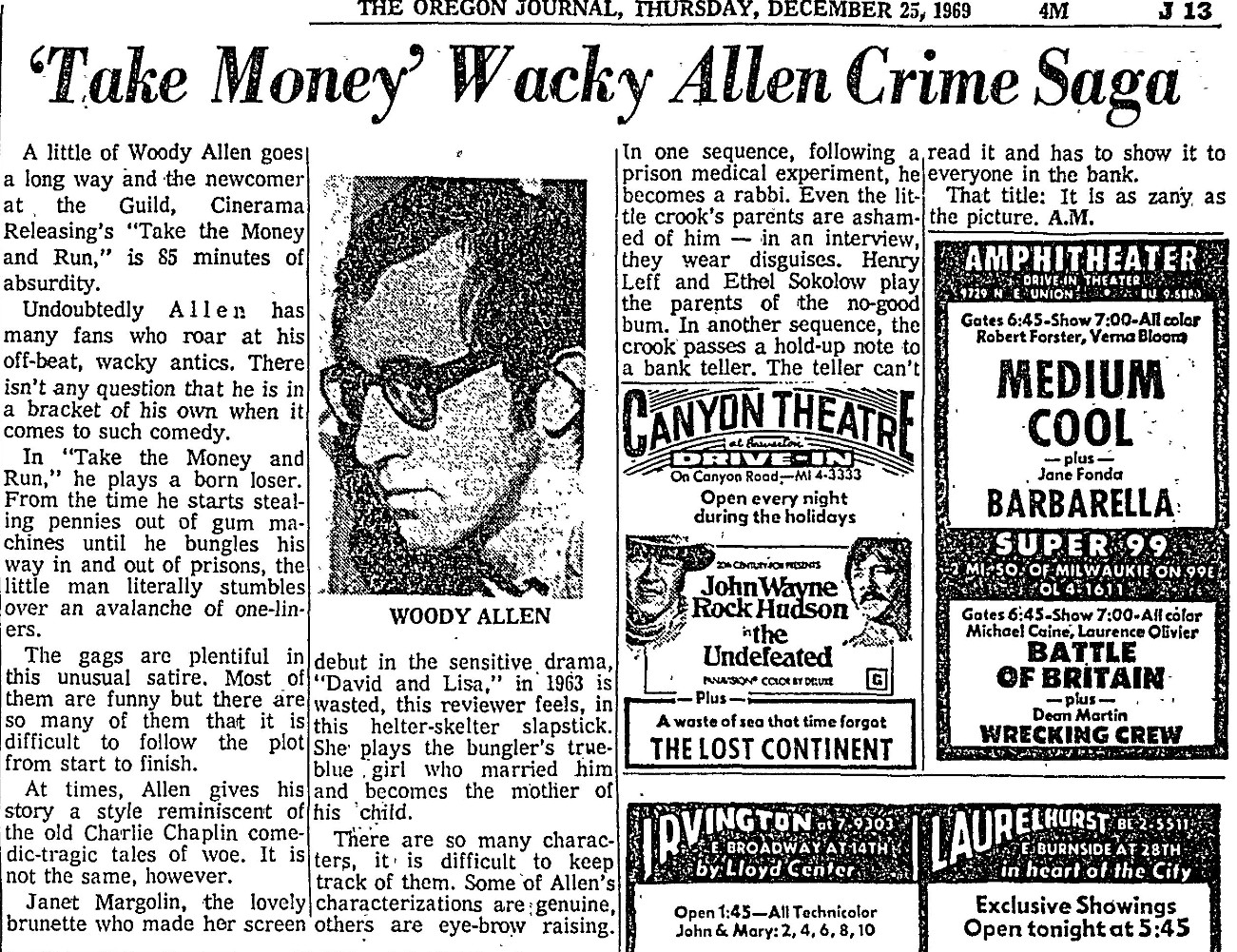
December 25, 1969 review (Portland)
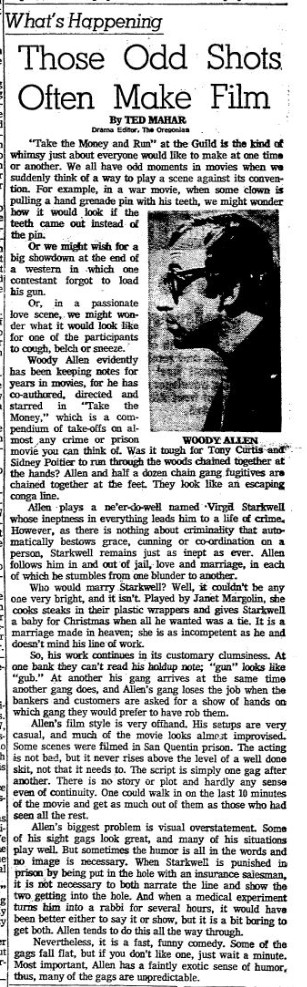
December 27, 1969 review(Portland)
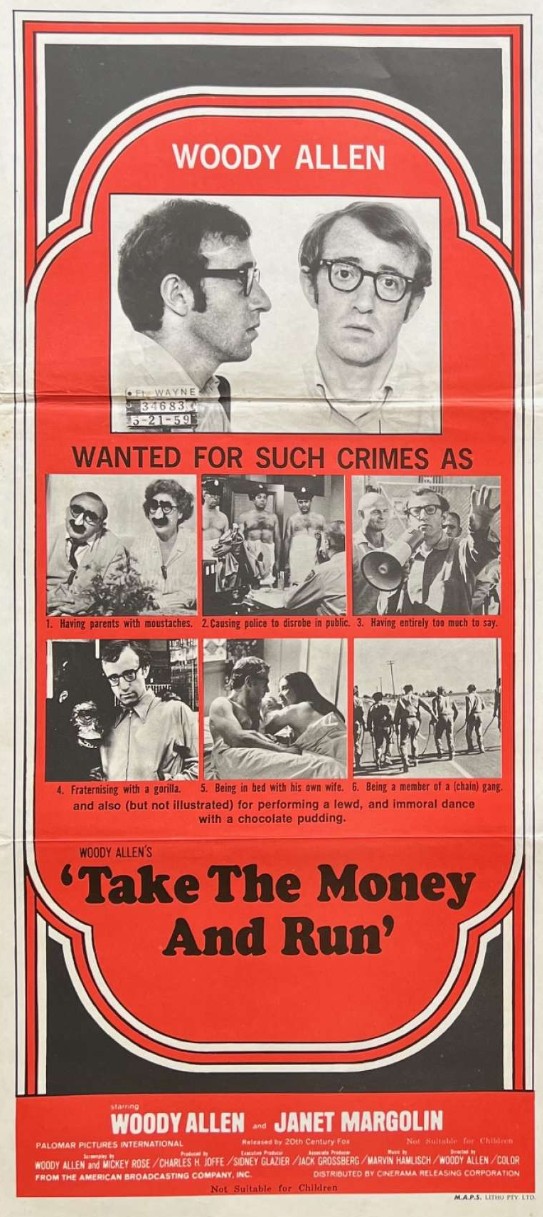
Take the Money and Run (1969) poster
Take the Money and Run (1969) trailer
Buy "Take the Money and Run" (1969) DVD on Amazon (SPONSORED)
