Home
Joe (1970) in the PNW
- Details
- Written by: Mortado
- Category: The 1970s in Northwest Cinemas
- Hits: 180
This is a collection of media from the initial runs of "Joe" (1970) in the Pacific Northwest.
Click on images for larger versions.
Joe (1970)
“Joe” is one of those films that pretends to be a portrait of America but really feels more like a bruise pressed until it throbs. It moves through its story with the kind of sour energy you get when people have stopped believing in anything except their own resentments. The film circles around a middle-aged executive who stumbles into a violent encounter and then crosses paths with Joe, a factory worker who treats rage like a hobby and prejudice like a birthright. What follows is less a plot than a slow, queasy slide into mutual corruption, the kind that happens when two men discover they share the same hollow place inside and decide to feed it.
The film’s cynicism is not decorative. It is baked into every frame, every cramped barroom, every muttered complaint about the world going to hell. “Joe” is fascinated by the way ordinary people justify their worst impulses, how they dress up cruelty as common sense and call it honesty. The camera never flatters anyone. It watches these men with a kind of exhausted patience, as if waiting for them to realize how pathetic they are, knowing they never will. The counterculture kids drifting through the margins are no better, just lost in a different direction, and the film refuses to grant anyone the dignity of innocence.
What makes “Joe” linger is the way it captures a country splitting along cultural fault lines without offering a single comforting explanation. It is a film about anger as a social contagion, about the thrill of finding someone who hates the same things you do, and about how quickly that thrill curdles into something violent and stupid. The performances feel almost too real, like people caught on camera saying things they should not say out loud. There is no moral center, no guiding hand, just a grim recognition that once people start mistaking fury for purpose, they will follow it anywhere.
It is a rough, unpleasant film, but intentionally so. “Joe” does not ask you to sympathize with anyone, and it certainly does not ask you to enjoy yourself. It simply drags you through a world where bitterness is the closest thing to belief, and then leaves you there, wondering how much of that world still exists outside the frame. If anything, its most unsettling trick is how familiar it feels, even decades later.
Director: John G. Avildsen
Writer: Norman Wexler
Stars: Peter Boyle, Dennis Patrick, Susan Sarandon
Buy "Joe" (1970) bluray on Amazon (SPONSORED)
Buy "Joe" (1970) DVD on Amazon (SPONSORED)
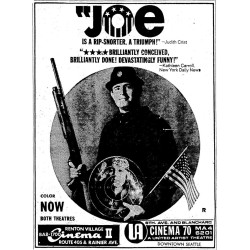
October 7, 1970 ad (Seattle)
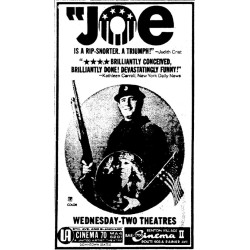
October 6, 1970 ad (Seattle)
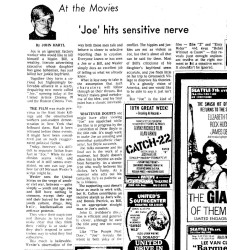
October 7, 1970 review (Seattle)
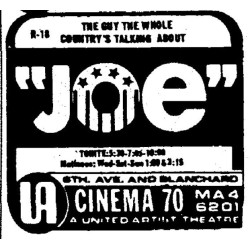
October 8, 1970 ad (Seattle)
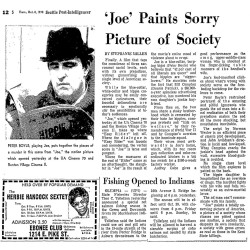
October 8, 1970 review (Seattle)
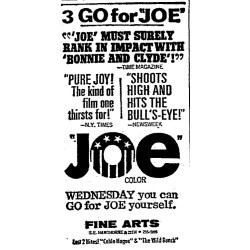
October 12, 1970 ad (Portland)
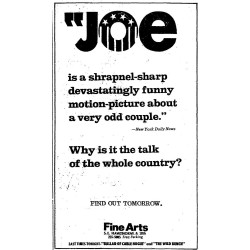
October 13, 1970 ad (Portland)
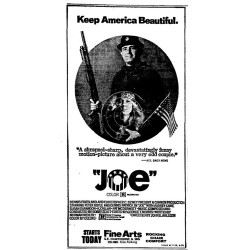
October 14, 1970 ad (Portland)
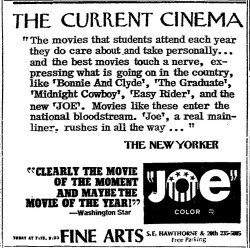
October 15, 1970 ad (Portland)
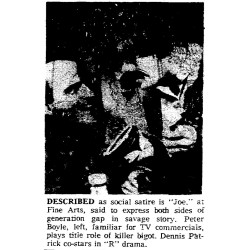
October 15, 1970 photo (Portland)
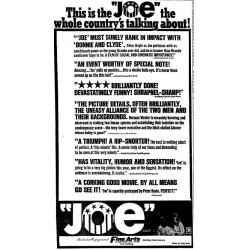
October 16, 1970 ad (Portland)
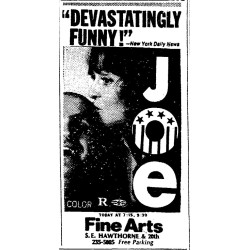
October 17, 1970 ad (Portland)
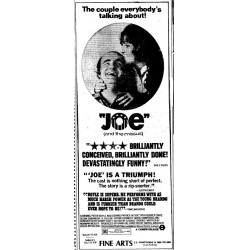
October 18, 1970 ad (Portland)
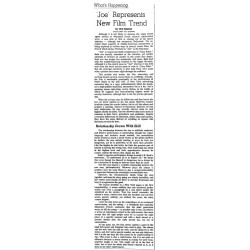
October 19, 1970 review (Portland)
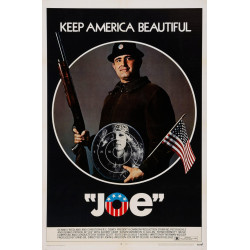
Joe (1970) poster
Joe (1970) trailer
Buy "Joe" (1970) bluray on Amazon (SPONSORED)
Buy "Joe" (1970) DVD on Amazon (SPONSORED)
Angels Die Hard (1970) in the PNW
- Details
- Written by: Mortado
- Category: The 1970s in Northwest Cinemas
- Hits: 222
This is a collection of media from the initial runs of "Angels Die Hard" (1970) in the Pacific Northwest.
Click on images for larger versions.
Angels Die Hard (1970)
“Angels Die Hard” is one of those ragged little relics from the tail end of the sixties hangover, a film that pretends it’s about rebellion but mostly just circles around the debris of men who don’t know what to do with themselves once the party’s over. It follows a biker crew swaggering into a small town that clearly wants nothing to do with them, and the whole thing plays out like a slow collision between two exhausted cultures. The bikers aren’t romanticized; they’re restless, petty, and half convinced their own mythology still matters. The townspeople aren’t noble either. They’re brittle, suspicious, and terrified of anything that doesn’t fit neatly into their sun-bleached routines. The film keeps rubbing these two groups together until sparks fly, but the sparks feel more like static electricity than revolution.
The movie has a kind of accidental honesty in how it looks. Everything feels dusty, underfunded, and slightly embarrassed to be caught on camera. The bikers drift through the landscape like ghosts of a counterculture that already knows it’s dying, and the town feels like it’s been waiting decades for an excuse to explode. The story doesn’t bother polishing anyone’s motives. It just lets the tension simmer until it curdles, and that sourness becomes the film’s real personality. You watch these people stumble through their grievances, convinced they’re fighting for something meaningful, when really they’re just clawing at whatever scraps of identity they have left.
What makes “Angels Die Hard” interesting is how little faith it has in either side. It doesn’t pretend the bikers are misunderstood heroes, and it doesn’t pretend the townsfolk guard order. Everyone is compromised, everyone is tired, and everyone is one bad decision away from making things worse. The film never says this outright, but you can feel it in the way scenes linger a beat too long, as if the camera itself is waiting for someone to admit they’re full of it. It’s a rough, cynical portrait of American bravado collapsing under its own weight, and it leaves you with the sense that no one in this story is going to ride off into the sunset.
Director: Richard Compton
Writer: Richard Compton
Stars: Tom Baker, William Smith, Carl Steppling
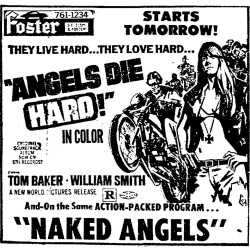
October 6, 1970 ad (Portland)
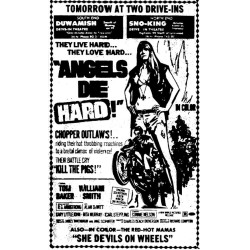
October 6, 1970 ad (Seattle)
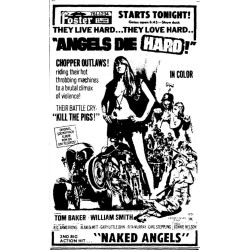
October 7, 1970 ad (Portland)
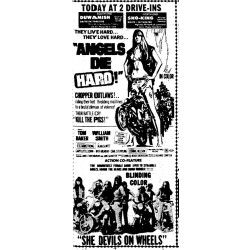
October 7, 1970 ad (Seattle)
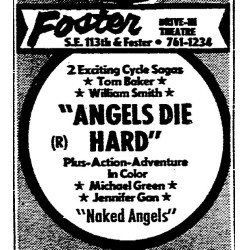
October 8, 1970 ad (Portland)
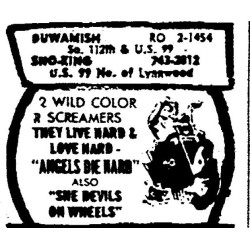
October 8, 1970 ad (Seattle)
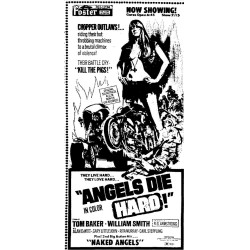
October 9, 1970 ad (Portland)
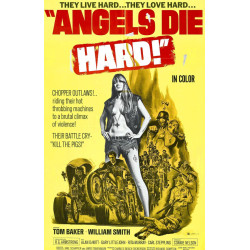
Angels Die Hard (1970) poster
Angels Die Hard (1970) trailer
Page 2 of 8