This is a collection of media from the initial runs of "Tick, Tick, Tick" (1970) in the Pacific Northwest.
Click on images for larger versions.
Tick, Tick, Tick (1970)
“Tick, Tick, Tick” is one of those late‑era civil‑rights dramas that pretends it’s walking into the room to negotiate peace, but really it’s there to show you how rotten the floorboards have always been. The film stages its small Southern town like a pressure cooker someone forgot on the stove: everything is already scorched, everyone already knows it, and the arrival of a newly elected Black sheriff simply forces the town to stop pretending the smoke isn’t coming from inside the house. What makes the film interesting, sometimes in spite of itself, is how it treats progress not as triumph but as a kind of civic ulcer, something that throbs and leaks and refuses to heal because the people around it keep picking at the scab.
The story moves with a grim, procedural inevitability. The new sheriff isn’t framed as a savior or a symbol; he’s a man who knows he’s walking into a job designed to break him. The white sheriff he replaces isn’t a cartoon villain, but a man who has spent years trying to keep the town’s ugliness from erupting into open violence, less out of moral conviction than out of exhausted pragmatism. Their uneasy dynamic becomes the film’s backbone: two men who understand that the town’s hatred is bigger than either of them, and that their own survival depends on a kind of mutual, unspoken resignation. The film’s cynicism comes from how little faith it has in institutions, or in the people who cling to them. The courthouse, the jail, the sheriff’s office, every space feels like a relic from a past that refuses to die, a past the town keeps embalmed because it’s easier than admitting it’s already a corpse.
Visually, the film leans into a dusty, sun‑bleached realism that makes the town feel both claustrophobic and hollow. Streets look wide but somehow airless, like the horizon is just another wall. The townspeople drift through scenes with the slack‑jawed hostility of people who’ve inherited a grudge they don’t fully understand but are determined to uphold anyway. The tension doesn’t build so much as simmer, the way resentment does when it’s been passed down like family silver. Even when the film gestures toward reconciliation, it does so with the weary shrug of a place that knows it’s only buying time before the next explosion.
“Tick, Tick, Tick” isn’t a hopeful film, and that’s its strength. It’s a portrait of a community that would rather implode than evolve, and of the men trapped inside its machinery, trying to keep the gears from grinding them into dust. It’s rough, blunt, and unromantic, an artifact from a moment when American cinema was finally willing to admit that the country’s wounds weren’t going to close just because someone said they should. If anything, the film suggests the ticking you hear isn’t a bomb waiting to go off; it’s the sound of a clock that’s been broken for generations, still pretending it keeps time.
Director: Ralph Nelson
Writer: James Lee Barrett
Stars: Jim Brown, George Kennedy, Fredric March
Buy "Tick, Tick, Tick" (1970) DVD on Amazon (SPONSORED)
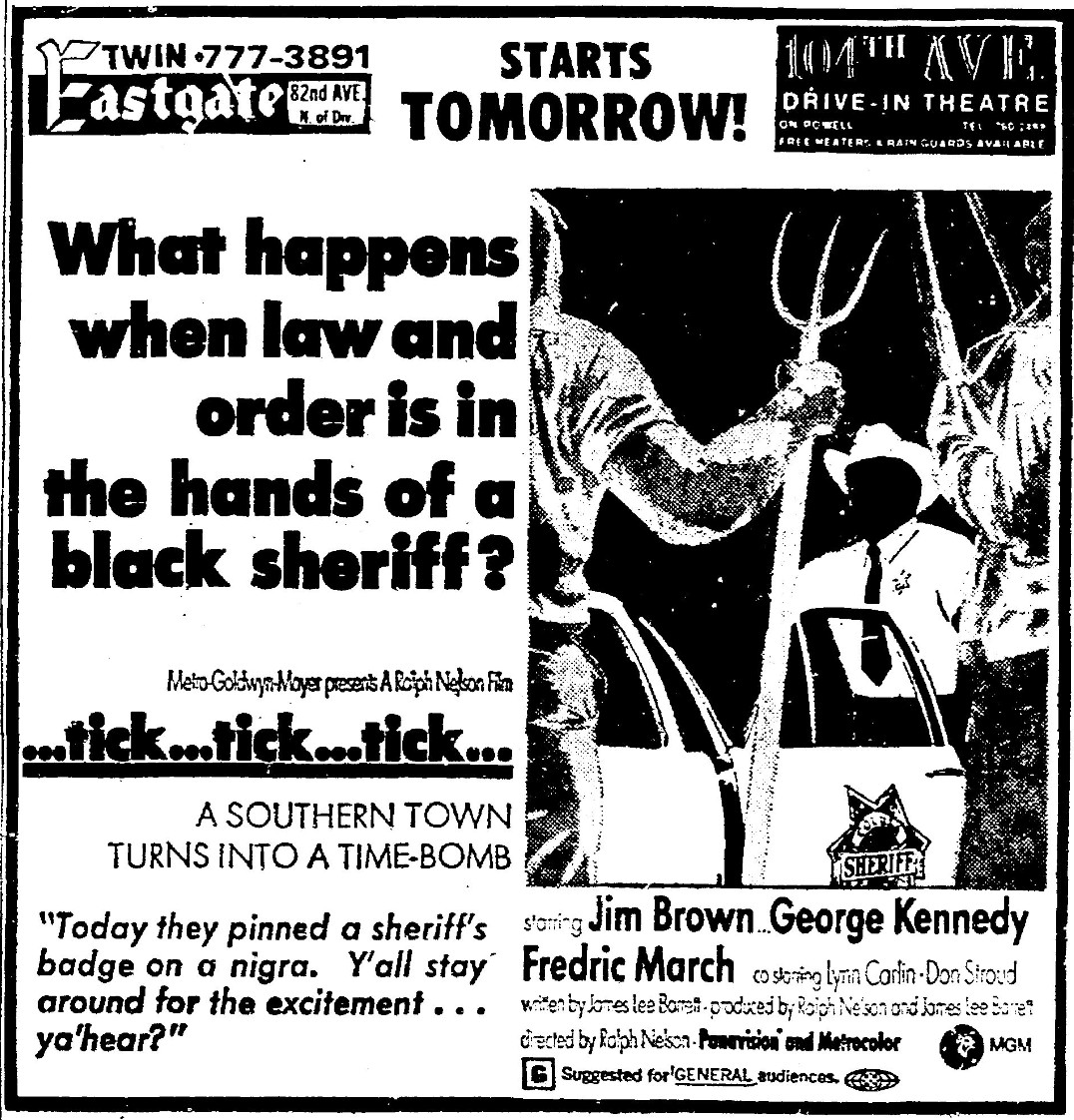
February 3, 1970 ad (Portland)
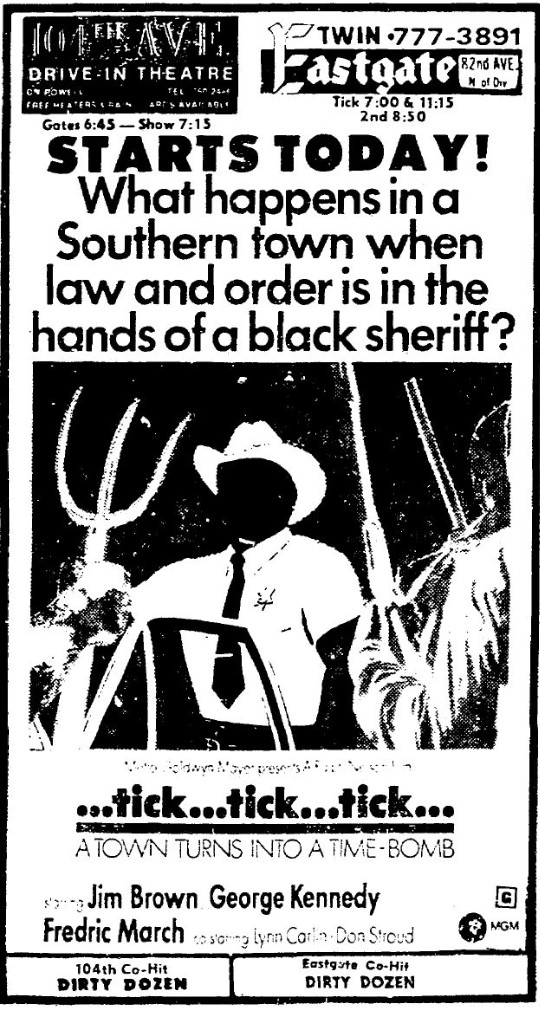
February 4, 1970 ad (Portland)

February 5, 1970 ad (Portland)

February 6, 1970 ad (Portland)
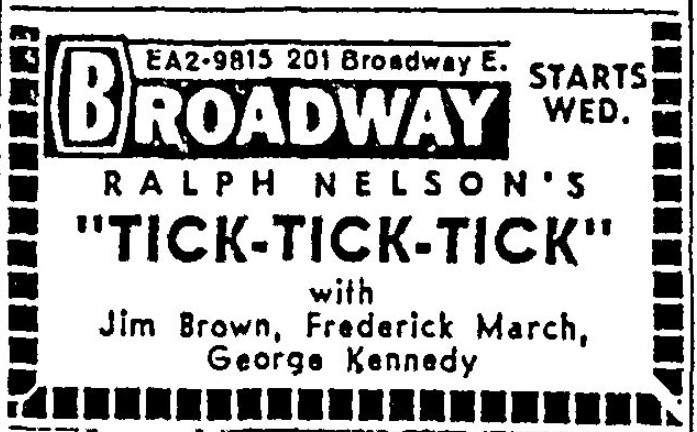
February 24, 1970 ad (Seattle)
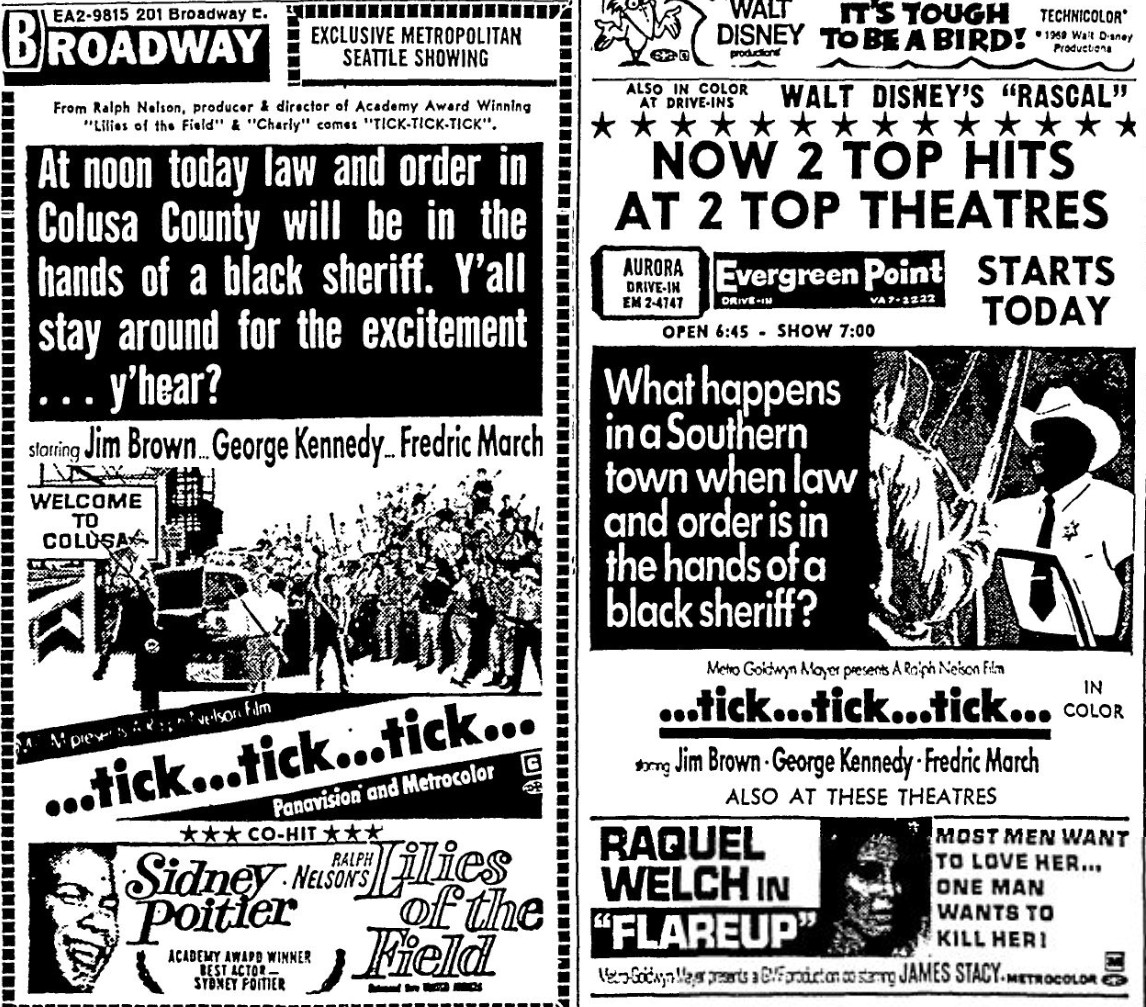
February 25, 1970 ad (Seattle)
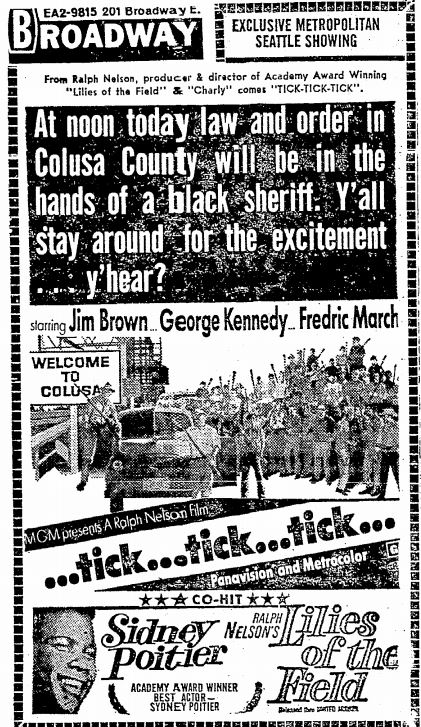
February 27, 1970 ad (Seattle)
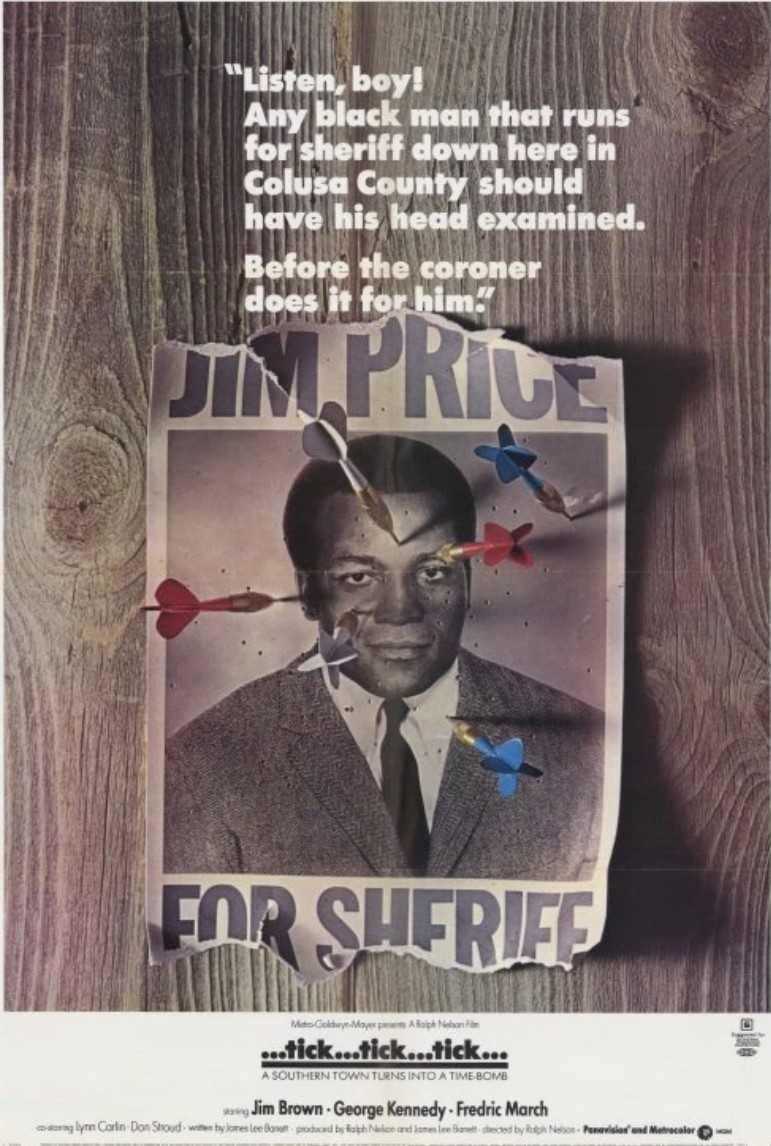
Tick, Tick, Tick (1970) poster
Tick, Tick, Tick (1970) trailer
Buy "Tick, Tick, Tick" (1970) DVD on Amazon (SPONSORED)
