Home
Sabata (1969) in the PNW
- Details
- Written by: Mortado
- Category: The 1970s in Northwest Cinemas
- Hits: 293
This is a collection of media from the initial runs of "Sabata" (1969) in the Pacific Northwest.
Click on images for larger versions.
Sabata (1969)
“Sabata” is one of those late-cycle westerns that struts into the room already knowing the whole genre is on its last legs. Instead of pretending otherwise, it leans into the absurdity with a kind of swaggering, half-amused contempt. The film treats its frontier town like a stage set used too many times, now creaking under the weight of yet another conspiracy, another gang of self-important crooks, another mysterious gunman who seems to have wandered in from a different movie entirely. Sabata himself moves through it all with the bored confidence of a man who has seen every trick before and is only mildly entertained by watching people try them again.
There is a sense throughout that the filmmakers were tired of the usual moral posturing and decided to replace it with a circus of eccentric weapons, improbable stunts, and characters who behave as though they are auditioning for a traveling sideshow. The villains are smug in that hollow way particular to western antagonists who know they are doomed but insist on preening anyway. The townsfolk barely register as human beings, more like props arranged to give Sabata something to saunter past. Even the violence feels theatrical, not in a stylized modern sense but in the way of a troupe performing a familiar routine for an audience that has grown numb to it.
What gives “Sabata” its strange charm is the way it refuses to take its own world seriously. It’s a western that knows the myth has rotted and decides to play in the ruins rather than rebuild them. The hero is too competent to be noble, the villains too foolish to be threatening, and the plot too contrived to be anything but a game. Yet the film’s cynicism never curdles; it’s more like a smirk at the whole tradition, a shrug that says the frontier was always a bit of a joke, and maybe the best way to honor it is to stop pretending otherwise.
Director: Gianfranco Parolini
Writers: Renato Izzo, Gianfranco Parolini
Stars: Lee Van Cleef, William Berger, Ignazio Spalla
Buy "Sabata" (1969) bluray on Amazon (SPONSORED)
Buy "Sabata" (1969) DVD on Amazon (SPONSORED)
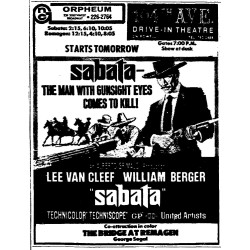
September 29, 1970 ad (Portland)
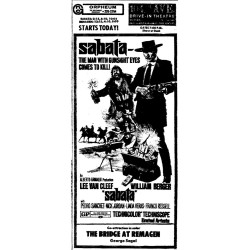
September 30, 1970 ad (Portland)
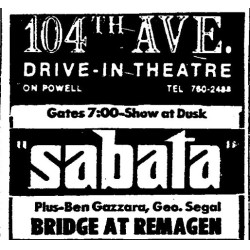
October 1, 1970 ad (Portland)
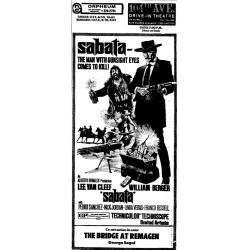
October 2, 1970 ad (Portland)
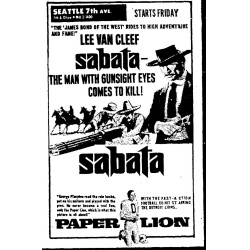
October 15, 1970 ad (Seattle)
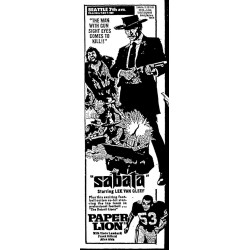
October 16, 1970 ad (Seattle)
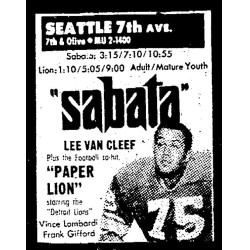
October 17, 1970 ad (Seattle)
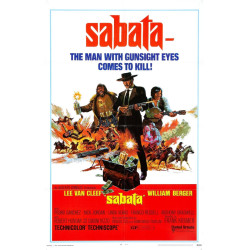
Sabata (1969) poster
Sabata (1969) trailer
Buy "Sabata" (1969) bluray on Amazon (SPONSORED)
Buy "Sabata" (1969) DVD on Amazon (SPONSORED)
Girly (1970) in the PNW
- Details
- Written by: Mortado
- Category: The 1970s in Northwest Cinemas
- Hits: 400
This is a collection of media from the initial runs of "Girly" (1970) in the Pacific Northwest.
Click on images for larger versions.
Girly (1970)
“Girly” is one of those films that pretends to be a naughty little fairy tale but keeps its teeth sharp enough to draw blood. It drifts in with a singsong innocence, all lace curtains and childish games, then quietly reveals that the children are not children and the games are not games. What starts as a story about a strange, insulated family becomes a slow, queasy study in how people weaponize affection when they have nothing else left. The film’s world feels like a dollhouse left out in the rain, warped and peeling, yet still arranged with obsessive care. Every gesture is a performance, every smile a trap, and every rule a reminder that the house runs on its own logic, not the logic of the adults who stumble into it.
The so-called family behaves as though they are preserving some sacred ritual, but it is really just a way to keep reality at bay. They cling to their roles because without them they would have to face the emptiness underneath. The newcomer, who thinks he can charm his way through anything, quickly learns that charm is useless when the people around him have rewritten the meaning of love, loyalty, and punishment. The film never shouts its intentions. It just lets the rot seep in around the edges until you realize you have been watching a story about captivity disguised as playtime. “Girly” is cynical in the way only a film from that era can be, suggesting that innocence is just another costume adults put on when they want to justify cruelty.
Director: Freddie Francis
Writers: Brian Comport, Maisie Mosco
Stars: Michael Bryant, Vanessa Howard, Pat Heywood
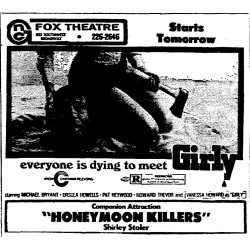
September 29, 1970 ad (Portland)
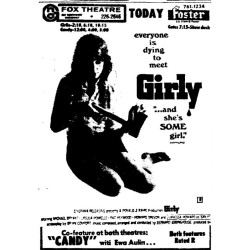
September 30, 1970 ad (Portland)
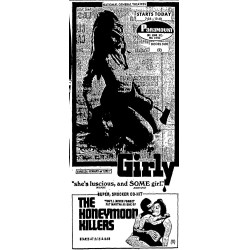
September 30, 1970 ad (Seattle)
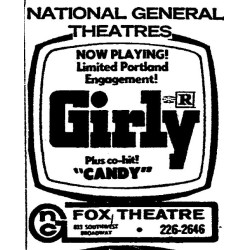
October 1, 1970 ad (Portland)
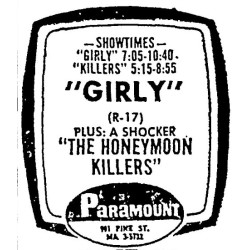
October 1, 1970 ad (Seattle)
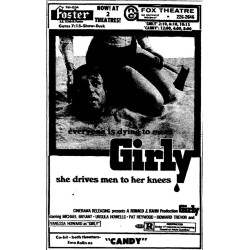
October 1, 1970 ad (Portland)
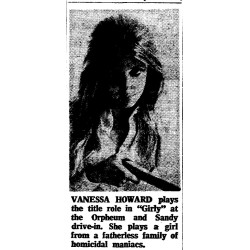
October 1, 1970 photo (Portland)
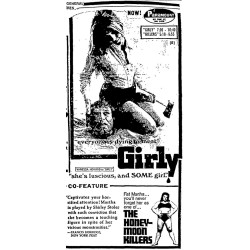
October 2, 1970 ad (Seattle)
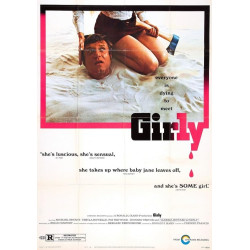
Girly (1970) poster
Girly (1970) trailer
Page 4 of 8