This is a collection of media from the initial runs of "Night of Bloody Horror" (1969) in the Pacific Northwest. Everyone got "Night of the Living Dead" (1968) for a second feature; the third in the package was either "Dracula Has Risen from the Grave" (1968) or "Fearless Vampire Killers" (1967).
Click on images for larger versions.
Night of Bloody Horror (1969)
“Night of Bloody Horror” is a low‑budget Southern Gothic slasher that channels the anxieties of late‑1960s American genre filmmaking, using its limitations to cultivate a mood of psychological unease rather than polished spectacle. The film follows a young man recently released from a mental institution, a figure whose fragile sense of self becomes the film’s central tension. His past is marked by trauma, guilt, and a family history steeped in repression, and the story uses these elements to blur the line between internal torment and external threat. What emerges is a portrait of a protagonist who is never fully at ease in his own skin, and the film leans into that instability to generate its atmosphere.
Stylistically, the movie reflects the transitional moment in horror when older Gothic tropes were giving way to more intimate, character‑driven violence. Its rural Louisiana setting adds a humid, oppressive quality, with the environment functioning almost as an extension of the protagonist’s psyche—isolated, decaying, and haunted by unresolved memory. The film’s pacing is deliberately uneven, shifting between dreamy introspection and sudden eruptions of brutality, a rhythm that mirrors the protagonist’s fractured mental state. Rather than relying on elaborate effects, it uses suggestion, shadow, and the rawness of regional filmmaking to create a sense of unpredictability.
What makes “Night of Bloody Horror” particularly interesting is how it frames violence not as spectacle but as a symptom of deeper emotional and generational wounds. The narrative hints at the pressures of masculinity, the weight of familial expectation, and the corrosive effects of secrecy, all filtered through the lens of a character who may be as much a victim of his past as he is a potential danger to others. The film’s rough edges—its grainy photography, its abrupt tonal shifts, its unpolished performances—ultimately contribute to its unsettling quality, giving it the feel of a story that is unraveling in real time.
In the broader landscape of late‑1960s horror, “Night of Bloody Horror” stands as a curious artifact: a regional production that anticipates the more psychologically charged slashers of the coming decade while still rooted in the Gothic melodrama of earlier eras. Its power lies not in narrative complexity but in the way it captures a moment when American horror was becoming more personal, more chaotic, and more willing to explore the darkness within its characters rather than the monsters outside them.
Director: Joy N. Houck Jr.
Writers: Joy N. Houck Jr., Robert A. Weaver
Stars: Gerald McRaney, Gaye Yellen, Herbert Nelson
Buy "Night of Bloody Horror" (1969) DVD on Amazon (SPONSORED)
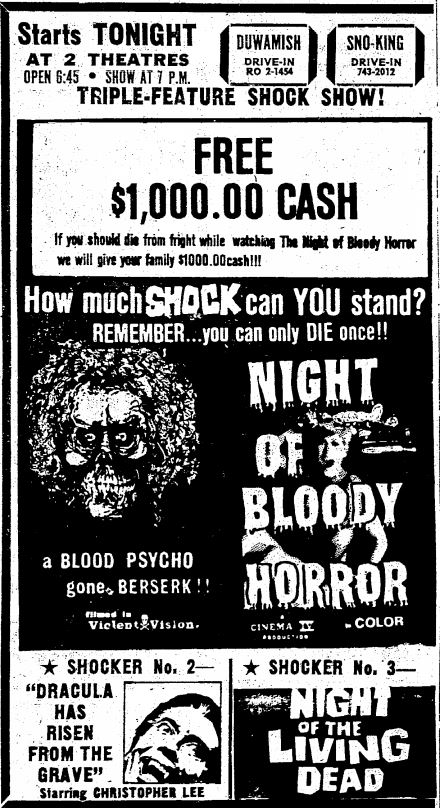
October 22, 1969 ad (Seattle)
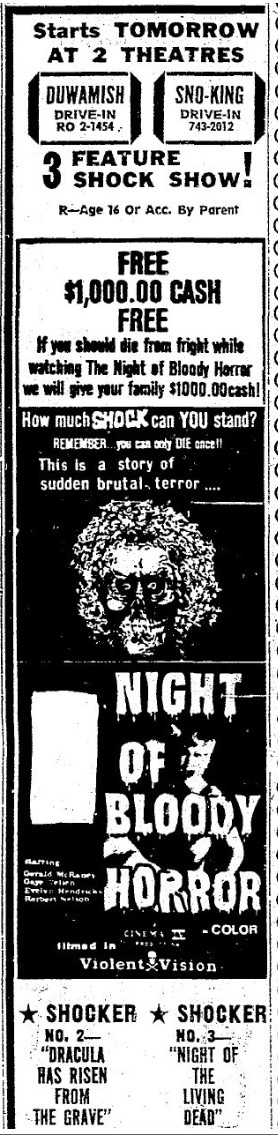
October 21, 1969 ad (Seattle)
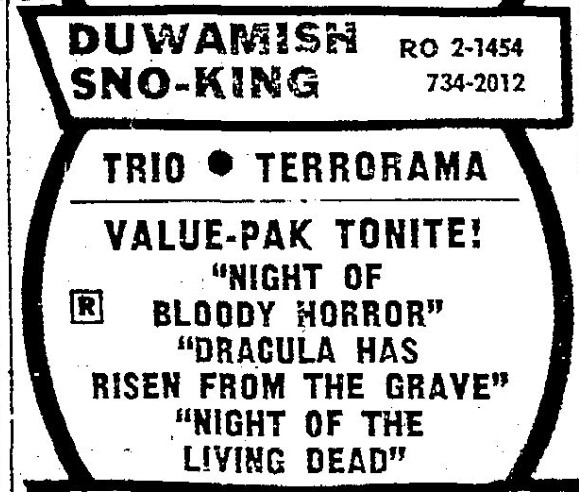
October 23, 1969 ad (Seattle)
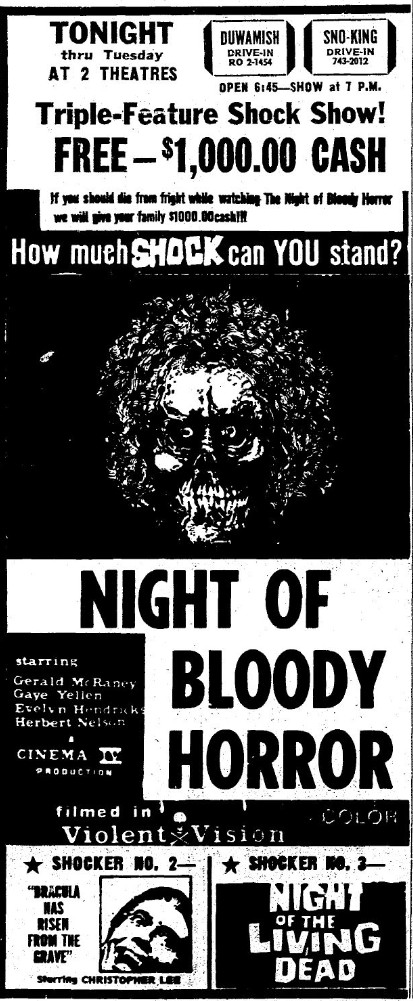
October 24, 1969 ad (Seattle)
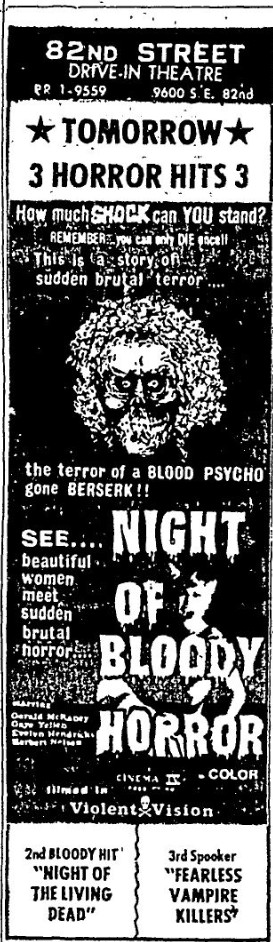
November 4, 1969 ad (Portland)
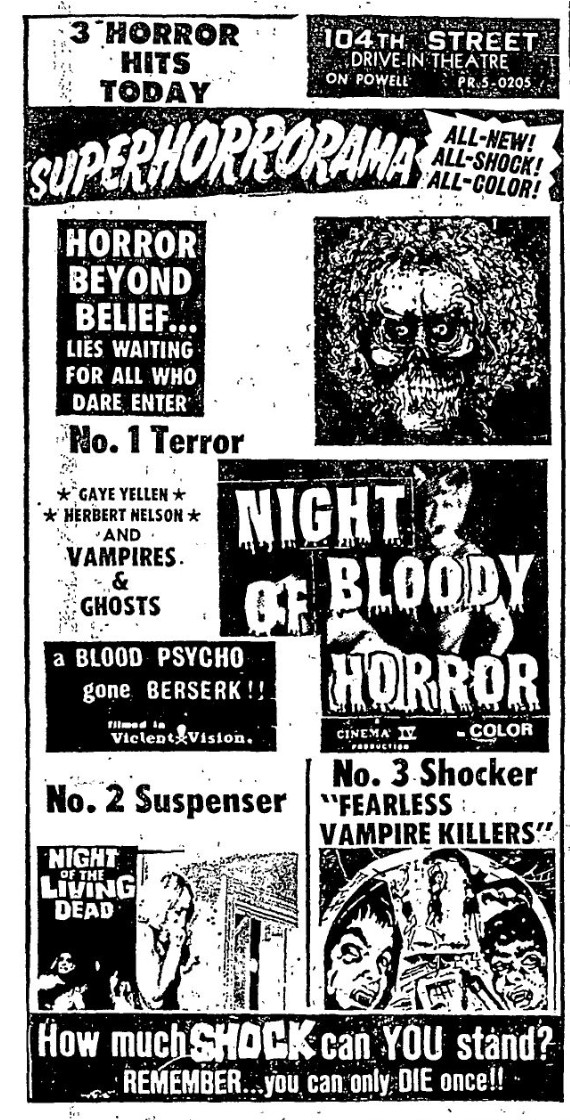
November 5, 1969 ad (Portland)
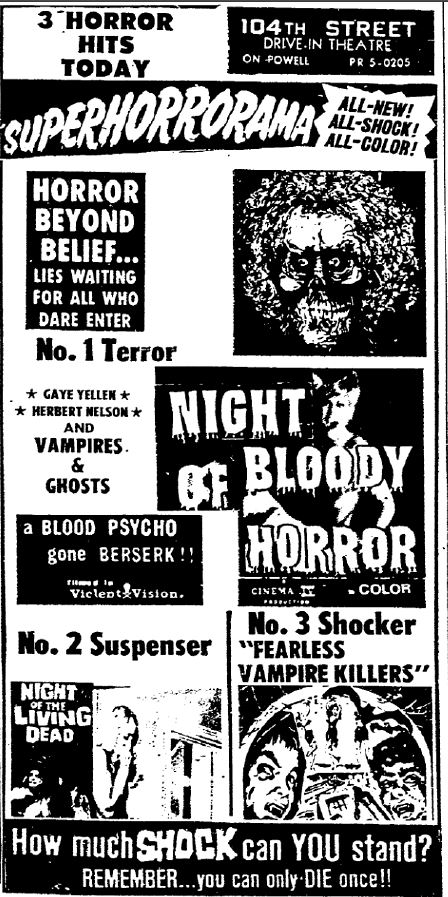
November 7, 1969 ad (Portland)
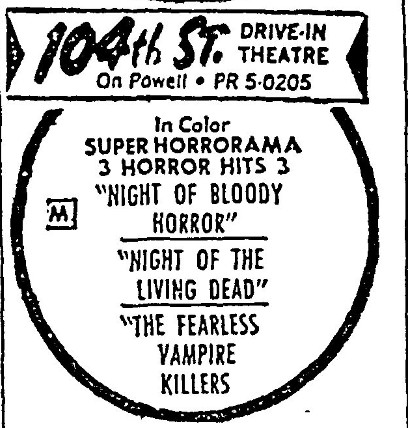
November 8, 1969 ad (Portland)
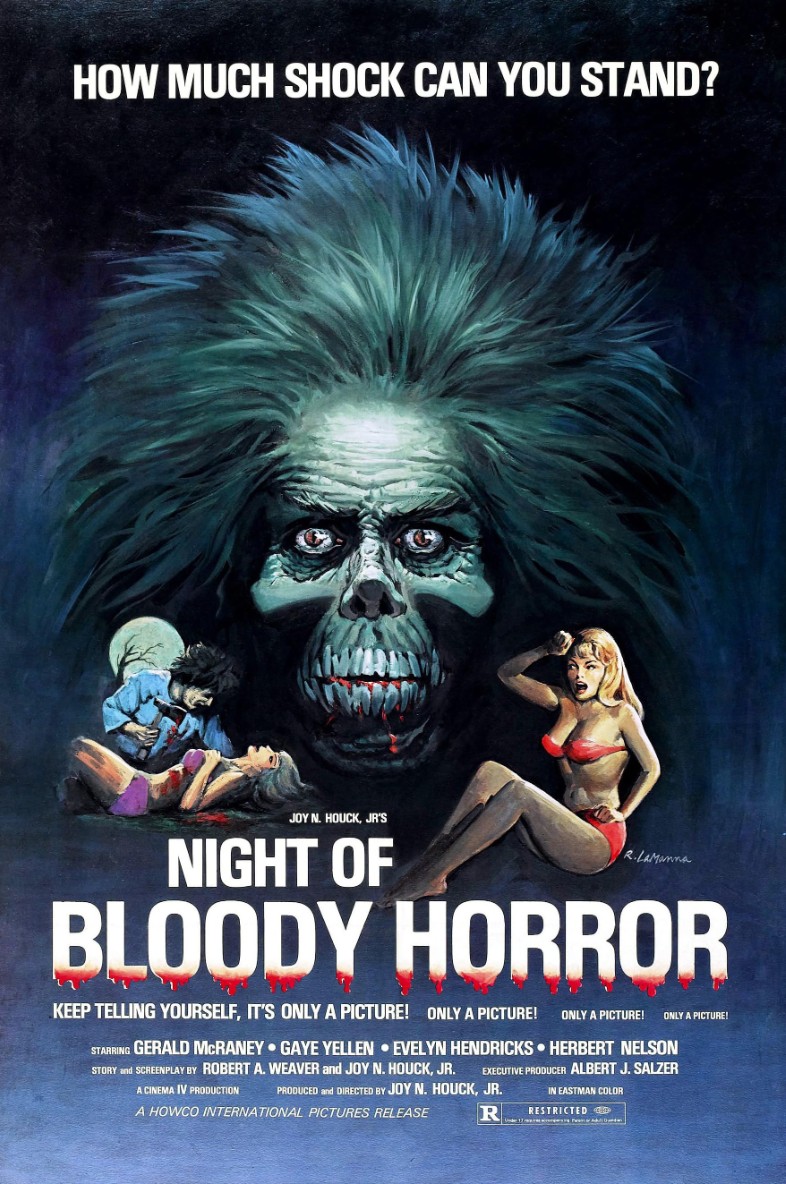
Night of Bloody Horror (1969) poster
Night of Bloody Horror (1969) trailer
Buy "Night of Bloody Horror" (1969) DVD on Amazon (SPONSORED)
