This is a collection of media from the initial runs of "Two Gentlemen Sharing" (1969) in the Pacific Northwest.
Click on images for larger versions.
Two Gentlemen Sharing (1969)
"Two Gentlemen Sharing" is one of those late‑1960s British dramas that feels both firmly rooted in its moment and quietly ahead of it. The film uses the framework of a London flat‑share arrangement to probe the uneasy intersections of race, class, and personal identity at a time when the city was undergoing rapid cultural change. What begins as a seemingly simple story about two men sharing a home becomes a layered examination of how proximity does not automatically create understanding, and how the social structures of the era cling stubbornly to those who try to outrun them.
At its center is the contrast between two men navigating the same city from very different vantage points. One is a young Black Jamaican professional trying to build a life in a society that welcomes his labor but not his presence; the other is a white advertising executive whose outwardly progressive attitudes mask deeper uncertainties about his own place in a shifting social order. Their shared living space becomes a microcosm of late‑60s London—vibrant, modern, and outwardly cosmopolitan, yet still governed by unspoken hierarchies and anxieties that shape every interaction.
The film’s strength lies in how it dramatizes these tensions without resorting to didacticism. It captures the subtle, everyday frictions that arise when people from different backgrounds attempt to coexist within systems designed to keep them apart. The narrative pays close attention to the emotional toll of naviesqgating coded prejudice, the pressure to assimilate, and the fragile alliances that form when individuals try to bridge divides they barely understand. At the same time, it critiques the era’s fashionable liberalism, exposing how easily good intentions can collapse under the weight of ingrained social expectations.
Visually, the film embraces the look of late‑60s London—its boutiques, clubs, and modernist interiors—yet the style never overwhelms the story. Instead, the aesthetic contrast between the city’s sleek surfaces and the characters’ internal struggles reinforces the film’s central theme: the gap between the image of a progressive society and the lived reality of those marginalized within it.
What makes "Two Gentlemen Sharing" compelling today is its refusal to offer easy resolutions. It presents a world in transition, full of people trying to redefine themselves while still tethered to old structures. The film’s emotional power comes from its recognition that genuine connection requires more than proximity or good intentions; it demands a willingness to confront uncomfortable truths about oneself and the society one inhabits.
Director: Ted Kotcheff
Writers: Evan Jones, David Stuart Leslie
Stars: Robin Phillips, Judy Geeson, Esther Anderson
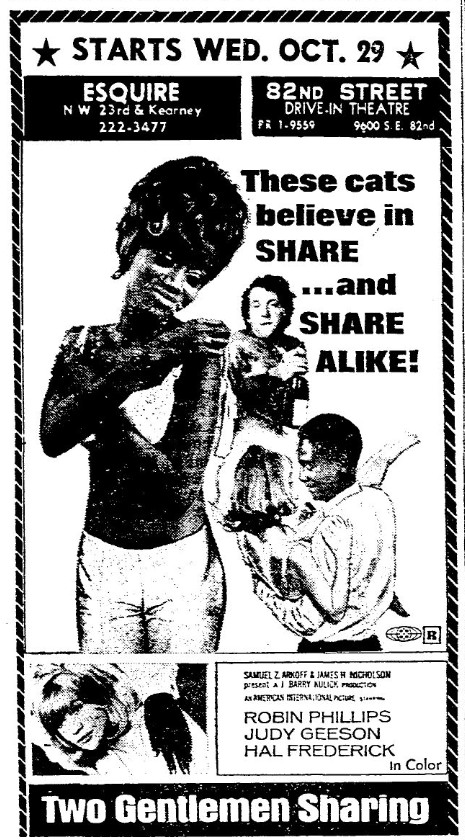
October 20, 1969 ad (Portland)
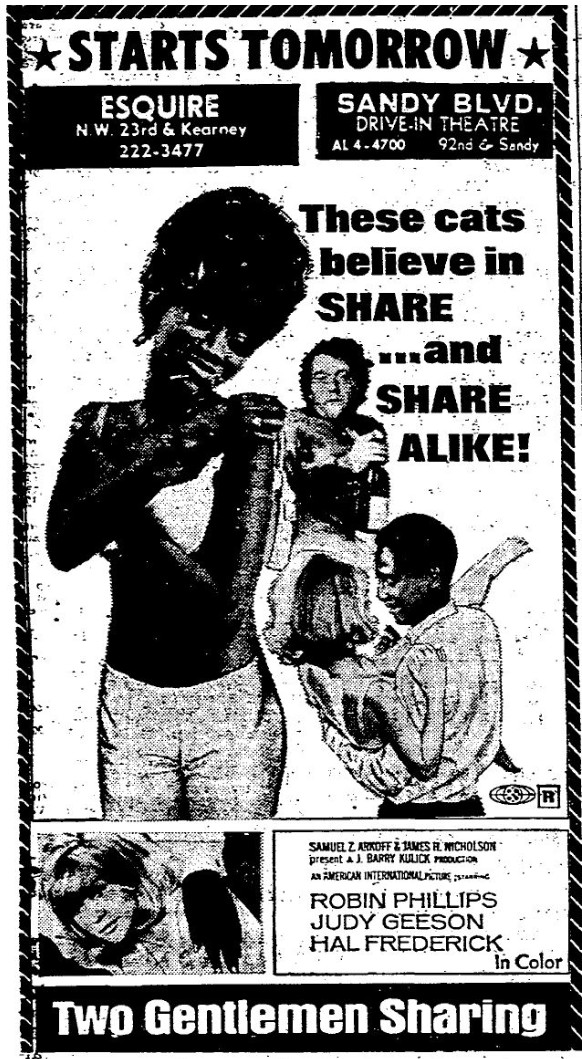
October 28, 1969 ad (Portland)
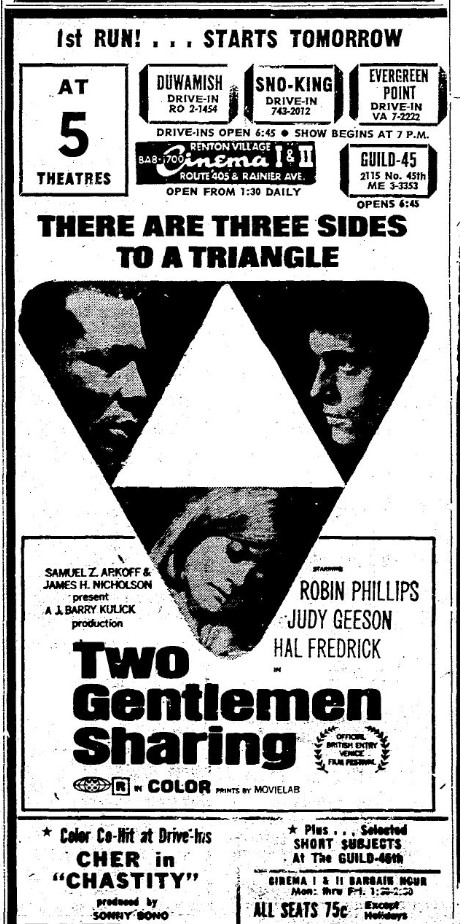
October 28, 1969 ad (Seattle)
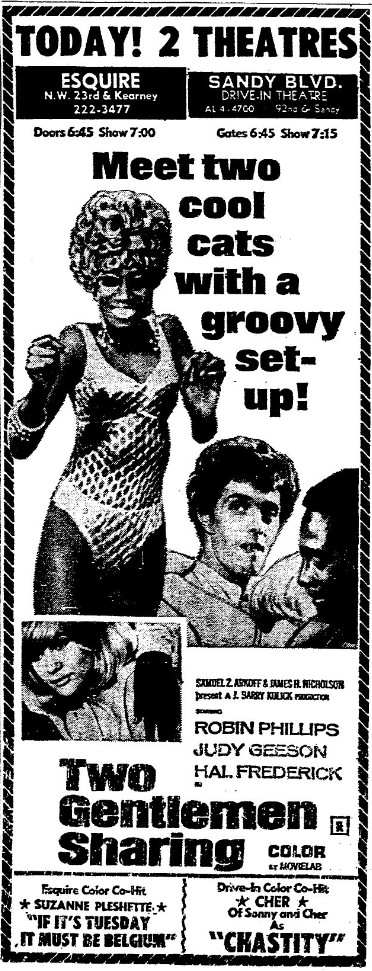
October 29, 1969 ad (Portland)
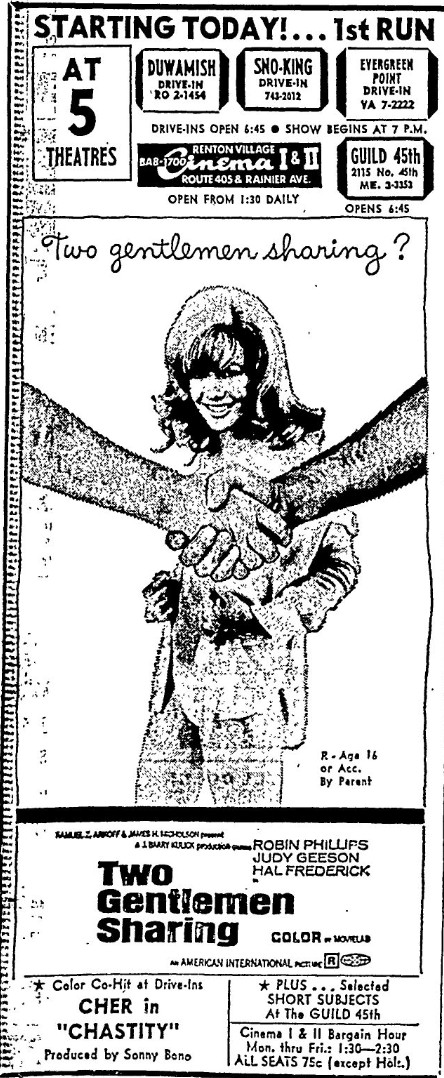
October 29, 1969 ad (Seattle)
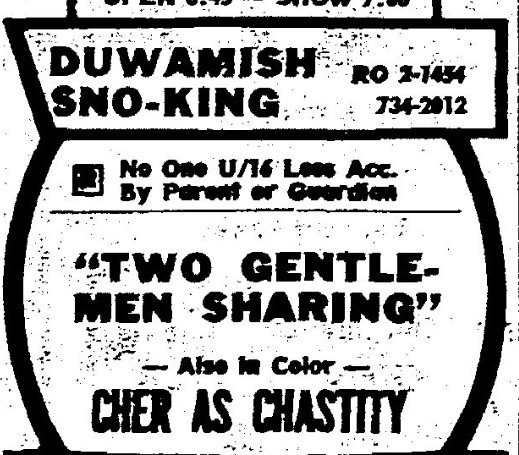
October 30, 1969 ad (Seattle)
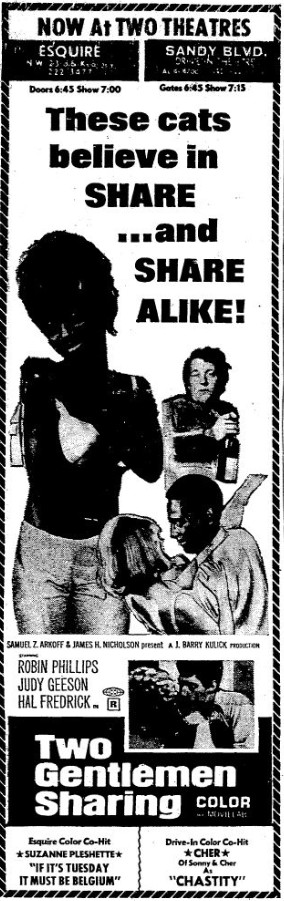
October 31, 1969 ad (Portland)
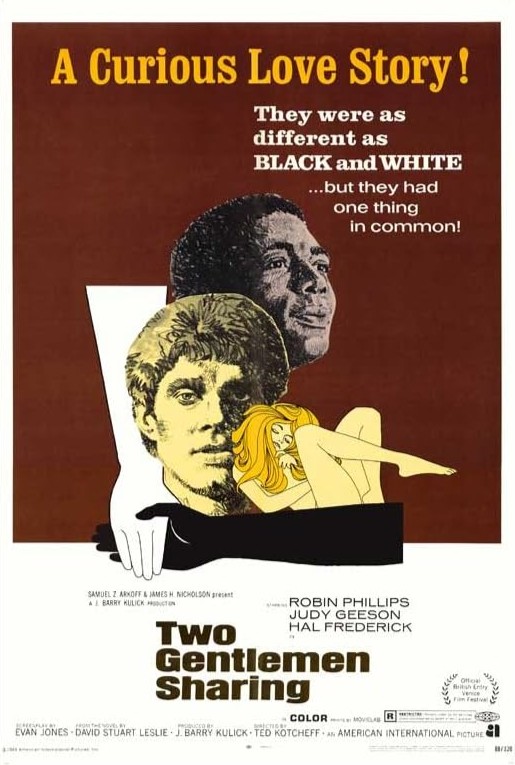
Two Gentlemen Sharing (1969) poster
Two Gentlemen Sharing (1969) radio ad
