This is a collection of media from the initial runs of "Journey to the Far Side of the Sun" (1969) in the Pacific Northwest.
Click on images for larger versions.
Journey to the Far Side of the Sun (1969)
“Journey to the Far Side of the Sun” is a curious, unsettling artifact of late‑1960s science fiction—an era when space exploration was both a source of national pride and a wellspring of existential dread. Produced by Gerry and Sylvia Anderson, the film blends the sleek futurism of their television work with a more somber, adult tone, creating a story that feels suspended between pulp adventure and philosophical inquiry. What emerges is a film fascinated by the fragility of perception, the limits of human certainty, and the unnerving possibility that the universe may reflect us back in ways we are not prepared to confront.
The film begins with the confident machinery of an international space agency, all gleaming surfaces and bureaucratic precision, but beneath that polished exterior lies a deep anxiety about surveillance, secrecy, and the political pressures that shape scientific discovery. The narrative’s inciting mystery—a newly detected planet hidden in Earth’s orbit—acts less as a conventional plot device and more as a metaphor for the era’s fear that reality itself might be concealing something. The mission to investigate this celestial twin is framed with a procedural rigor that grounds the story, yet the film gradually shifts into a more disorienting register, where the familiar becomes subtly wrong and the boundaries of identity begin to blur.
Visually, the film is striking. Its production design revels in retro‑futurist detail: modular spacecraft interiors, clinical control rooms, and a color palette that oscillates between sterile whites and oppressive shadows. The Andersons’ signature miniature work gives the space sequences a tactile, almost architectural beauty, while the live‑action performances introduce a human vulnerability that their earlier puppet‑based productions could only imply. The result is a world that feels both meticulously engineered and emotionally brittle, as if the technology meant to expand human understanding is instead amplifying its uncertainties.
Tonally, “Journey to the Far Side of the Sun” occupies a space between mystery and melancholy. It is less concerned with the mechanics of its premise than with the psychological shockwaves it sends through its characters. The film’s central tension arises from the collision between empirical science and the uncanny, and it treats that collision with a seriousness that borders on the tragic. As the story unfolds, the film becomes increasingly preoccupied with the idea that discovery can be destabilizing—that the pursuit of knowledge may lead not to enlightenment but to a deeper, more personal form of disorientation.
By the time it reaches its conclusion, the film has transformed from a straightforward space mission narrative into something more introspective and haunting. It leaves the viewer with a lingering sense of unease, not because of any overt horror, but because it suggests that the greatest mysteries are not out in the cosmos but within the frameworks we use to interpret it. In that way, “Journey to the Far Side of the Sun” stands as a distinctive entry in late‑1960s science fiction: a film that uses the aesthetics of the space age to explore the shadows cast by human perception, ambition, and doubt.
Director: Robert Parrish
Writers: Gerry Anderson, Sylvia Anderson, Donald James
Stars: Roy Thinnes, Ian Hendry, Patrick Wymark
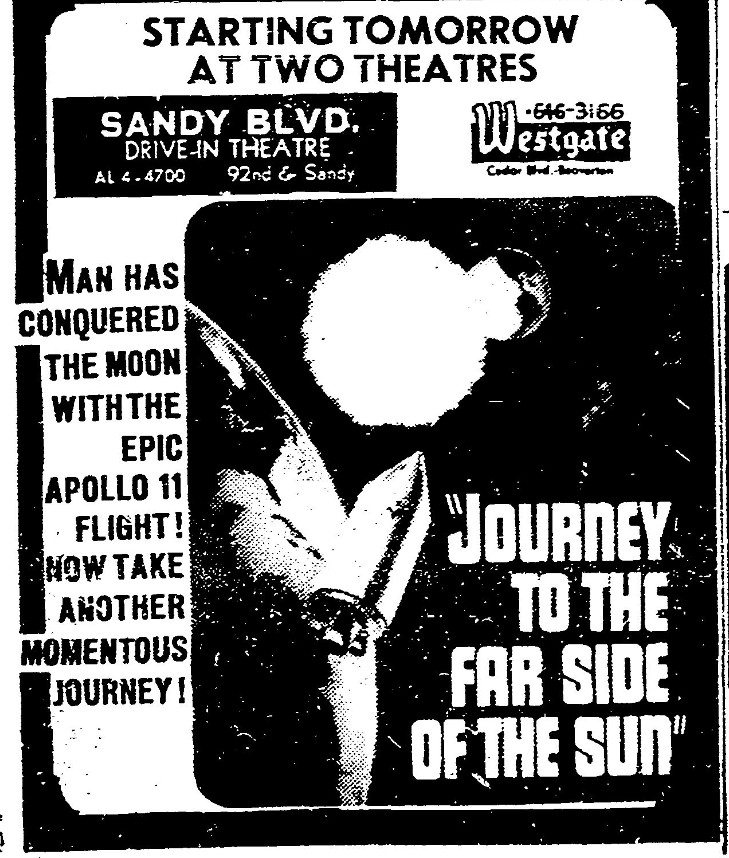
October 7, 1969 ad (Portland)
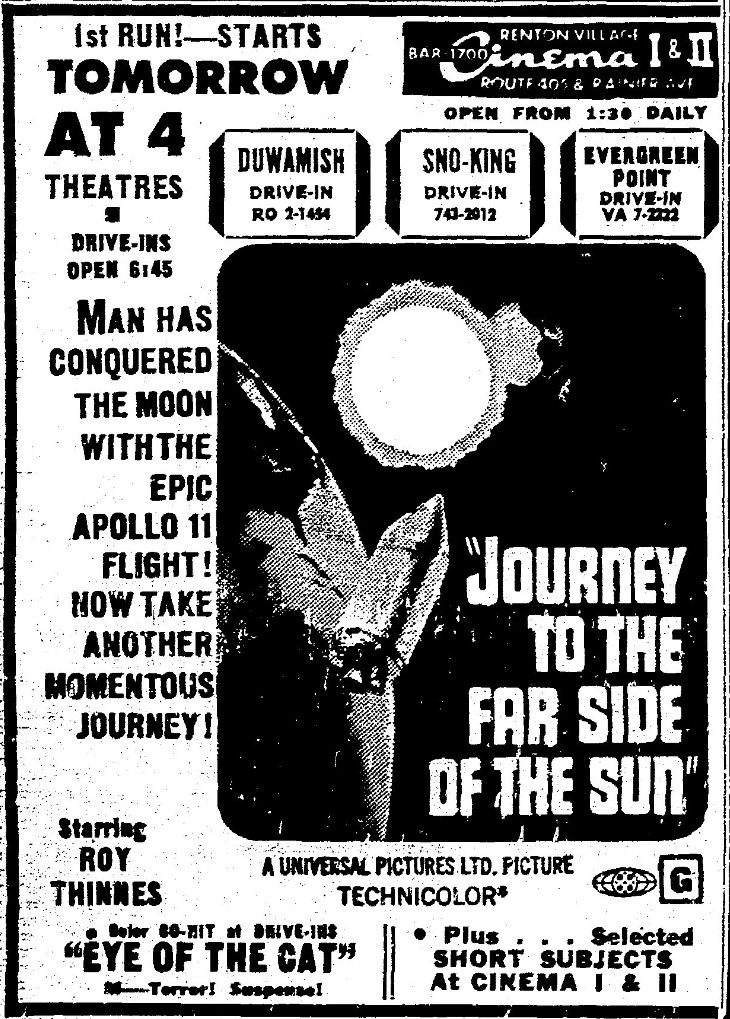
October 7, 1969 ad (Seattle)
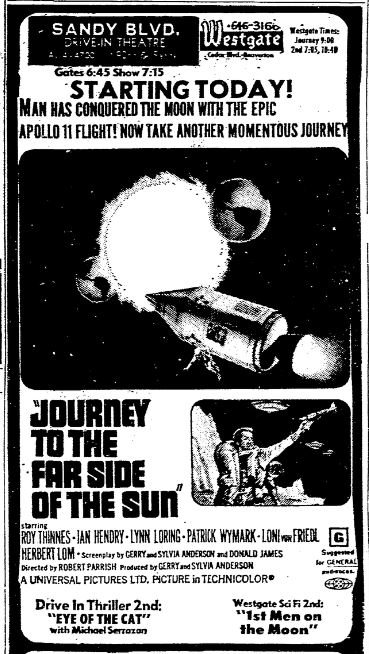
October 8, 1969 ad (Portland)
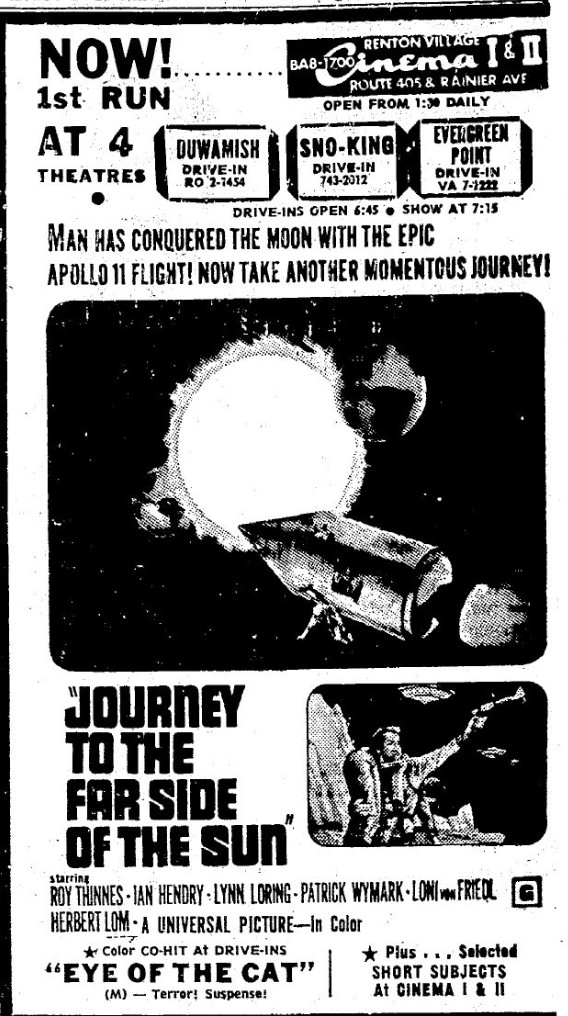
October 8, 1969 ad (Seattle)
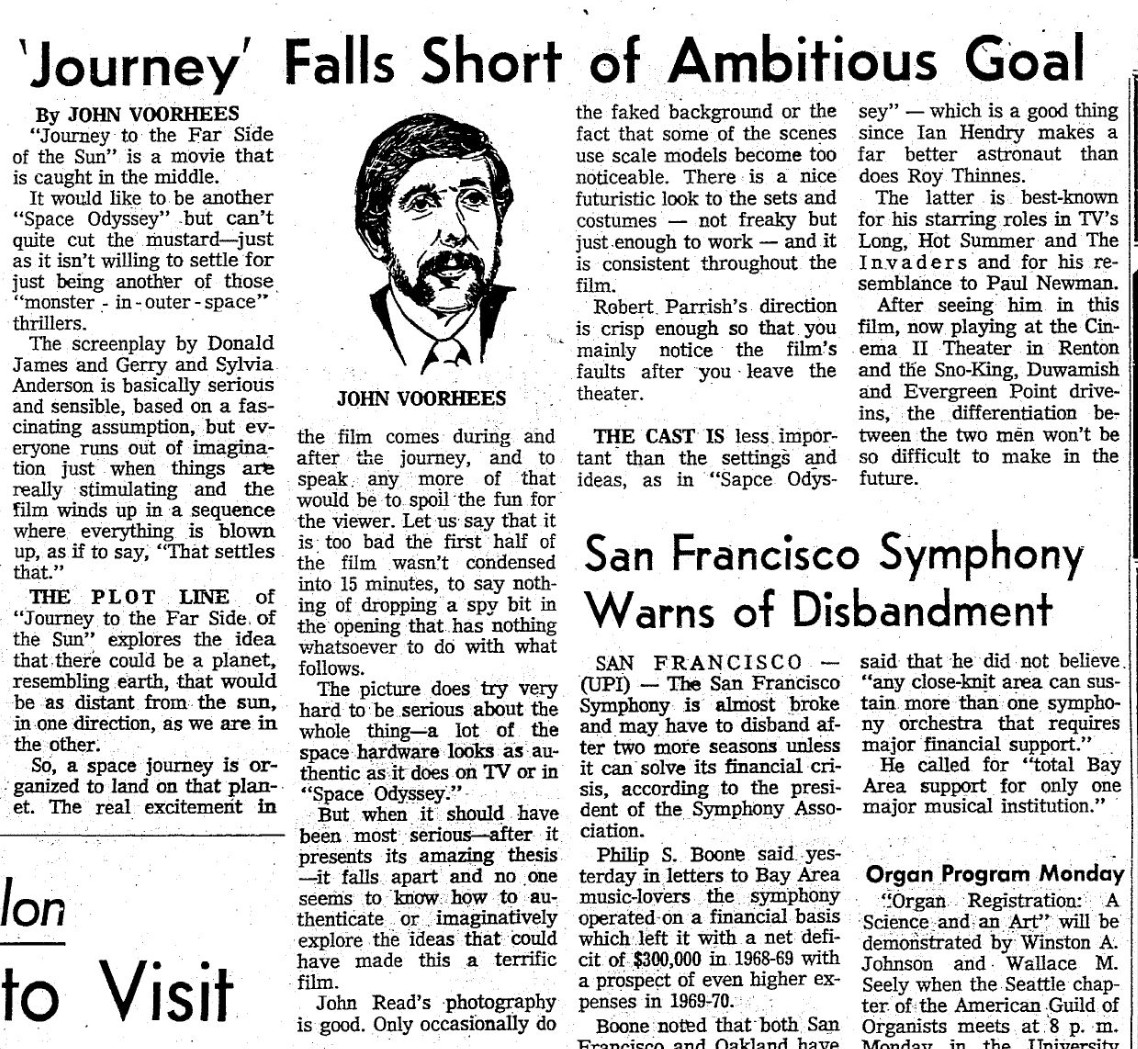
October 9, 1969 article (Seattle)
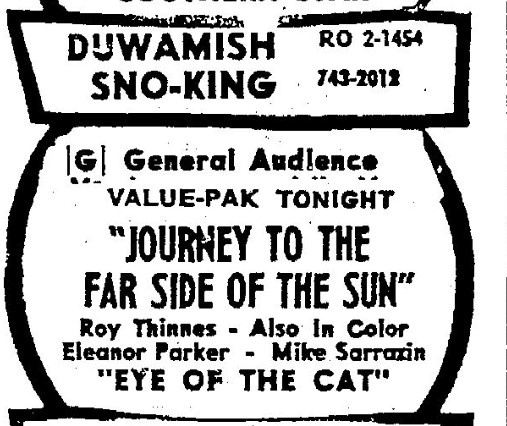
October 9, 1969 ad (Seattle)
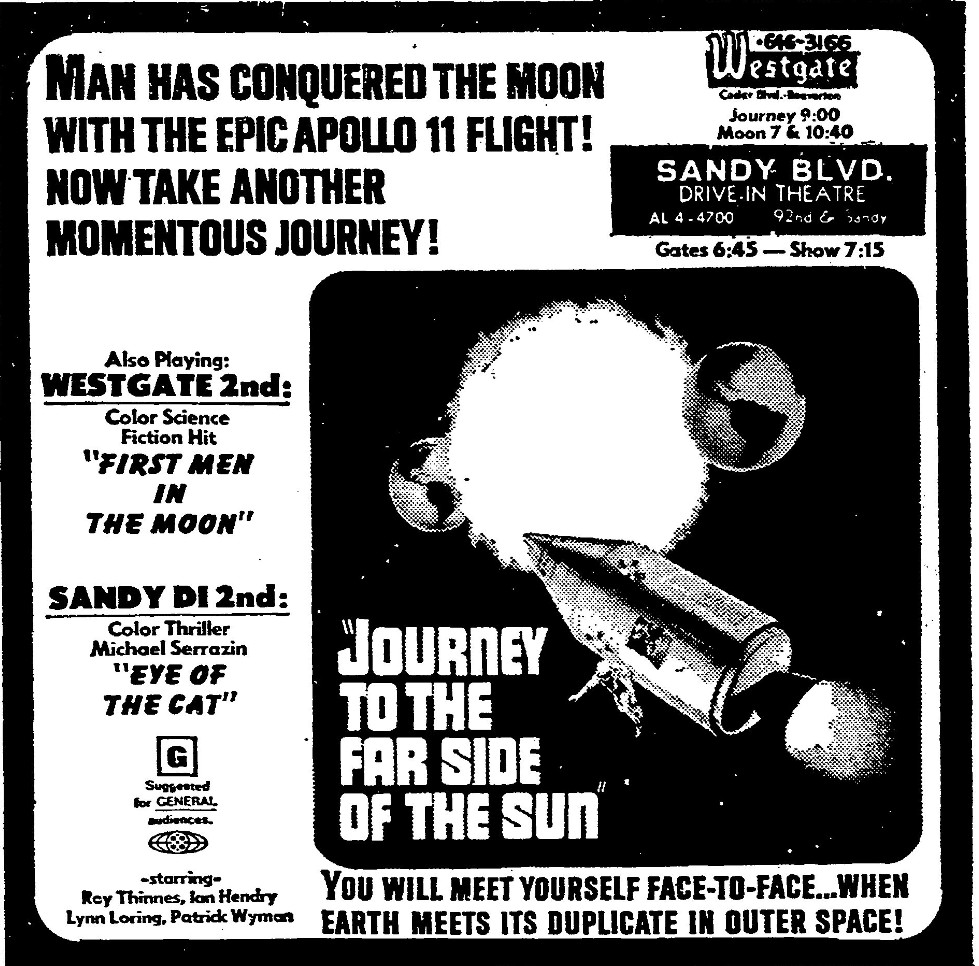
October 10, 1969 ad (Portland)
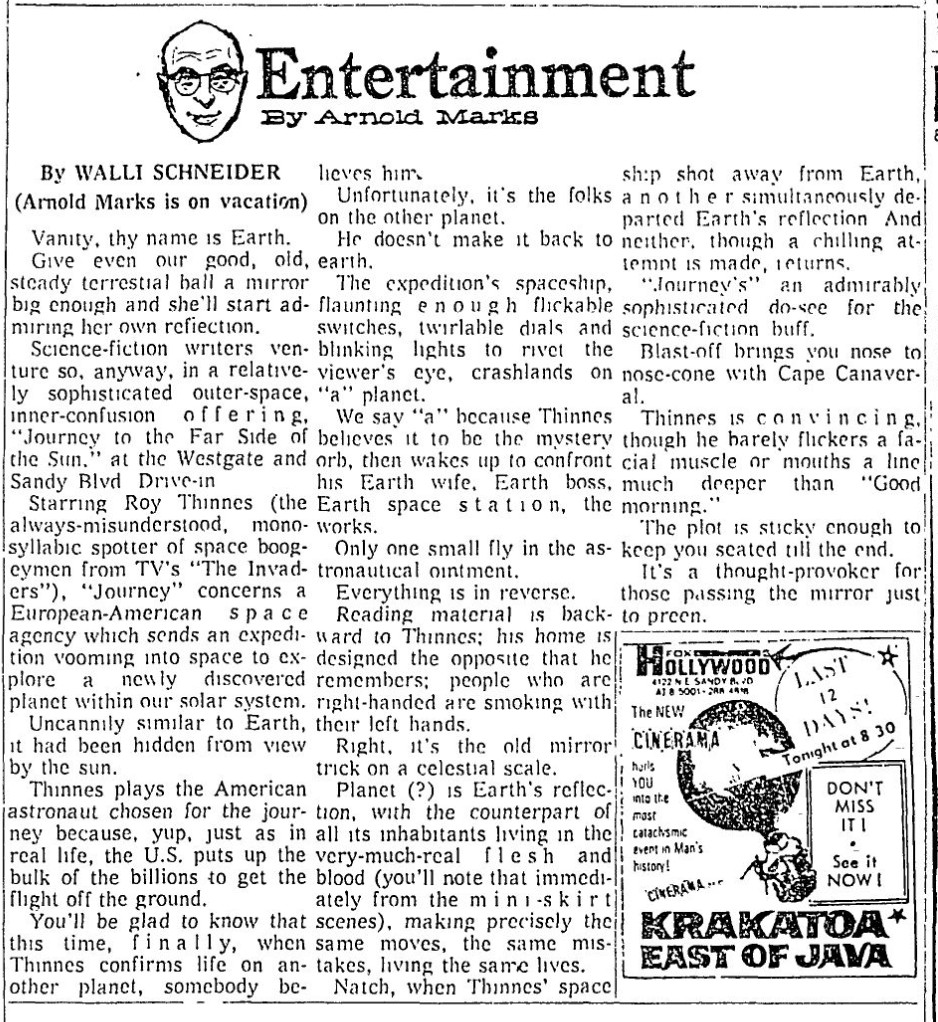
October 10, 1969 article (Portland)
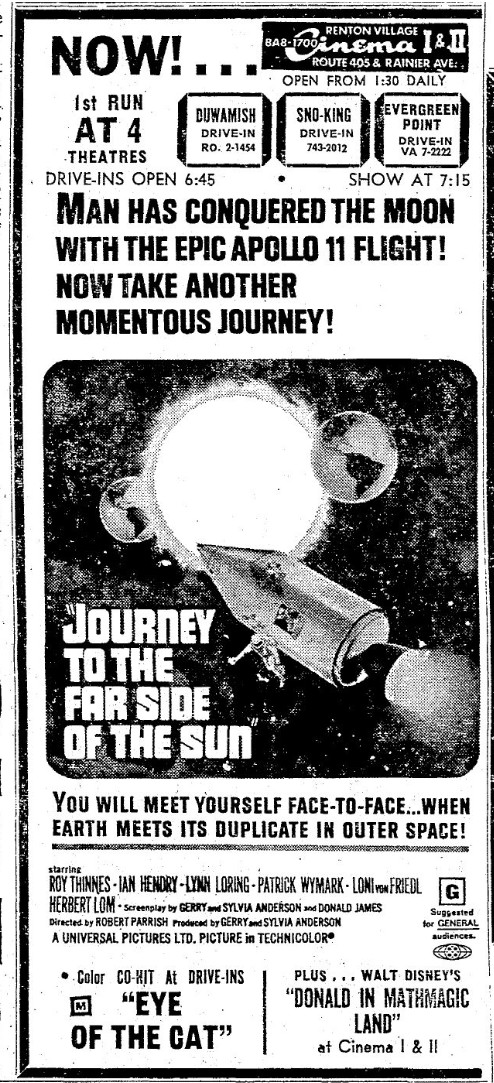
October 10, 1969 ad (Seattle)
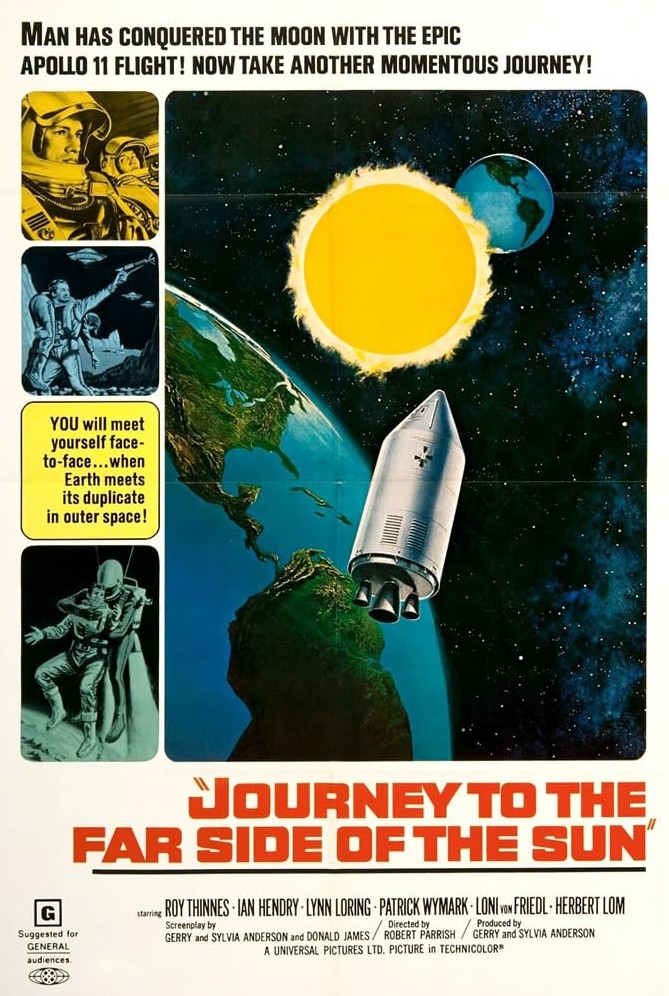
Journey to the Far Side of the Sun (1969) poster
Journey to the Far Side of the Sun (1969) trailer
Buy "Journey to the Far Side of the Sun" (1969) bluray on Amazon (SPONSORED)
Buy "Journey to the Far Side of the Sun" (1969) DVD on Amazon (SPONSORED)
