This is a collection of media from the initial runs of "Gorath" (1962) and "The Human Vapor" (1960) in the Pacific Northwest. I could find no evidence of either playing Portland and have no idea why it took so long for this pairing to reach Seattle, as its USA debut was in 1964. To make this bill even better, H.G. Lewis' "A Taste of Blood" (1967) was added.
Click on images for larger versions.
Gorath (1962)
“Gorath” arrives in its U.S. release as a striking example of how a film’s identity can shift when re-edited for a different audience. What began in Japan as a sweeping, somber meditation on global cooperation in the face of cosmic annihilation becomes, in its American form, a more streamlined and sensationalized spectacle. The core premise remains intact: Earth faces destruction from a runaway celestial body, and humanity must mobilize its scientific and political will to avert catastrophe. Yet the U.S. version reframes this narrative with a brisker pace, a heavier emphasis on action, and a notable reduction of the original’s philosophical undercurrents.
The film’s structure in this edition leans into urgency. Scenes that once lingered on the emotional and ethical weight of the crisis are trimmed or removed, creating a more direct march toward the film’s central technological gambit. This shift alters the tone considerably. Where the Japanese version foregrounds the fragility of international trust and the moral cost of survival, the American cut favors a cleaner, more optimistic narrative of ingenuity triumphing over cosmic indifference. The result is a film that feels more like a Cold War-era adventure than a reflective science‑fiction drama, even though the specter of global tension still hums beneath the surface.
Visually, “Gorath” retains its impressive miniature work and atmospheric staging, hallmarks of Toho’s effects team during this period. The U.S. version, however, rearranges and occasionally repurposes these sequences to heighten spectacle, sometimes at the expense of narrative cohesion. The sense of scale remains powerful, but the emotional throughline becomes more fragmented, with character arcs compressed into functional beats that support the film’s accelerated tempo.
Perhaps the most defining difference is the removal of certain fantastical elements that originally expanded the film’s thematic palette. Their absence narrows the story’s scope, grounding it more firmly in a technological crisis narrative and reducing the mythic or allegorical dimension that once enriched the film’s worldview. What remains is still compelling, but it is a leaner, more conventional science‑fiction thriller shaped by the expectations of American distributors and audiences in the early 1960s.
In this form, “Gorath” stands as a fascinating artifact of transnational cinema—an example of how editing choices can reshape not only pacing and tone but also the philosophical resonance of a story. The U.S. version may lack some of the contemplative depth of its source, yet it preserves enough of the original’s ambition and visual imagination to remain an intriguing entry in Toho’s broader exploration of humanity’s relationship to overwhelming cosmic forces.
Director: Ishirô Honda
Writers: Takeshi Kimura, Jôjirô Okami, John Meredyth Lucas
Stars: Ryô Ikebe, Yumi Shirakawa, Akira Kubo
The Human Vapor (1960)
“The Human Vapor” in its U.S. release emerges as a moody, morally fraught science‑fiction thriller that blends noir sensibilities with the anxieties of early‑1960s technological ambition. The American cut preserves the central premise—a man transformed by a dangerous scientific experiment gains the ability to dissolve into vapor—but reshapes the narrative rhythm and thematic emphasis to suit a different audience. What was originally a slow‑burn character study becomes, in this version, a more direct confrontation between a desperate fugitive and the institutions trying to contain him.
The film’s atmosphere is defined by a tension between tragedy and menace. The protagonist’s newfound power is presented less as a marvel than as a curse, and the U.S. edit leans into this duality by foregrounding the destructive consequences of his condition. His motivations, rooted in longing and emotional entanglement, give the story a melancholy undertow, yet the American version trims some of the more introspective moments, pushing the narrative toward a tighter, crime‑driven structure. This shift subtly reframes the character: he becomes less a victim of scientific overreach and more a figure caught between yearning and obsession, a man whose humanity flickers even as he becomes increasingly untethered from the physical world.
Visually, “The Human Vapor” retains the stark, shadow‑laden aesthetic characteristic of Toho’s genre films of the era. The U.S. cut highlights the spectacle of transformation sequences and the eerie fluidity of the vapor form, using these moments to punctuate the story with bursts of uncanny energy. Yet the film’s strongest visual moments are not its effects but its use of confined spaces—police offices, rehearsal rooms, dimly lit streets—to evoke a sense of tightening inevitability. The American edit accentuates this claustrophobia, creating a narrative that feels more like a pursuit than a meditation.
The supporting characters, particularly the investigators and the woman at the center of the fugitive’s emotional world, are framed with sharper narrative efficiency in this version. Their roles become more functional, serving as moral counterpoints or catalysts rather than fully developed figures. This streamlining alters the thematic balance: where the original leans into questions of scientific responsibility and personal ruin, the U.S. version gravitates toward a more conventional struggle between law enforcement and a superhuman threat, albeit one tinged with sorrow.
Ultimately, “The Human Vapor” in its American form stands as a compelling hybrid—part monster film, part noir tragedy, part cautionary tale about the unintended consequences of scientific ambition. While the U.S. edit pares back some of the emotional nuance and philosophical weight of the Japanese original, it preserves enough of the film’s haunting core to remain a distinctive entry in Toho’s early science‑fiction cycle, driven by a protagonist whose power and pain are inseparable.
Director: Ishirô Honda
Writer: Takeshi Kimura
Stars: Tatsuya Mihashi, Kaoru Yachigusa, Yoshio Tsuchiya
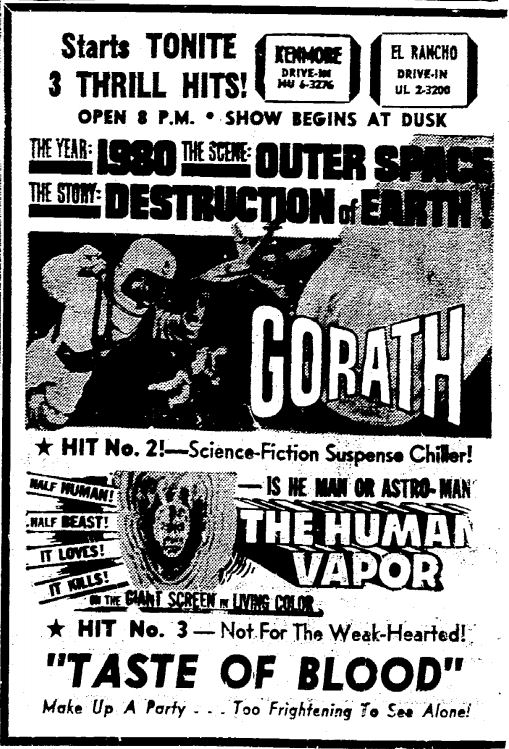
July 2, 1969 ad (Seattle)
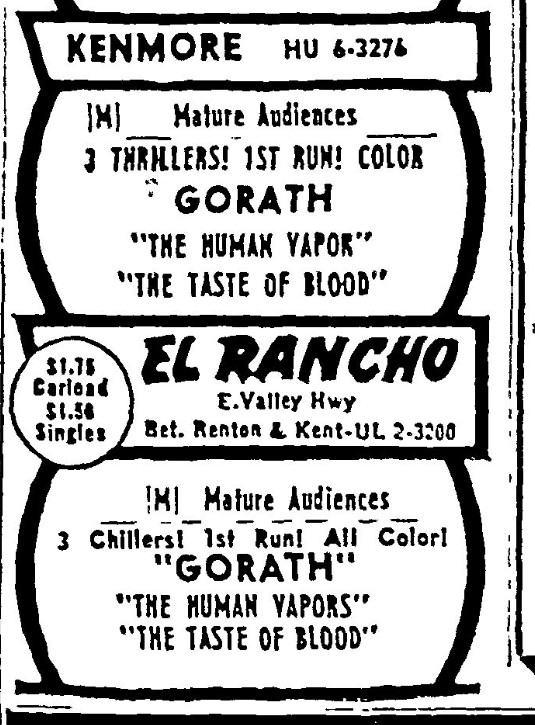
July 3, 1969 ad (Seattle)
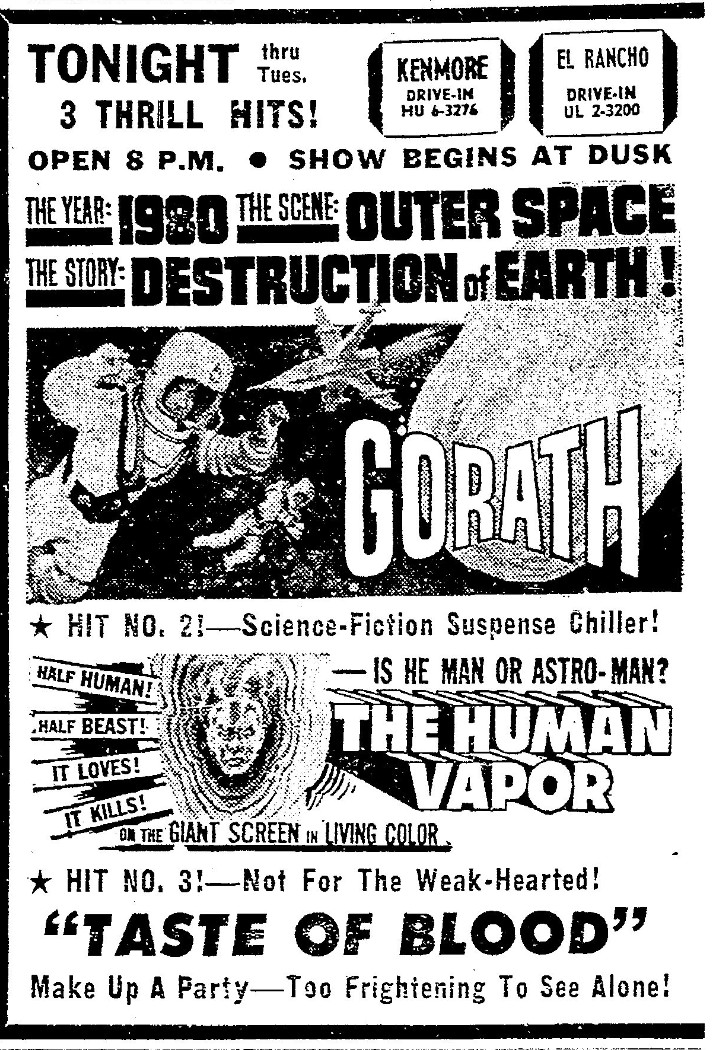
July 4, 1969 ad (Seattle)
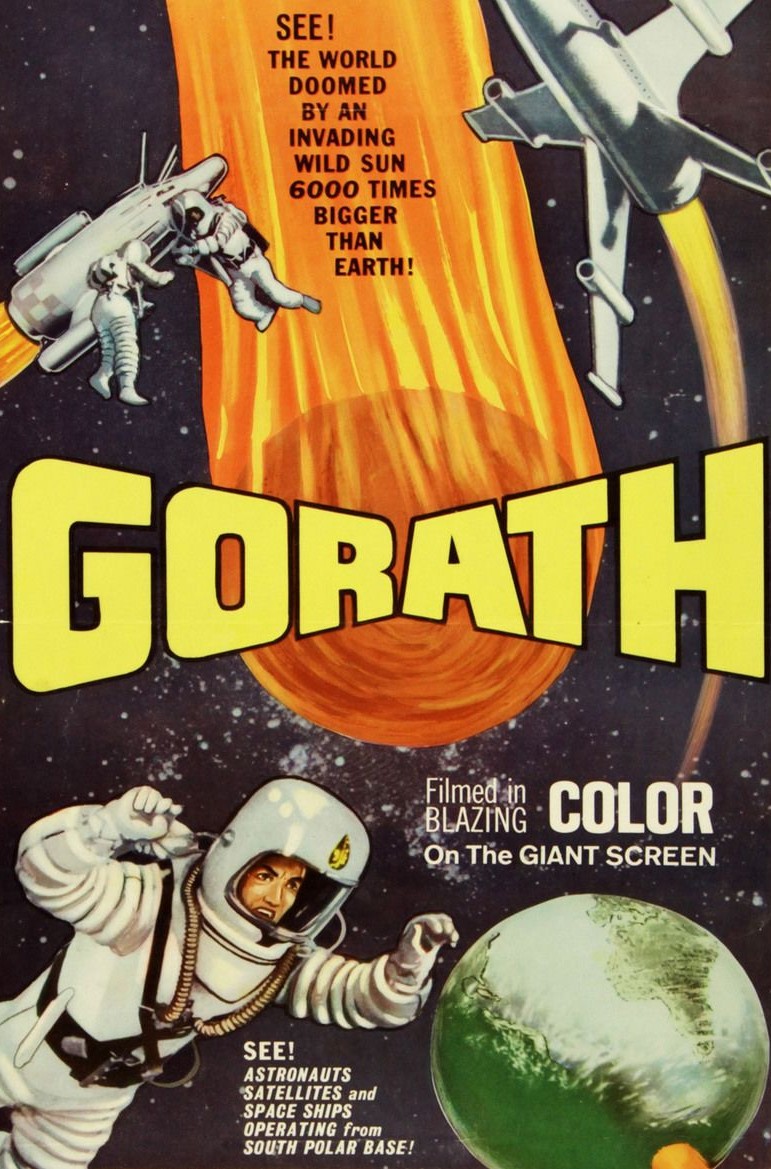
Gorath (1962) poster
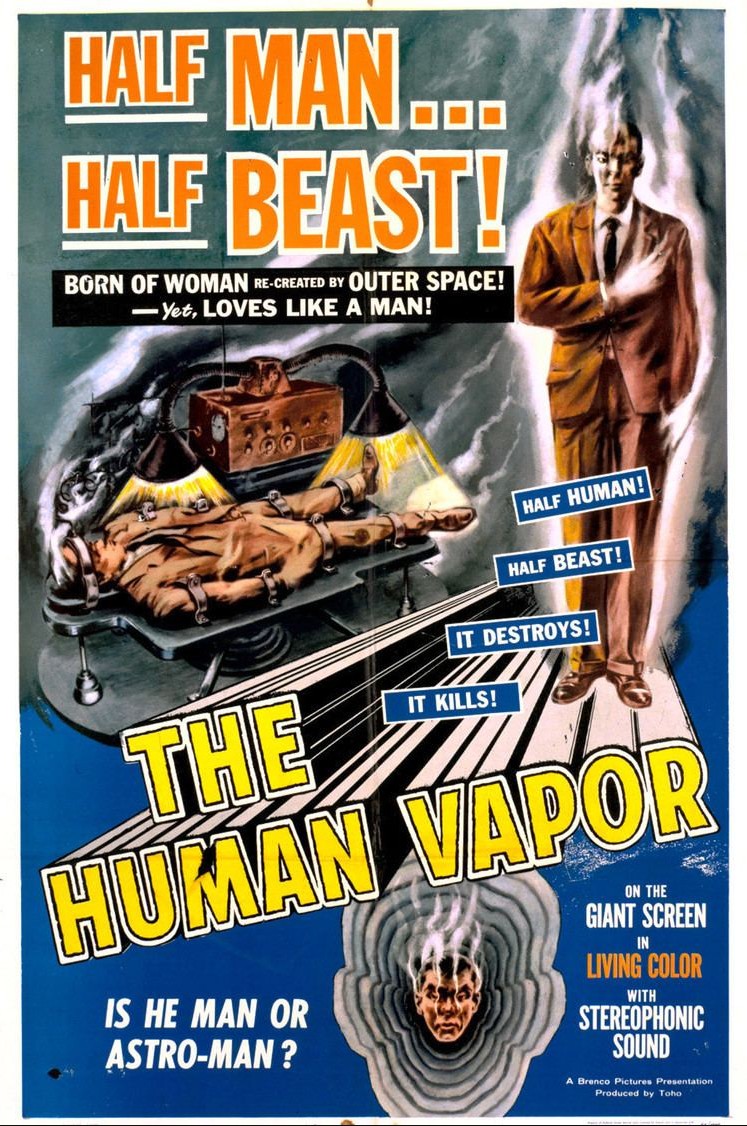
The Human Vapor (1960) poster
Gorath(1962) trailer
The Human Vapor (1960) trailer
