This is a collection of media from the initial runs of "Nightmare in Wax" and "Blood of Dracula's Castle" (both 1969) in the Pacific Northwest.
Click on images for larger versions.
Nightmare in Wax (1969)
“Nightmare in Wax” unfolds like a fever dream stitched together from the anxieties and obsessions that haunted late‑1960s genre cinema. On its surface, it’s a lurid tale of a disfigured wax sculptor whose life and career have been shattered by betrayal, but beneath that melodramatic premise lies a surprisingly atmospheric meditation on identity, spectacle, and the uneasy relationship between art and exploitation. The film inhabits a world where glamour curdles into menace, where the artificial sheen of celebrity becomes indistinguishable from the lifeless perfection of wax figures, and where the boundary between creation and possession grows dangerously thin.
The film’s most compelling element is its setting: a wax museum that becomes a kind of psychological labyrinth. The space is both theatrical and claustrophobic, a place where stillness feels charged with threat and where the uncanny quality of the exhibits mirrors the protagonist’s fractured sense of self. Director Michael Dugan leans into this tension, using the museum’s eerie tableaux to explore how beauty, fame, and control intertwine. The result is a visual style that feels both garish and hypnotic, capturing the era’s fascination with artificiality while hinting at the darker impulses lurking beneath the surface of show business. The film’s atmosphere often does more narrative work than its dialogue, creating a mood of creeping dread that lingers even when the plot veers into pulpier territory.
What gives “Nightmare in Wax” its staying power is the way it frames its central figure not merely as a villain but as a tragic embodiment of wounded pride and artistic obsession. His disfigurement becomes a metaphor for the emotional scars inflicted by an industry that prizes appearance above humanity, and the film uses his descent to critique the machinery of fame without ever losing its drive as a genre piece. The tension between pathos and horror gives the story a strange, compelling energy, as if the film itself is torn between sympathy and revulsion. Even when the narrative leans into sensationalism, it retains an undercurrent of melancholy that enriches its more macabre flourishes.
In the end, “Nightmare in Wax” stands as a curious artifact of its time: part horror thriller, part Hollywood satire, part psychological portrait. Its blend of camp, atmosphere, and emotional intensity creates a distinctive tone that reflects the shifting cultural landscape of the late 1960s, when traditional studio glamour was giving way to a more cynical, self‑aware vision of the entertainment world.
Director: Bud Townsend
Writer: Rex Carlton
Stars: Cameron Mitchell, Anne Helm, Scott Brady
Blood of Dracula's Castle (1969)
“Blood of Dracula’s Castle” occupies a peculiar and fascinating corner of late‑1960s American horror, a moment when the genre was shifting from Gothic formality toward drive‑in sensationalism, yet still clinging to the theatricality of earlier decades. The film presents a vampire tale filtered through the sensibilities of low‑budget exploitation, resulting in a work that feels both knowingly artificial and strangely earnest. Its castle setting—transplanted to the sun‑bleached landscapes of the American Southwest—creates an immediate tension between old‑world myth and modern mundanity. This contrast becomes one of the film’s most distinctive qualities.
At the center of “Blood of Dracula’s Castle” is a pair of aristocratic vampires who exude a kind of faded grandeur, their refined manners and genteel domestic routines clashing with the brutality that sustains their existence. This juxtaposition gives the film an offbeat charm, as if it were observing the undead not as monstrous predators but as relics of a bygone social order trying to maintain decorum in a world that has moved on without them. Their castle becomes a stage where civility and savagery coexist uneasily, and the film utilizes this dynamic to explore the absurdity of clinging to tradition in a rapidly transforming surrounding culture.
The tone is one of deliberate theatricality, with performances that lean into arch mannerisms and a visual style that embraces the artificiality of its sets and lighting. Rather than undermining the film, this heightened approach gives it a dreamlike quality, as though the story unfolds in a pocket universe where Gothic tropes have been preserved in amber. The supporting characters—particularly the castle’s deranged servant and the assortment of captives—add layers of pulp energy that contrast with the vampires’ stiff elegance, creating a tonal blend that is both humorous and unsettling. The film’s pacing, while leisurely, reinforces its atmosphere of suspended time, as if the castle itself resists the intrusion of the modern world.
What ultimately makes “Blood of Dracula’s Castle” compelling is the way it reflects the transitional nature of its era. It stands at the crossroads of classic monster‑movie iconography and the emerging countercultural sensibilities of the late 1960s, resulting in a film that feels simultaneously antiquated and subversive. Its vampires are symbols of decaying aristocracy, its setting a metaphor for outdated power structures, and its narrative a quiet acknowledgment that the old Gothic order is giving way to something stranger, more chaotic, and more self‑aware. The film may not aim for grandeur, but its blend of camp, atmosphere, and cultural resonance gives it a distinctive place within the evolving landscape of American horror.
Directors: Al Adamson, Don Hulette
Writer: Rex Carlton
Stars: John Carradine, Paula Raymond, Alexander D'Arcy
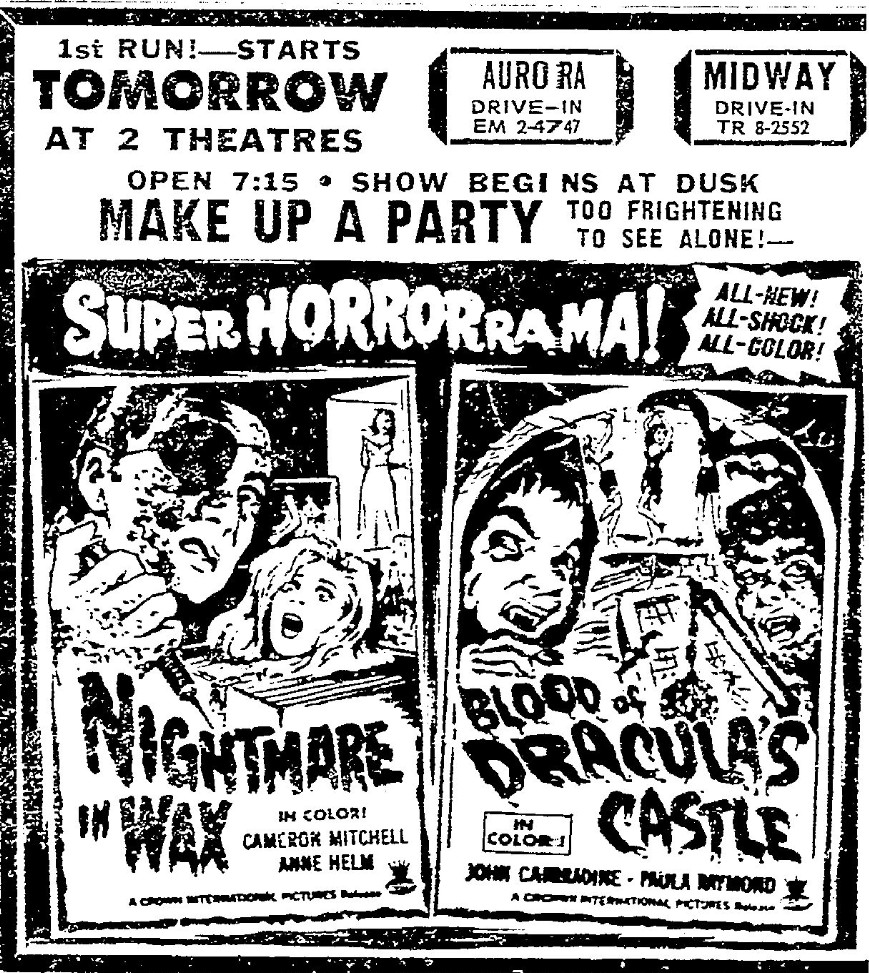
September 9, 1969 ad (Seattle)
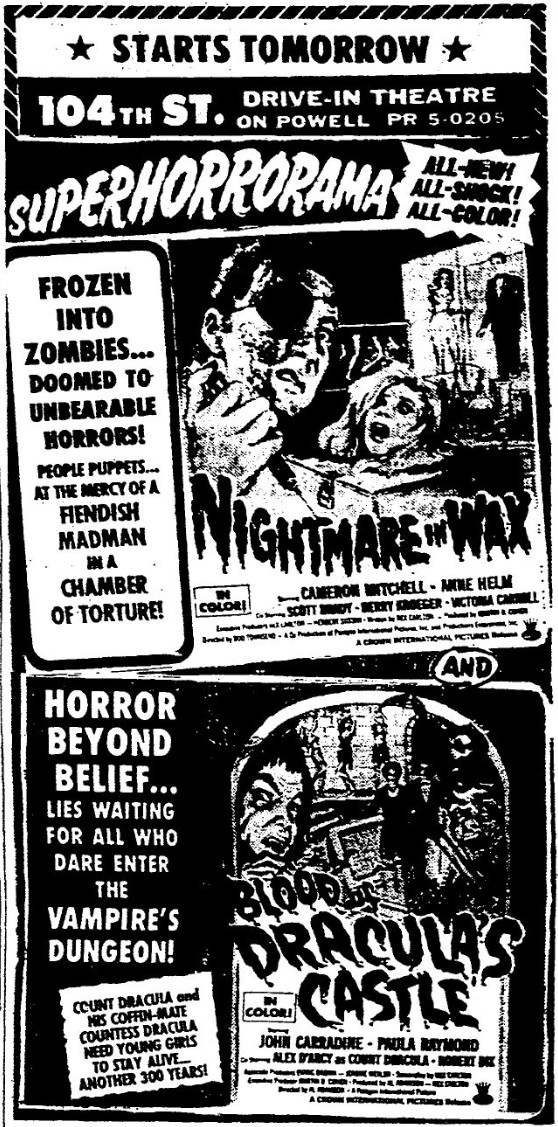
June 3, 1969 ad (Portland): This ad ran but the movies never actually played until December.
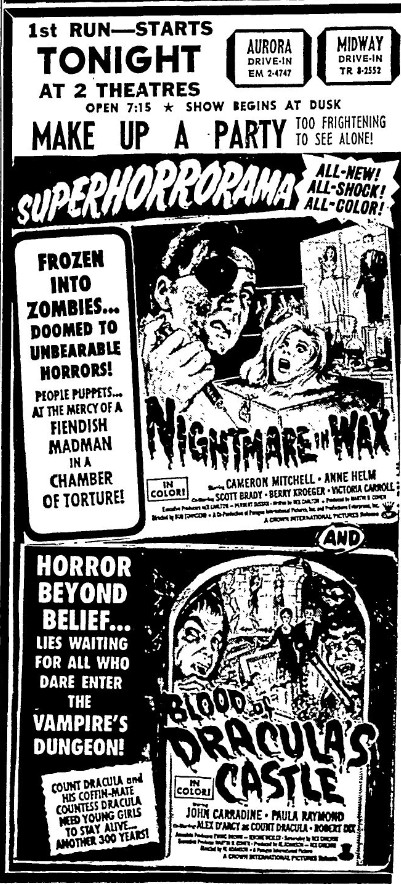
September 9, 1969 ad (Seattle)
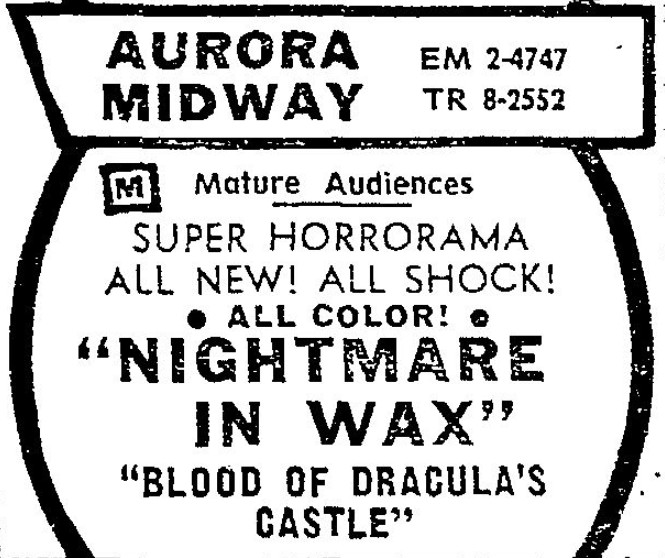
September 9, 1969 ad (Seattle)
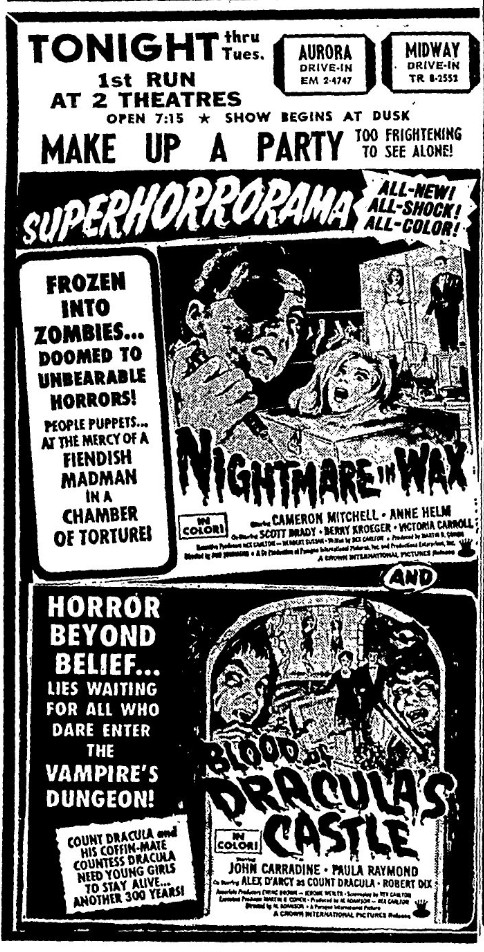
September 9, 1969 ad (Seattle)
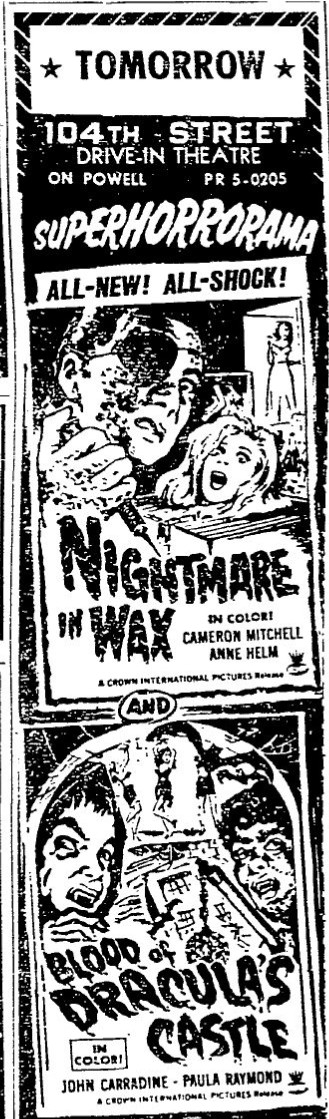
December 2, 1969 ad (Portland)
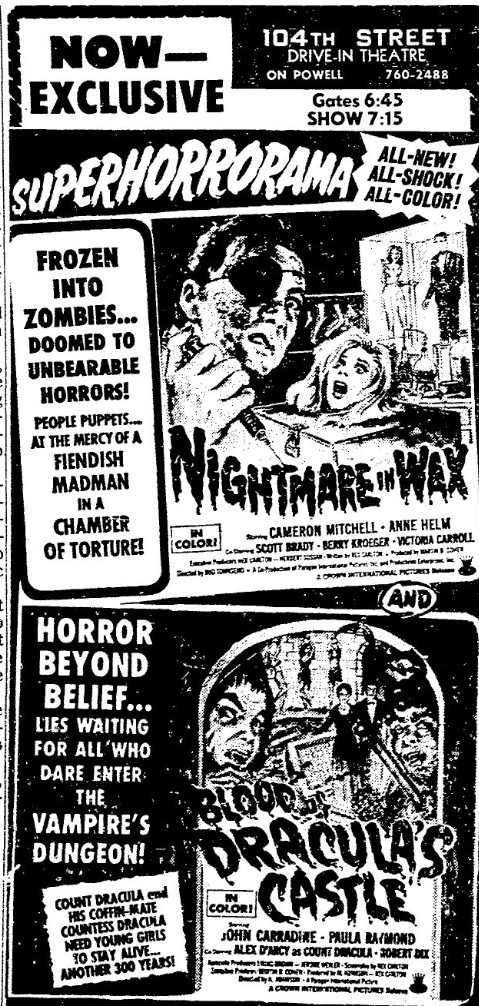
December 3, 1969 ad (Portland)
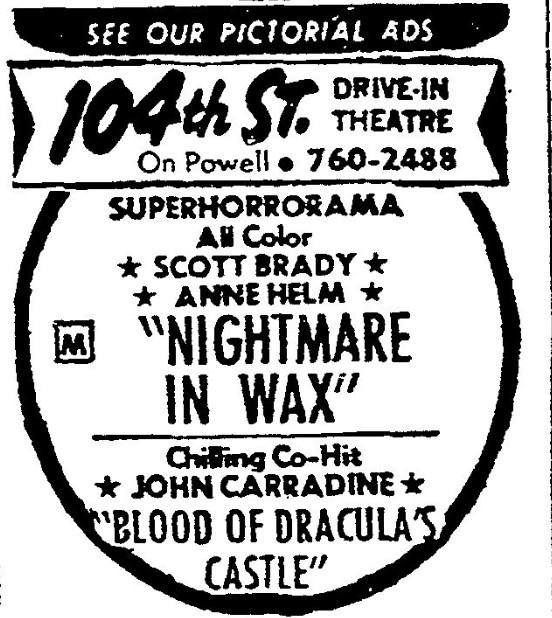
December 4, 1969 ad (Portland)
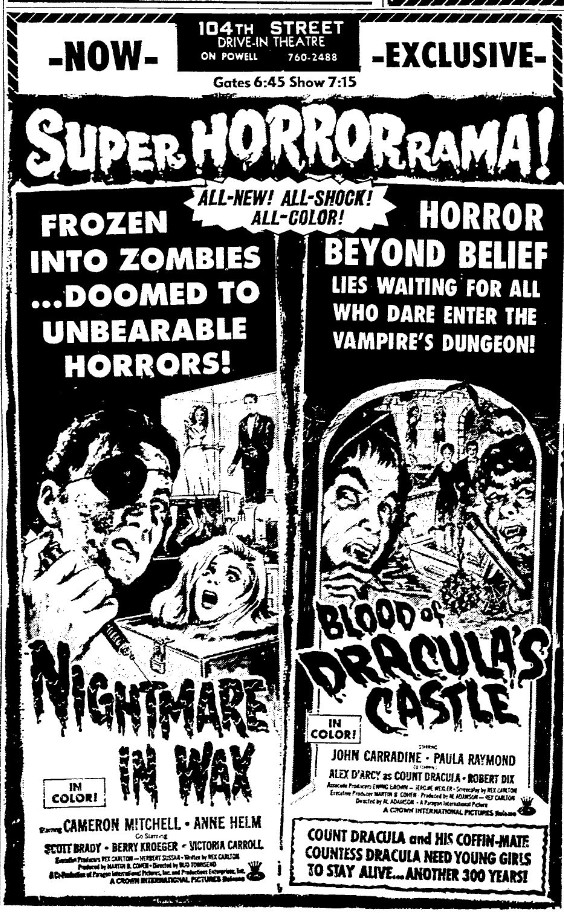
December 5, 1969 ad (Portland)
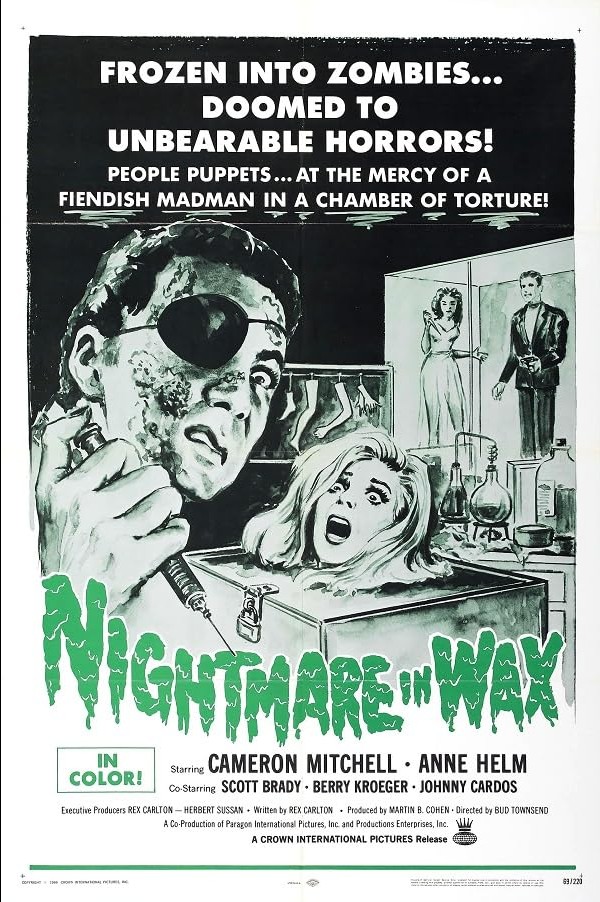
Nightmare in Wax (1969) poster
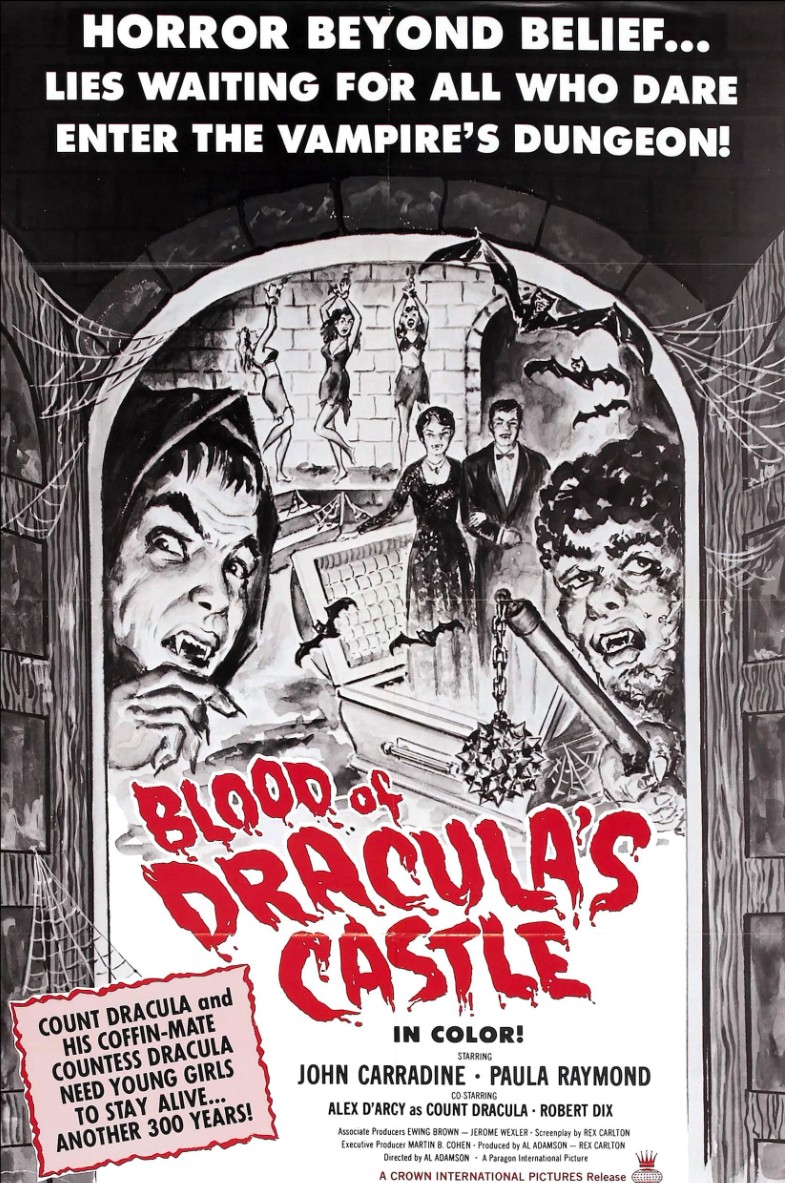
Blood of Dracula's Castle (1969) poster
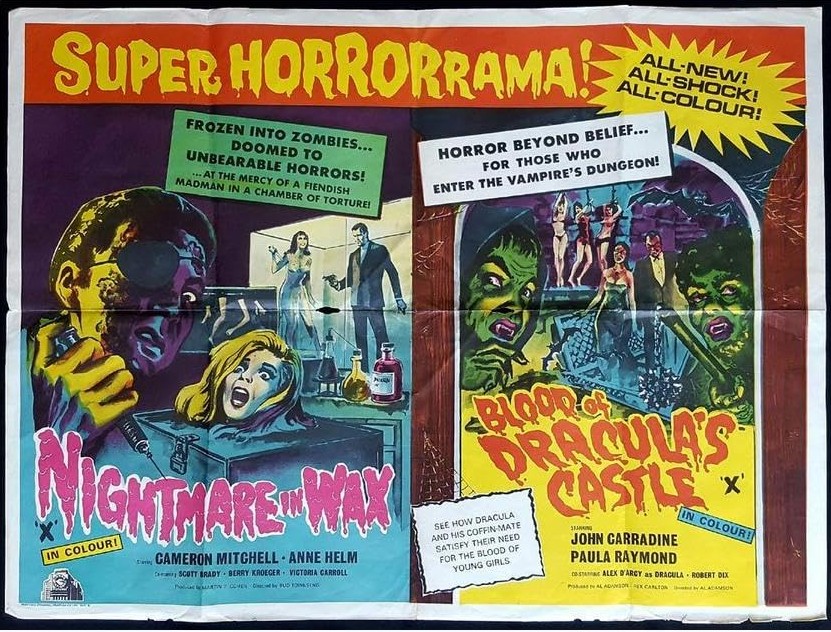
Super Horrorrama poster
Nightmare in Wax (1969) clip
Blood of Dracula's Castle (1969) trailer
