This is a collection of media from the initial runs of "Naked Angels" and "Pit Stop" ( both 1969) in the Pacific Northwest.
Click on images for larger versions.
Naked Angels (1969)
“Naked Angels” moves through the late‑1960s biker‑film landscape with a raw, unvarnished energy that reflects both the countercultural moment and the exploitation sensibilities of its producers. Rather than leaning solely on the expected iconography of roaring engines and leather‑clad bravado, the film uses its outlaw‑motorcycle setting as a stage for a more atmospheric portrait of tribal loyalty, masculine insecurity, and the fragile codes that hold volatile groups together. Its narrative follows a small biker gang whose swagger masks a deep sense of drift, and the film’s tension grows from the way these characters cling to ritualized violence and performative toughness as a substitute for purpose.
What distinguishes “Naked Angels” from many of its contemporaries is its almost dreamlike looseness. Scenes unfold with a hazy, sun‑bleached quality that blurs the line between documentary grit and stylized detachment. Dialogue often feels improvised, giving the characters a feral unpredictability that mirrors the era’s fascination with antiheroes living outside the boundaries of mainstream society. The film’s violence is less about shock than about exposing the emotional emptiness beneath the gang’s posturing, and the story’s central conflict becomes a study of how bravado collapses when confronted with vulnerability or humiliation.
The film also captures the uneasy relationship between biker culture and the broader counterculture. While the gang embodies rebellion, their worldview is rigid, territorial, and deeply hierarchical, revealing a contradiction at the heart of the 1960s myth of freedom. “Naked Angels” uses this contradiction to explore how groups built on alienation can become trapped by their own codes, unable to evolve even as the world around them shifts. The result is a film that feels both rough and strangely introspective, a snapshot of a subculture caught between romanticized outlaw fantasy and the stark reality of its own limitations.
Director: Bruce D. Clark
Writers: Bruce D. Clark, Marc Siegler
Stars: Michael Greene, Jennifer Gan, Richard Rust
Pit Stop (1969)
“Pit Stop” stands out among late‑1960s exploitation films for the way it transforms a seemingly straightforward premise—underground figure‑eight racing—into a stark, almost existential character study. Rather than treating the racetrack as a backdrop for cheap thrills, the film uses its looping, collision‑prone circuit as a metaphor for ambition, self‑destruction, and the seductive pull of competition. Its protagonist, drawn into the world of outlaw racing by a manipulative promoter, becomes the center of a story that examines how drive and talent can curdle into obsession when channeled through a system built on spectacle and risk.
The film’s visual style is lean and unsentimental, shaped by Roger Corman’s production ethos but elevated by Jack Hill’s sharp direction. Hill brings a documentary immediacy to the racing sequences, capturing the chaos of the figure‑eight track with a clarity that feels both exhilarating and unnerving. Off the track, the film shifts into a more brooding register, exploring the emotional costs of a subculture where camaraderie and rivalry are inseparable. Characters orbit one another with a mix of admiration, envy, and distrust, and the film’s tension builds as these relationships shift with victories and defeats.
What gives “Pit Stop” its lasting resonance is its refusal to romanticize the world it depicts. The film recognizes the allure of danger and the adrenaline of competition, but it also exposes the emptiness that can lie beneath the pursuit of dominance. Its portrait of the racing scene becomes a commentary on the broader American fixation on winning at any cost. This theme feels especially pointed against the backdrop of the late 1960s, when cultural upheaval and disillusionment were reshaping the national psyche. The result is a film that is gritty yet thoughtful, kinetic yet introspective, and far more ambitious than its modest budget might suggest.
Director: Jack Hill
Writer: Jack Hill
Stars: Brian Donlevy, Sid Haig, Ellen Burstyn
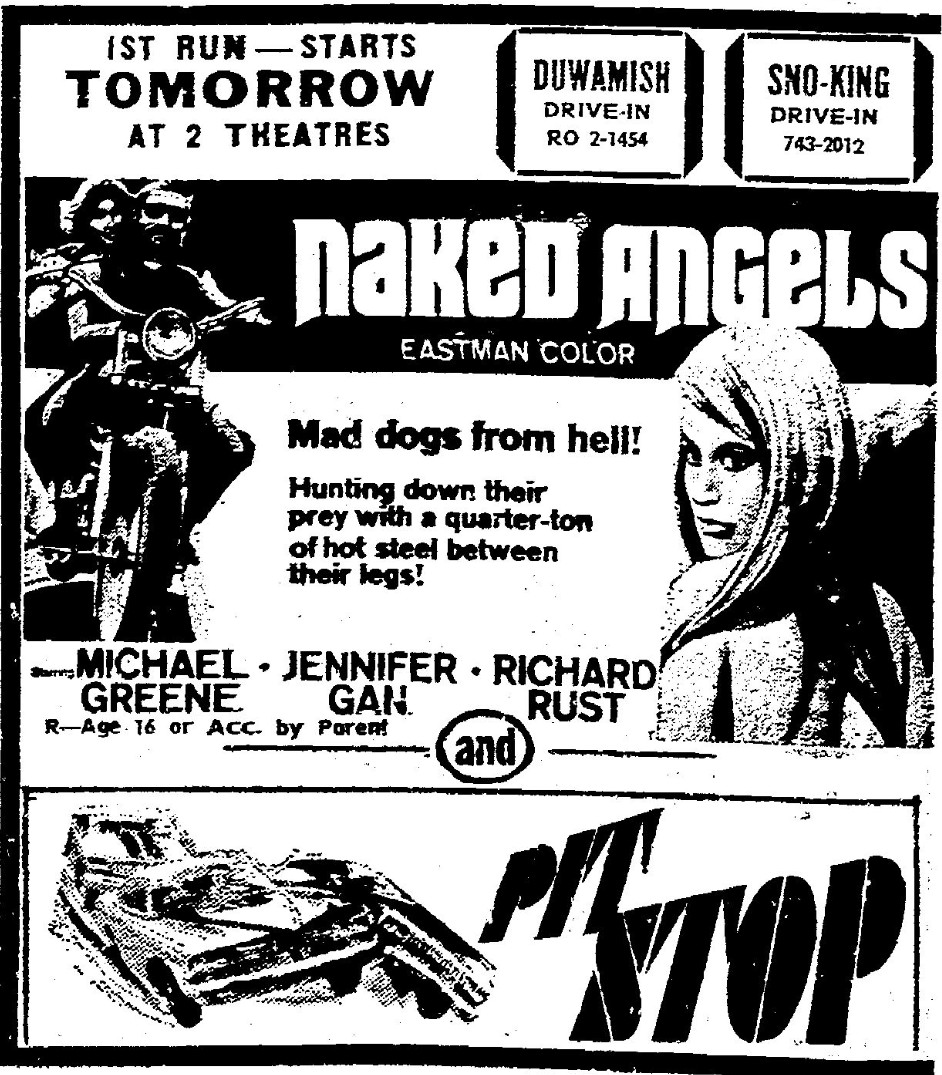
July 15, 1969 ad (Seattle)
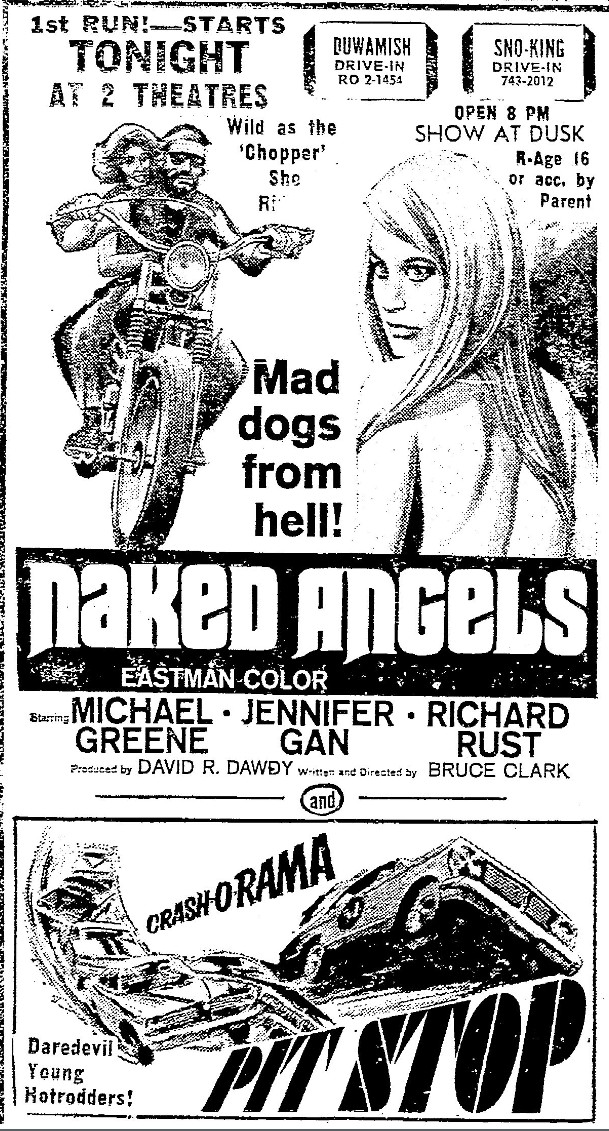
July 16, 1969 ad (Seattle)
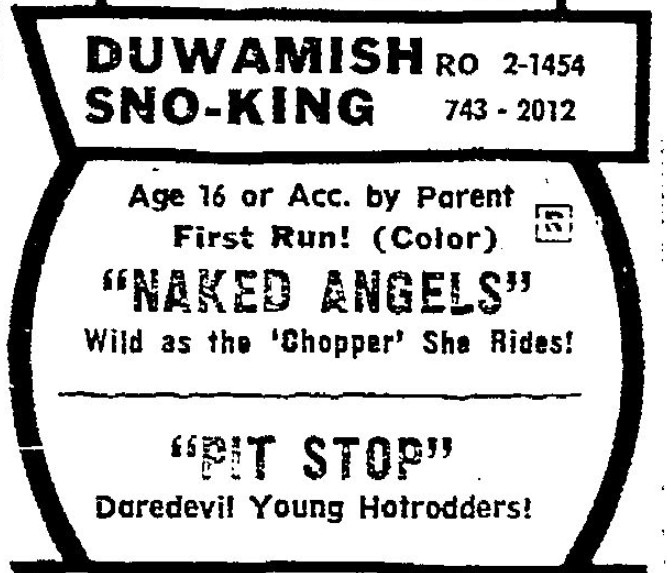
July 17, 1969 ad (Seattle)
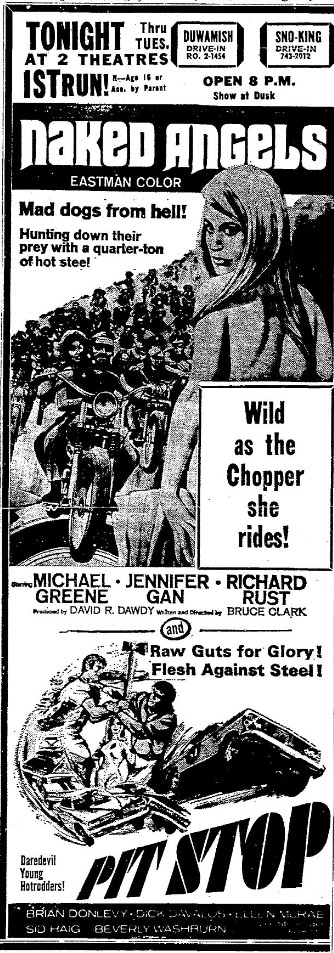
July 18, 1969 ad (Seattle)
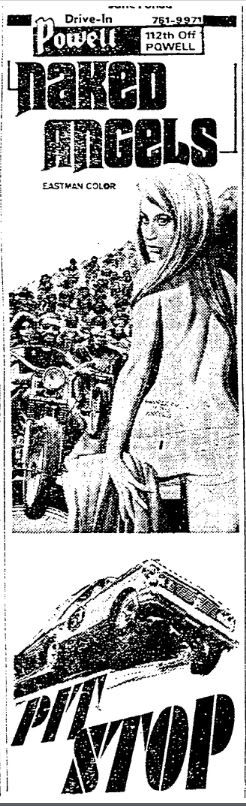
September 24, 1969 ad (Portland)
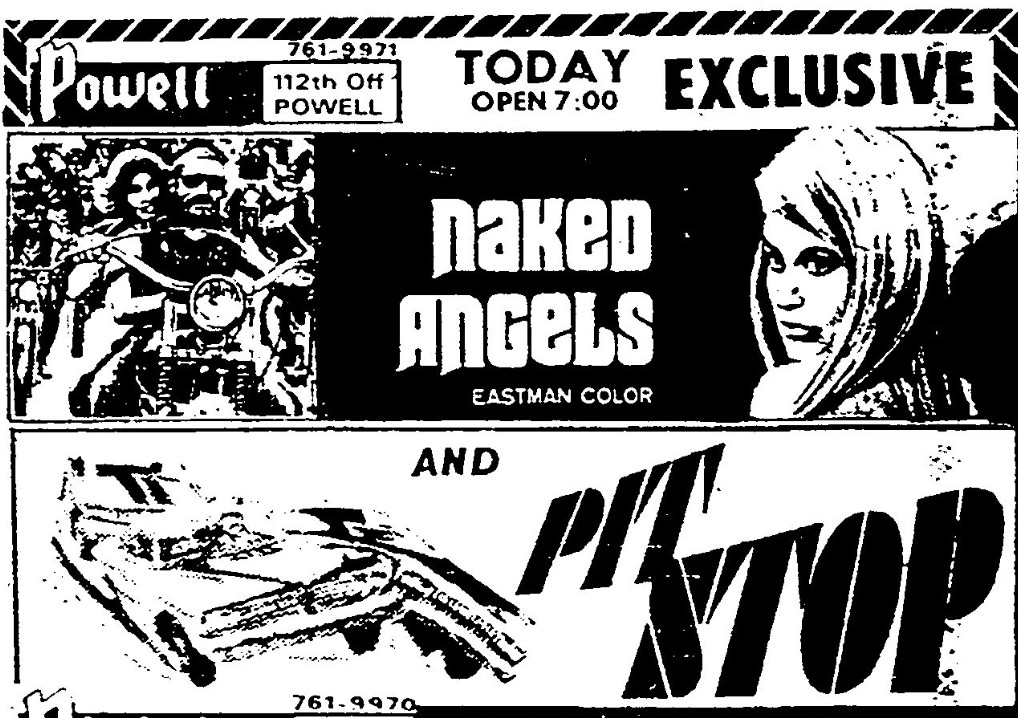
September 25, 1969 ad (Portland)
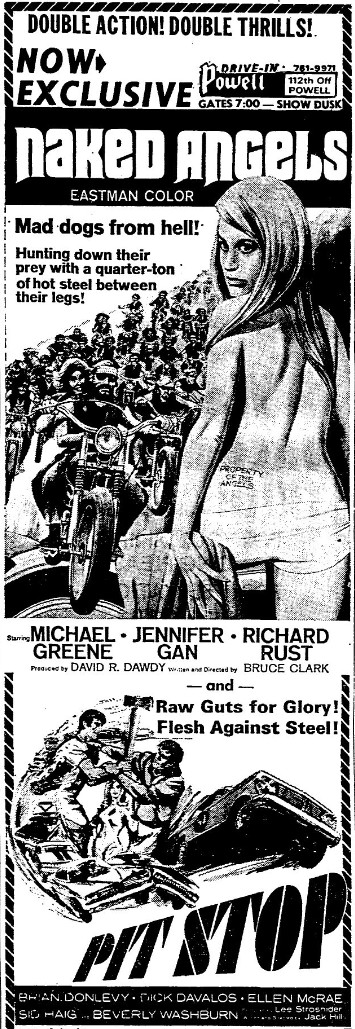
September 26, 1969 ad (Portland)
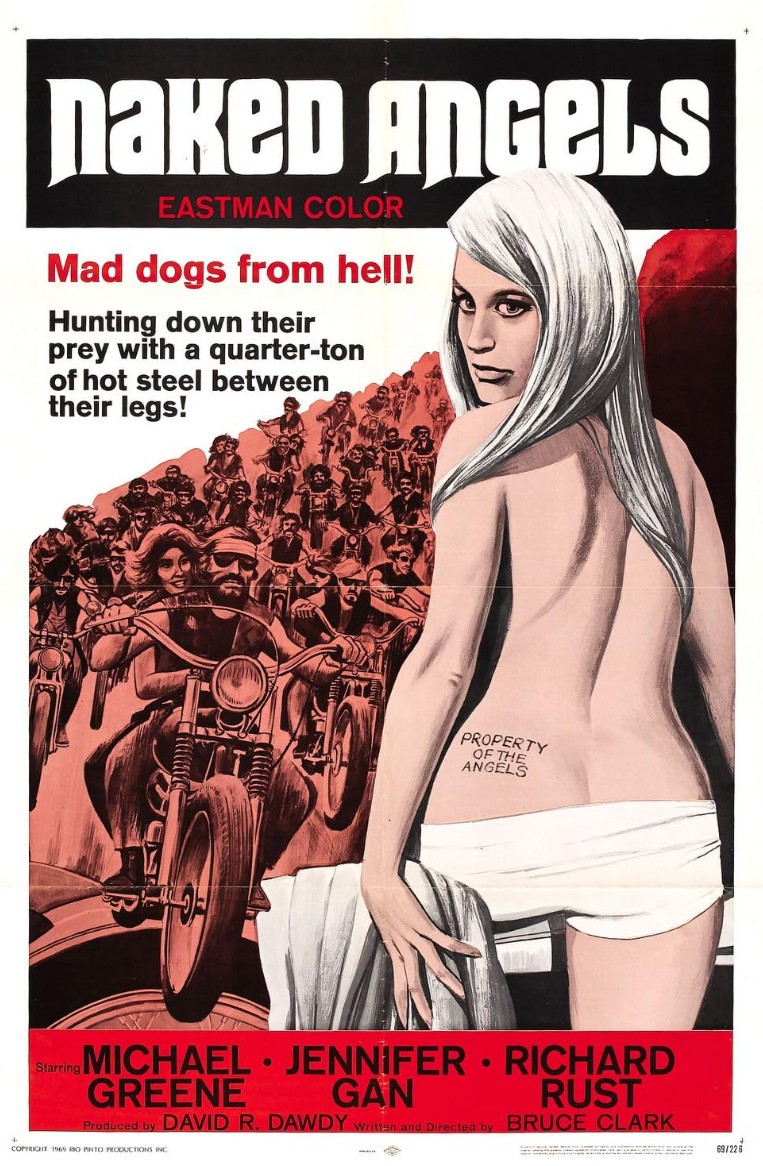
Naked Angels (1969) poster
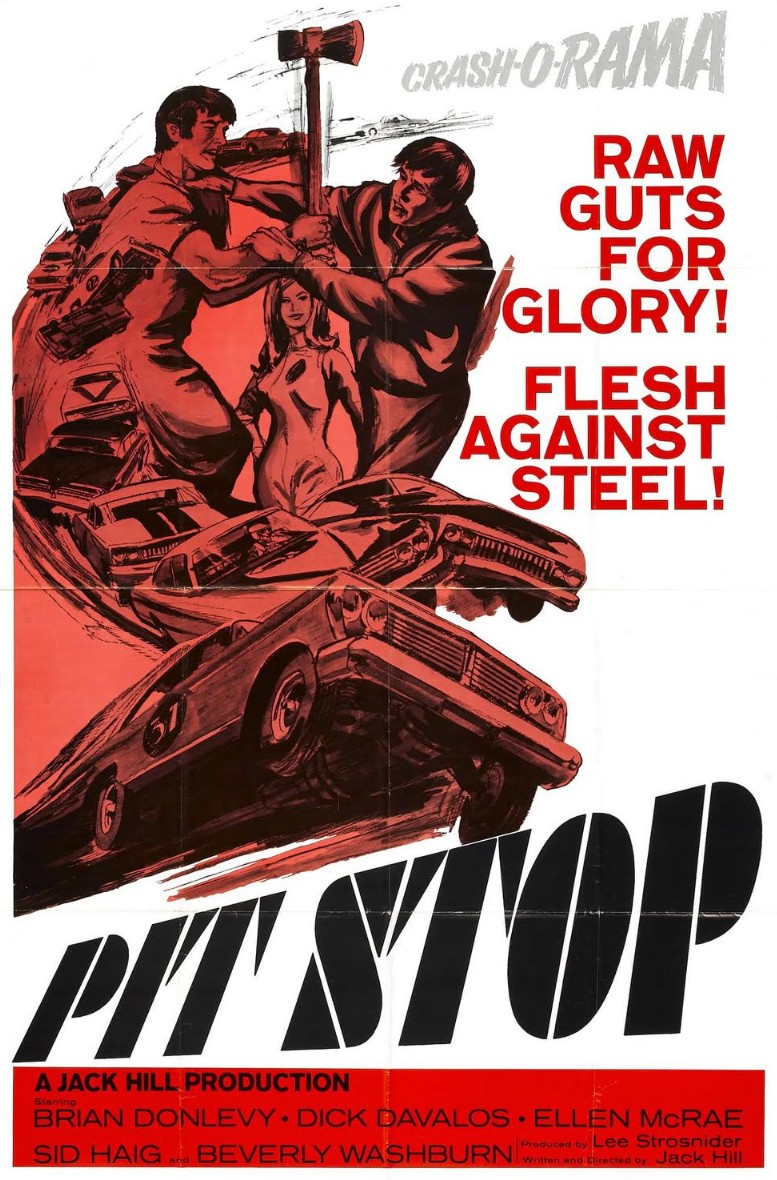
Pit Stop (1969) poster
Naked Angels (1969) trailer
Pit Stop (1969) trailer
