This is a collection of media from the initial runs of "Slaves" (1969) in the Pacific Northwest.
Click on images for larger versions.
Slaves (1969)
“Slaves” is a 1969 drama that approaches the antebellum South with a raw, confrontational tone that reflects the political and cultural turbulence of the era in which it was made. Rather than adopting the polished, prestige‑drama style that earlier Hollywood treatments of slavery often favored, the film leans into a more abrasive, almost exploitation‑adjacent sensibility, using its rough edges to underline the brutality and dehumanization at the core of its subject. It is less concerned with historical nuance than with emotional immediacy, presenting slavery as a system of unchecked power where violence, sexual coercion, and psychological domination are woven into everyday life.
At the center of “Slaves” is a triangular dynamic between an enslaved man determined to preserve his dignity, an enslaved woman whose survival depends on navigating the desires of those who control her, and a plantation owner whose authority is built on cruelty masked as paternalism. The film uses this triangle to explore how oppression fractures relationships, forcing individuals into roles that are simultaneously imposed and resisted. Its most compelling moments arise from the tension between internal resolve and external constraint, showing how people under bondage carve out small spaces of autonomy even when the system is designed to crush them.
Stylistically, the film blends melodrama with a documentary‑like immediacy, creating a sense of volatility that mirrors the social climate of late‑1960s America. Its performances are deliberately heightened, emphasizing the emotional stakes rather than striving for subtle realism. This approach gives “Slaves” a confrontational energy, though it also leads to tonal unevenness, as the film oscillates between earnest political statement and sensationalized spectacle. Still, that very instability becomes part of its character: a work born from a moment when American cinema was beginning to challenge sanitized narratives and confront the country’s historical violence more directly.
“Slaves” ultimately stands as a film that uses its imperfections to amplify its urgency. It is a product of a transitional period in American filmmaking, when social critique and genre provocation often collided. Its power lies not in refinement but in its willingness to depict the institution of slavery as a system defined by domination, fear, and the constant negotiation of humanity under inhuman conditions.
Director: Herbert J. Biberman
Writers: Herbert J. Biberman, John O. Killens, Alida Sherman
Stars: Ossie Davis, Stephen Boyd, Dionne Warwick
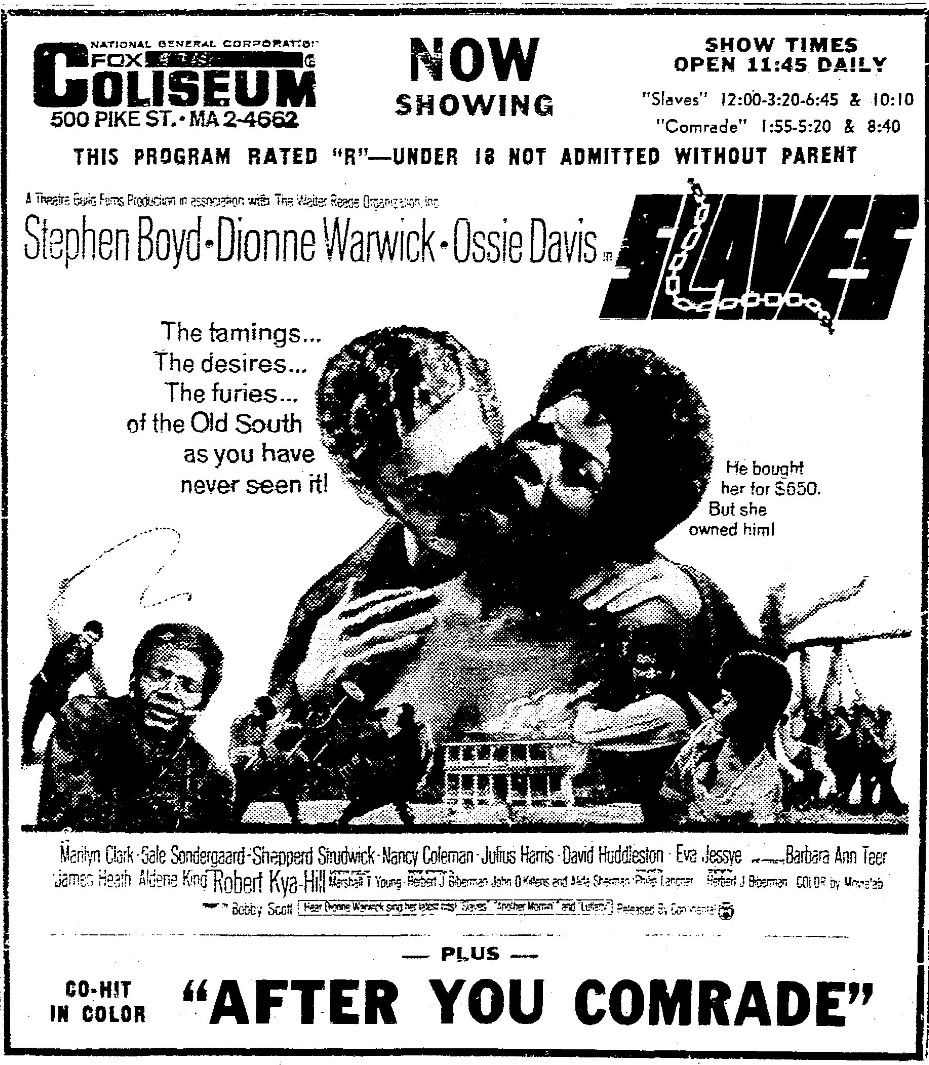
July 16, 1969 ad (Seattle)
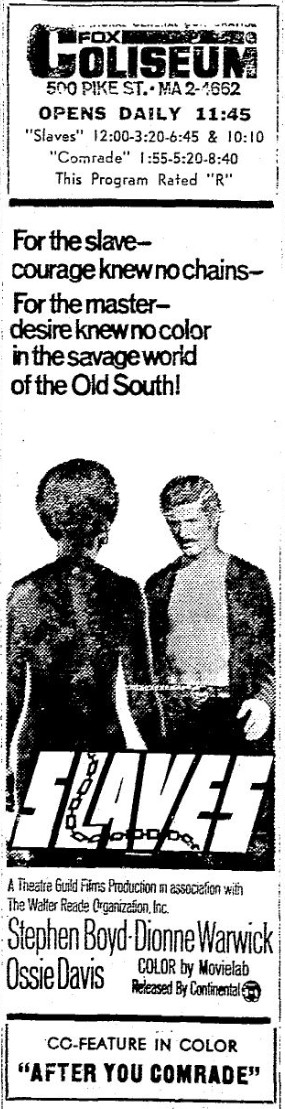
July 17, 1969 ad (Seattle)
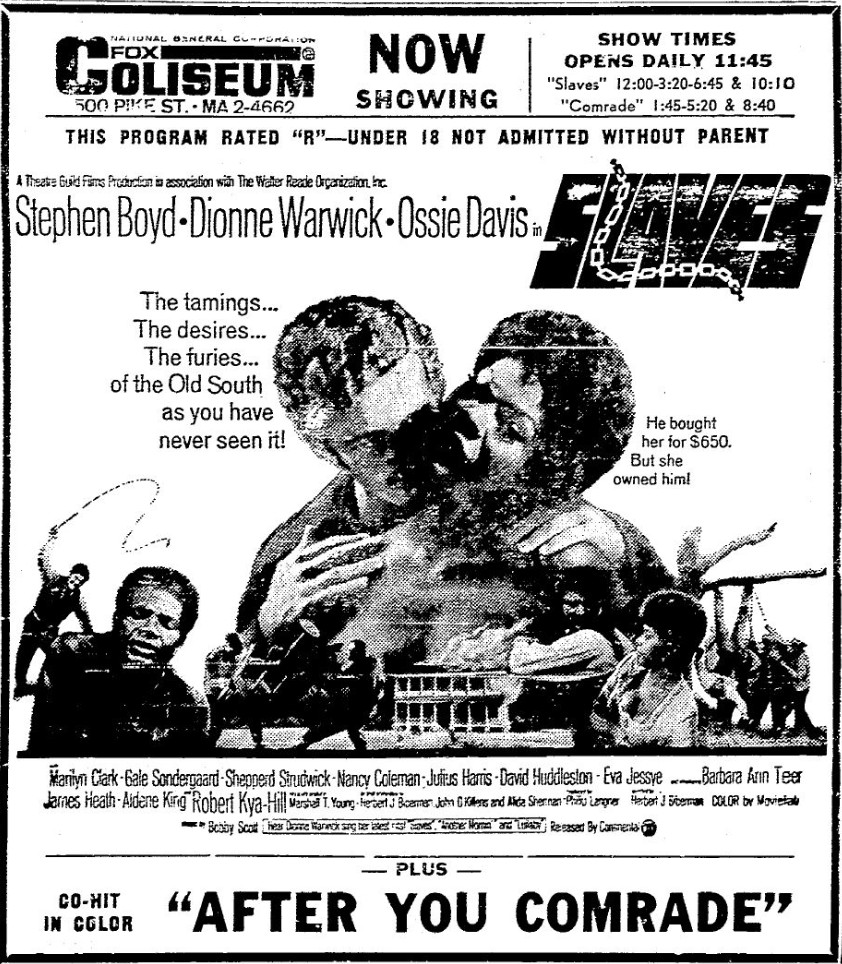
July 18, 1969 ad (Seattle)
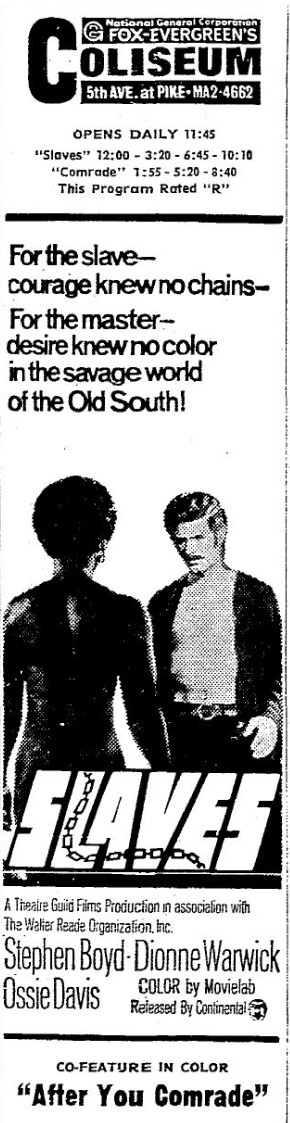
July 22, 1969 ad (Seattle)
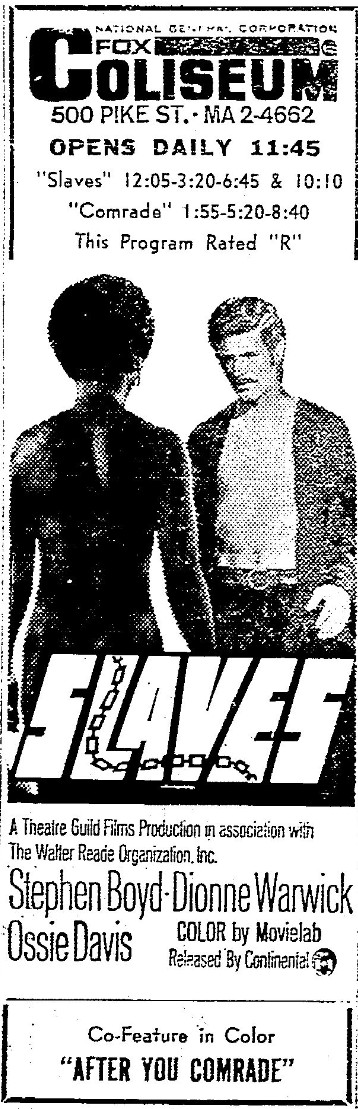
July 24, 1969 ad (Seattle)
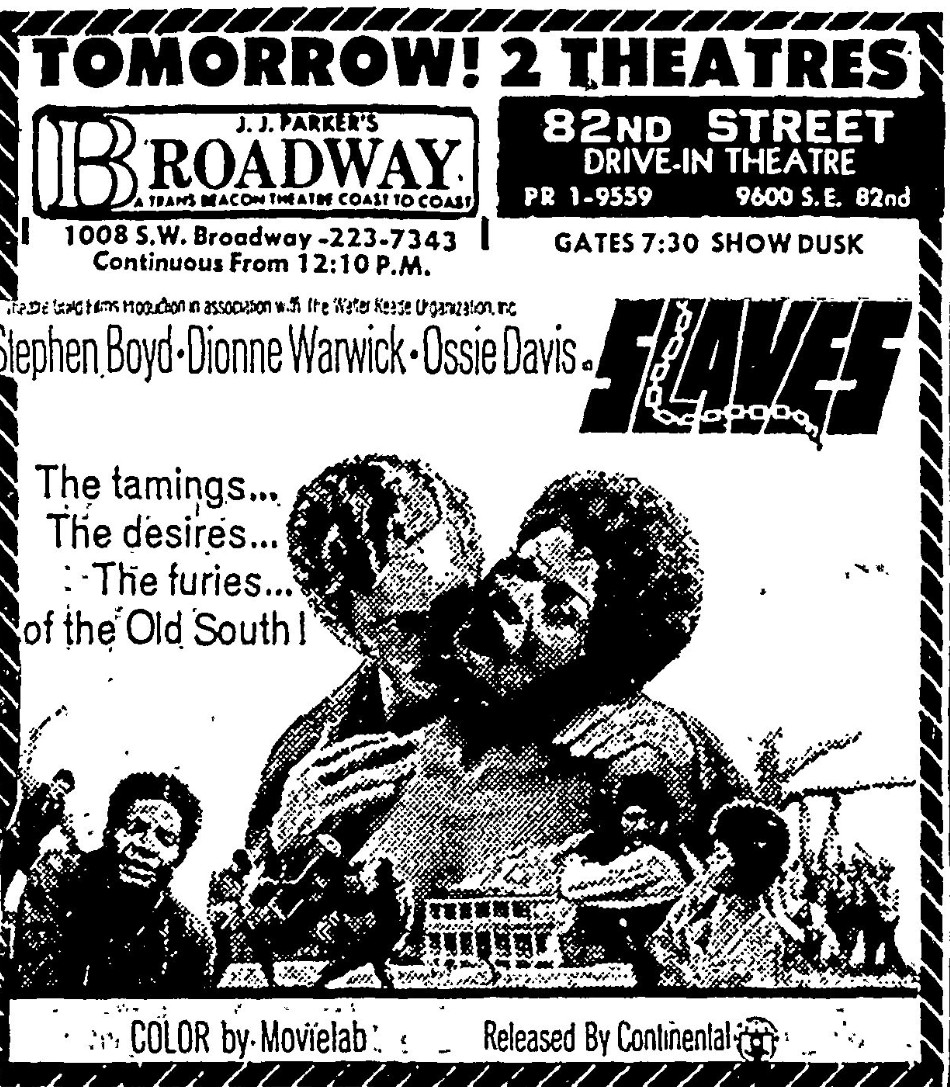
September 2, 1969 ad (Portland)
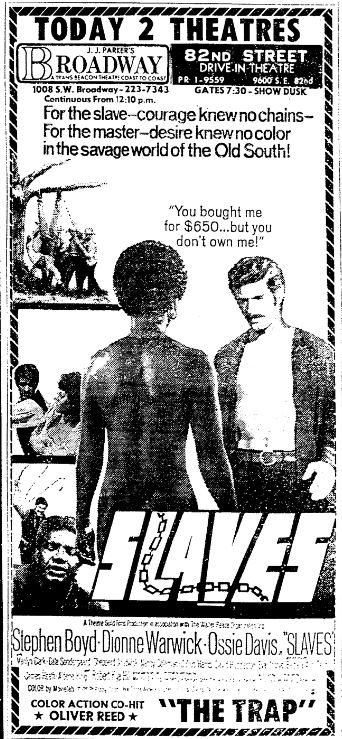
September 3, 1969 ad (Portland)
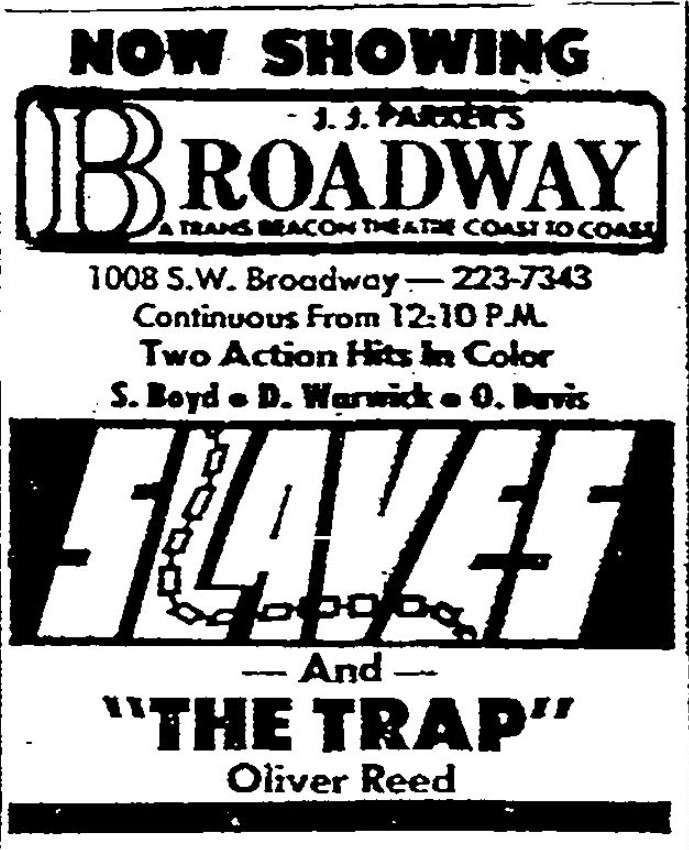
September 4, 1969 ad (Portland)
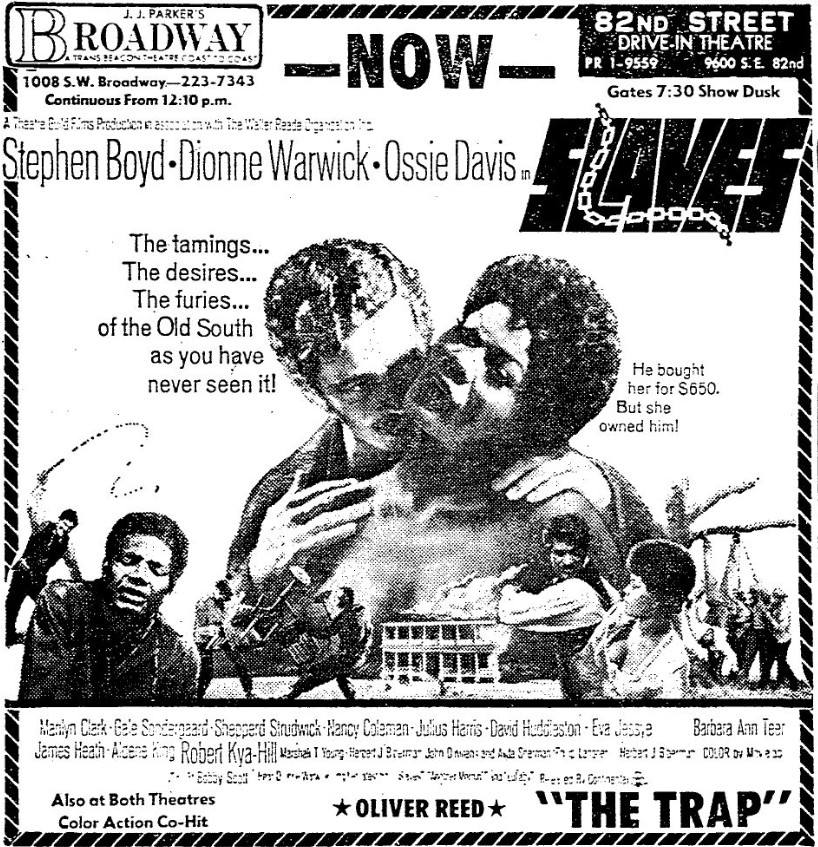
September 5, 1969 ad (Portland)
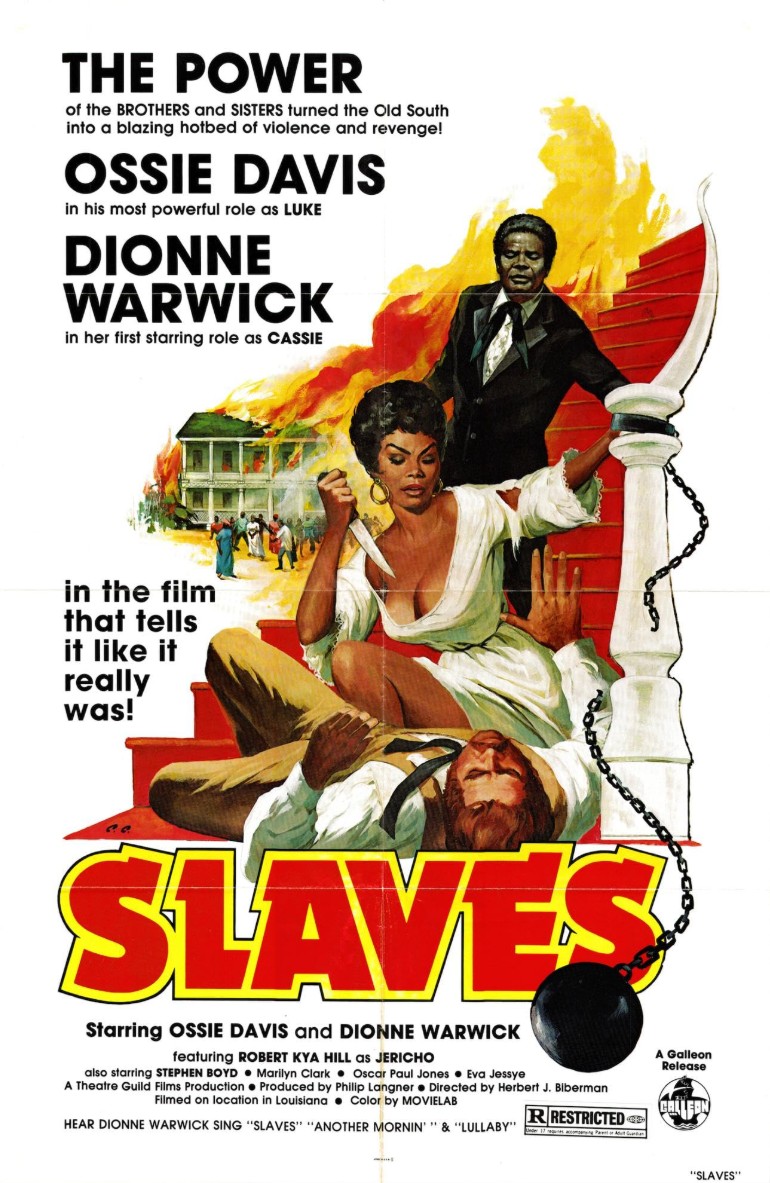
Slaves (1969) poster
Slaves (1969) trailer
