This is a collection of media from the initial runs of "Putney Swope" (1969) in the Pacific Northwest.
Click on images for larger versions.
Putney Swope (1969)
“Putney Swope” is a film that detonates its own premise with gleeful abandon, using the structure of a corporate satire as a launchpad for something far stranger, sharper, and more confrontational than its setup initially suggests. At its core, the film follows the accidental rise of a marginalized figure within a rigidly white, self-satisfied advertising agency, but it quickly becomes clear that the narrative is less interested in traditional character arcs than in exposing the absurdity, hypocrisy, and moral rot of American commercial culture at the end of the 1960s. The story unfolds in a series of jagged, anarchic episodes that mimic the fractured logic of advertising itself—short bursts of imagery, slogans, and provocations stitched together into a collage of cultural critique.
The film’s humor is abrasive and deliberately uncomfortable, leaning into exaggeration not for cheap laughs but to reveal how the advertising industry flattens everything—race, desire, rebellion, even dissent—into marketable surfaces. By pushing every scenario to its most grotesque or illogical extreme, the film exposes the machinery of persuasion that underlies corporate America. Its fake commercials, which interrupt the narrative like invasive species, function as miniature parodies of the era’s media landscape: slick, seductive, and utterly hollow. They become the film’s most potent weapon, revealing how easily radical imagery can be co‑opted and commodified.
Visually and tonally, “Putney Swope” embraces a raw, guerrilla energy that mirrors the countercultural moment from which it emerged. The black‑and‑white cinematography gives the film a documentary edge, while its abrupt tonal shifts and confrontational performances keep the viewer off balance. Rather than offering a clean moral stance, the film revels in contradictions—its protagonist’s rise to power becomes a critique of power itself, and its attacks on racism and capitalism are delivered through a style that is intentionally chaotic, sometimes abrasive, and often self‑implicating. The result is a film that feels like both a product of its time and a critique of that time, a satire that refuses to let anyone, including its own audience, off the hook.
What makes “Putney Swope” endure is its refusal to smooth out its rough edges. It is a film that understands satire as a form of disruption, not comfort, and it uses that disruption to interrogate the ways institutions absorb and neutralize rebellion. Even when its targets are obvious, its method is anything but, and the film’s jagged, confrontational style becomes part of its argument: in a world built on manipulation, clarity itself can be a trap.
Director: Robert Downey Sr.
Writer: Robert Downey Sr.
Stars: Arnold Johnson, Stan Gottlieb, Allen Garfield
Buy "Putney Swope" (1969) bluray on Amazon (SPONSORED)
Buy "Putney Swope" (1969) DVD on Amazon (SPONSORED)
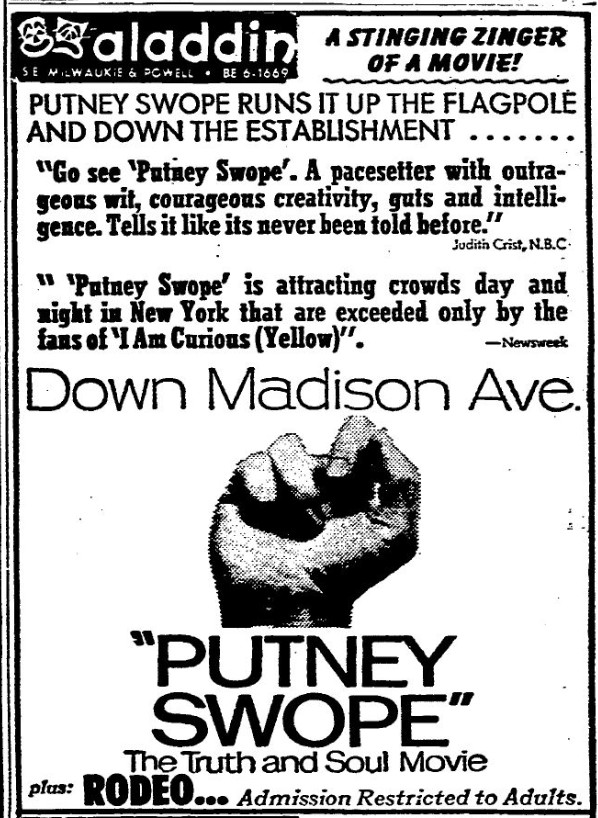
January 7, 1970 ad (Portland)
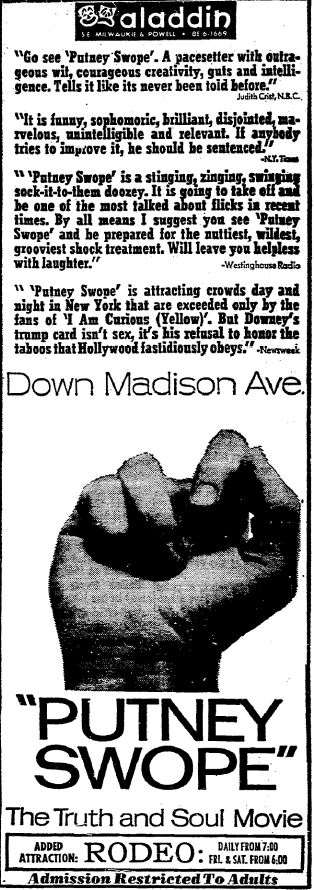
December 31, 1969 ad (Portland)
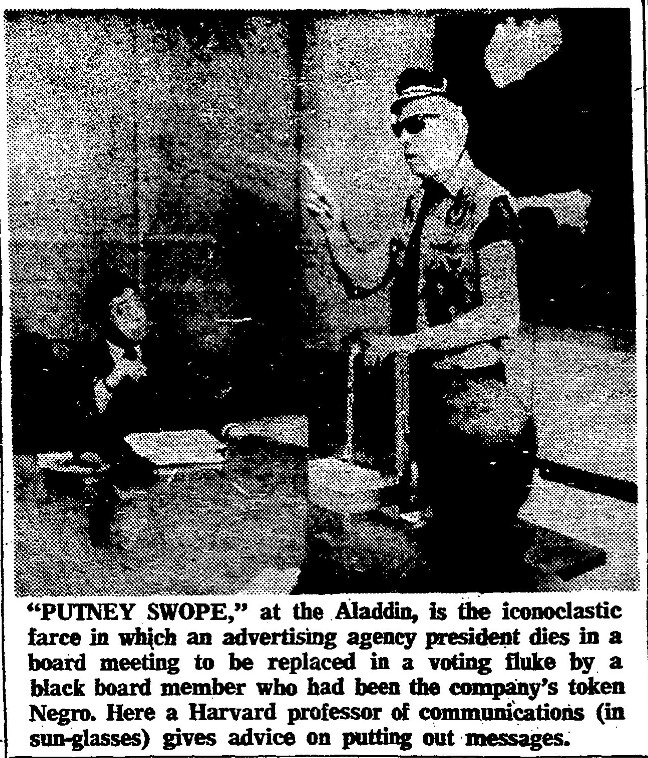
January 1, 1970 photo (Portland)
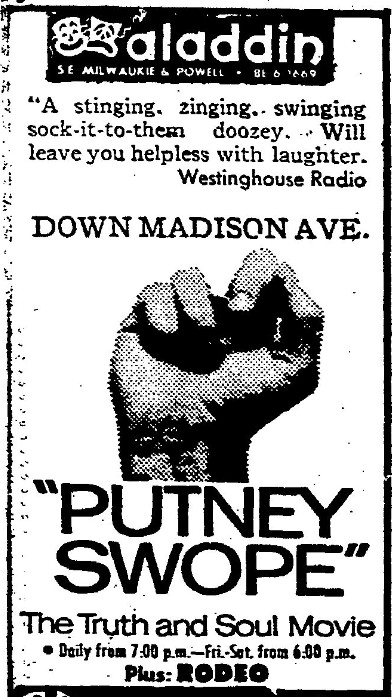
January 1, 1970 ad (Portland)
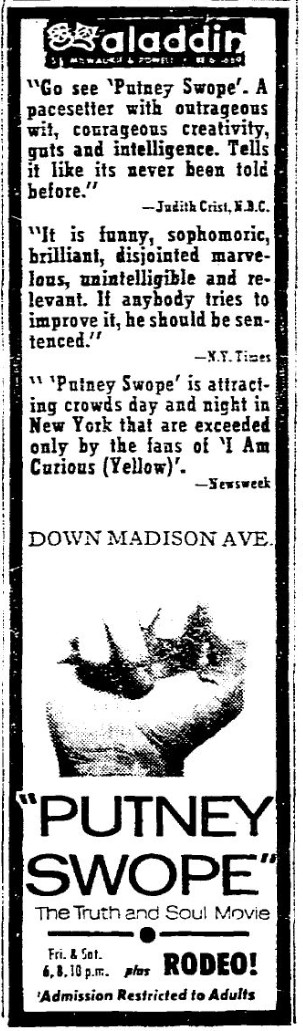
January 2, 1970 ad (Portland)
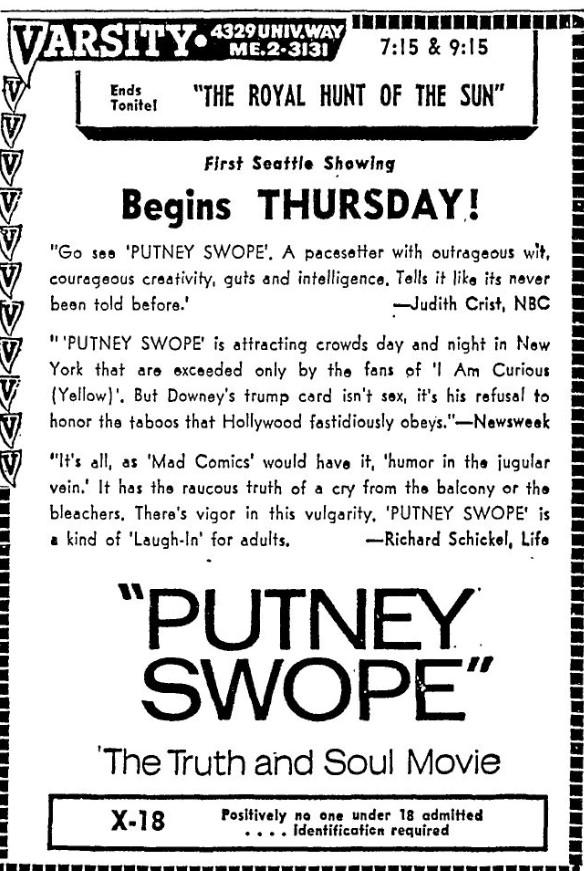
January 7, 1970 ad (Seattle)
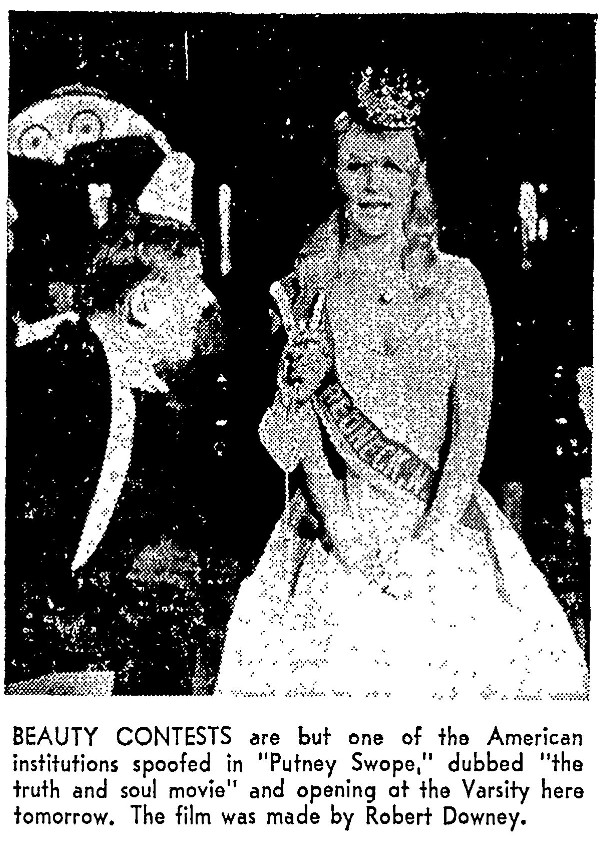
January 7, 1970 photo (Seattle)
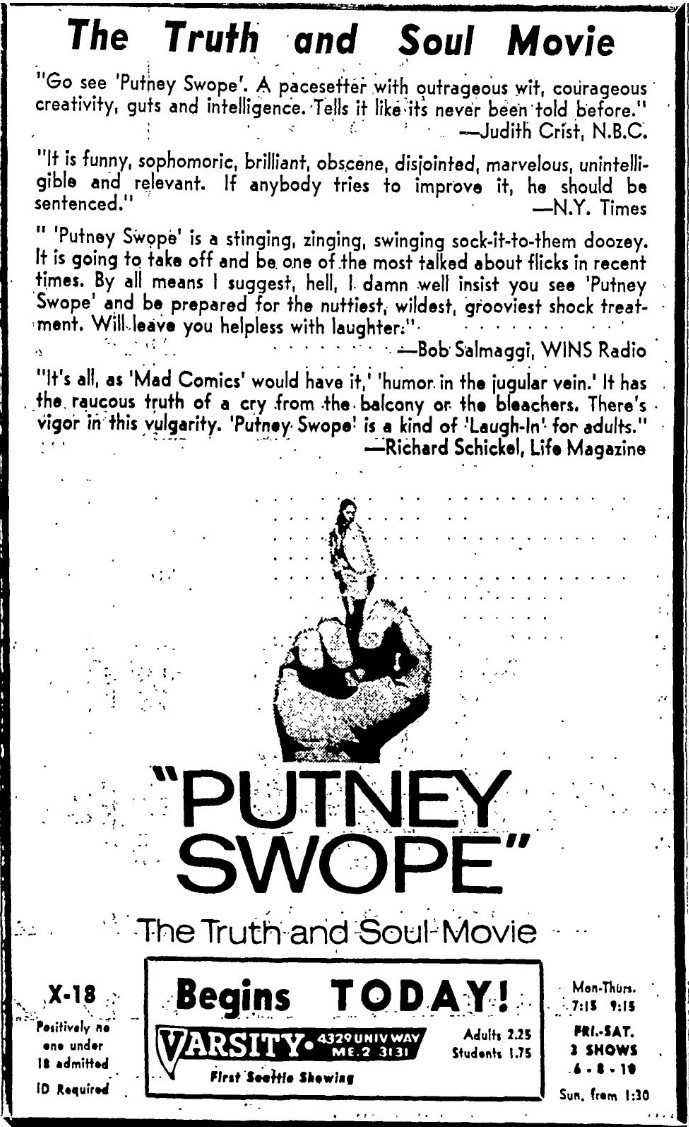
January 8, 1970 ad (Seattle)
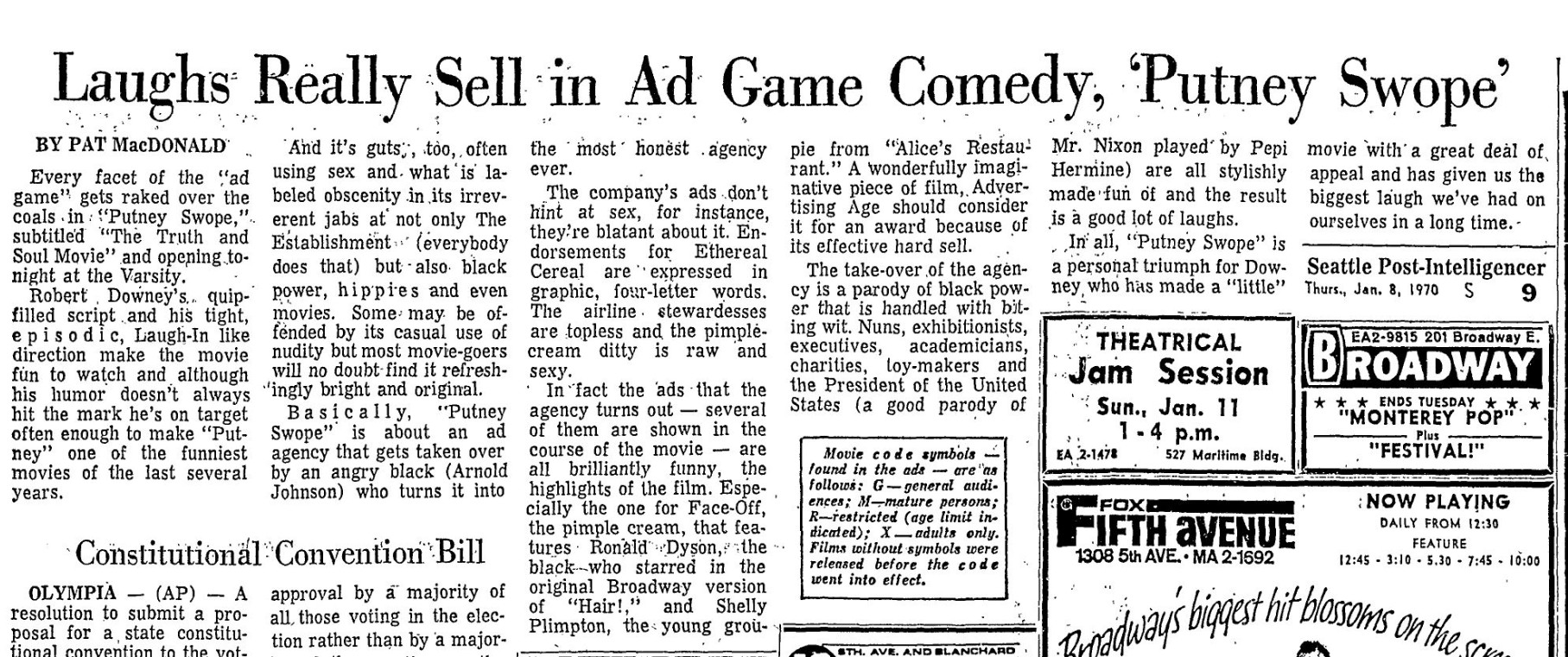
January 8, 1970 article (Seattle)
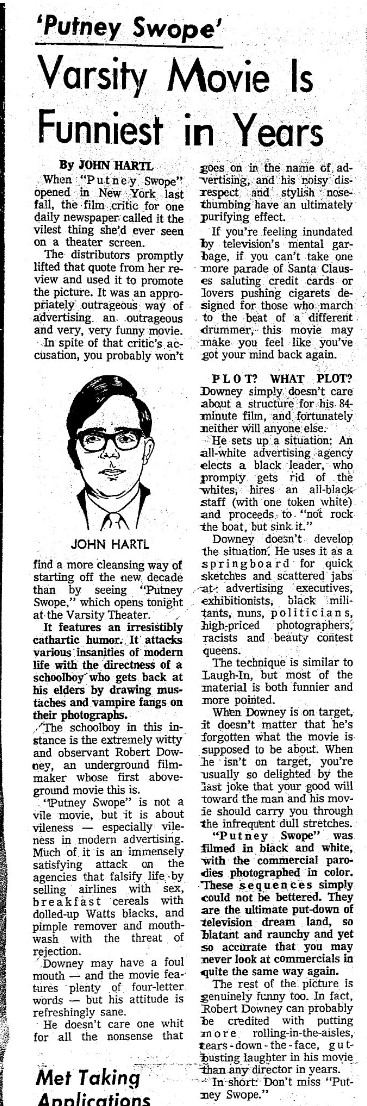
January 8, 1970 article (Seattle)
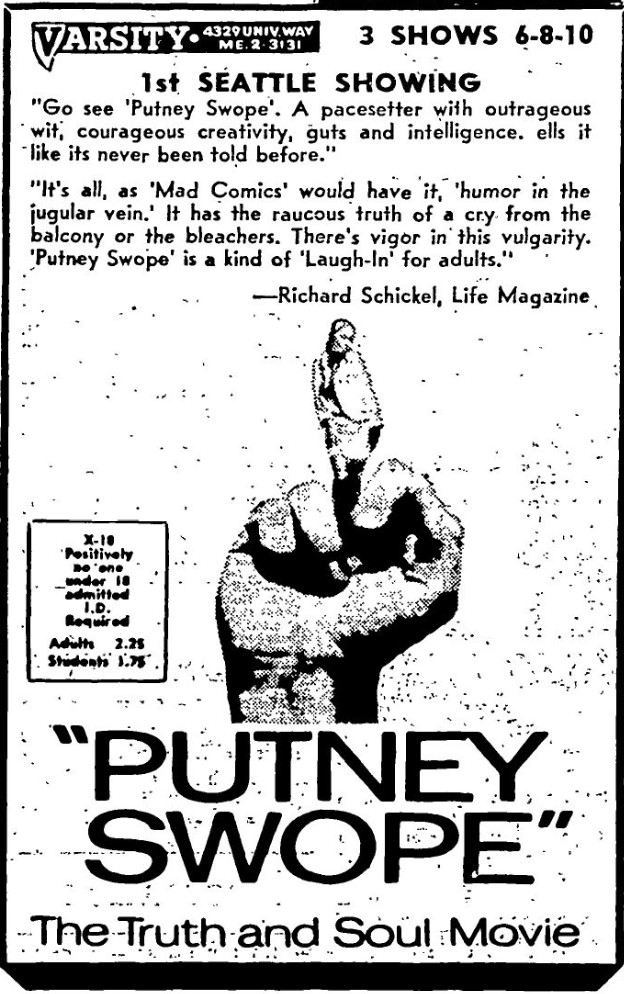
January 9, 1970 ad (Seattle)
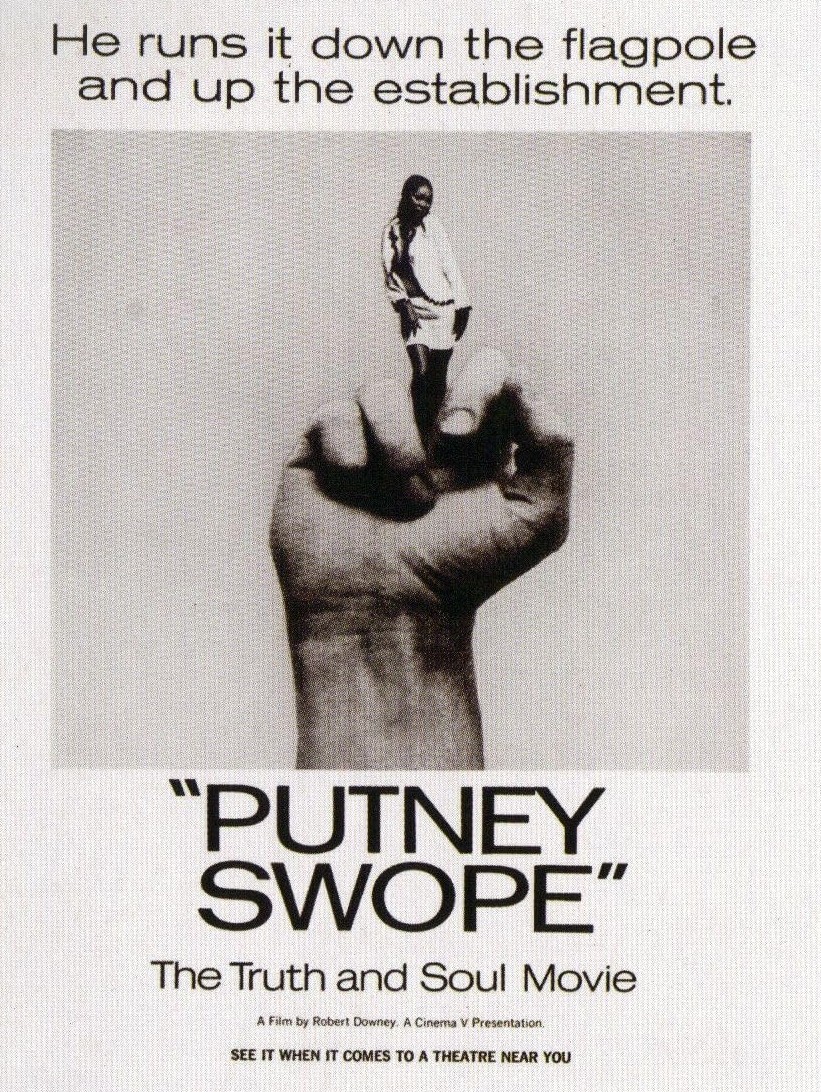
Putney Swope (1969) poster
Putney Swope (1969) trailer
Buy "Putney Swope" (1969) bluray on Amazon (SPONSORED)
Buy "Putney Swope" (1969) DVD on Amazon (SPONSORED)
