This is a collection of media from the initial runs of "Twisted Nerve" (1968) in the Pacific Northwest.
Click on images for larger versions.
Twisted Nerve (1968)
"Twisted Nerve" is a coolly disquieting psychological thriller that treats everyday spaces like pressure cookers, letting unease accumulate in bright kitchens, tidy shops, and genteel drawing rooms until the familiar feels faintly treacherous. Roy Boulting’s direction maintains a crisp, almost domestic clarity that keeps the film grounded, while subtly stressing the gap between polite surfaces and the roiling impulses underneath. Bernard Herrmann’s whistled motif threads through the film like a private signal—a lullaby that curdles into forewarning—so that even quiet scenes hum with the threat of imminent rupture.
"Twisted Nerve" probes the choreography of charm: how manners, smiles, and studied vulnerability can be performed to disarm, distract, and gain access. It’s fascinated by social masks, and the way English civility—soothing and codified—can be both protection and camouflage. The film repeatedly asks how much of identity is costume, how much is compulsion, and what happens when a carefully arranged self slips under the weight of desire, resentment, or fear. In this sense, it resonates with late‑1960s anxieties about class mobility, generational friction, and the brittleness of moral consensus.
Visually, "Twisted Nerve" relies on clean lines and uncluttered compositions that make small disruptions—lingering looks, misplaced objects, spatial asymmetries—feel like intrusions. That minimalist precision turns everyday interactions into a kind of social suspense, where the danger isn’t just what might happen, but how plausibly it can be excused. The editing favors measured escalation over shock, letting the audience sit in the discomfort of ambiguous intentions and half‑truths rather than pushing toward sensational revelation.
The performances anchor "Twisted Nerve" in a persuasive reality: gestures and micro‑expressions carry as much weight as dialogue, and charm is wielded with a delicacy that hints at calculation without tipping into caricature. Hayley Mills brings an open, observant presence that balances the film’s darker currents, while Hywel Bennett’s mercurial shifts register as both beguiling and faintly dissonant. Together, they enact a dance of attention and trust that becomes the film’s moral terrain, where empathy is tested and perception is repeatedly challenged.
As a cultural artifact, "Twisted Nerve" catches a moment when British cinema was interrogating the fault lines beneath its social rituals. It is less about overt violence than the creeping sense that the ordinary can be weaponized, that politeness may be a veil, and that intimacy—so casual in daylight—can be precarious in shadow. The film lingers because it leaves viewers with that disquieting aftertaste: the sense that the everyday, once unsettled, cannot be neatly restored.
Director: Roy Boulting
Writers: Leo Marks, Roy Boulting, Roger Marshall
Stars: Hywel Bennett, Russell Napier, Hayley Mills
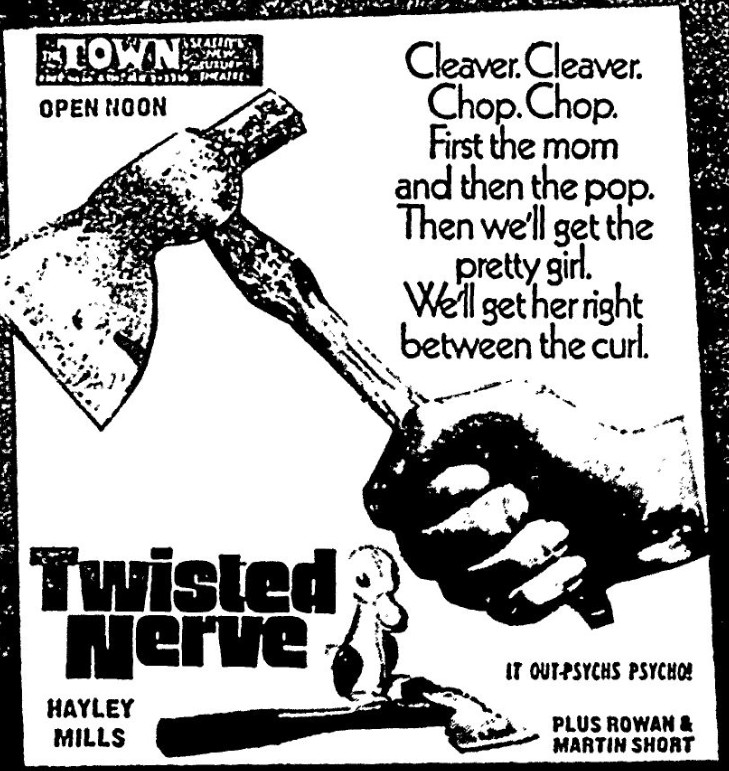
February 20, 1969 ad (Seattle)
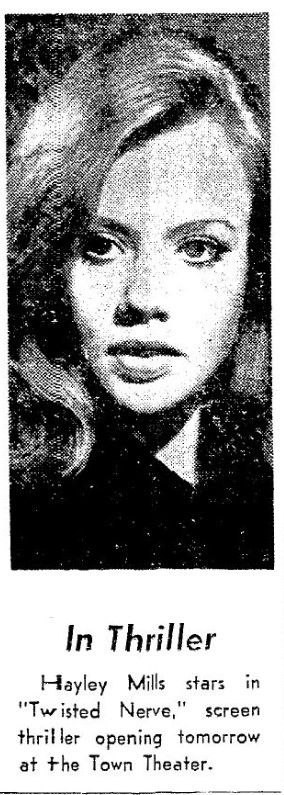
February 18, 1969 photo (Seattle)
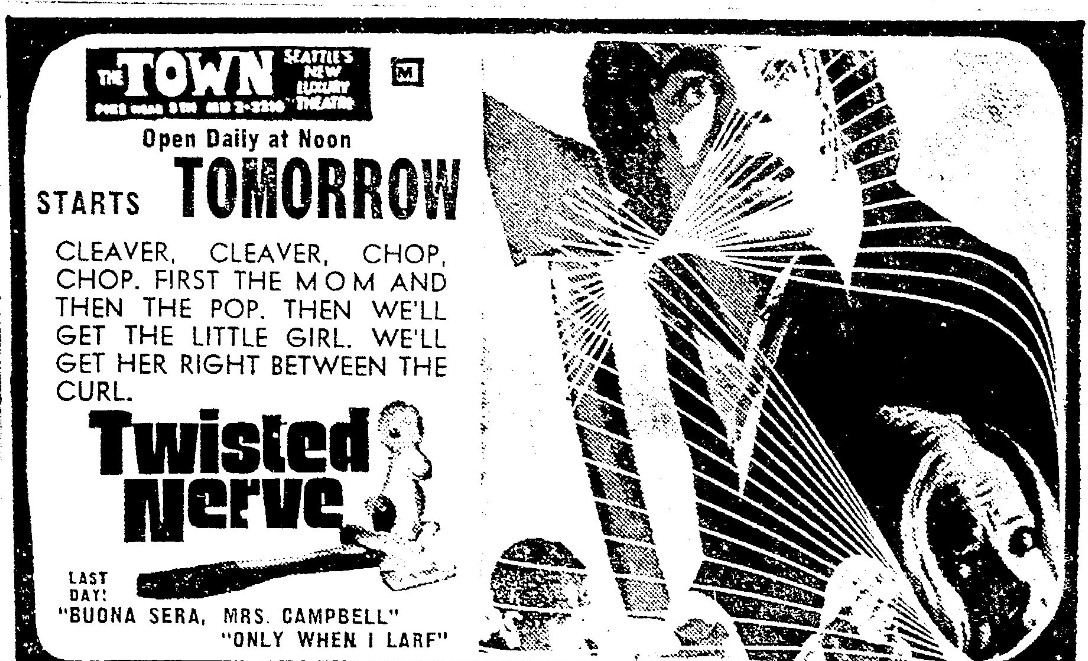
February 18, 1969 ad (Seattle)
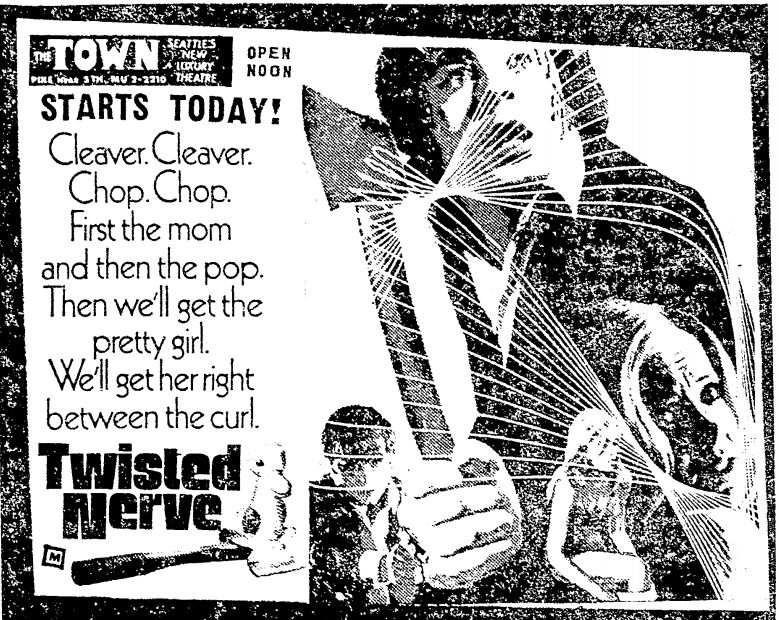
February 19, 1969 ad (Seattle)
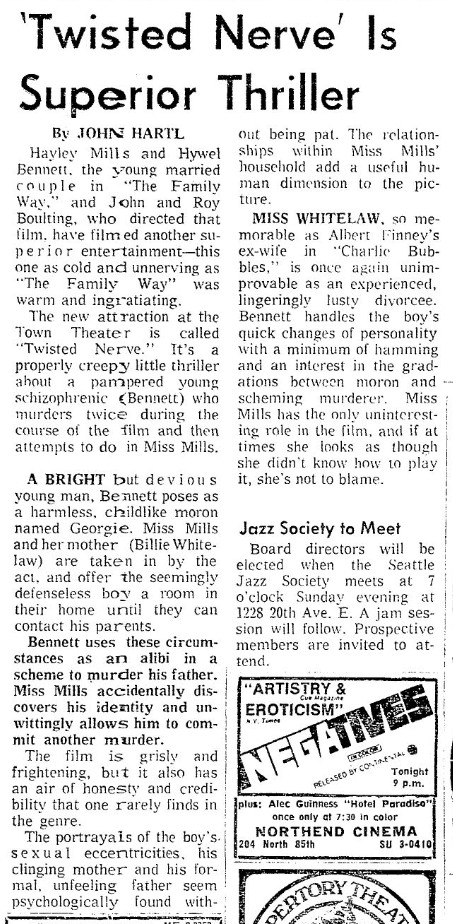
February 20, 1969 article (Seattle)
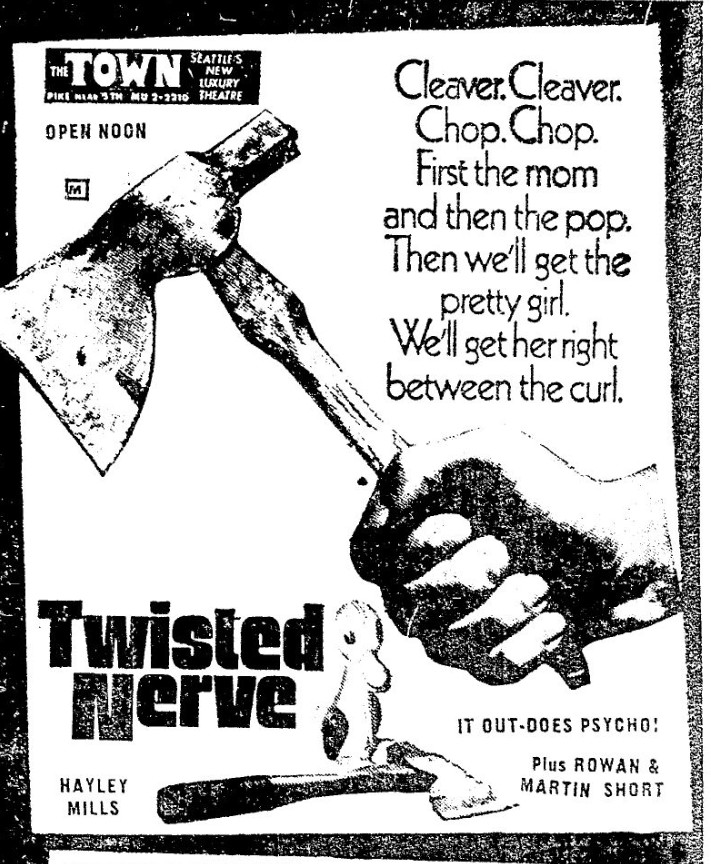
February 21, 1969 ad (Seattle)
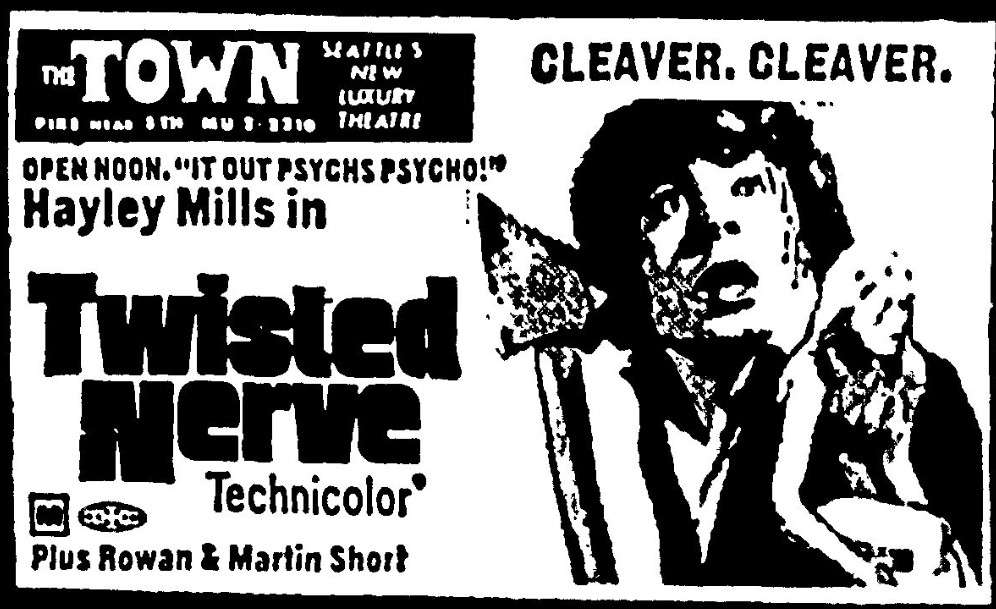
February 25, 1969 ad (Seattle)
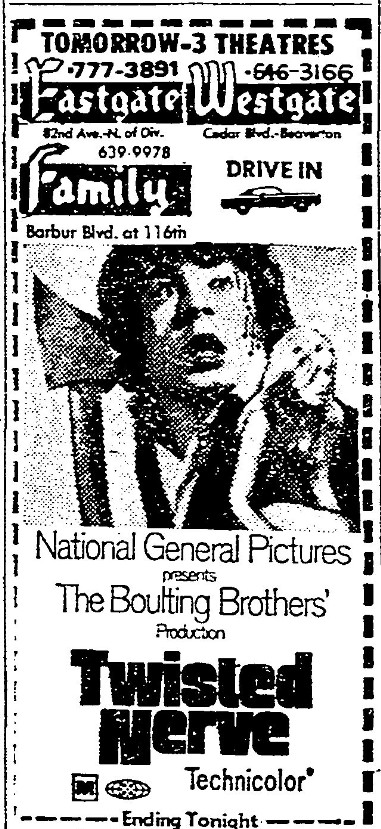
April 8, 1969 ad (Portland)
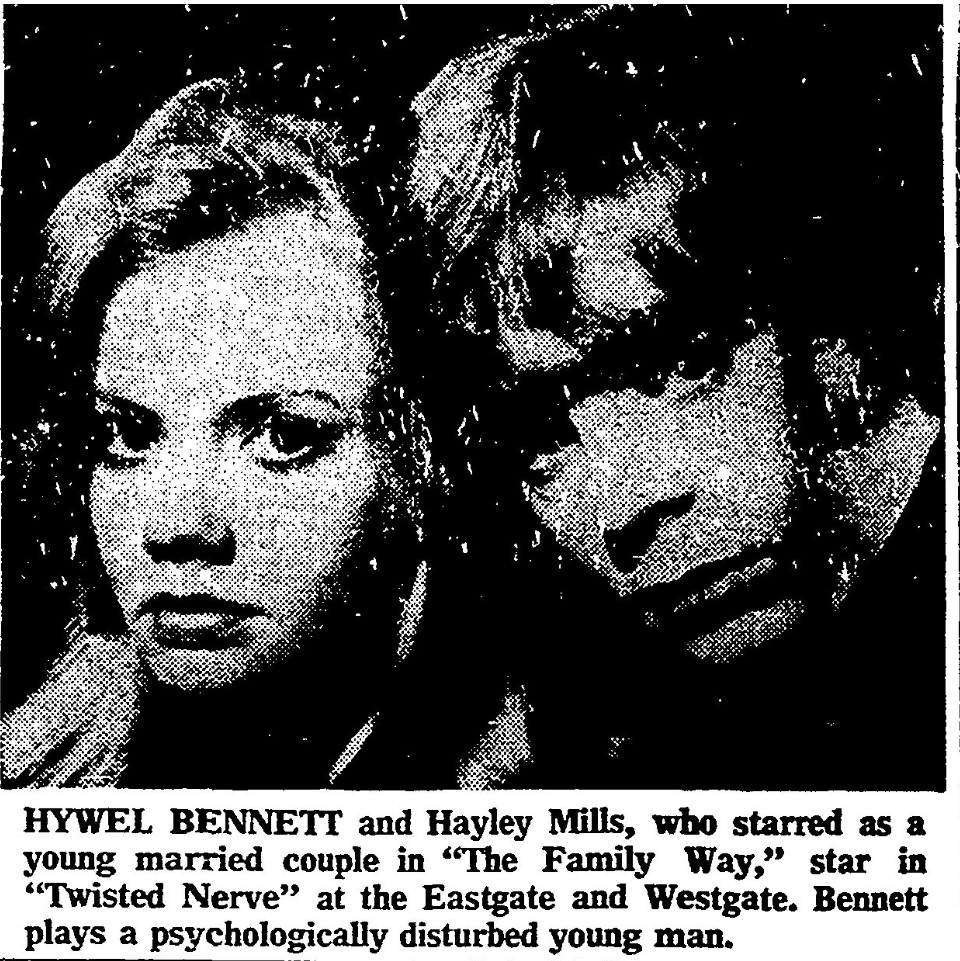
April 9, 1969 ad (Portland)
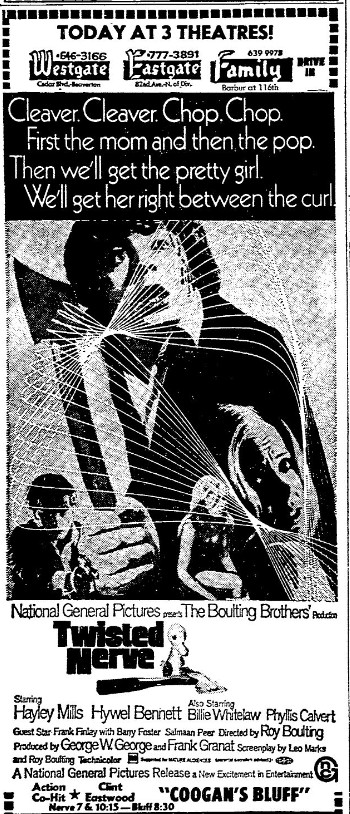
April 9, 1969 ad (Portland)
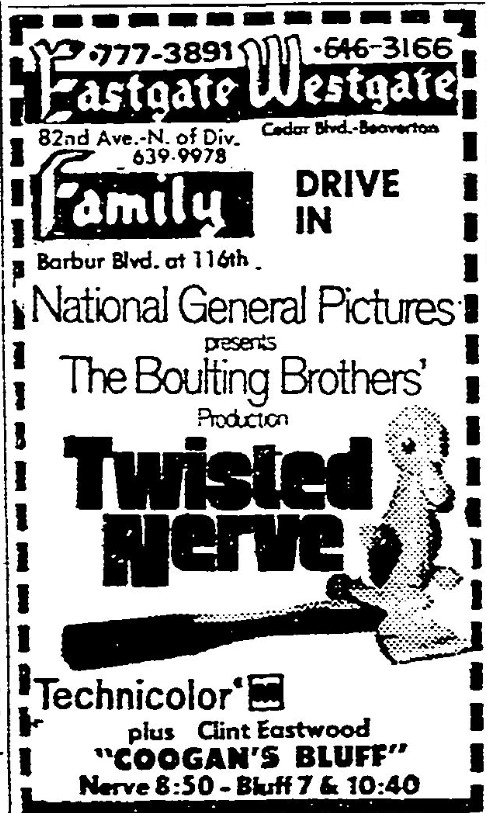
April 10, 1969 ad (Portland)
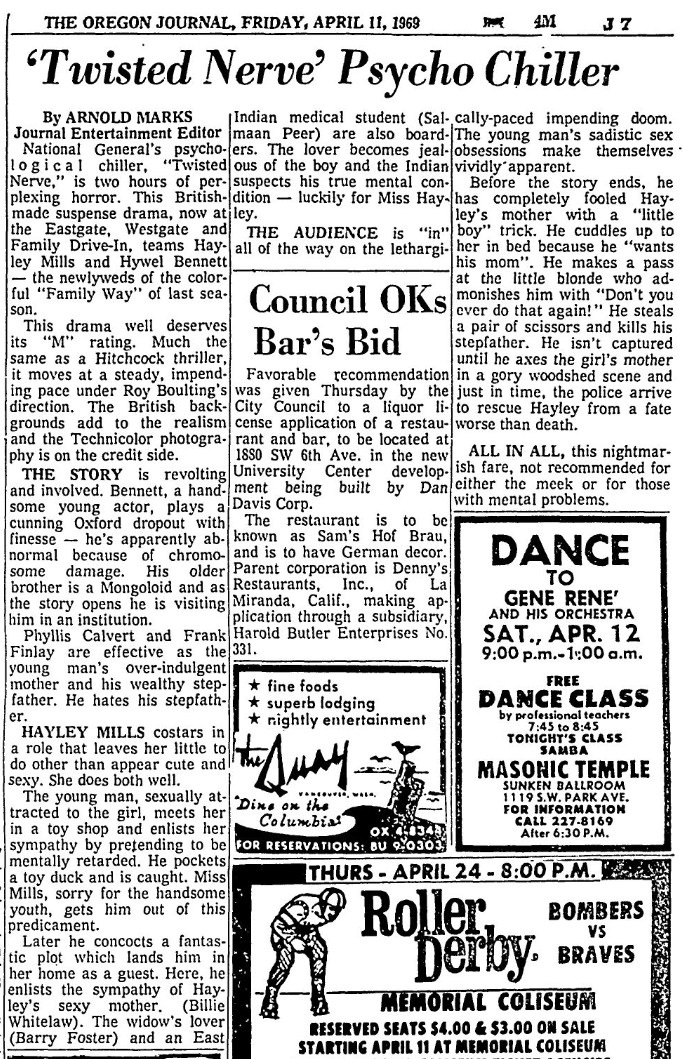
April 11, 1969 article (Portland)
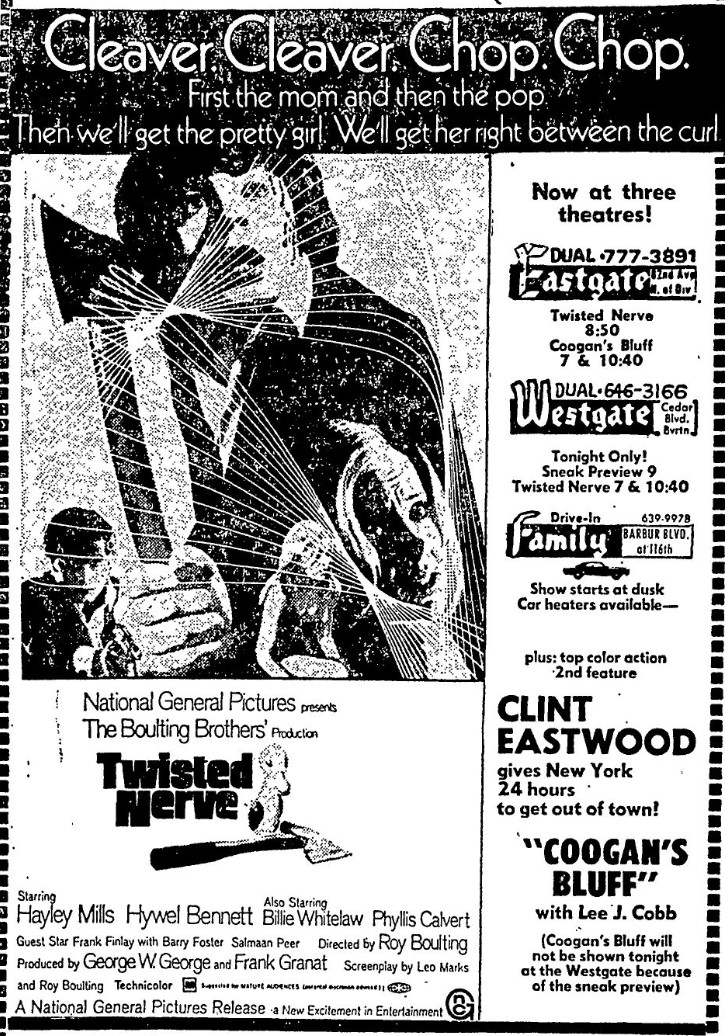
April 11, 1969 ad (Portland)
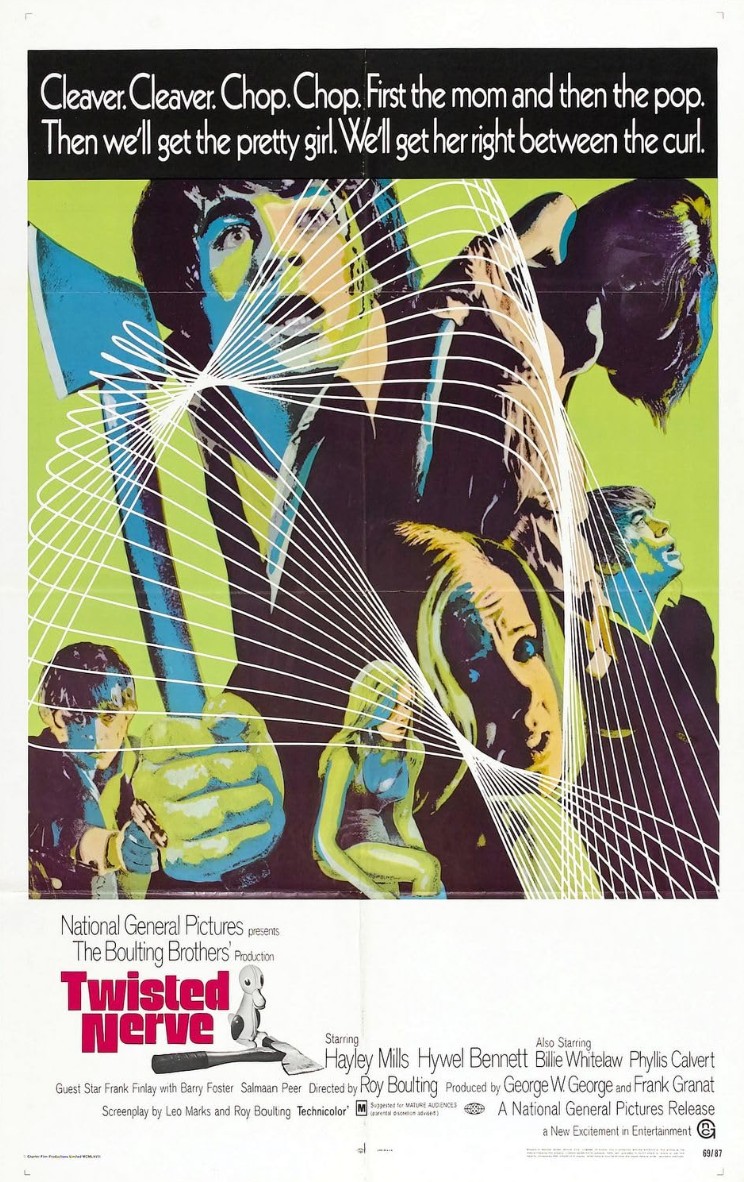
Twisted Nerve (1968) poster
Twisted Nerve (1968) trailer
