This is a collection of media from the initial runs of "Riot" (1969) in the Pacific Northwest.
Click on images for larger versions.
Riot (1969)
“Riot” (1969) is a gritty, atmospheric prison drama that aims for realism but struggles with narrative cohesion.
Directed by Buzz Kulik and based on Frank Elli’s non-fiction novel, “Riot” unfolds within the confines of an Arizona penitentiary, where a volatile uprising becomes the backdrop for a tense character study. The film is notable for its use of real inmates and its location shooting inside an actual prison, lending it a raw, documentary-like texture that sets it apart from more stylized entries in the prison-break genre. Kulik’s direction emphasizes the chaotic and claustrophobic nature of the setting, using muffled dialogue, ambient noise, and disorienting sound design to evoke the confusion and desperation of a facility on the brink of collapse.
At the heart of “Riot” is a contrast between two central figures: Jim Brown’s Cully Briston, a pragmatic inmate with hopes of parole, and Gene Hackman’s Red Fraker, a charismatic but volatile leader of the revolt. Their dynamic reflects broader tensions within the prison population—between those seeking survival and those driven by vengeance or ideology. Brown’s performance hints at a deeper emotional range than his earlier action roles, while Hackman brings a simmering intensity that foreshadows his later career-defining work. Ben Carruthers, as a disturbed inmate, adds a layer of unpredictability that underscores the film’s psychological edge.
Despite its compelling performances and immersive setting, “Riot” falters in its narrative execution. The plot lacks a clear trajectory, with the prison break plan feeling underdeveloped and the suspense often dissipating into unresolved confrontations. The film’s structure leans heavily on character interactions and philosophical musings, but these moments rarely coalesce into a cohesive thematic arc. Instead, the story meanders through fragmented scenes that suggest deeper meaning without fully delivering it.
What “Riot” does achieve is a sense of authenticity—its portrayal of prison life is unvarnished and often bleak, capturing the rhythms of confinement and the simmering tensions that can erupt into violence. The film’s soundscape, scored by Krzysztof Komeda, adds a haunting layer to the chaos, using electronic distortions and ambient noise to heighten the sense of unease. This sonic experimentation is one of the film’s most distinctive features, reinforcing its commitment to mood over conventional storytelling.
Ultimately, “Riot” stands as a transitional work—caught between the gritty realism of late-1960s cinema and the more structured genre conventions it seeks to subvert. It’s a film that values atmosphere and character over plot, and while that choice yields moments of genuine intensity, it also leaves the viewer adrift in a narrative that never fully crystallizes. For those interested in prison dramas that reflect the era’s shifting cinematic sensibilities, “Riot” offers a compelling, if uneven, glimpse into institutional unrest and personal reckoning.
Director: Buzz Kulik
Writers: Frank Elli, James Poe
Stars: Jim Brown, Gene Hackman, Mike Kellin
Buy "Riot" (1969) bluray on Amazon (SPONSORED)
Buy "Riot" (1969) DVD on Amazon (SPONSORED)
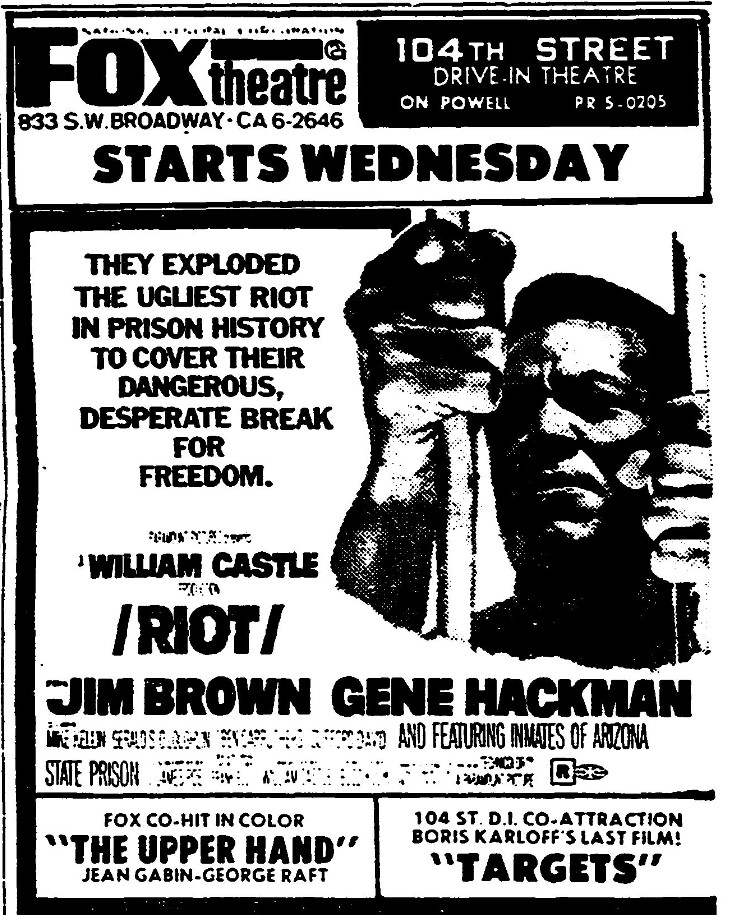
February 11, 1969 ad (Portland)
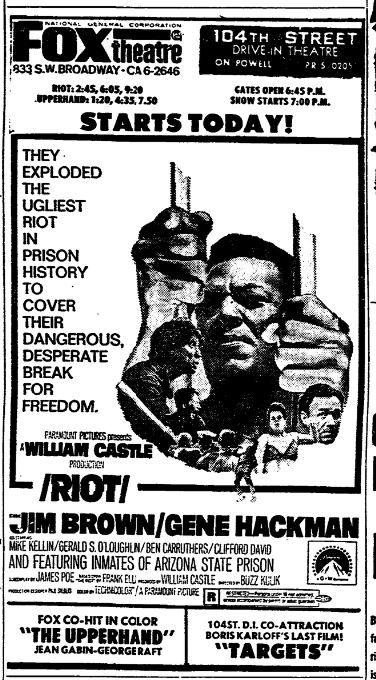
February 12, 1969 ad (Portland)
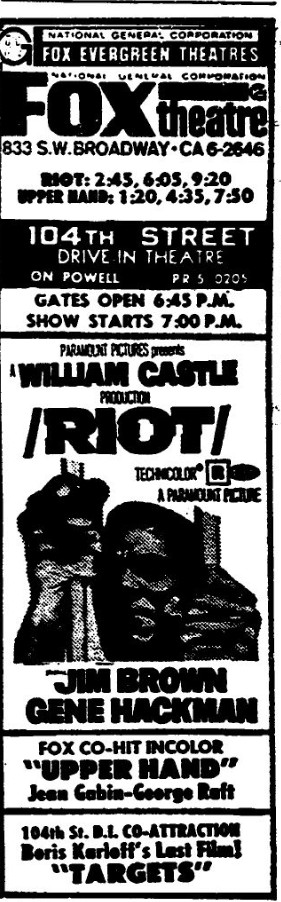
February 13, 1969 ad (Portland)
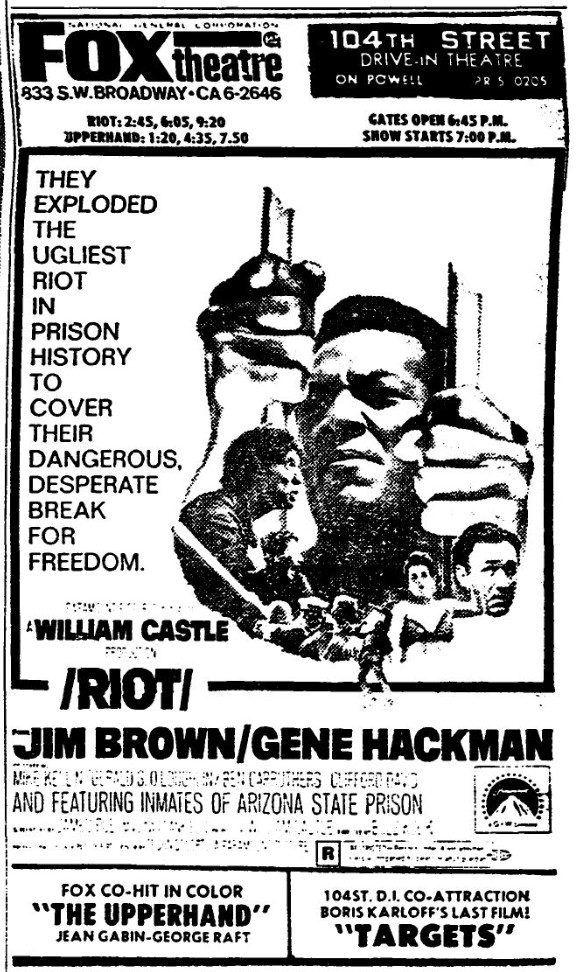
February 14, 1969 ad (Portland)
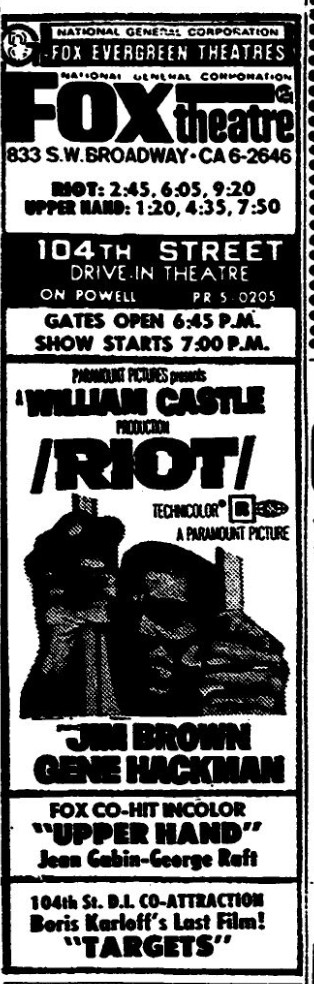
February 15, 1969 ad (Portland)
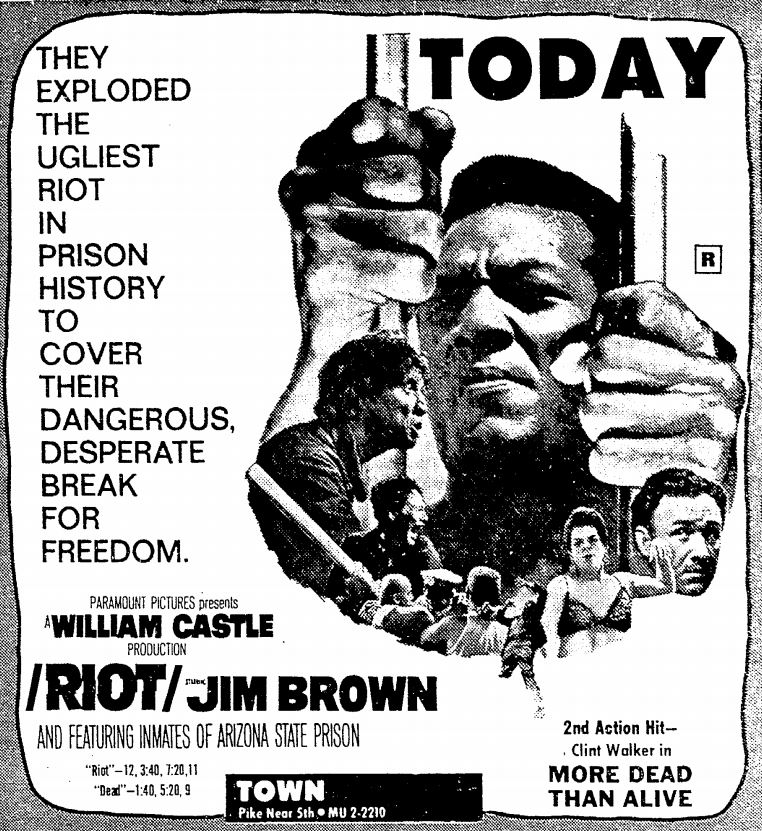
March 5, 1969 ad (Seattle)
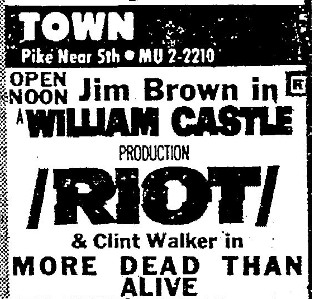
March 6, 1969 ad (Seattle)
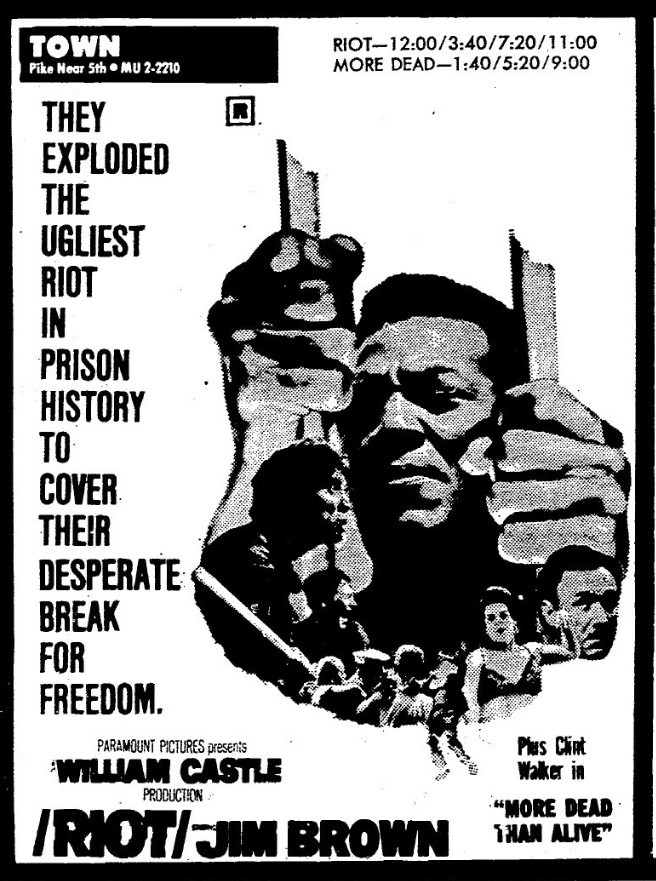
March 7, 1969 ad (Seattle)
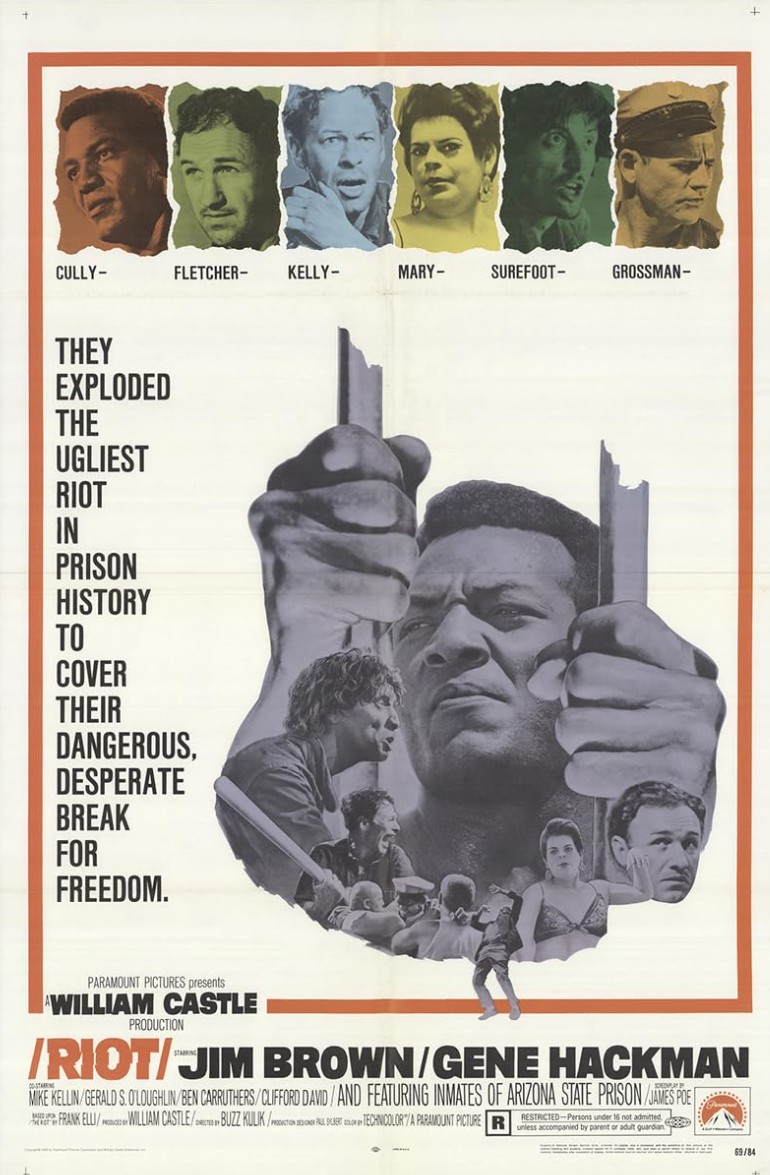
Riot (1969) poster
Riot (1969) opening
Buy "Riot" (1969) bluray on Amazon (SPONSORED)
Buy "Riot" (1969) DVD on Amazon (SPONSORED)
