This is a collection of media from the initial runs of "Charly" (1968) in the Pacific Northwest.
Click on images for larger versions.
Charly (1968)
"Charly" (1968) is a poignant and stylistically adventurous adaptation of Daniel Keyes’ novella "Flowers for Algernon," anchored by Cliff Robertson’s Oscar-winning performance. The film explores the psychological and emotional ramifications of artificially enhanced intelligence through the story of Charly Gordon, a developmentally disabled man who undergoes an experimental procedure that dramatically increases his IQ. What begins as a tale of scientific triumph gradually deepens into a meditation on identity, human connection, and the fragile boundaries between intellect and emotion.
Set against the backdrop of late-1960s America, "Charly" reflects the era’s fascination with progress and its anxieties about the cost of tampering with nature. The film’s visual style is emblematic of its time, employing split screens, psychedelic montages, and experimental editing to mirror Charly’s shifting consciousness. These techniques, while occasionally jarring, serve to immerse the viewer in his evolving internal world, capturing both the exhilaration and isolation that accompany his transformation.
At its core, "Charly" is less concerned with the mechanics of science fiction than with the human consequences of radical change. The narrative probes questions of dignity, autonomy, and the ethics of experimentation, all while maintaining a deeply personal focus. The emotional resonance of the film is heightened by its sensitive portrayal of relationships—particularly between Charly and his teacher Alice, whose evolving dynamic underscores the tension between intellectual growth and emotional maturity.
Robertson’s performance is central to the film’s impact, conveying Charly’s journey with remarkable nuance and empathy. His ability to shift seamlessly between innocence, brilliance, and vulnerability gives the character a haunting complexity. The film’s conclusion, while not revealed here, is both inevitable and deeply affecting, leaving the viewer with lingering questions about what it means to be truly human.
"Charly" stands as a compelling fusion of character study and social commentary, enriched by its period-specific aesthetic and philosophical depth. It remains a powerful exploration of the limits of science, the nature of selfhood, and the enduring need for compassion in the face of transformation.
Director: Ralph Nelson
Writers: Stirling Silliphant, Daniel Keyes (Novel, "Flowers for Algernon")
Stars: Cliff Robertson, Claire Bloom, Lilia Skala
Buy "Charly" (1968) DVD on Amazon (SPONSORED)
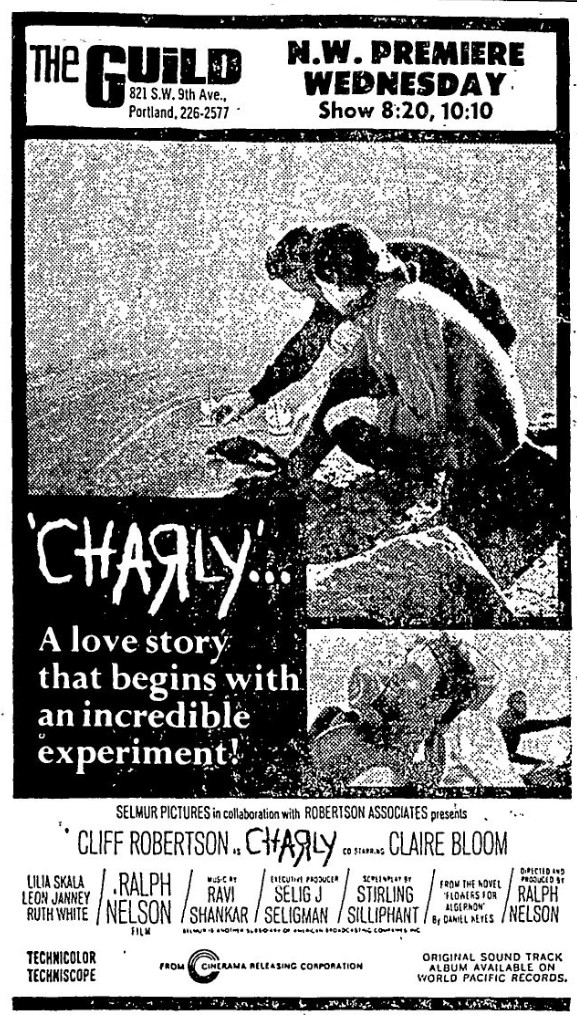
February 4, 1969 ad (Portland)
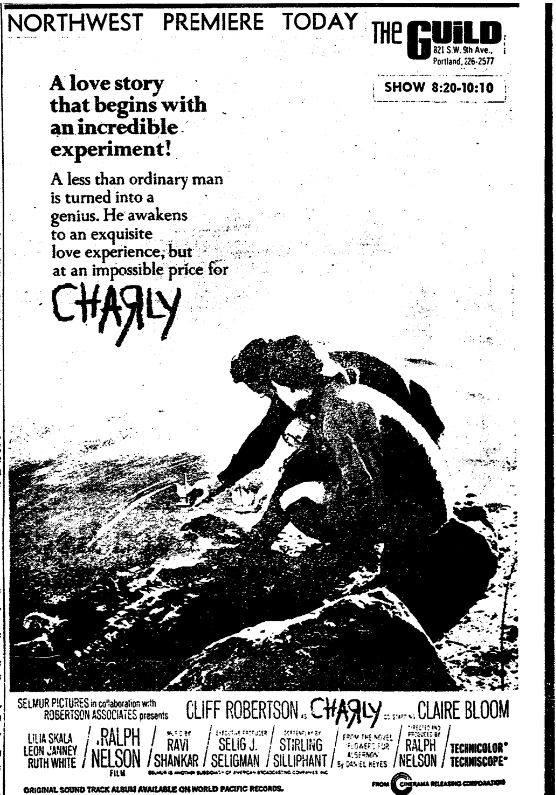
February 5, 1969 ad (Portland)
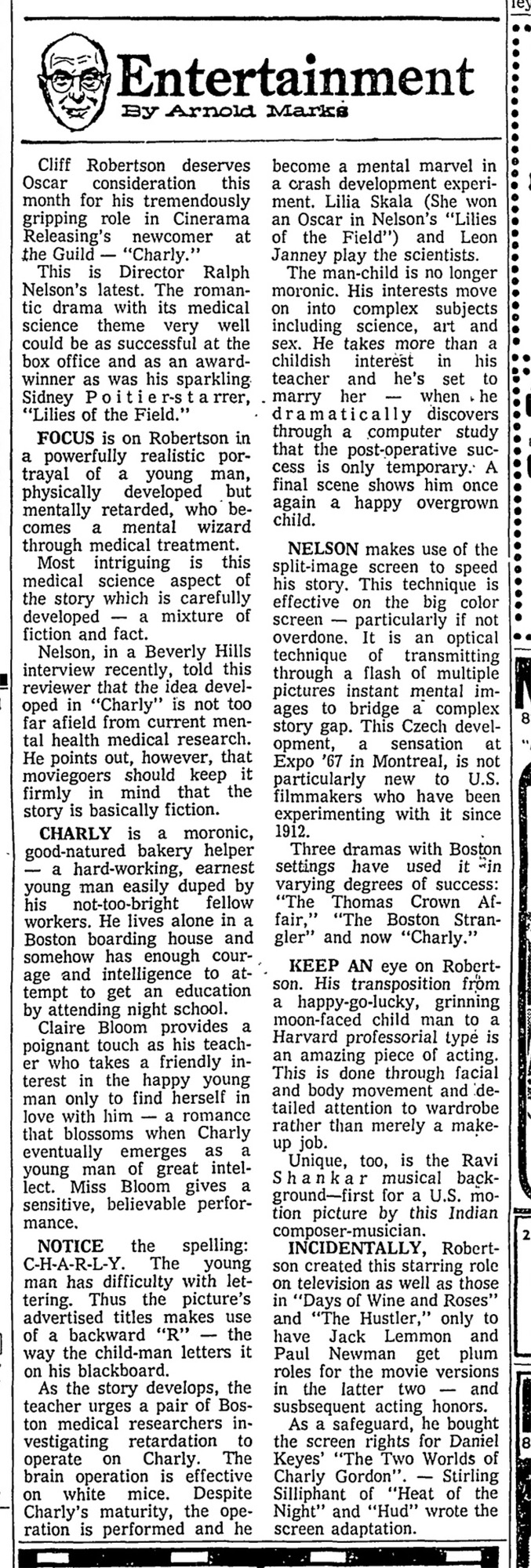
February 5, 1969 article (Portland)
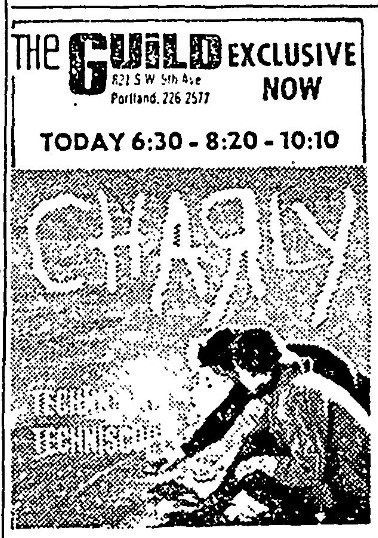
February 5, 1969 ad (Portland)
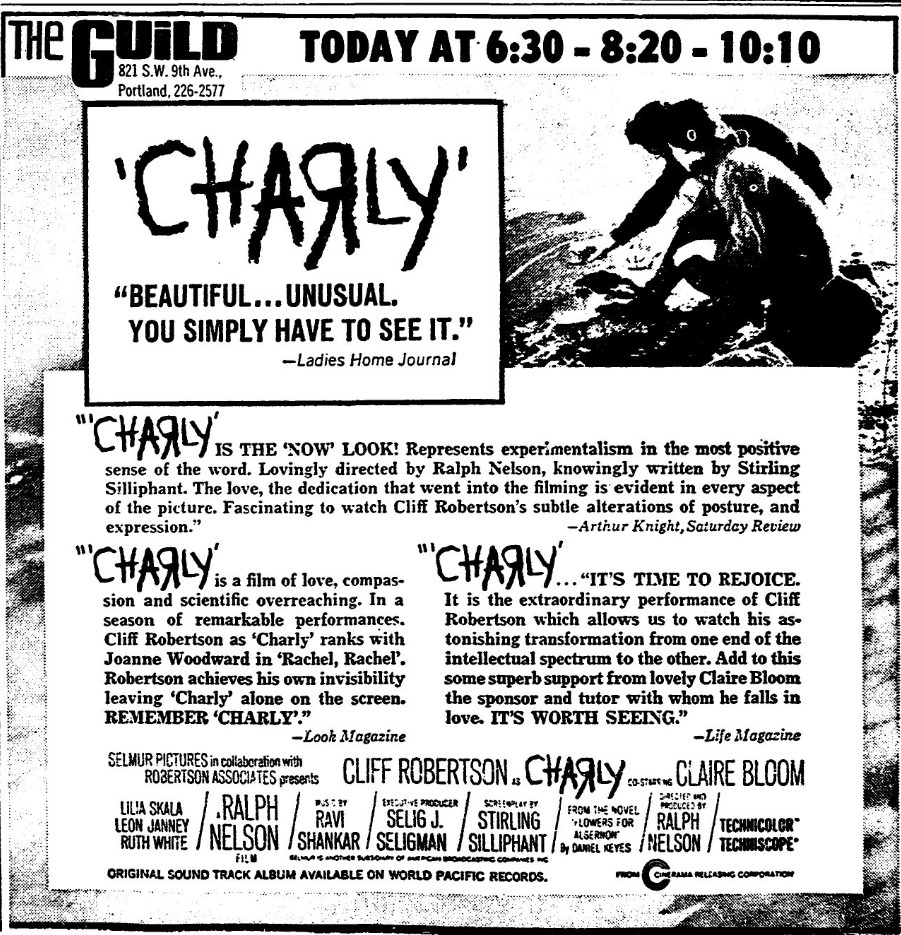
February 7, 1969 ad (Portland)
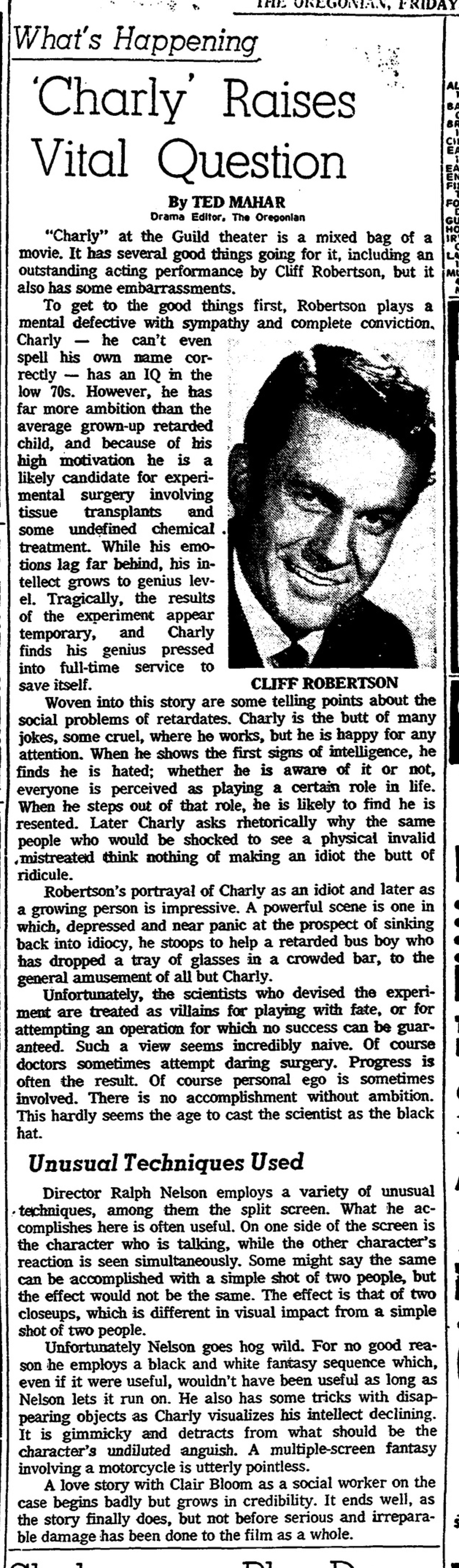
February 7, 1969 article (Portland)
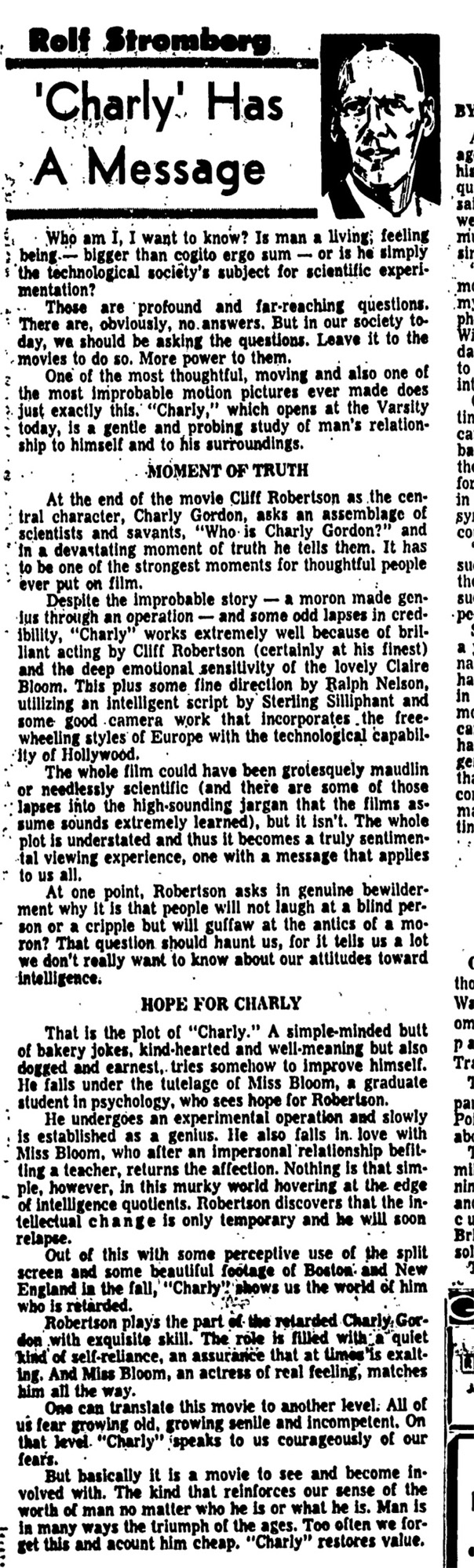
March 20, 1969 article (Seattle)
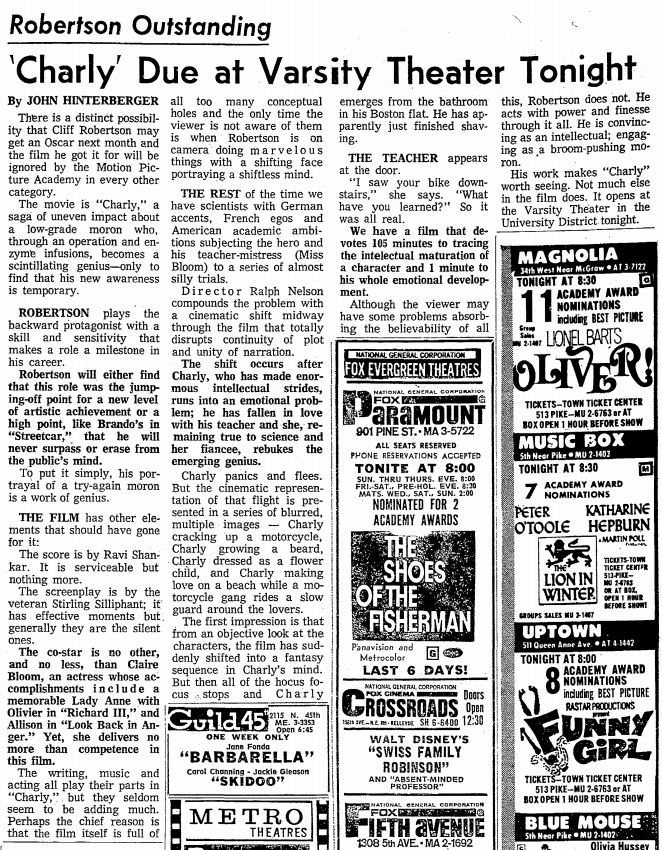
March 20, 1969 article (Seattle)
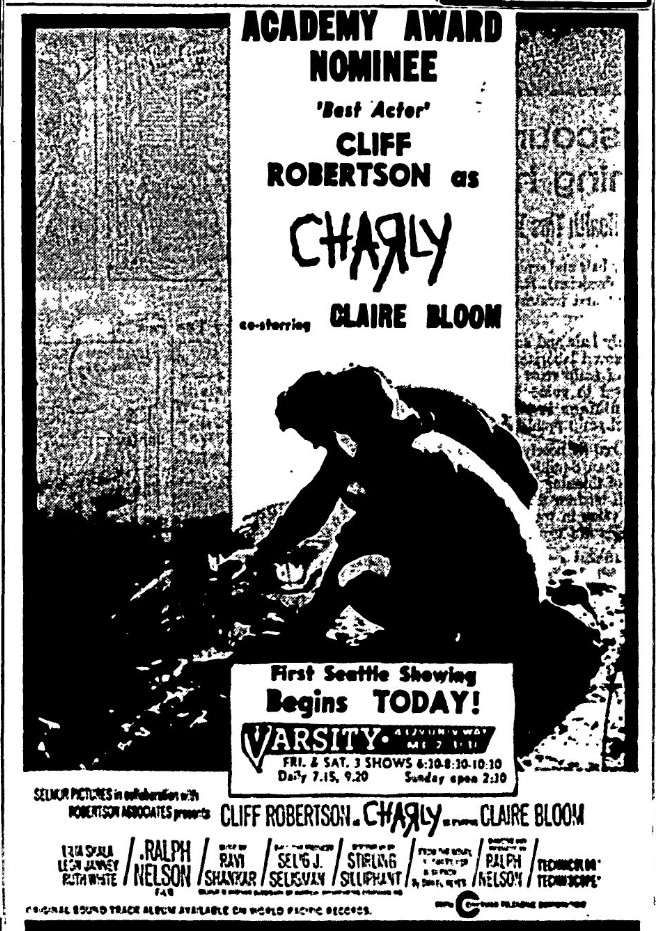
March 20, 1969 ad (Seattle)
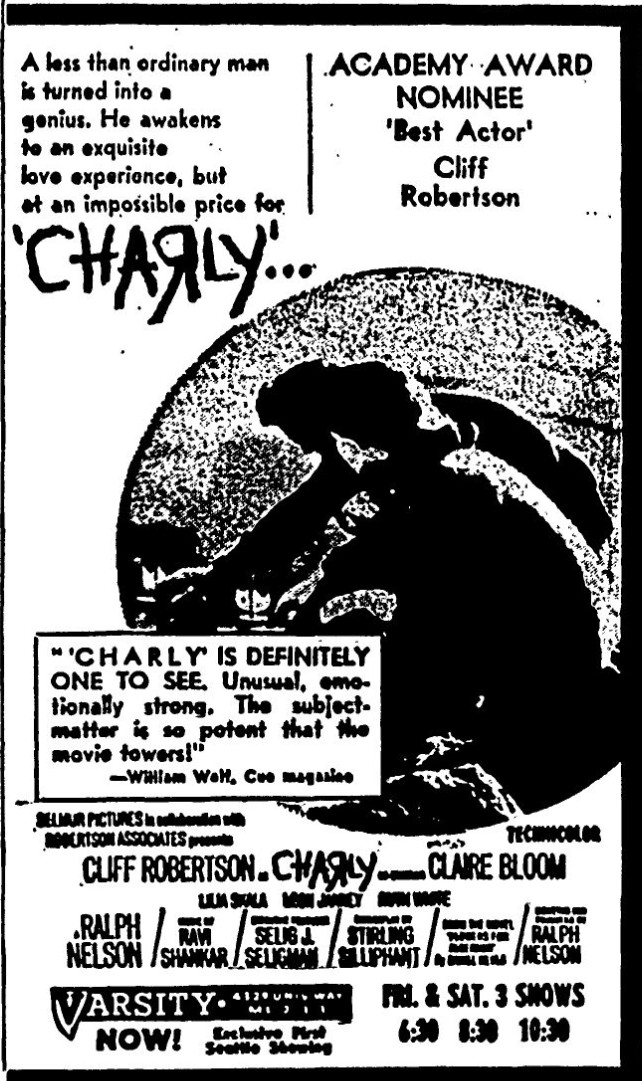
March 21, 1969 ad (Seattle)
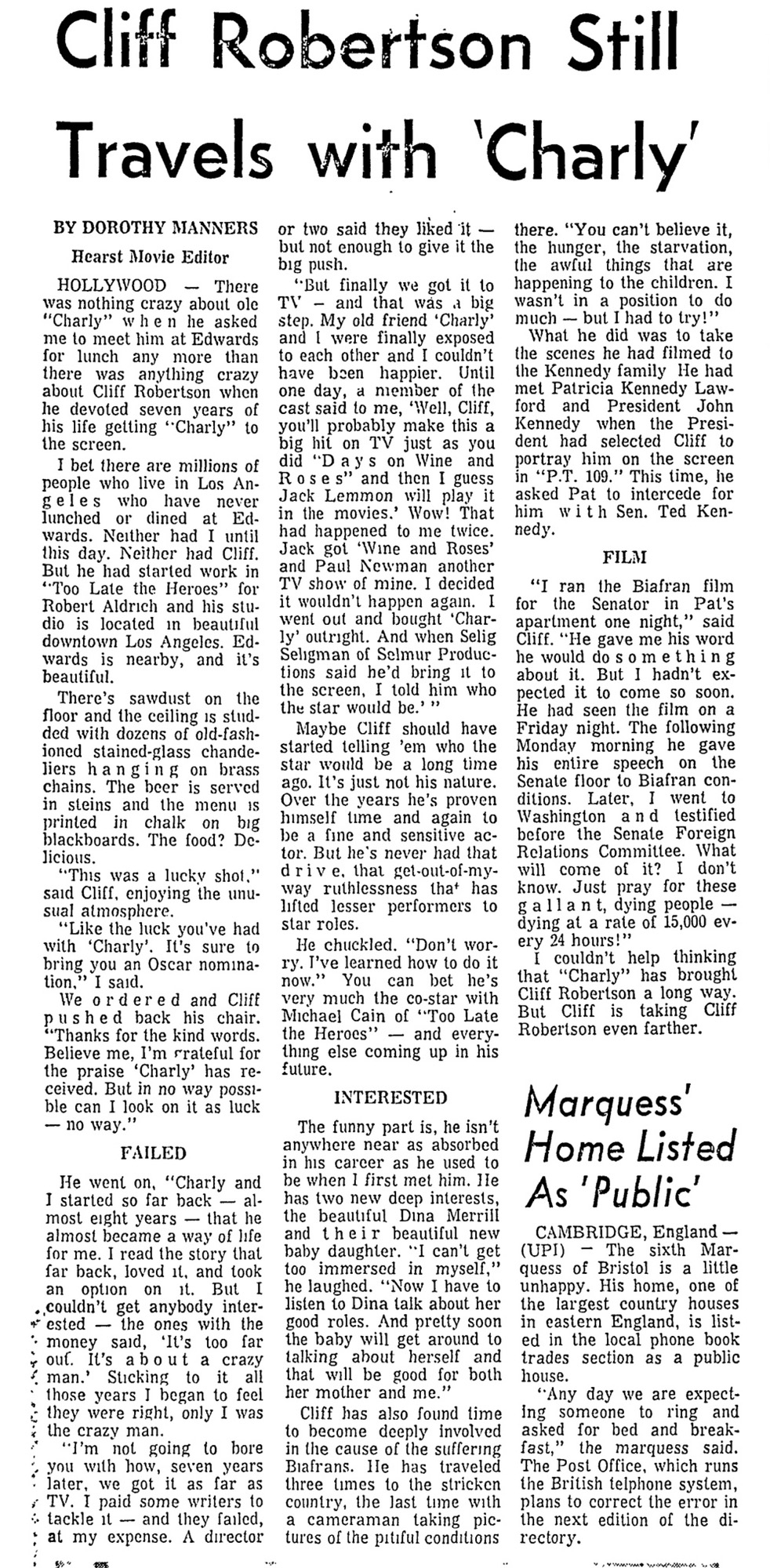
March 23, 1969 article (Seattle)
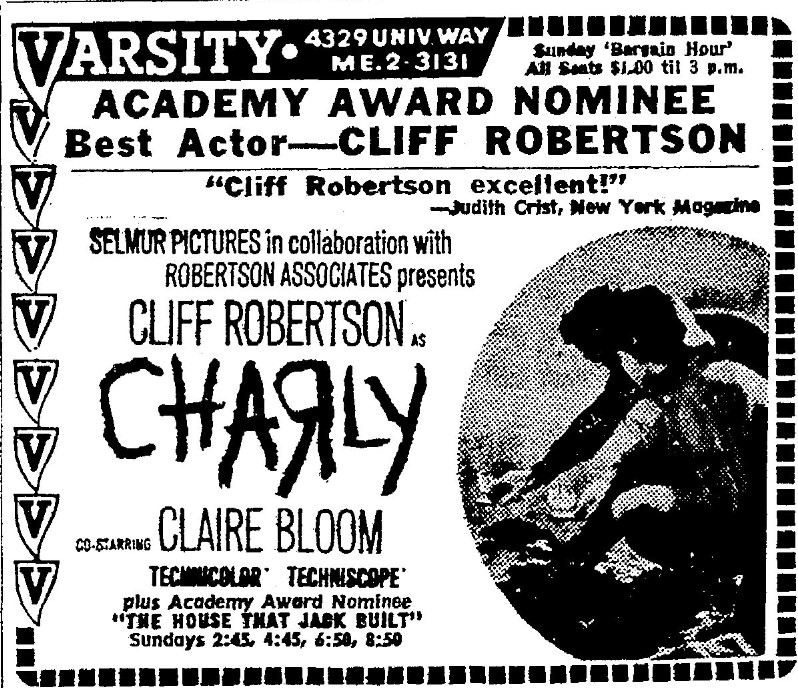
March 23, 1969 ad (Seattle)
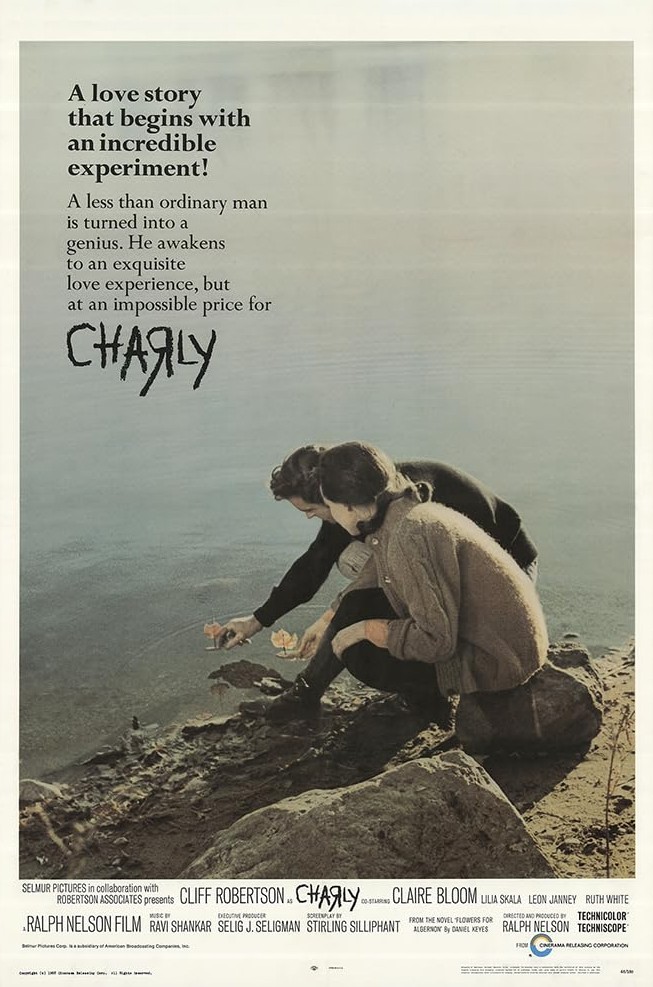
Charly (1968) poster
