This is a collection of media from the initial runs of "King Kong Escapes" (1967) in the Pacific Northwest.
Click on images for larger versions.
King Kong Escapes (1967)
"King Kong Escapes" is a vibrant collision of Cold War intrigue, pulp adventure, and kaiju spectacle, directed by Ishirō Honda and infused with the imaginative flair of Rankin/Bass animation influences. While it carries the DNA of classic monster cinema, the film diverges from its predecessors by embracing a comic book sensibility that borders on the surreal. The narrative unfolds with a blend of espionage and science fiction, introducing a villainous mastermind whose ambitions hinge on the exploitation of a powerful radioactive element. His solution—a robotic doppelgänger of Kong known as Mechani-Kong—sets the stage for a thematic exploration of artificiality versus nature, control versus autonomy.
The film’s tone is unapologetically theatrical, with exaggerated performances and stylized set pieces that evoke the spirit of Saturday morning serials. Honda’s direction balances the absurdity with earnestness, allowing the audience to invest in the stakes without losing sight of the genre’s inherent playfulness. Akira Ifukube’s score lends a mythic gravitas to the proceedings, elevating the action sequences and imbuing Kong with a sense of tragic nobility. Visually, "King Kong Escapes" is a kaleidoscope of mid-century design: icy lairs, tropical islands, and Tokyo cityscapes all rendered with meticulous miniature work and bold color palettes that reflect the film’s dual identity as both Japanese tokusatsu and American cartoon fantasy.
What sets "King Kong Escapes" apart is its willingness to embrace contradiction. It is at once a critique of technological hubris and a celebration of monster mayhem. The film’s central conflict—between Kong and his mechanical twin—serves as a metaphor for the anxieties of the atomic age, where the line between progress and peril is perilously thin. Yet beneath the spectacle lies a surprisingly tender undercurrent, as Kong’s interactions with the human characters reveal a creature capable of empathy and loyalty, challenging the notion of the monster as mere brute force.
In the broader context of 1960s genre cinema, "King Kong Escapes" stands as a curious hybrid: not quite horror, not quite sci-fi, but unmistakably emblematic of its era’s fascination with the fantastical. It’s a film that rewards viewers who appreciate the intersection of camp and commentary, offering a glimpse into a world where giant apes and mad scientists coexist with Cold War paranoia and pop-art aesthetics.
Director: Ishirô Honda
Writers: Takeshi Kimura
Stars: Rhodes Reason, Akira Takarada, Linda Miller
Buy "King Kong Escapes" (1967) bluray on Amazon (SPONSORED)
Buy "King Kong Escapes" (1967) DVD on Amazon (SPONSORED)
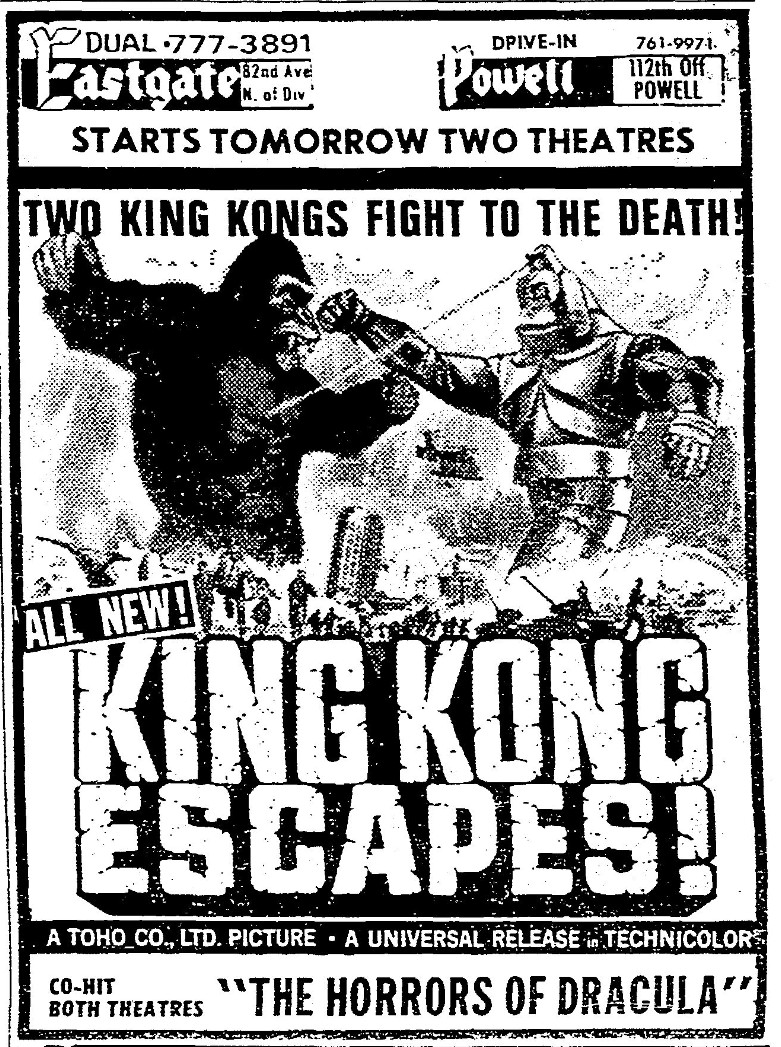
July 9, 1968 ad (Portland)
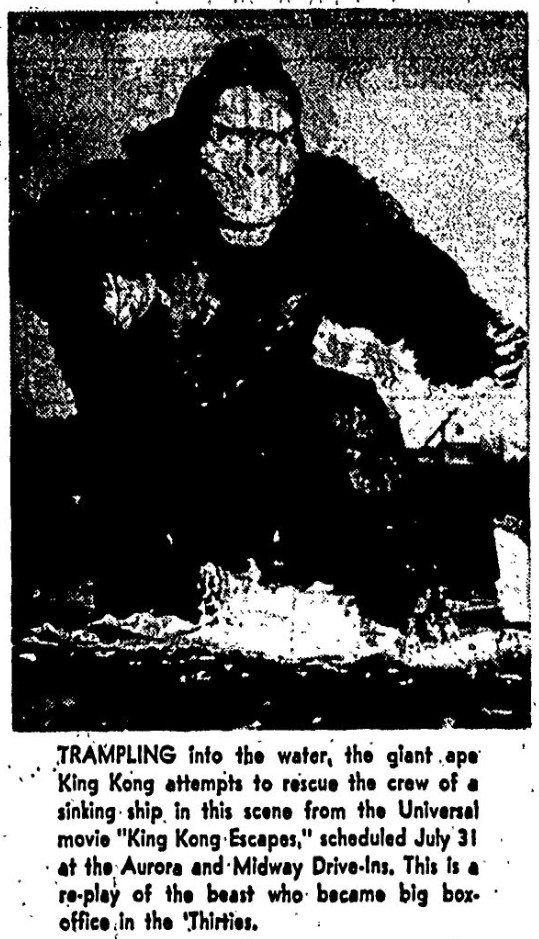
July 6, 1968 photo (Seattle)
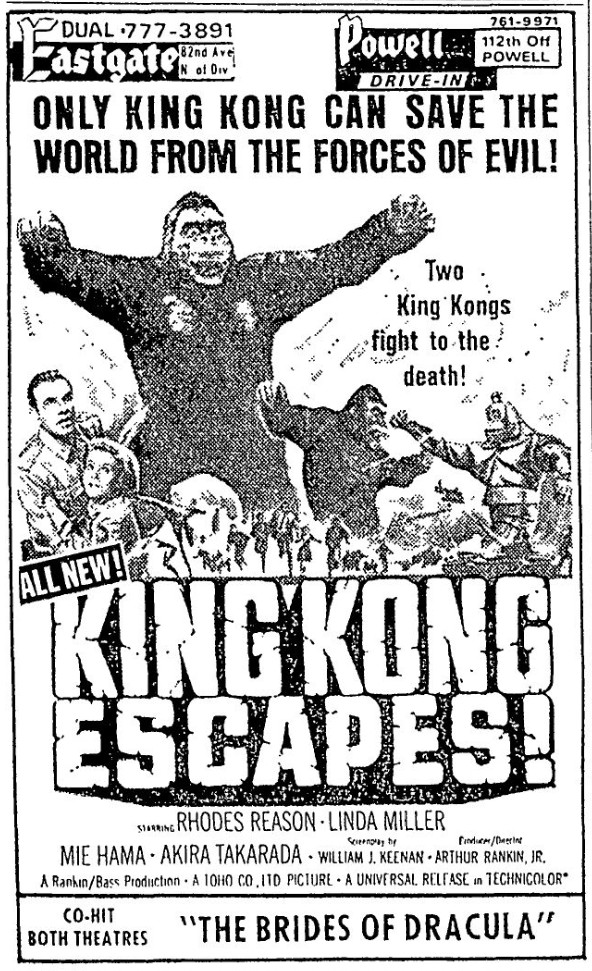
July 10, 1968 ad (Portland)
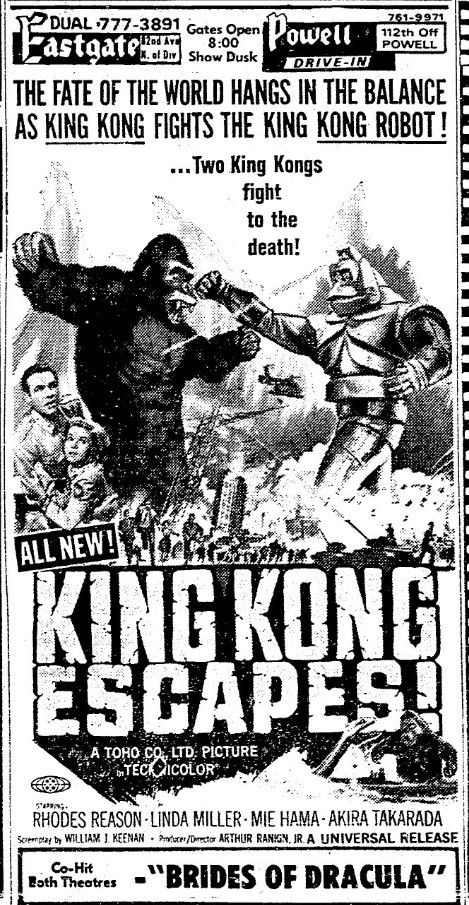
July 11, 1968 ad (Portland)
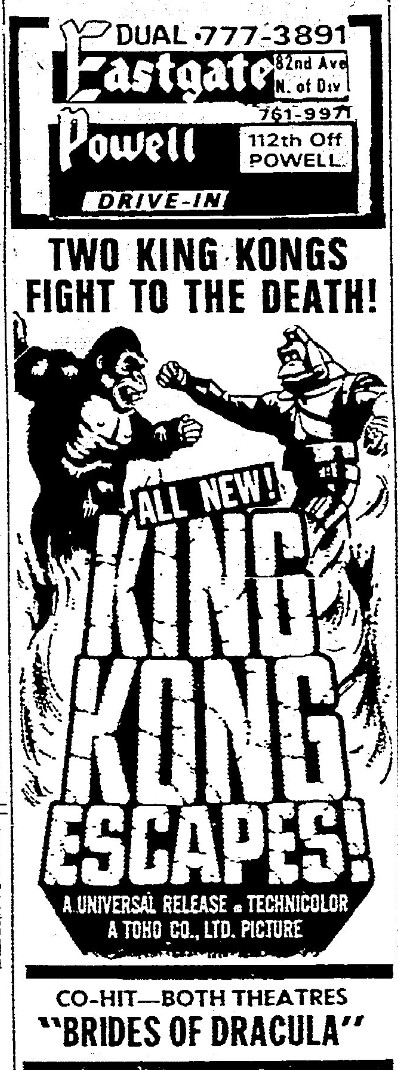
July 13, 1968 ad (Portland)
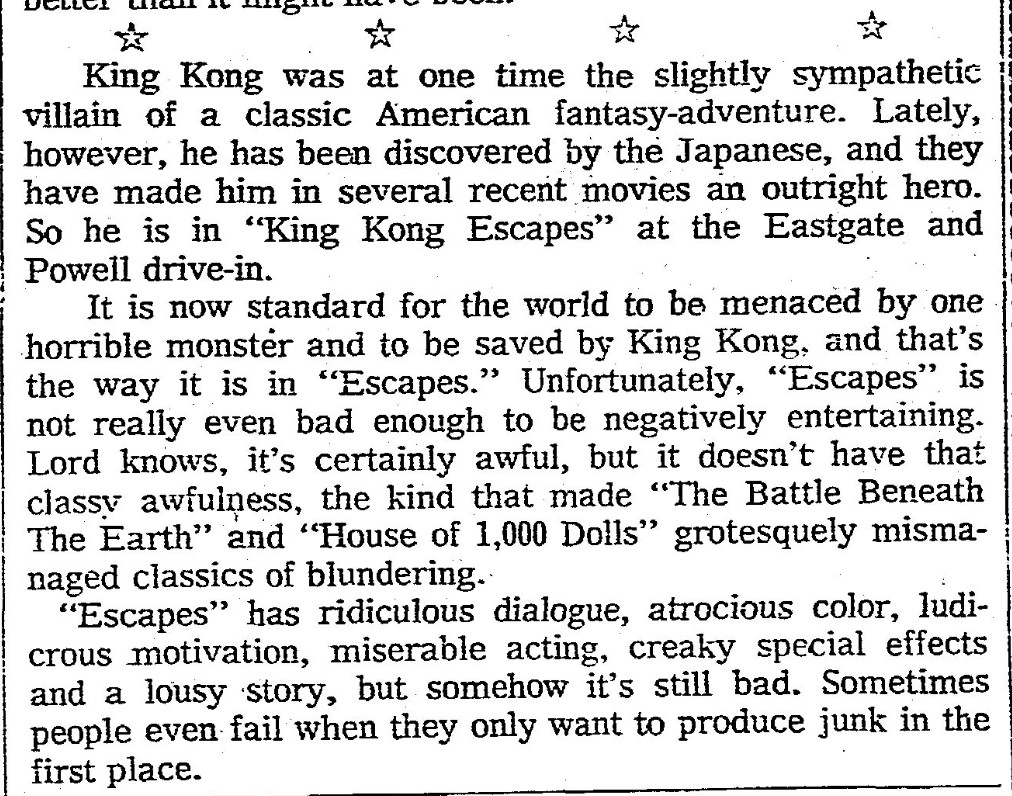
July 16, 1968 review (Portland)
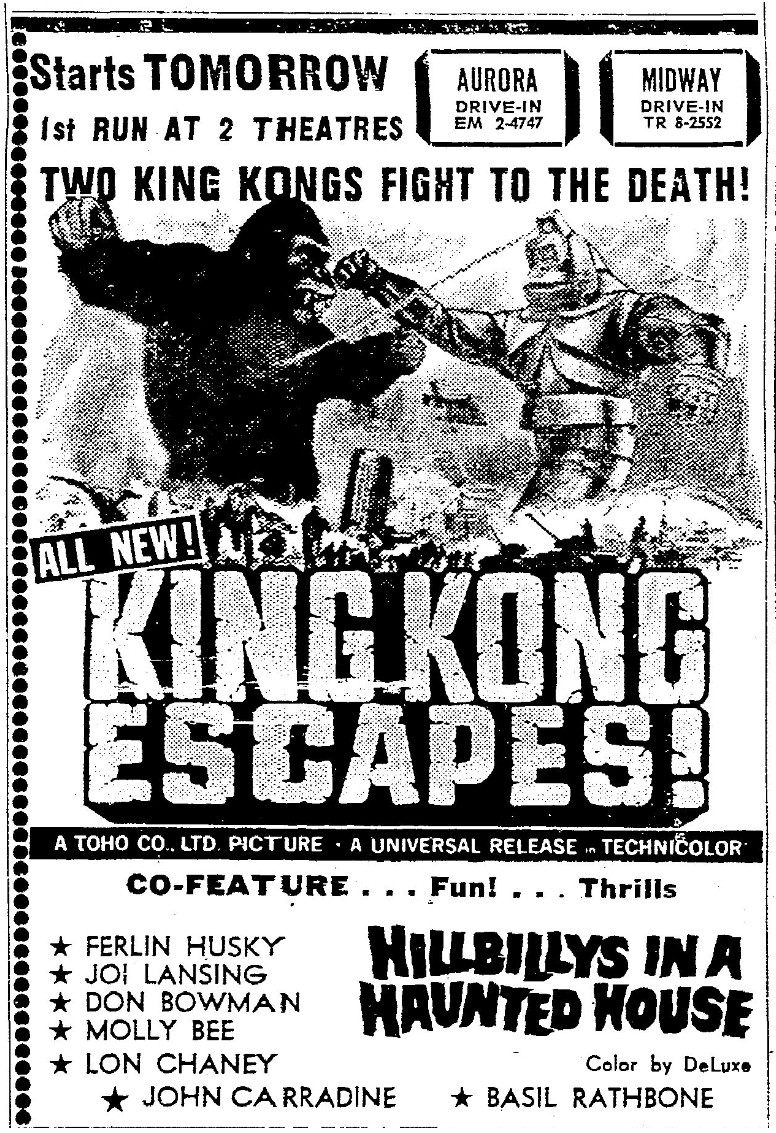
August 20, 1968 ad (Seattle)
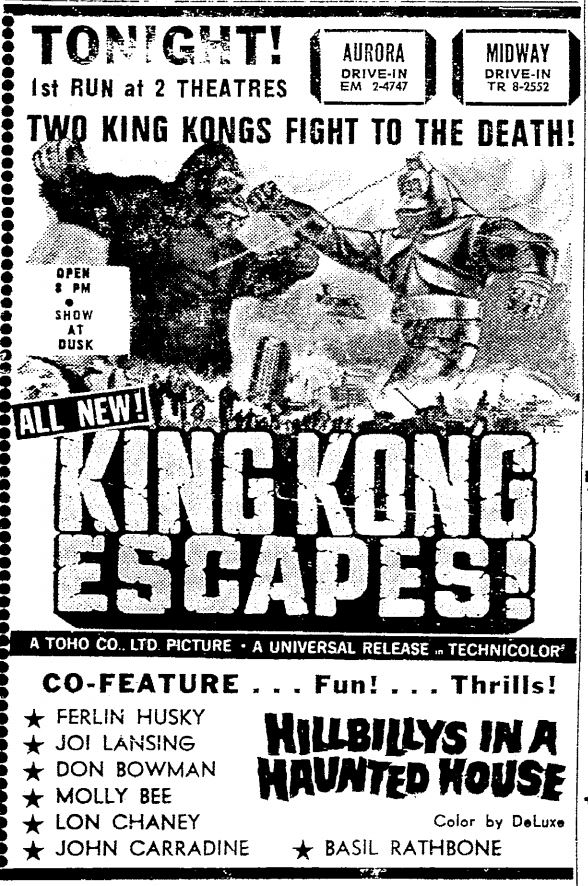
August 21, 1968 ad (Seattle)
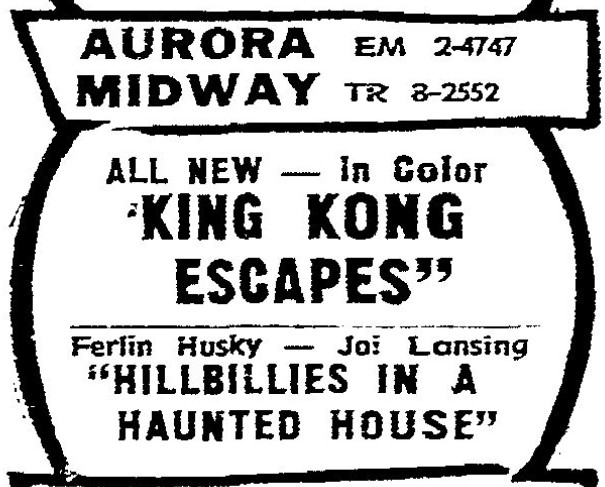
August 22, 1968 ad (Seattle)
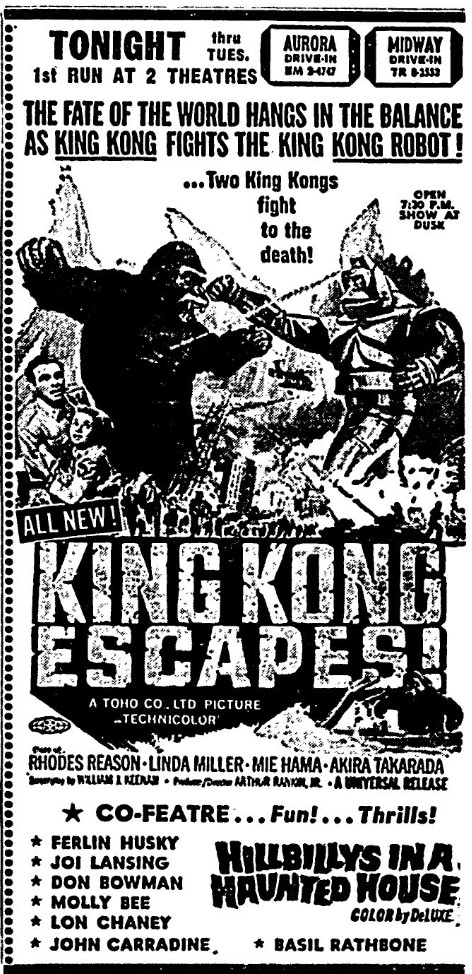
August 23, 1968 ad (Seattle)
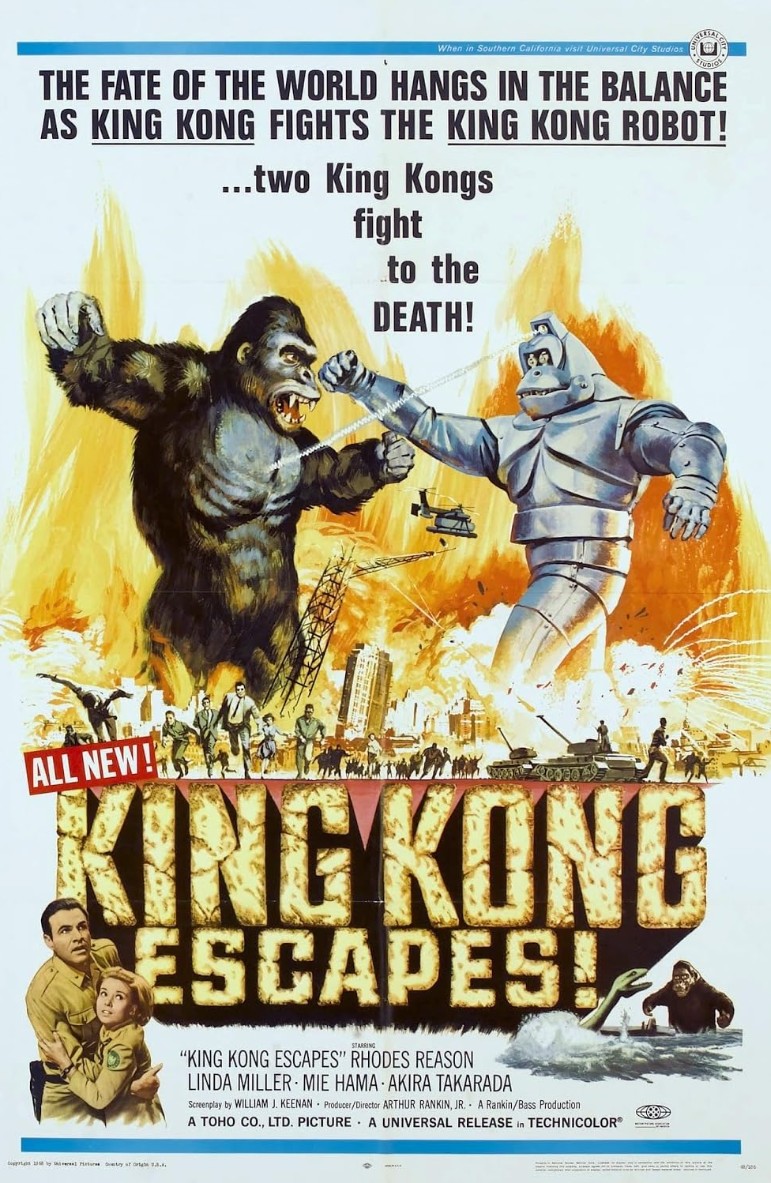
King Kong Escapes (1967) poster
King Kong Escapes (1967) trailer
Buy "King Kong Escapes" (1967) bluray on Amazon (SPONSORED)
Buy "King Kong Escapes" (1967) DVD on Amazon (SPONSORED)
