This is a collection of media from the initial runs of "Rosemary's Baby" (1968) in the Pacific Northwest.
Click on images for larger versions.
Rosemary's Baby (1968)
Roman Polanski’s "Rosemary's Baby" is a masterclass in psychological horror, a film that trades in dread not through spectacle but through the slow erosion of trust, autonomy, and reality. Set against the backdrop of a seemingly ordinary Manhattan apartment building, the film follows a young woman whose journey into motherhood becomes a descent into paranoia and isolation. What begins as a domestic drama gradually mutates into something far more sinister, with Polanski meticulously crafting an atmosphere where every glance, gesture, and overheard conversation carries the weight of hidden menace.
The brilliance of "Rosemary's Baby" lies in its refusal to rush. Polanski builds tension through the mundane, allowing the audience to inhabit the protagonist’s growing unease. The horror is not in what is seen, but in what is suggested—an approach that makes the film feel unnervingly plausible. Mia Farrow’s performance is central to this effect; her portrayal is fragile yet resilient, capturing the emotional toll of a woman whose world is being quietly, methodically dismantled. Her vulnerability is not exploited for shock but explored with empathy, making the film’s themes of bodily autonomy and gaslighting resonate with disturbing clarity.
Visually, the film is restrained but deliberate. The camera lingers in hallways and corners, emphasizing confinement and surveillance. The use of sound—particularly silence—is equally potent, amplifying the sense of isolation. Krzysztof Komeda’s haunting score, with its lullaby-like motifs, adds a layer of melancholy that underscores the film’s emotional core.
"Rosemary's Baby" is not merely a tale of occult intrigue; it is a reflection of cultural anxieties in late-1960s America, particularly around gender roles, institutional authority, and the erosion of traditional belief systems. Its horror is rooted in the everyday, in the betrayal of intimacy and the manipulation of trust. The film’s legacy endures not because of its supernatural elements, but because it taps into fears that are deeply human and disturbingly timeless.
Director: Roman Polanski
Writers: Ira Levin, Roman Polanski
Stars: Mia Farrow, John Cassavetes, Ruth Gordon
Buy "Rosemary's Baby" (1968) 4k UHD on Amazon (SPONSORED)
Buy "Rosemary's Baby" (1968) bluray on Amazon (SPONSORED)
Buy "Rosemary's Baby" (1968) DVD on Amazon (SPONSORED)
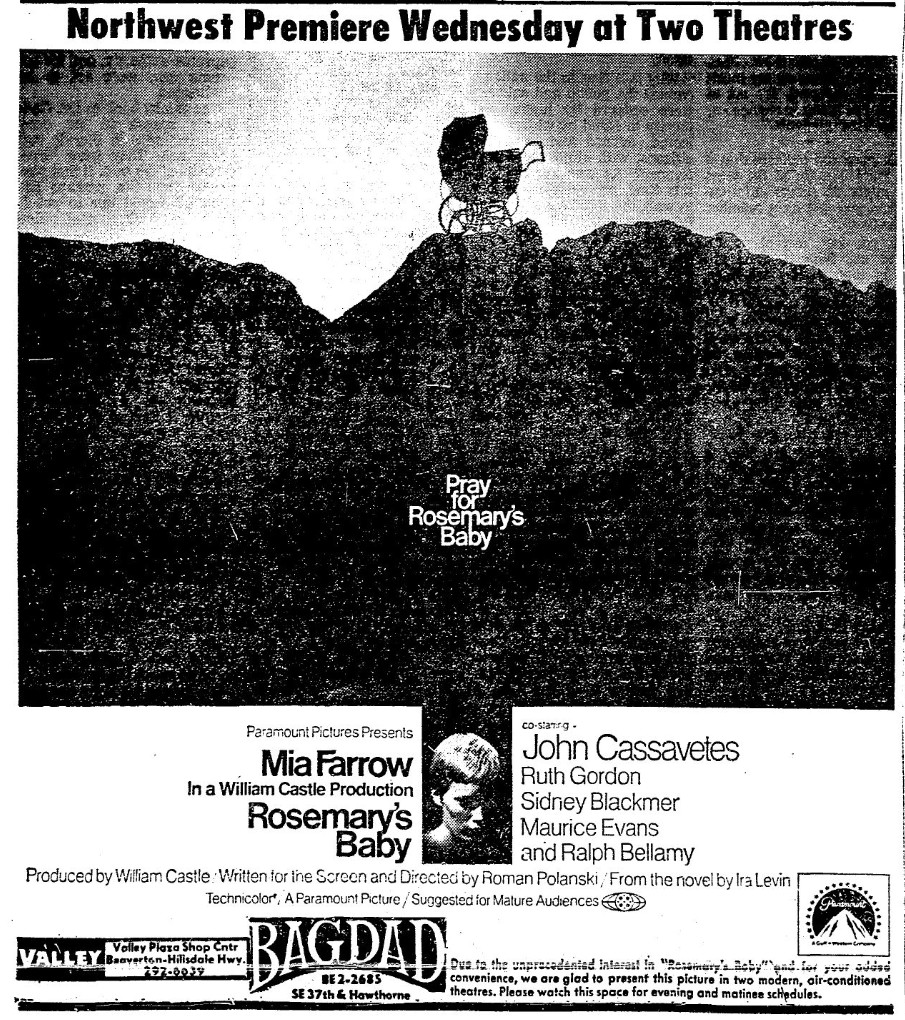
June 25, 1968 ad (Portland)
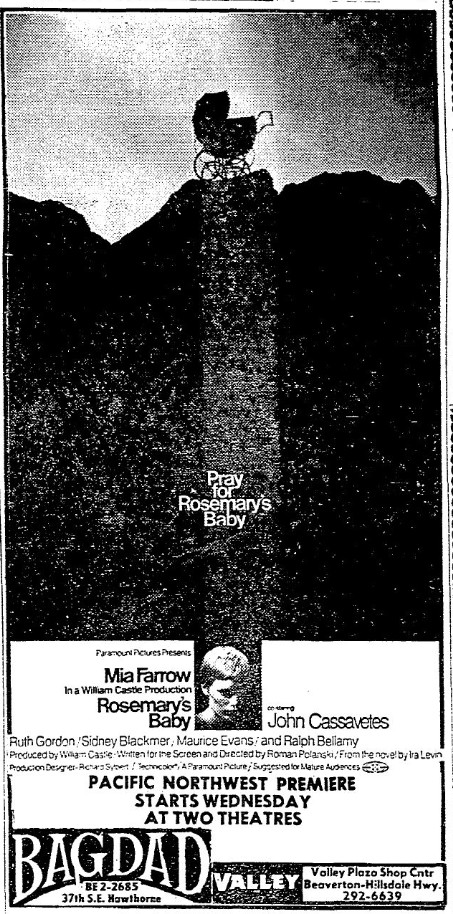
June 24, 1968 ad (Portland)
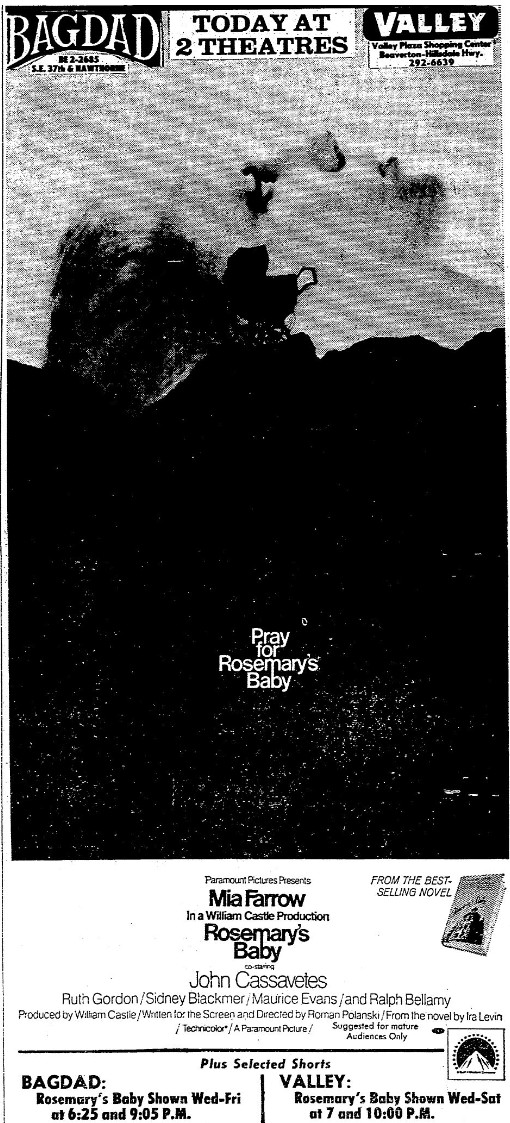
June 26, 1968 ad (Portland)
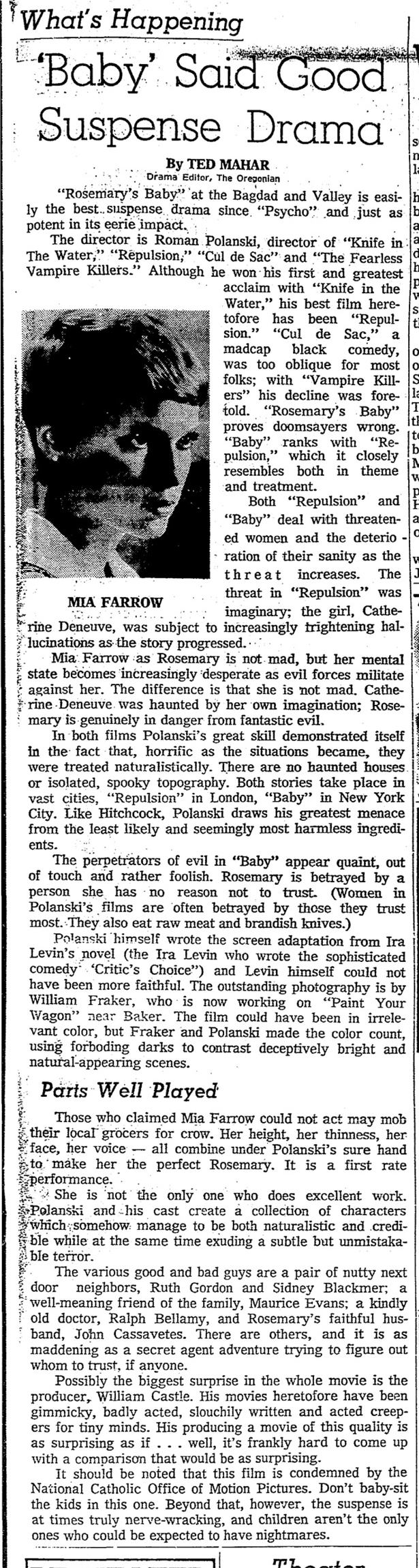
June 27, 1968 review (Portland)
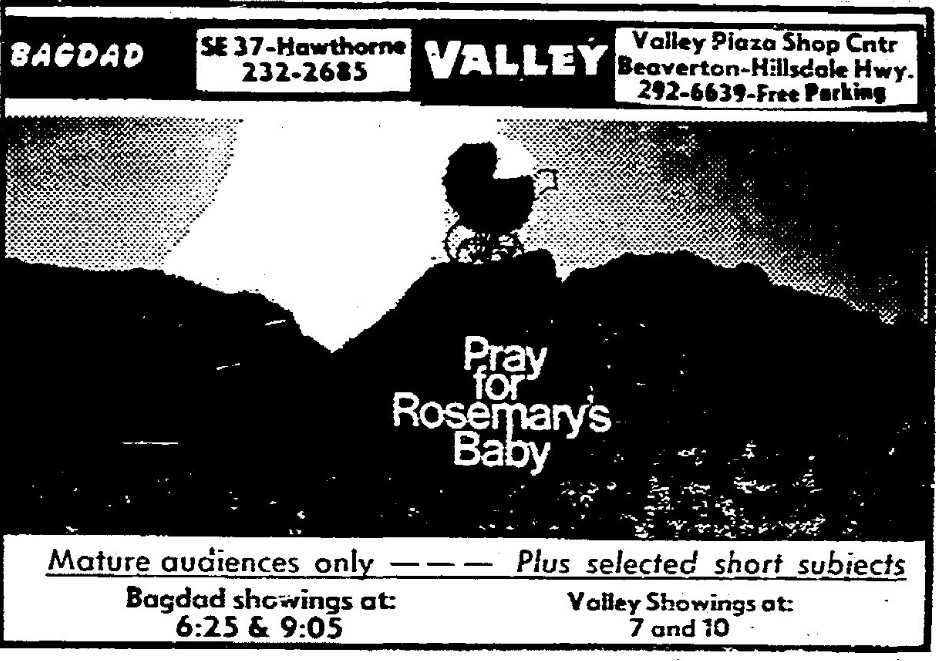
June 27, 1968 ad (Portland)
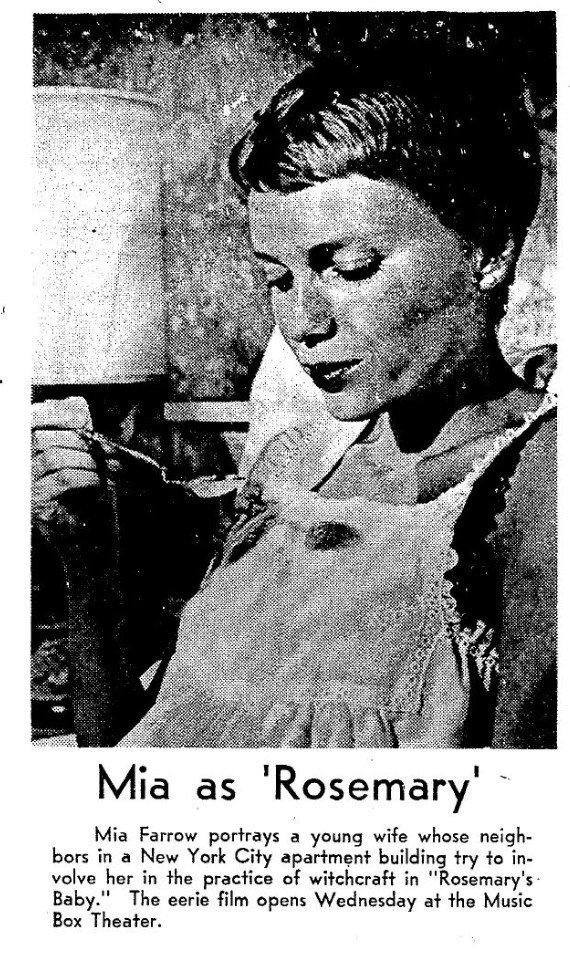
July 8, 1968 photo (Seattle)
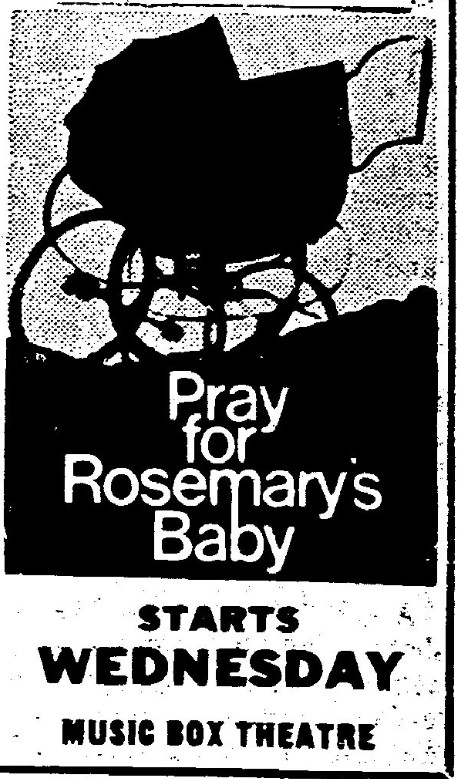
July 8, 1968 ad (Seattle)
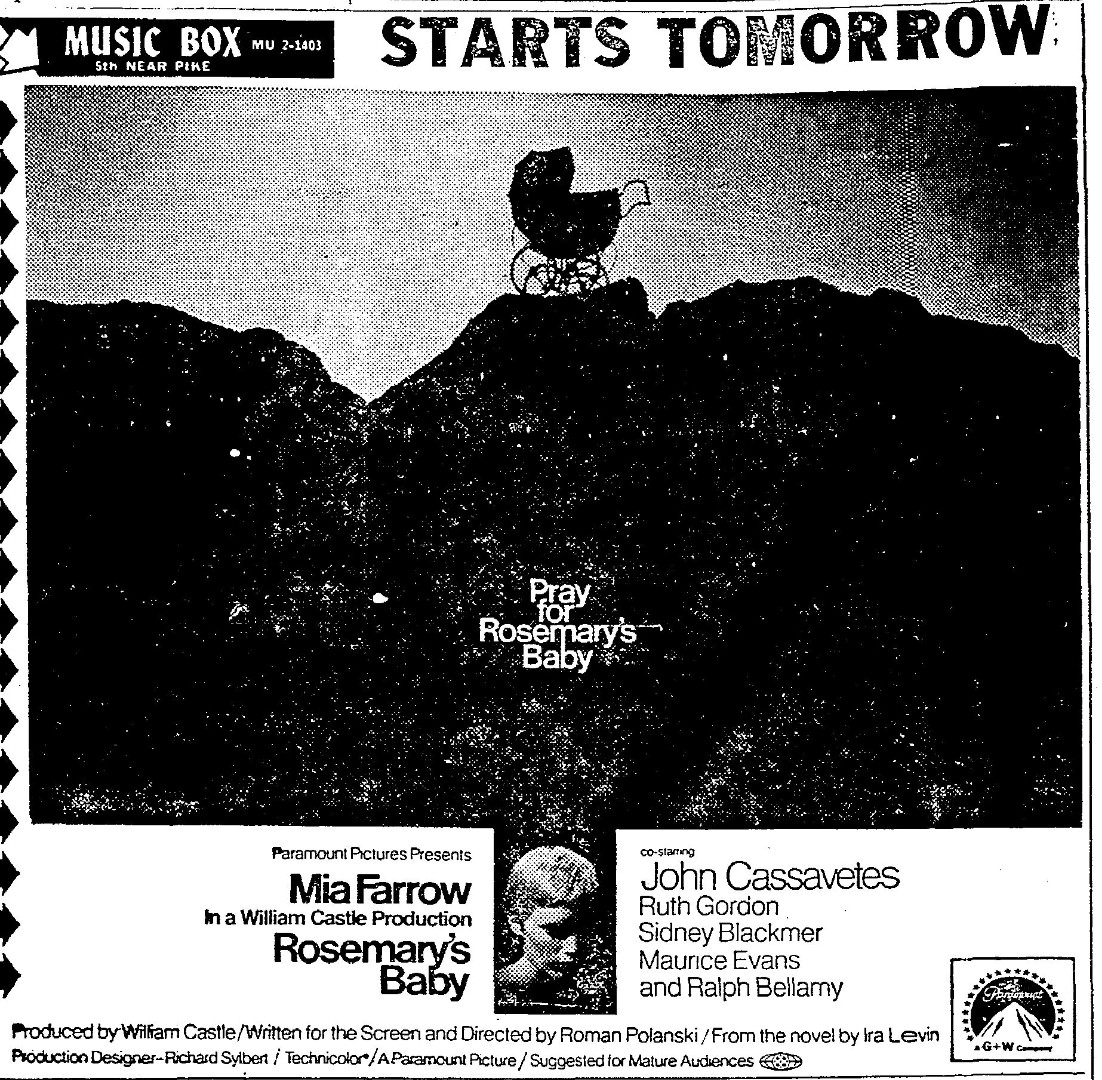
July 9, 1968 ad (Seattle)
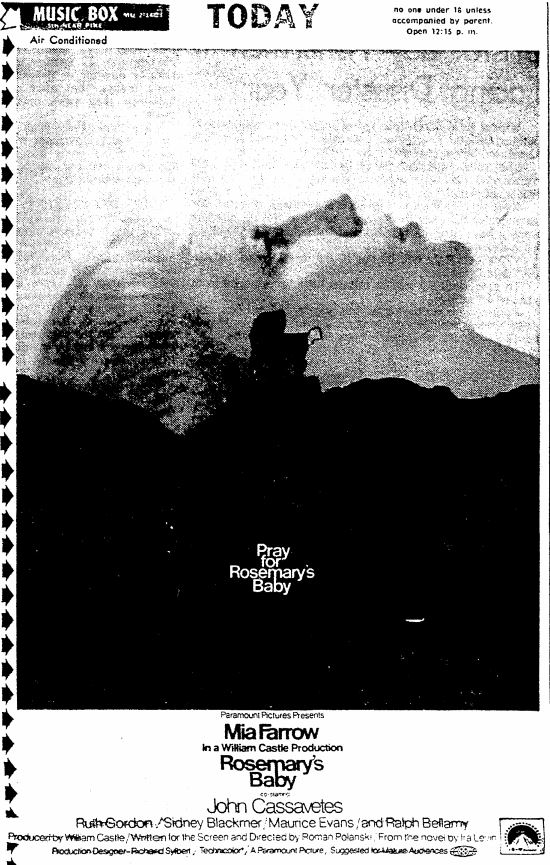
July 10, 1968 ad (Seattle)
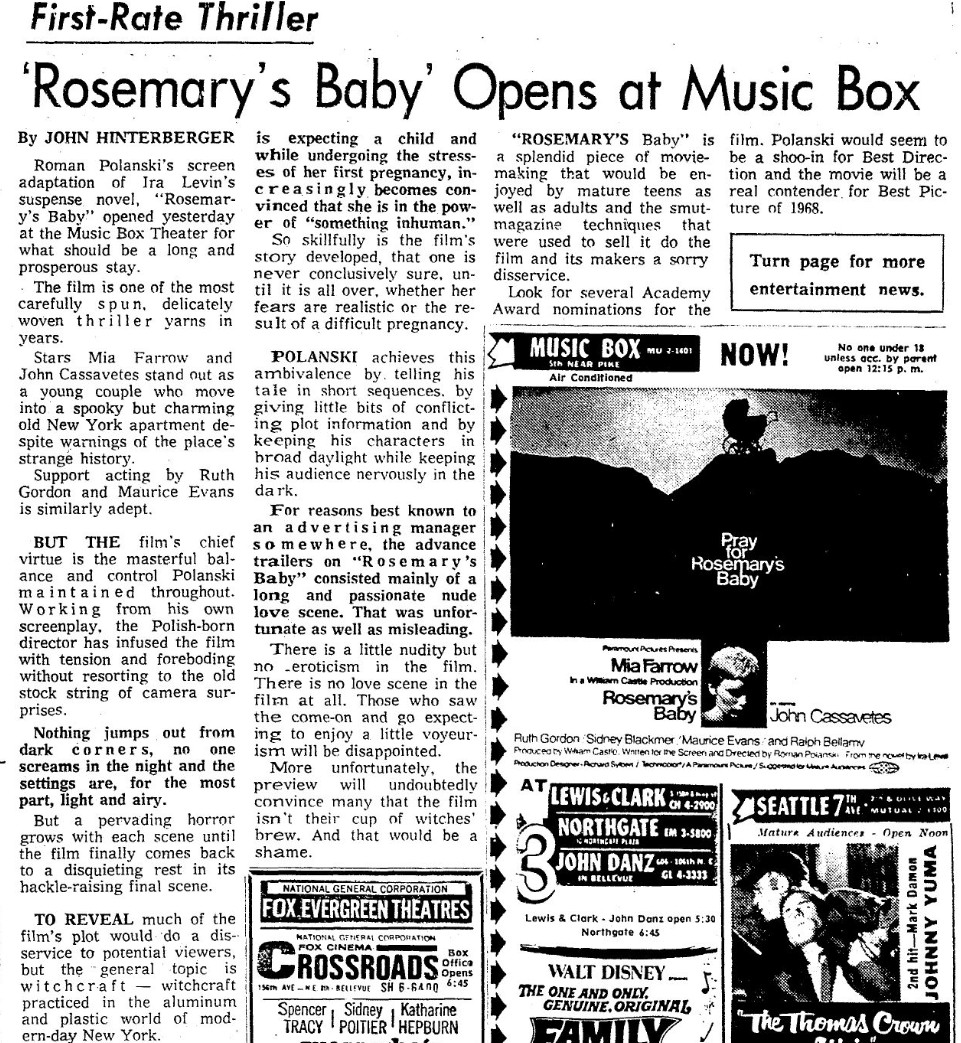
July 11, 1968 article (Seattle)
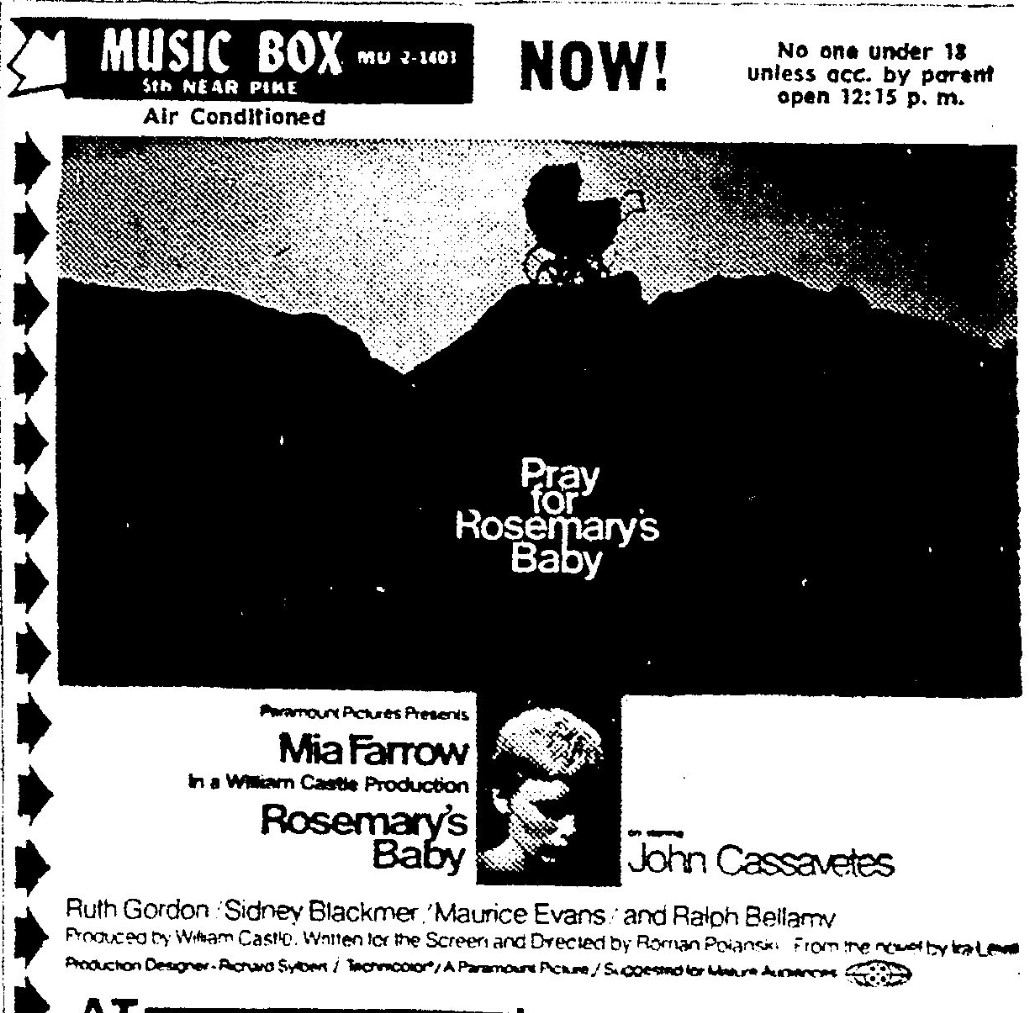
July 11, 1968 ad (Seattle)
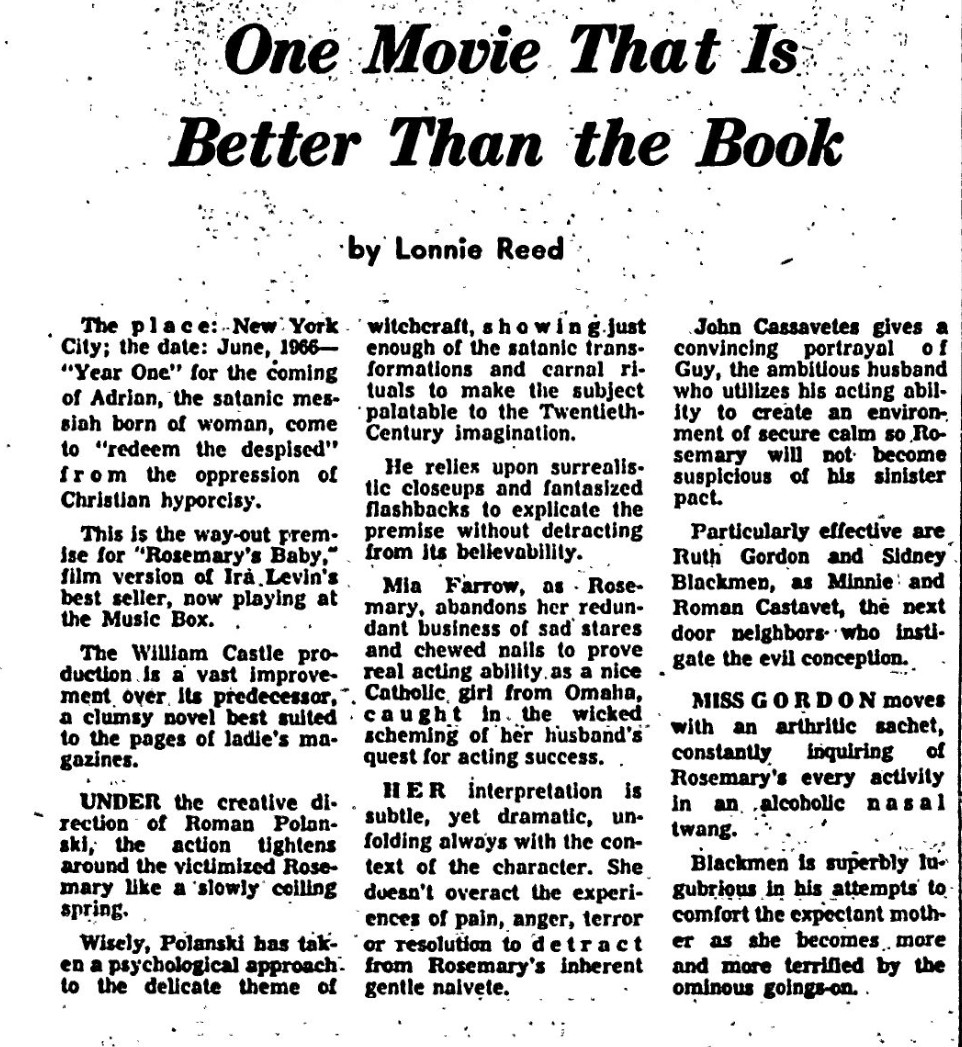
July 12, 1968 review (Seattle)
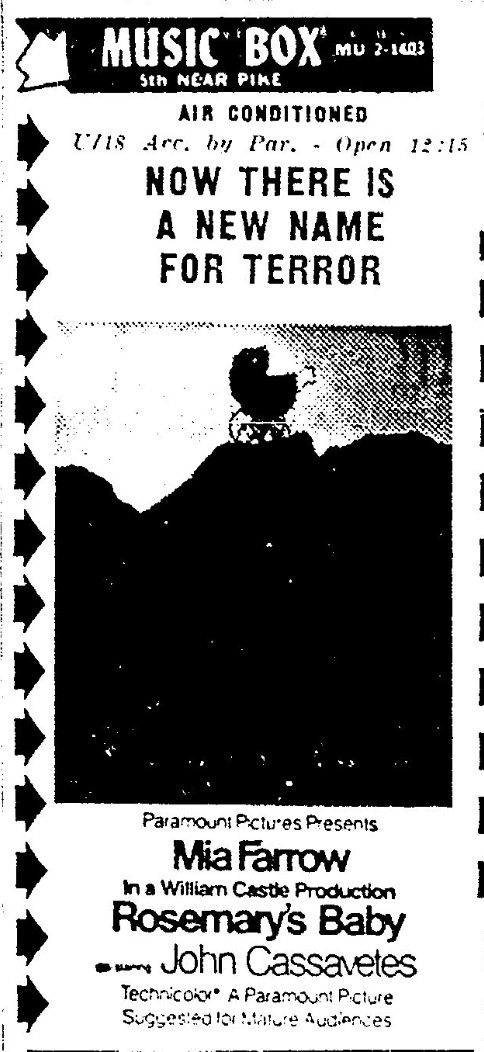
July 14, 1968 ad (Seattle)
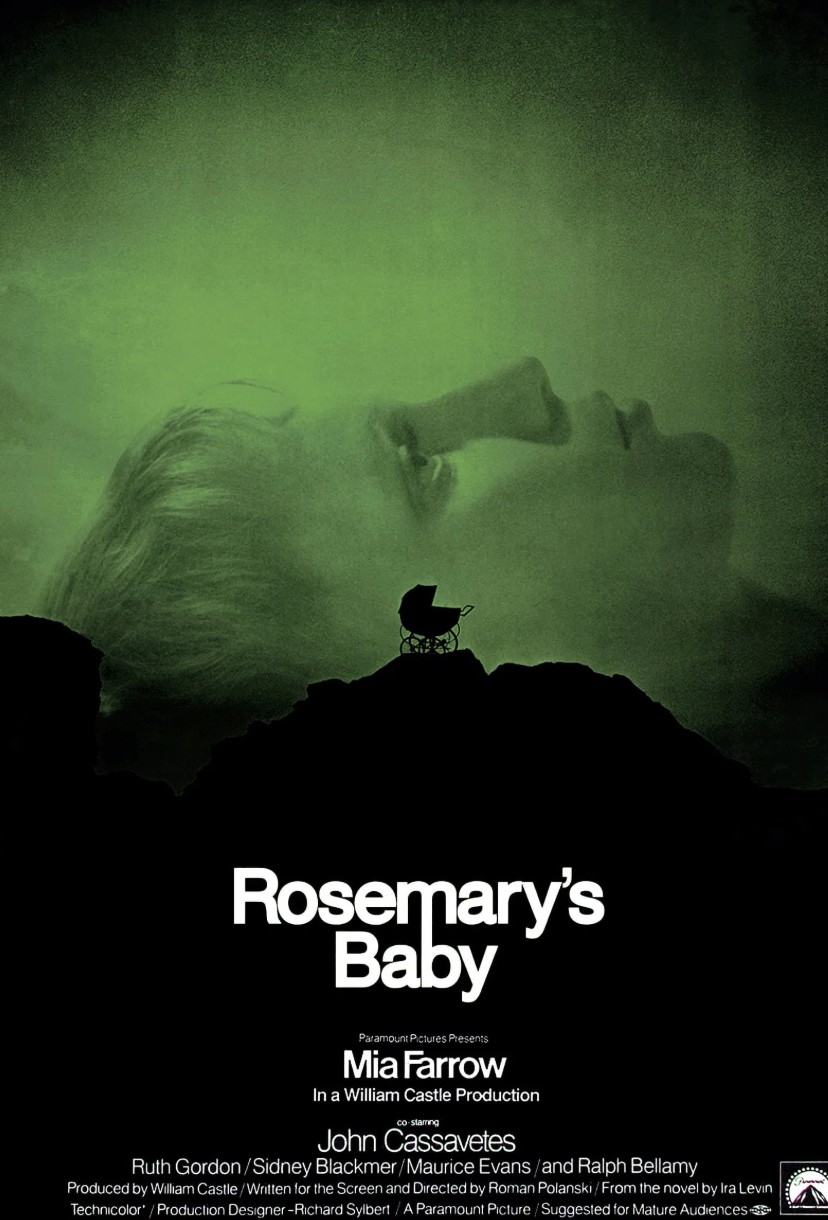
Rosemary's Baby (1968) poster
Rosemary's Baby (1968) trailer
Buy "Rosemary's Baby" (1968) 4k UHD on Amazon (SPONSORED)
Buy "Rosemary's Baby" (1968) bluray on Amazon (SPONSORED)
Buy "Rosemary's Baby" (1968) DVD on Amazon (SPONSORED)
