This is a collection of media from the initial runs of "Watermelon Man" (1970) in the Pacific Northwest.
Click on images for larger versions.
Watermelon Man (1970)
“Watermelon Man” is one of those films that pretends to grin while baring its teeth. It starts with a smug suburban salesman who thinks the world is a rigged carnival built for his amusement, and the film wastes no time showing how shallow that comfort really is. When his life abruptly shifts, the story stops being a joke and becomes a slow, grinding exposure of how fragile his self-image always was. What makes the film interesting is that it never flatters him, never gives him the dignity of a tragic fall. It treats him like a man who has spent years polishing a cheap façade, only to discover that the world underneath it is colder, meaner, and far less impressed with him than he ever imagined.
The film’s cynicism stems from the way it casually dismantles the suburban fantasy he clings to. His home, his job, his neighbors, all those little rituals of middle-class triumph are shown as brittle props that only work when everyone agrees to the same lie. Once he’s forced outside that lie, the people around him reveal themselves with a kind of vicious honesty. The film doesn’t exaggerate their ugliness; it simply lets them speak, and the result is more damning than any melodrama. You watch him scramble to reclaim the life he thought he earned, and every attempt only exposes how little control he ever had.
Visually, the film leans into a kind of heightened satire, but the tone underneath is rougher, almost bitter. It’s a comedy that doesn’t want you to laugh so much as wince. The director pushes the absurdity until it becomes uncomfortable, then holds it there long enough for the audience to feel the rot beneath the joke. By the time the story reaches its final stretch, the humor has curdled into something sharper — a reminder that the systems people rely on for identity and safety are designed to protect some and punish others, and that the man at the center of the film was always too self-satisfied to notice.
What lingers after “Watermelon Man” isn’t the premise but the way the film refuses to soften its critique. It’s a portrait of a man who learns nothing gracefully, who discovers the limits of his world only when they slam shut on him. The film’s roughness comes from its refusal to offer comfort, and its cynicism comes from the way it shows that comfort was never real in the first place.
Director: Melvin Van Peebles
Writer: Herman Raucher
Stars: Godfrey Cambridge, Estelle Parsons, Howard Caine
Buy "Watermelon Man" (1970) DVD on Amazon (SPONSORED)
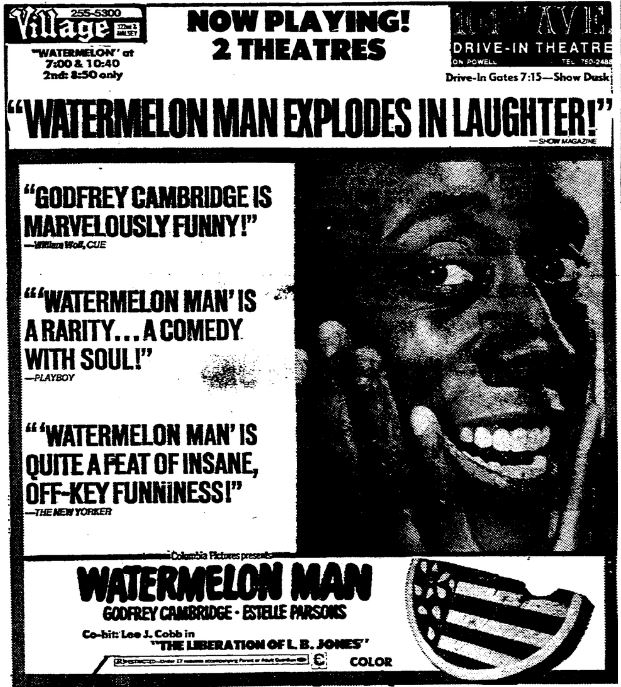
September 25, 1970 ad (Portland)
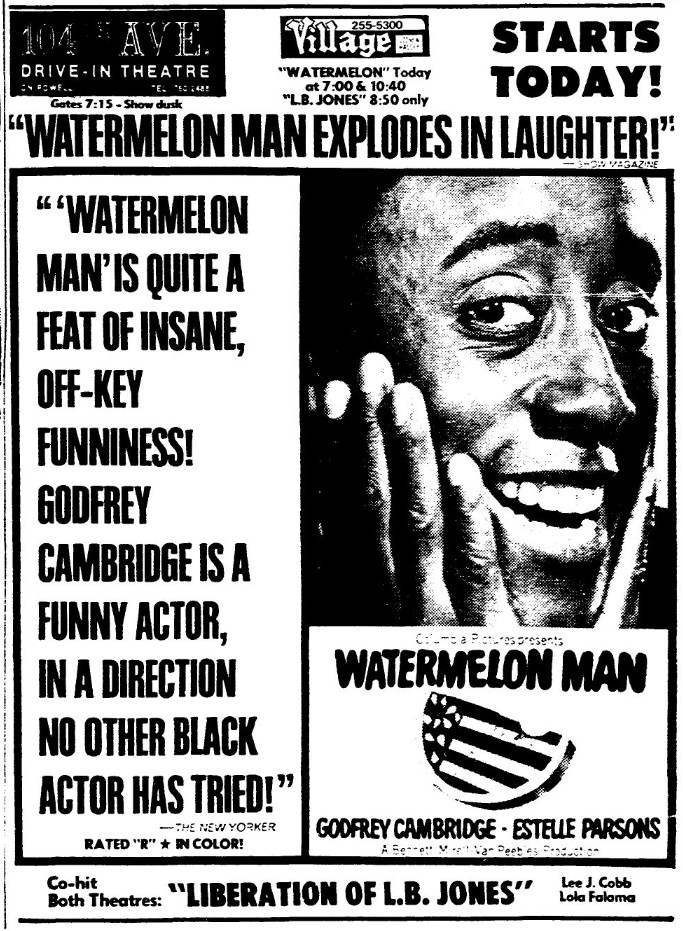
September 23, 1970 ad (Portland)
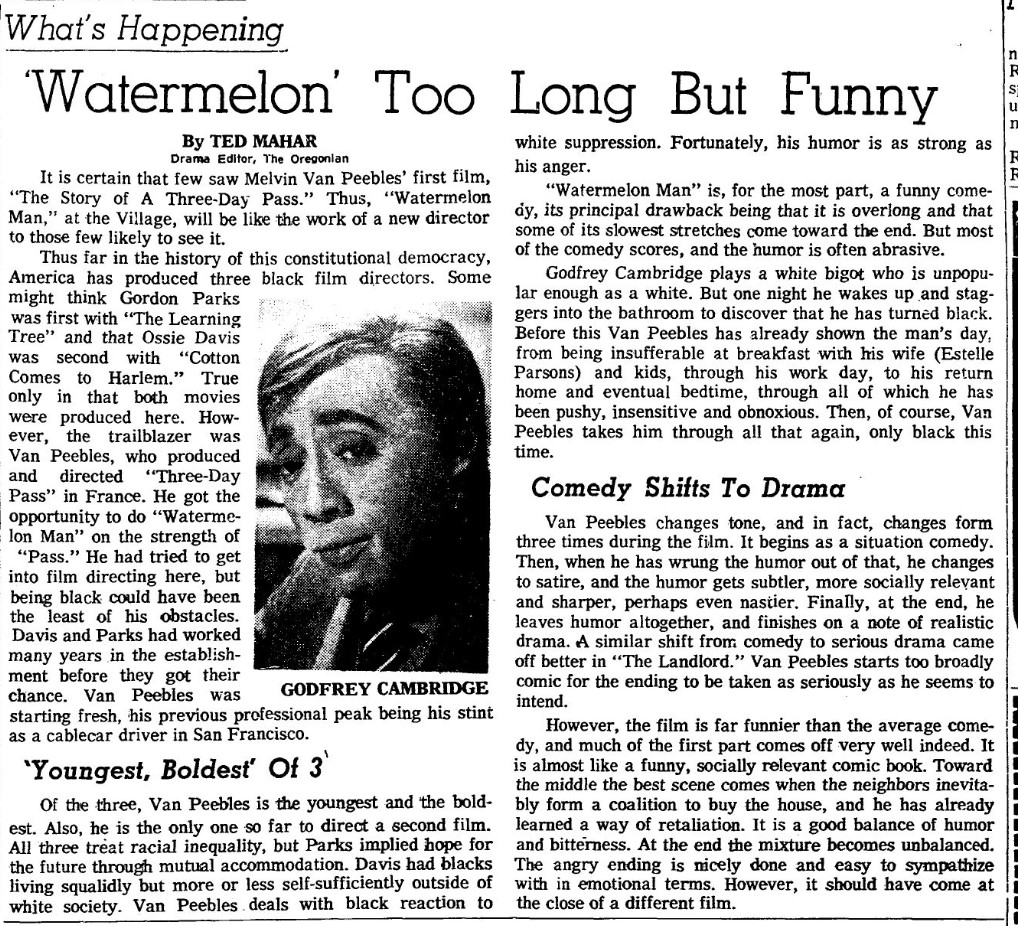
September 23, 1970 article (Portland)
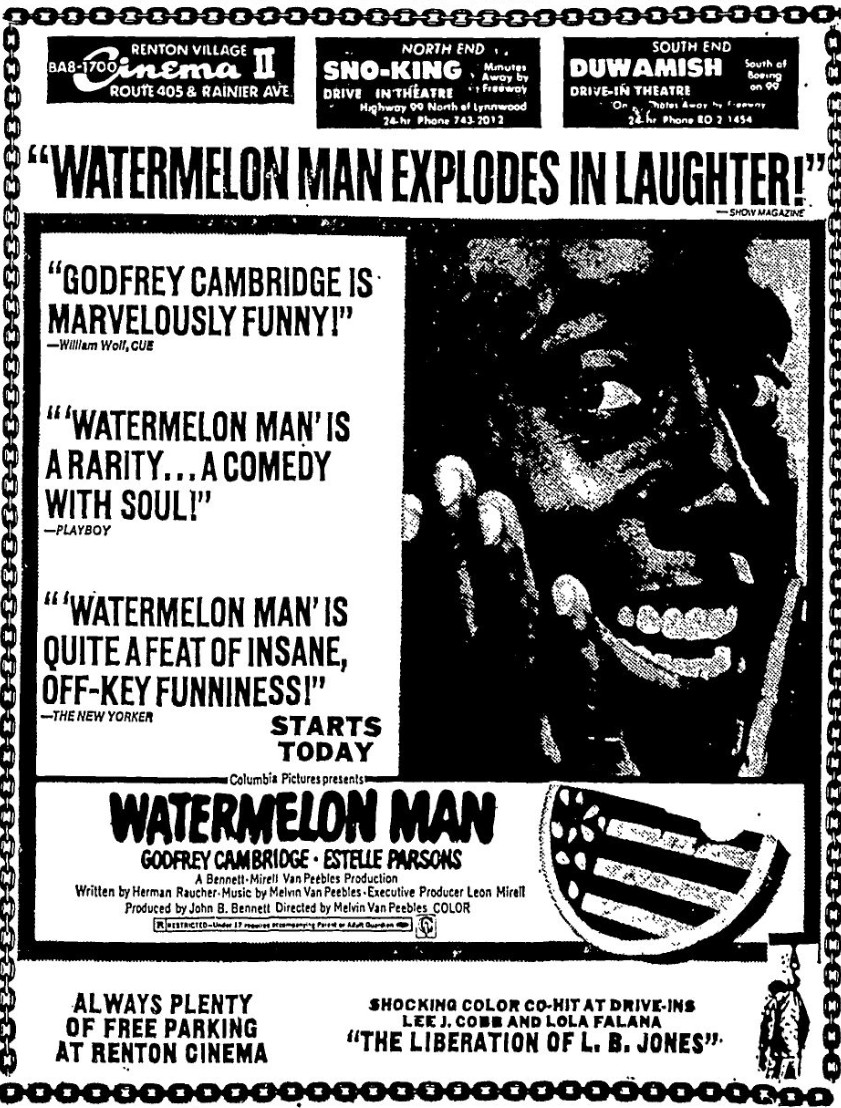
September 30, 1970 ad (Seattle)
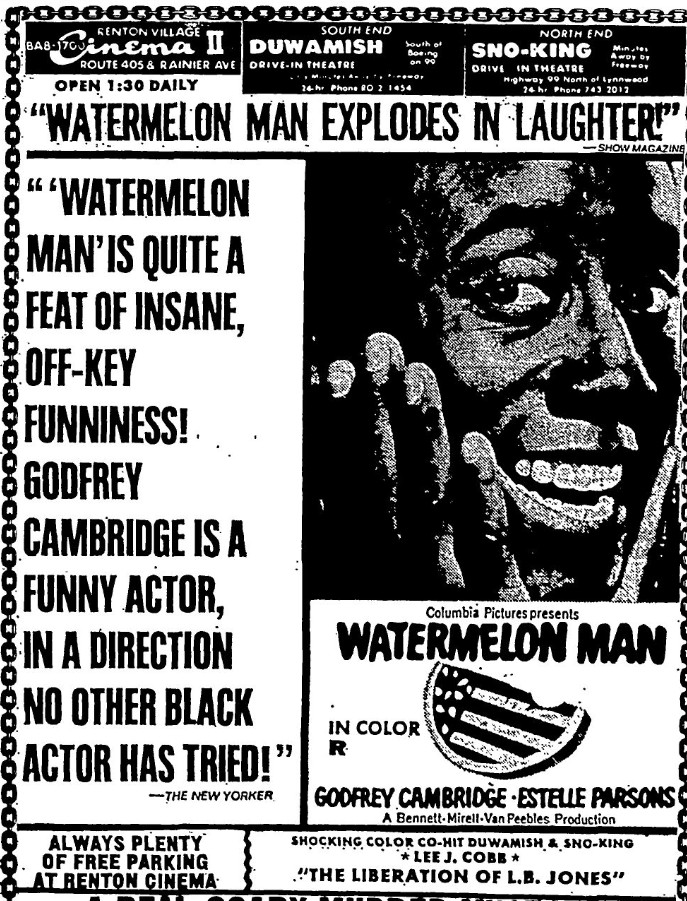
October 2, 1970 ad (Seattle)
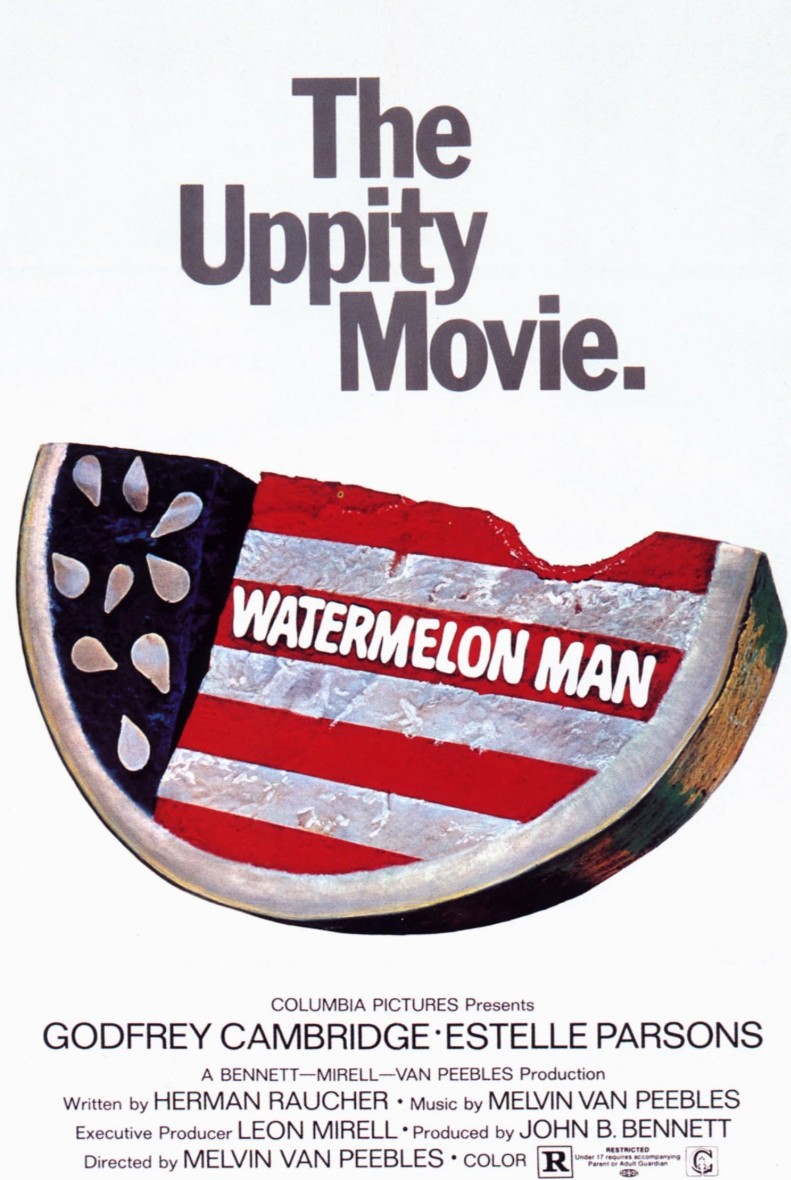
Watermelon Man (1970) poster
