This is a collection of media from the initial runs of "The Blood Rose" (1970) and "The Body Stealers" (1970) in the Pacific Northwest.
Click on images for larger versions.
The Blood Rose (1970)
“The Blood Rose” is one of those early seventies curiosities that pretends to be a gothic tragedy but can’t hide the fact that it’s really an anxious little exploitation piece dressed up in velvet drapes and candle smoke. The film circles a brooding artist whose life has curdled into obsession, and you can feel the era’s desperation in every frame. It wants to be elegant, but its elegance is brittle, like a mansion whose wallpaper hides mold. What you get instead is a story about a man clawing at beauty because he can’t accept decay, and the more he tries to preserve what he loves, the more grotesque his efforts become.
There’s a strange, almost narcotic atmosphere to the whole thing. The camera lingers on faces and corridors as if hoping they’ll confess something, but they never do. Everyone moves through the film with the stiff, haunted energy of people who know they’re trapped in someone else’s delusion. The plot keeps circling the same wound: a woman disfigured, a man unable to cope, and a series of increasingly deranged attempts to force the world back into the shape he wants. It’s romantic in the way a fever dream is romantic, all sweat and desperation and the kind of love that rots from the inside out.
What makes “The Blood Rose” interesting, though, is how nakedly it exposes the ugliness beneath its own aesthetic pretensions. The film’s sour emotional core constantly undermines the lush visuals and gothic trappings. You can feel the sixties slipping away in it, the counterculture’s idealism collapsing into a kind of decadent nihilism. The film doesn’t dare to confront that directly, so it hides behind melodrama and surreal flourishes, but the cynicism leaks through anyway. It’s a portrait of a man who can’t accept reality, made by a culture that couldn’t either.
It’s messy, overwrought, and occasionally beautiful despite itself. But beneath all the theatrics, “The Blood Rose” is really about the violence of refusing to let go, the way obsession turns love into possession and possession into ruin. It’s a gothic horror film that keeps trying to convince you it’s a tragic romance, and the tension between those impulses gives it a strange, uneasy charm. It’s not a great film, but it’s an honest one in its own warped way, and sometimes that’s more interesting.
Director: Claude Mulot
Writers: Claude Mulot, Jean Larriaga, Edgar Oppenheimer
Stars: Philippe Lemaire, Anny Duperey, Howard Vernon
Buy "The Blood Rose" (1969) DVD on Amazon (SPONSORED)
The Body Stealers (1969)
“The Body Stealers” is one of those late sixties sci fi thrillers that seems convinced it’s saying something profound about humanity, even though it can barely keep its own shoes tied. The film opens with a mystery that should feel eerie and unsettling, but instead comes off like someone misplaced half the script and decided to improvise the rest. Paratroopers vanish mid jump, and the movie treats this like the apocalypse, yet everything around it feels strangely casual, as if the world can’t be bothered to panic properly.
The tone is caught between pulp adventure and moody paranoia, never committing to either. You get a protagonist who looks permanently exhausted, wandering through military bases and empty fields while trying to piece together a conspiracy that the film itself barely understands. Every conversation feels like it’s been dubbed from a different movie, and the pacing has that sluggish, half-awake quality that plagued so many British genre productions of the era. It’s all fog, stiff uniforms, and people staring into the middle distance as if waiting for someone to tell them what the plot is supposed to be.
What gives “The Body Stealers” its odd charm is how earnestly it tries to cloak its threadbare story in cosmic significance. There’s a lot of talk about forces beyond human comprehension, but the execution is so clumsy that the supposed menace feels more like a scheduling conflict than an existential threat. The film wants to tap into the sixties fear of losing control, of being replaced or absorbed by something colder and more efficient, yet it never musters the conviction to make that fear stick. Instead, it drifts along in a haze of cheap effects and half-formed ideas, hoping atmosphere will cover for the lack of substance.
Still, there’s something strangely watchable about its awkwardness. The film’s attempts at mystery have a kind of accidental surrealism, and its stiff performances only underline how disconnected everyone seems from the world they’re supposed to be saving. “The Body Stealers” ends up feeling like a relic of a moment when science fiction was scrambling to keep up with cultural anxieties it didn’t fully grasp. It’s clunky, undercooked, and occasionally unintentionally funny, but in its own crooked way, it captures the era’s unease better than it ever intended.
Director: Gerry Levy
Writers: Michael St. Clair, Gerry Levy
Stars: George Sanders, Maurice Evans, Patrick Allen
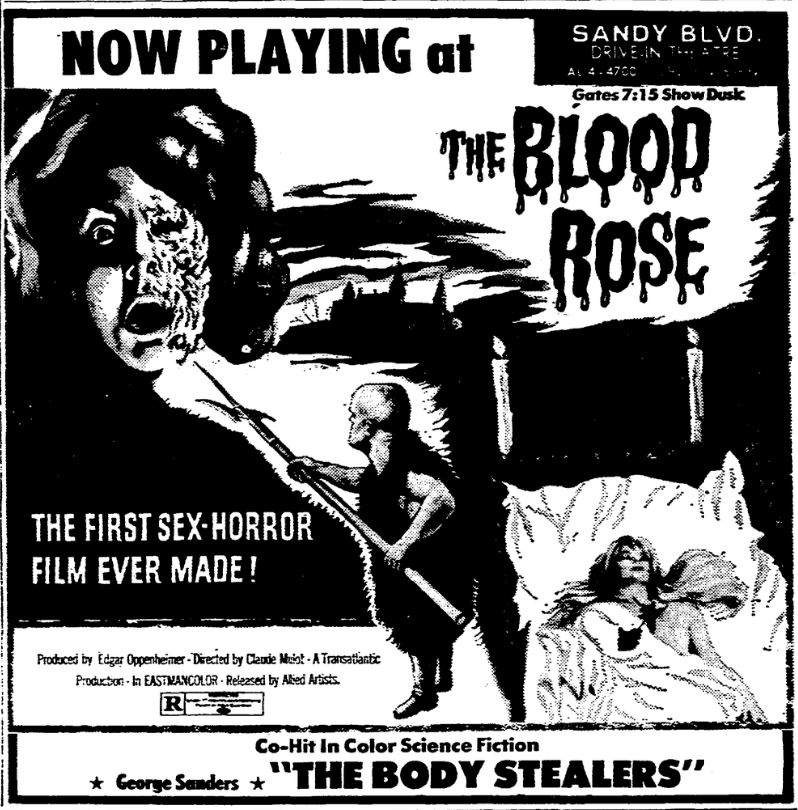
September 25, 1970 ad (Portland)
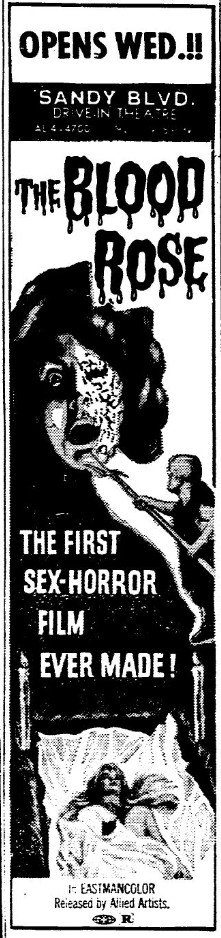
September 22, 1970 ad (Portland)
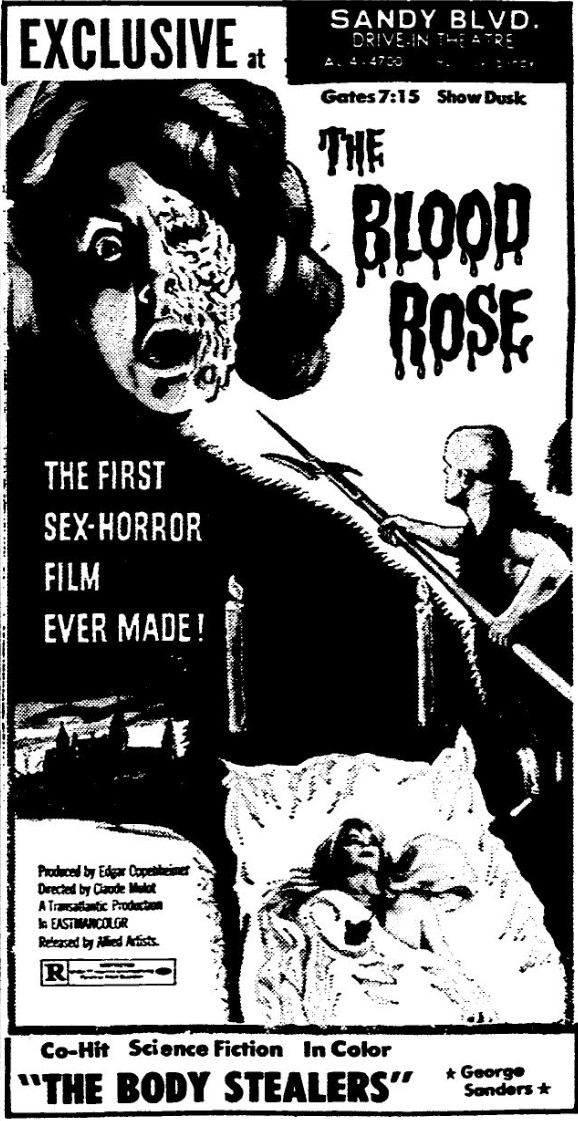
September 23, 1970 ad (Portland)
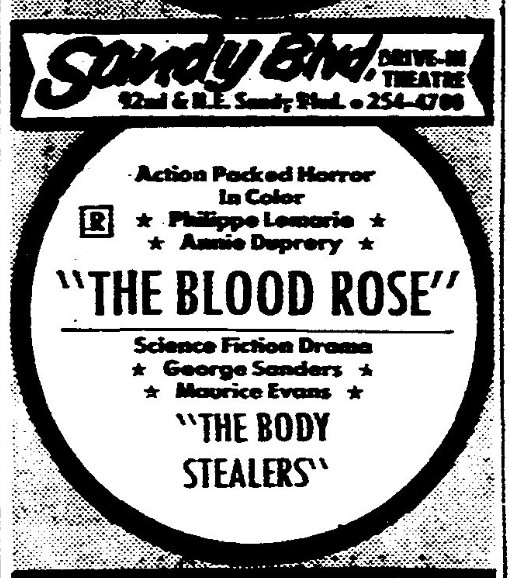
September 26, 1970 ad (Portland)
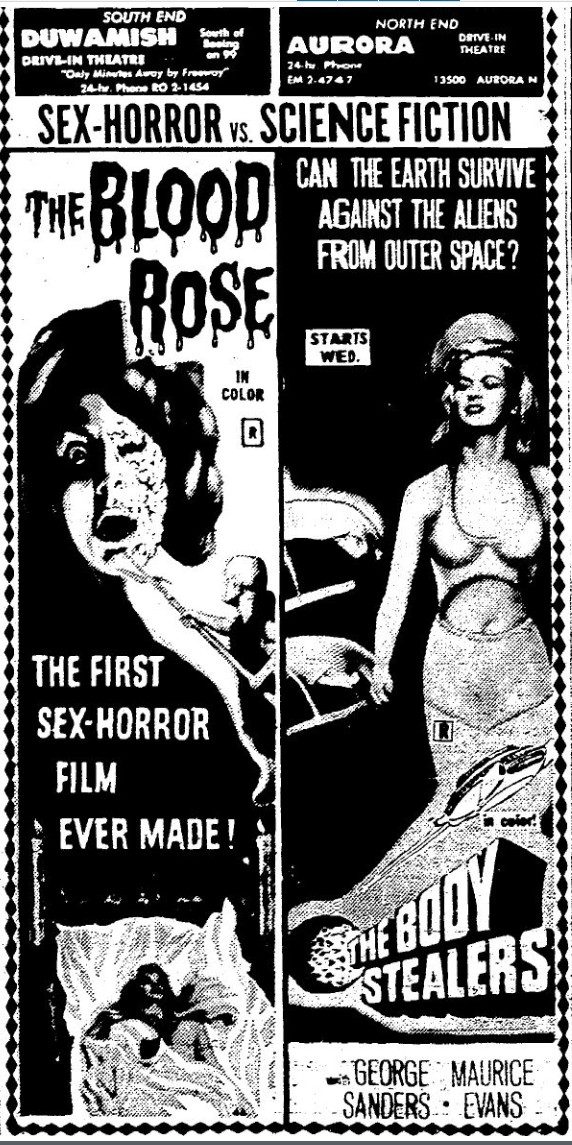
October 13, 1970 ad (Seattle)
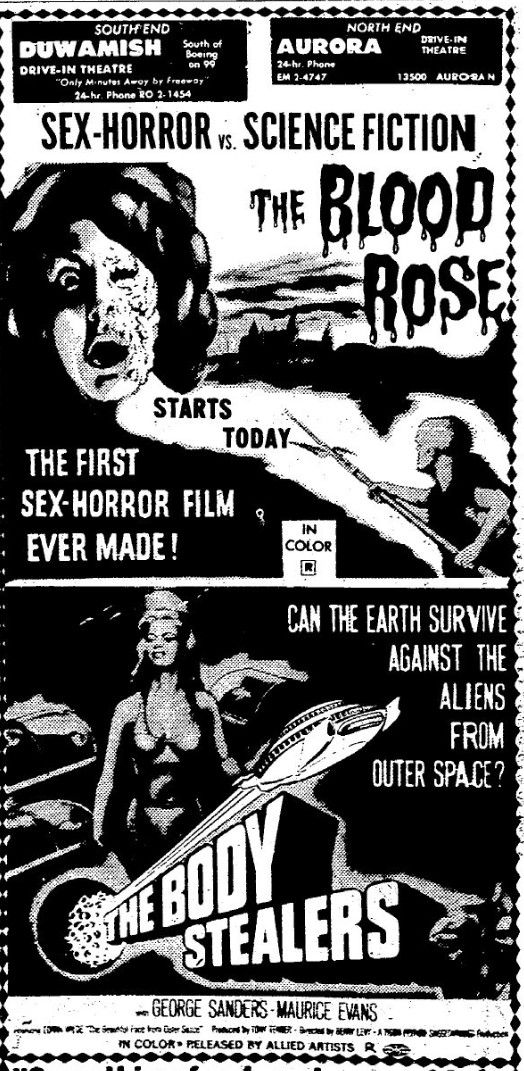
October 14, 1970 ad (Seattle)
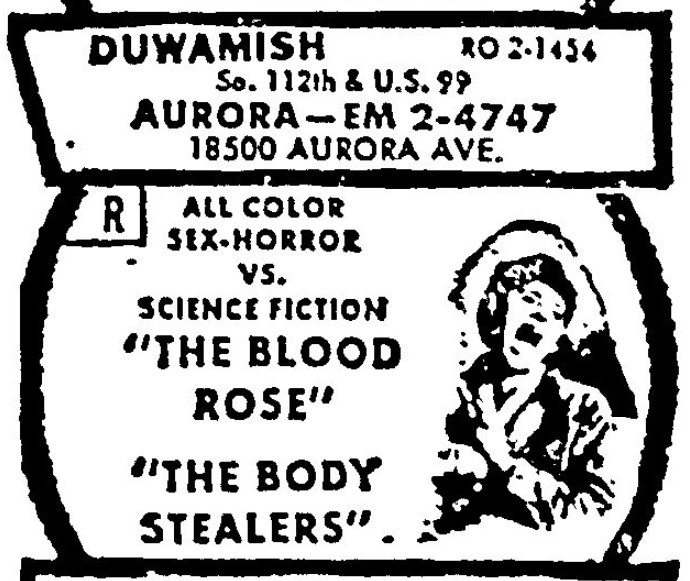
October 15, 1970 ad (Seattle)
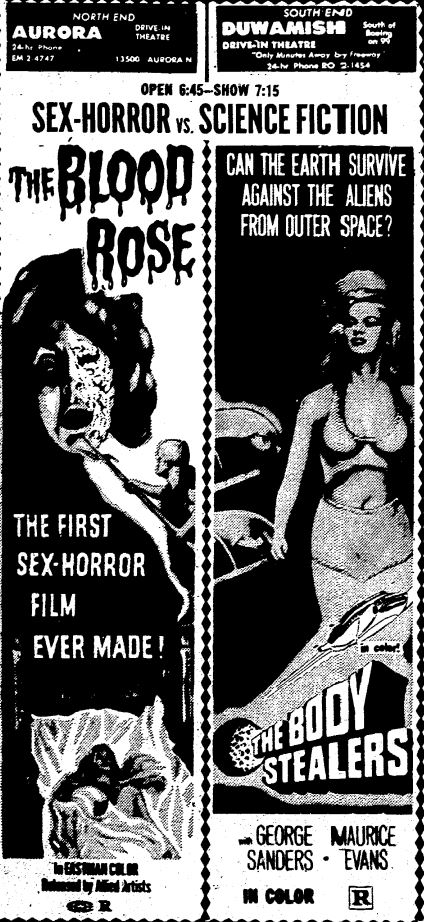
October 16, 1970 ad (Seattle)
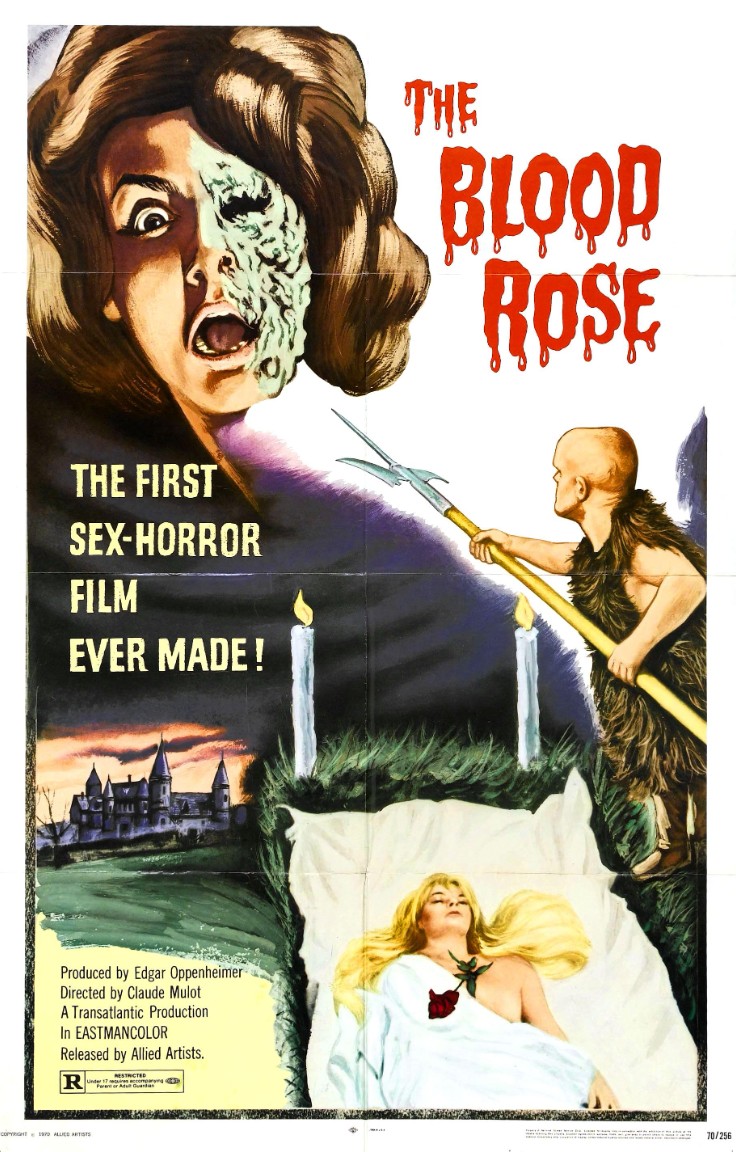
The Blood Rose (1970) poster
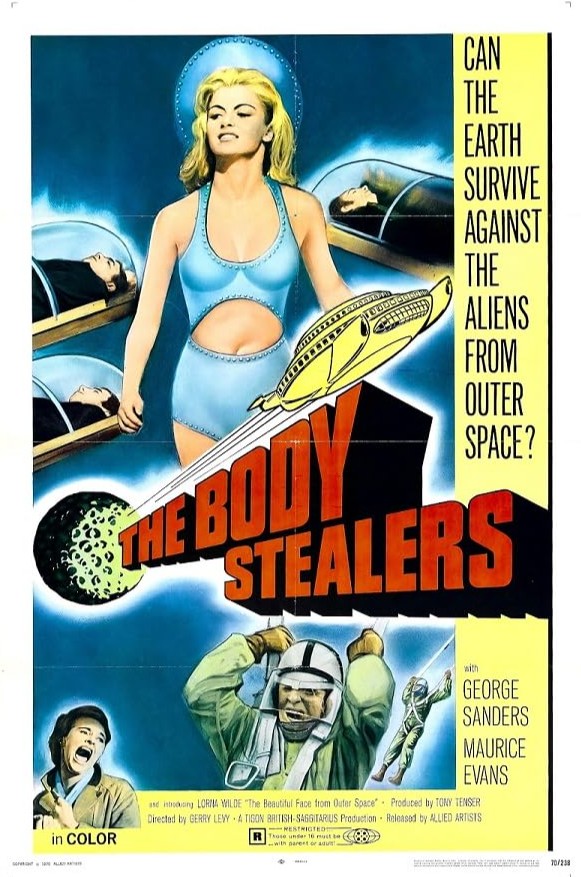
The Body Stealers (1969) poster
The Blood Rose (1970) trailer
Buy "The Blood Rose" (1969) DVD on Amazon (SPONSORED)
The Body Stealers (1969) trailer
