This is a collection of media from the initial runs of "Frankenstein Must Be Destroyed" (1969) in the Pacific Northwest. Seattle got "The Devil's Bride" (1968) for a co-feature while Portland got "Dracula Has Risen from the Grave" (1968) for its second.
Click on images for larger versions.
Frankenstein Must Be Destroyed (1969)
“Frankenstein Must Be Destroyed” crawls across the screen like a reminder that Hammer Studios could be at its most vicious when it stopped pretending its monsters were anything but reflections of human rot. The film strips away the last traces of gothic romance and leaves you alone with a Baron who has shed even the pretense of scientific nobility. This version of Frankenstein is not a tragic visionary or a misunderstood genius. He is a cold strategist who treats morality as a superstition and other people as raw materials. The story follows him as he forces his way into the lives of ordinary people, contaminating their routines with his clinical cruelty until they become unwilling accomplices in his obsession. The horror comes less from the laboratory and more from the way he manipulates every social weakness around him, turning fear, poverty, and respectability into tools.
The film’s atmosphere is thick with a kind of institutional decay. The settings feel like places where polite society has already failed, where the veneer of civility is just thin enough for someone like the Baron to slice through it without resistance. The violence is not grand or operatic. It is procedural, almost bureaucratic, which makes it sting more. Even the moments of tenderness or hope feel like they are being stalked by something calculating and patient. The production design leans into this sense of rot, giving the world a damp, claustrophobic texture that makes every room feel like a trap waiting to be sprung.
What makes “Frankenstein Must Be Destroyed” unsettling is how confidently it argues that the real monster is not stitched together in a lab but walks among us wearing a gentleman’s coat. The film is a slow tightening of screws, a study in how power corrodes everything it touches, and how easily people surrender their boundaries when confronted with someone who refuses to acknowledge any. It is one of Hammer’s bleakest statements, a story where the terror comes from watching a man with no conscience move through a world that keeps giving him permission.
Director: Terence Fisher
Writers: Bert Batt, Anthony Nelson Keys
Stars: Peter Cushing, Veronica Carlson, Freddie Jones
The Devil's Bride (AKA "The Devil Rides Out," 1968)
“The Devil’s Bride” moves with the confidence of a studio that knows exactly how to dress up damnation in velvet and candlelight, then quietly lets the rot seep through the seams. It is Hammer operating at its most ceremonially sinister, where the occult is less a source of spectacle and more a reminder that polite society is always one cracked surface away from surrendering to something older and hungrier. The film treats black magic not as a carnival trick but as a social infection, creeping into drawing rooms and manor houses with the same calm inevitability as a cold draft under a locked door. What gives it its bite is the way it refuses to romanticize any of it. The rituals are elaborate, but the motives behind them are petty, desperate, and human in the worst ways.
The atmosphere is drenched in a kind of aristocratic decay. Every location feels like a place where tradition has calcified into something brittle, ready to snap the moment someone pushes against it. The film’s antagonist embodies this perfectly, a figure who hides predatory intent behind a mask of refinement, turning charm into a weapon and intellect into a trap. The story unfolds like a slow tightening of invisible strings, pulling its characters toward a confrontation they barely understand. Even the moments of supposed safety feel compromised, as if the walls themselves are listening for the next opportunity to betray someone.
What makes “The Devil’s Bride” linger is its refusal to offer comfort. It presents the supernatural not as an external force but as an extension of human weakness, a mirror held up to people who would rather not see their own reflection. The film’s tension comes from watching rational minds try to impose order on something that thrives on their uncertainty, and from realizing that the real danger is not the dark arts but the people eager to wield them. It is a story where the elegance of the setting only sharpens the cruelty beneath it, and where every candlelit room feels like a stage prepared for someone’s undoing.
Director: Terence Fisher
Writers: Richard Matheson
Stars: Christopher Lee, Charles Gray, Nike Arrighi
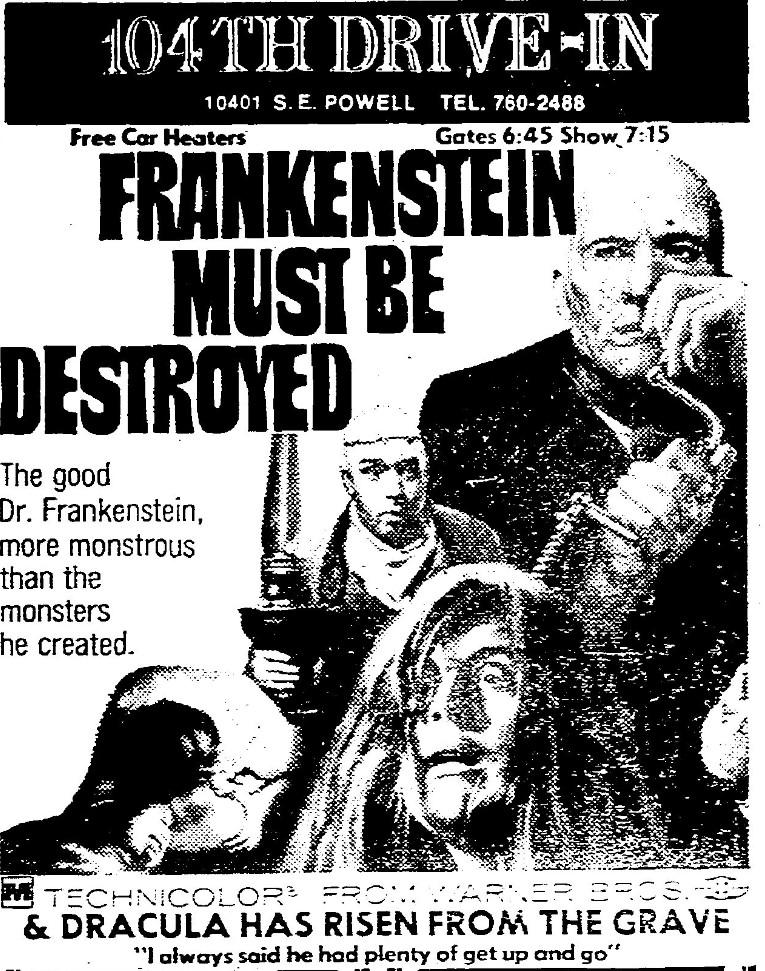
February 25, 1970 ad (Portland)
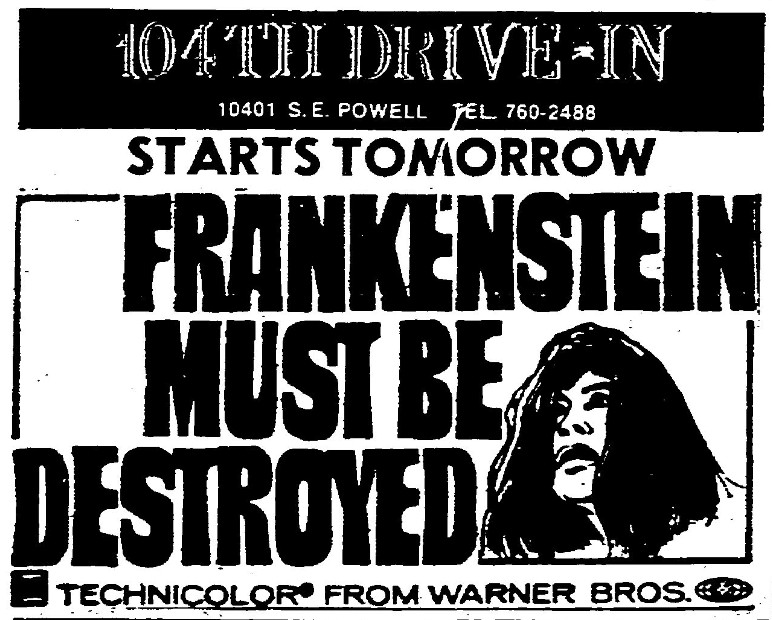
February 24, 1970 ad (Portland)
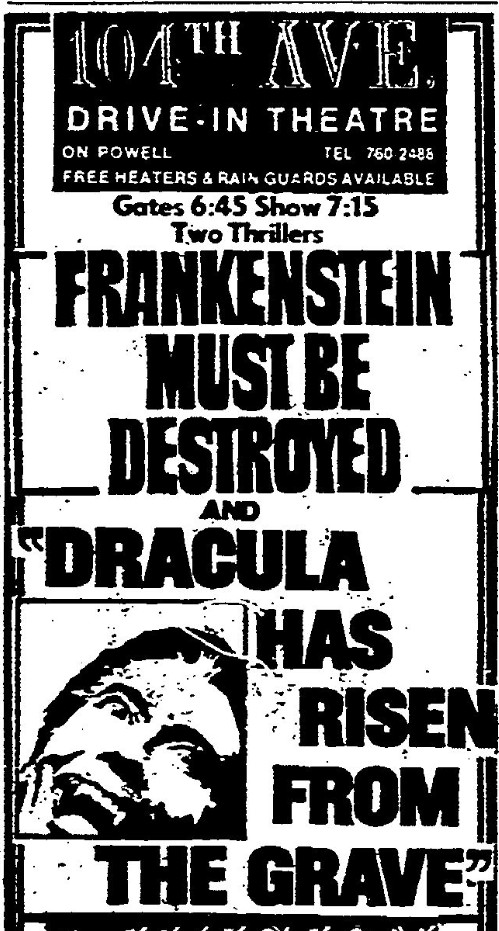
February 26, 1970 ad (Portland)
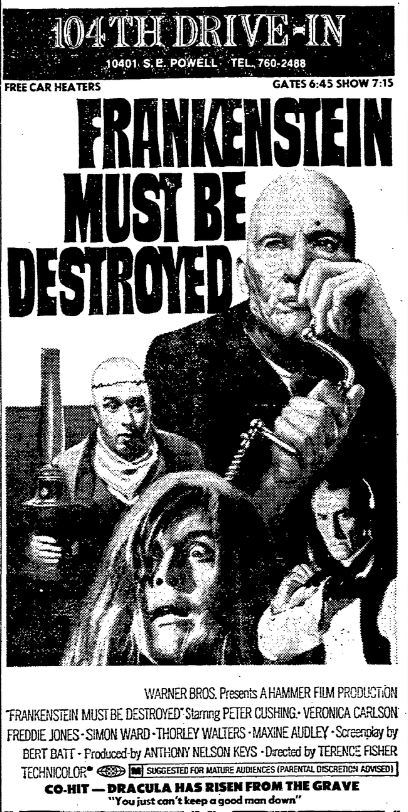
February 27, 1970 ad (Portland)
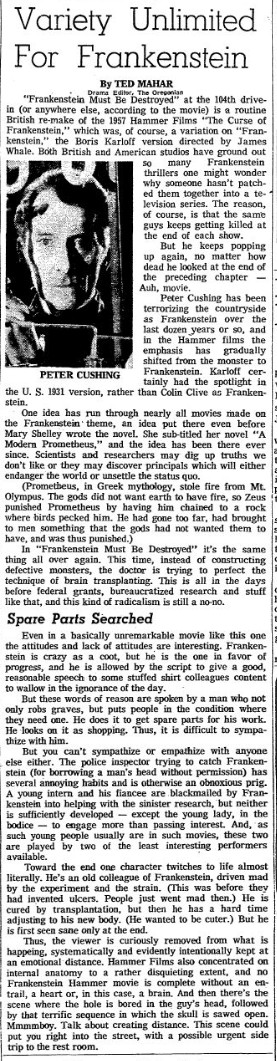
February 27, 1970 article (Portland)
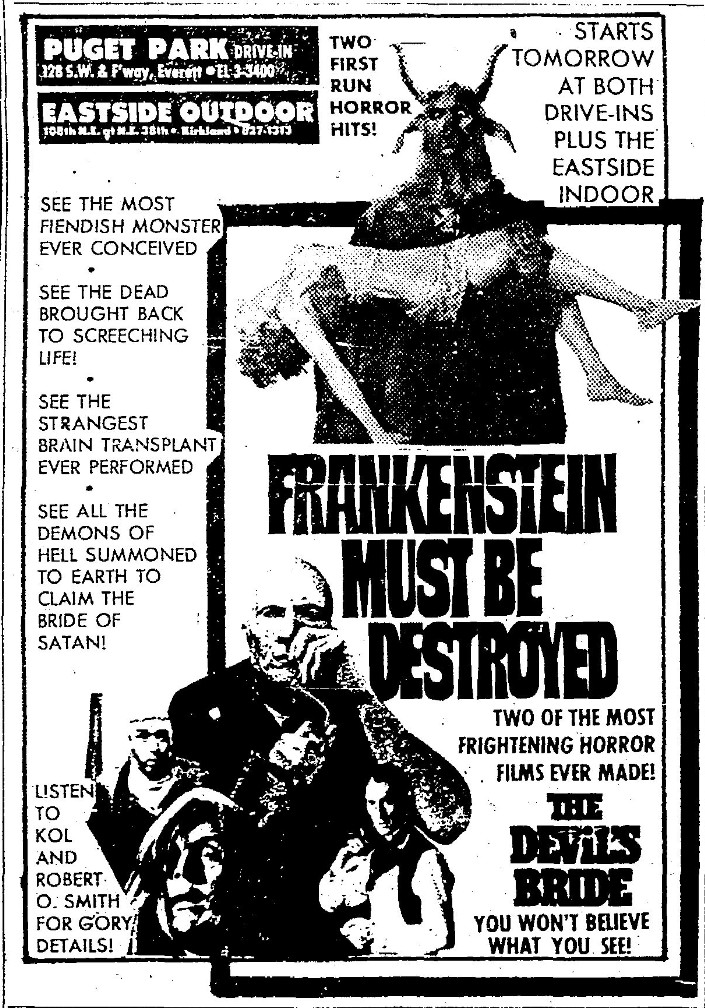
March 17, 1970 ad (Seattle)
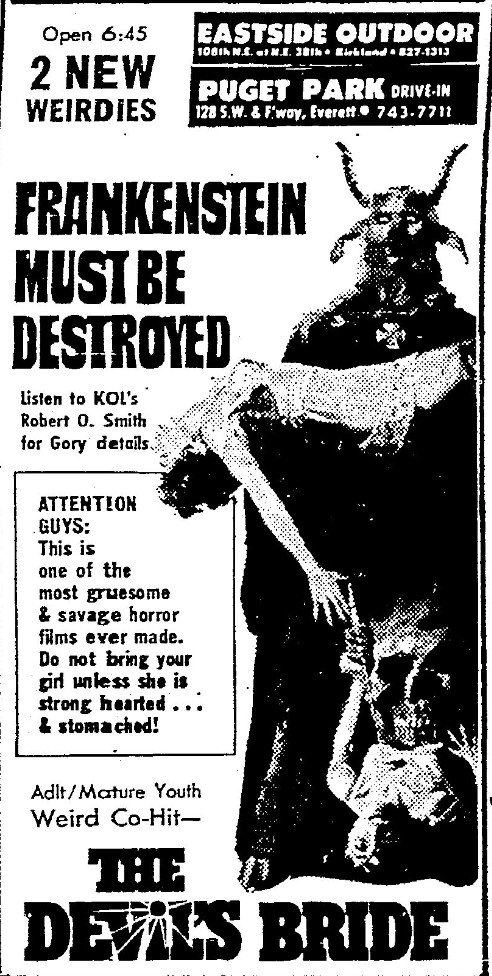
March 18, 1970 ad (Seattle)
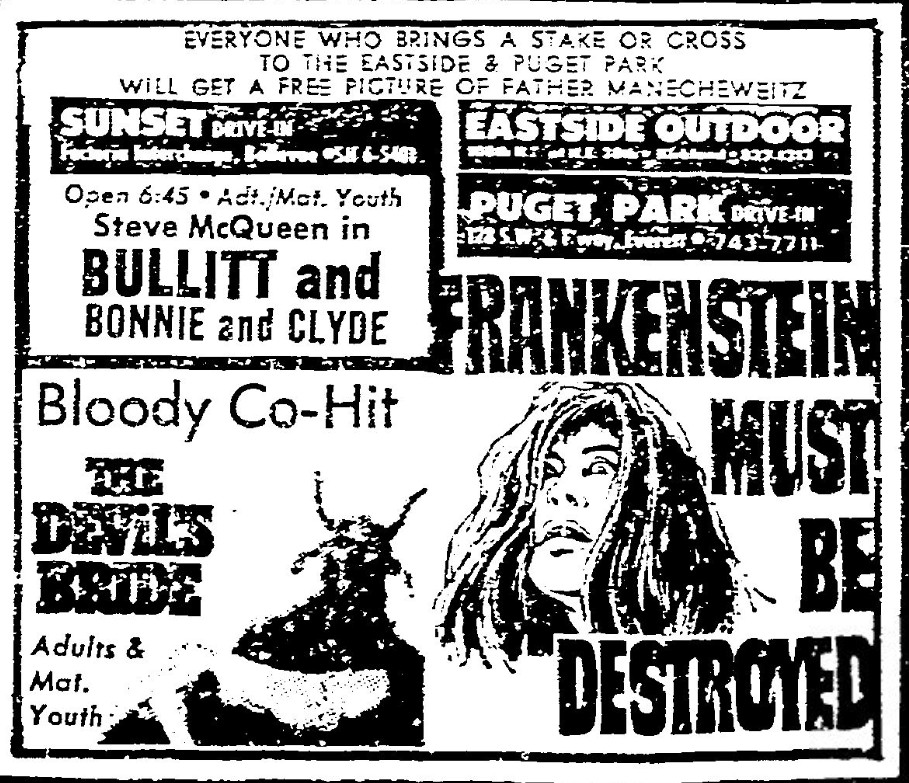
March 19, 1970 ad (Seattle)
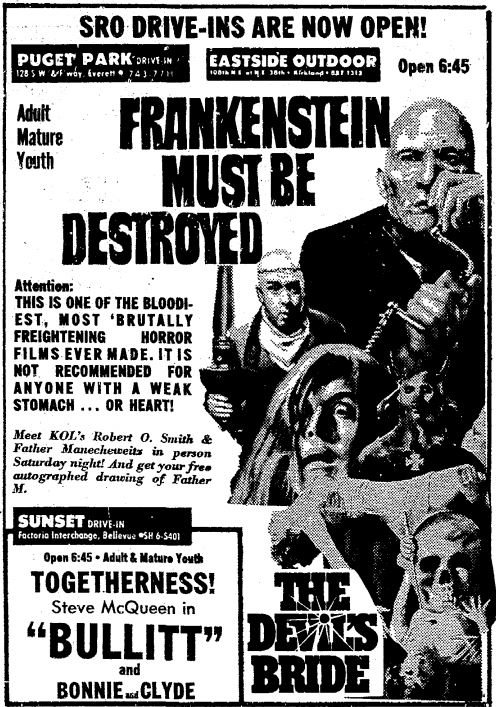
March 20, 1970 ad (Seattle)
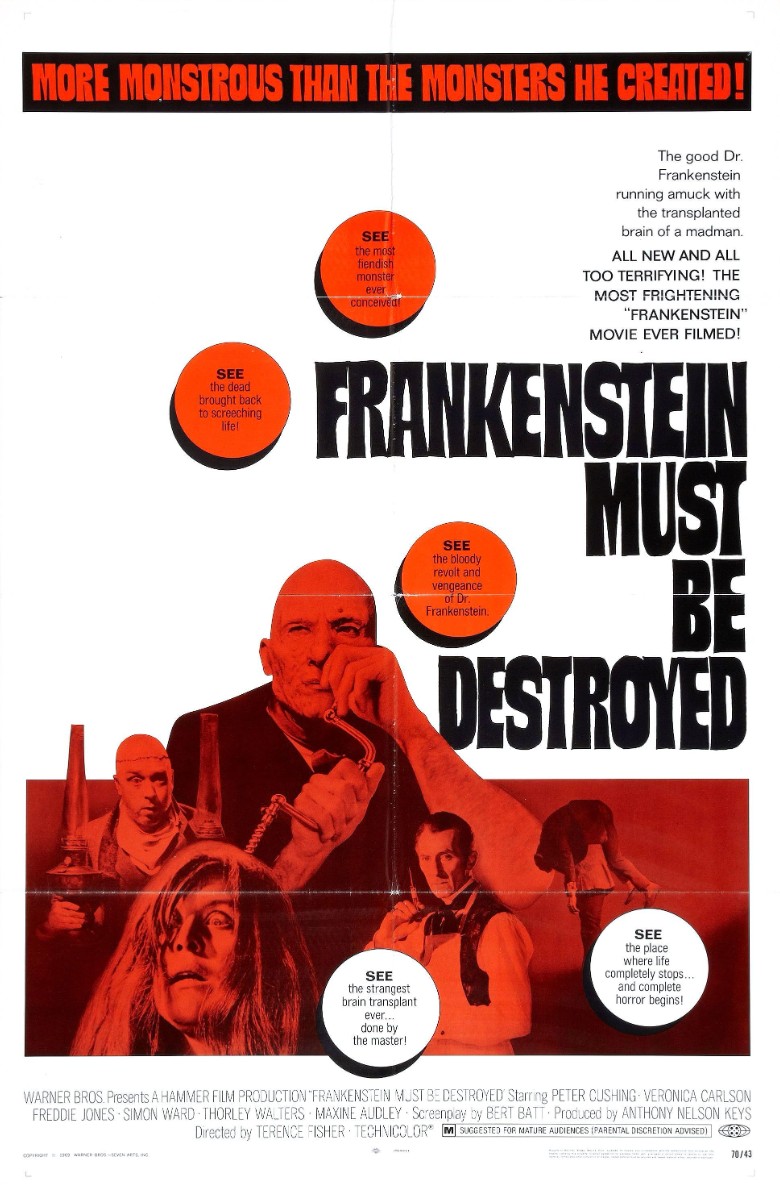
Frankenstein Must Be Destroyed (1969) poster
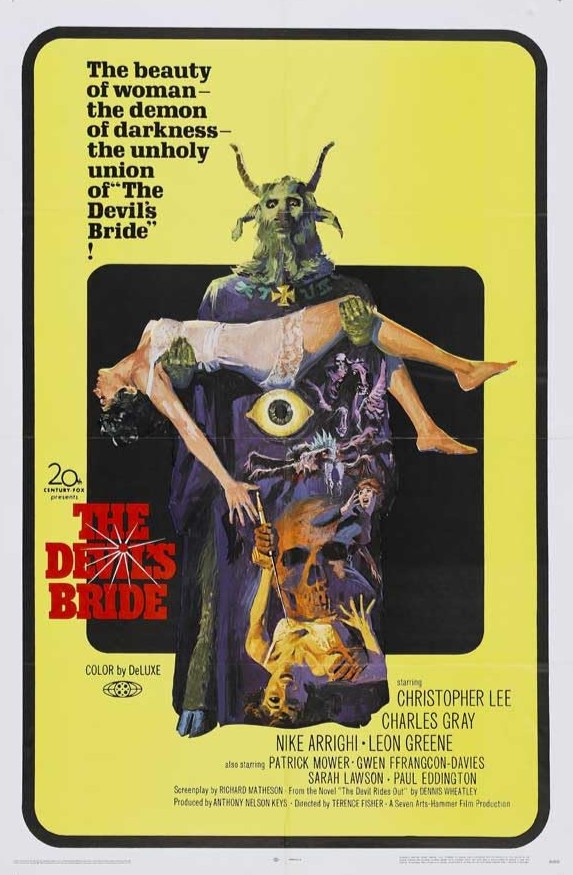
The Devil's Bride (AKA "The Devil Rides Out," 1968) poster
Frankenstein Must Be Destroyed (1969) trailer
The Devil's Bride (AKA "The Devil Rides Out," 1968) trailer
