This is a collection of media from the initial runs of "Hell's Angels '69" (1969) in the Pacific Northwest. The co-feature at most locations was "Jennie: Wife/Child" (1967).
Click on images for larger versions.
Hell's Angels '69 (1969)
“Hells Angels ’69” is a curious hybrid of counterculture tourism, outlaw‑biker mythology, and late‑sixties heist cinema, and its tension comes from the way those elements never quite settle into a single, stable identity. The film follows two thrill‑seeking brothers who drift into the orbit of the Oakland chapter of the Hells Angels, using the club’s reputation and volatility as cover for a robbery scheme. What emerges is less a straightforward crime picture than a study in how mythmaking, masculinity, and rebellion were being packaged and sold at the end of the decade.
The film’s most striking quality is its attempt to fold real‑life biker iconography into a narrative that is fundamentally about manipulation. The Angels are presented as both authentic countercultural figures and as symbols to be exploited, and the movie seems aware of the contradiction. It lingers on the rituals, camaraderie, and performative toughness of the club, but it also frames these men as pawns in a larger game they don’t realize they’re part of. That duality gives the film an uneasy energy: it wants the rawness of biker culture, yet it also wants the sleekness and calculation of a caper film, and the friction between those impulses becomes part of its texture.
Visually, the film leans into the sun‑bleached, documentary‑adjacent style that many late‑sixties exploitation and counterculture films adopted. The camera often seems more interested in the environment—the desert expanses, the roadside bars, the communal gatherings—than in the mechanics of the plot. This gives the film a sense of place that feels lived‑in, even when the narrative itself is more schematic. The Angels’ world is presented as chaotic but strangely ritualized, a space where freedom and violence coexist without ever fully resolving into a moral stance.
What keeps “Hells Angels ’69” interesting is the way it reflects the era’s fascination with outlaw authenticity while simultaneously revealing how easily that authenticity could be commodified. The brothers’ scheme depends on the public’s fear and fascination with the Angels, and the film implicitly critiques the way rebellion had already become a marketable aesthetic by 1969. Yet it also indulges in that same aesthetic, reveling in the spectacle of bikes, leather, and bravado. That ambivalence—admiration mixed with exploitation—makes the film feel like a snapshot of a cultural moment when the counterculture was being absorbed into mainstream entertainment even as it tried to resist it.
The result is a film that is less about the heist itself than about the performance of identity. It captures the contradictions of its time: the desire for freedom, the allure of danger, and the uneasy realization that even rebellion can be staged. In that sense, “Hells Angels ’69” becomes a document of the late sixties’ shifting cultural landscape, where authenticity and artifice were constantly colliding.
Director: Lee Madden
Writers: Don Tait, Tom Stern, Jeremy Slate
Stars: Tom Stern, Jeremy Slate, Conny Van Dyke
Jennie: Wife/Child (1967)
“Jennie: Wife/Child” is one of those late‑sixties American independents that feels caught between eras, using a modest domestic drama to probe the shifting moral and emotional terrain of the time. The film centers on a young woman whose marriage places her in a role she is neither prepared for nor fully capable of inhabiting, and its power comes from the way it treats that tension not as a sensational crisis but as a slow, unsettling unraveling of identity. What emerges is a portrait of a person suspended between adolescence and adulthood, trying to navigate expectations that feel both suffocating and abstract.
The film’s title captures its central contradiction: Jennie is legally a wife, but emotionally still a child, and the narrative keeps returning to that dissonance. Her husband, older and more settled, represents a world of responsibility and routine that she can mimic but not internalize. The film observes her with a kind of quiet, almost anthropological patience, showing how she drifts through domestic spaces that never quite feel like her own. Rather than framing her immaturity as a moral failing, the film treats it as a symptom of a society eager to impose adult roles on people who have barely had the chance to understand themselves.
Visually, the film leans into a stripped‑down realism that heightens its sense of emotional claustrophobia. Interiors feel cramped, not because of their size but because of the weight of expectation they carry. The camera often lingers on Jennie’s face as she tries to decode the adult world around her, and those moments become the film’s emotional anchor. There is a fragility to her presence that the film neither exploits nor sentimentalizes; instead, it uses her perspective to expose the hollowness of the roles she is expected to perform.
What makes “Jennie: Wife/Child” resonate is its refusal to turn its central conflict into melodrama. The film is more interested in the quiet, accumulating pressures that shape a young woman’s sense of self. It captures the late‑sixties moment when traditional domestic ideals were beginning to fracture, yet still held enough cultural force to trap those who didn’t fit them. Jennie becomes a symbol of that transitional space—someone trying to grow into a life that was chosen for her rather than by her.
In the end, the film stands as a subtle but incisive exploration of emotional development, societal expectation, and the fragile boundary between dependence and autonomy. It’s a small story, but one that lingers because of the way it treats its protagonist’s confusion and vulnerability as something deeply human rather than merely dramatic.
Directors: Robert Carl Cohen, James Landis
Writer: James Landis
Stars: Jack Lester, Beverly Lunsford, Jim Reader
Buy "Jennie: Wife/Child" (1967) bluray on Amazon (SPONSORED)
Buy "Jennie: Wife/Child" (1967) DVD on Amazon (SPONSORED)
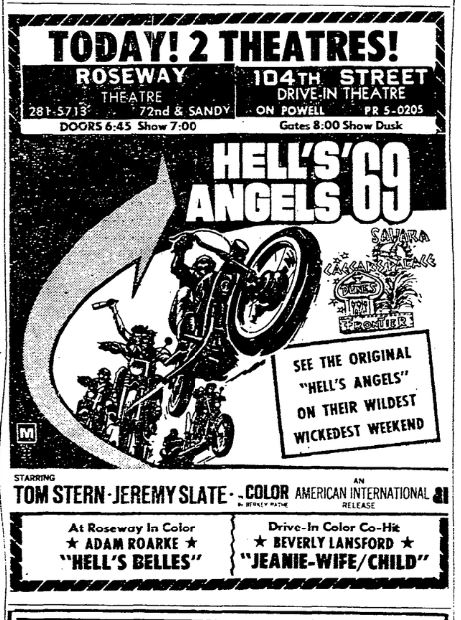
August 27, 1969 ad (Portland)
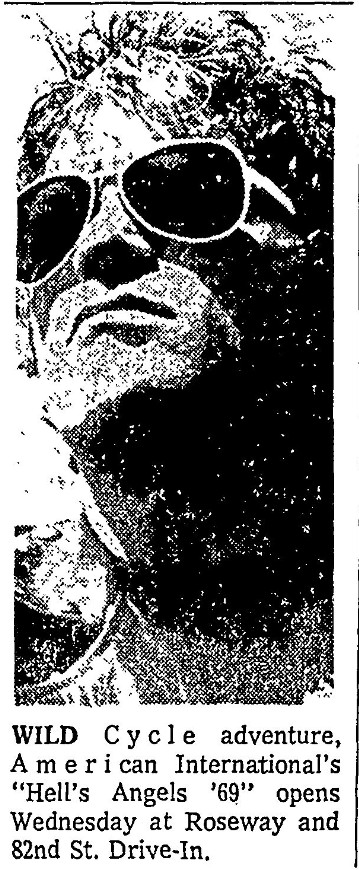
August 25, 1969 photo (Portland)
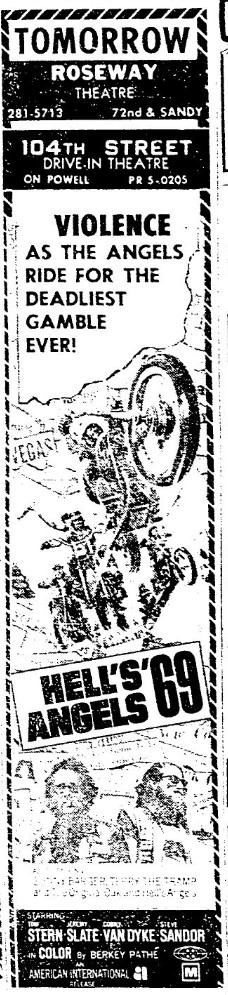
August 26, 1969 ad (Portland)
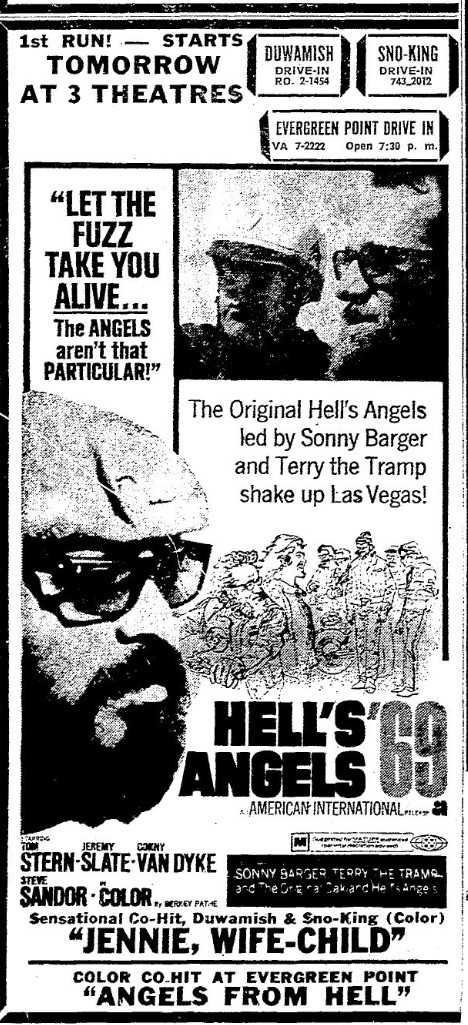
August 26, 1969 ad (Seattle)
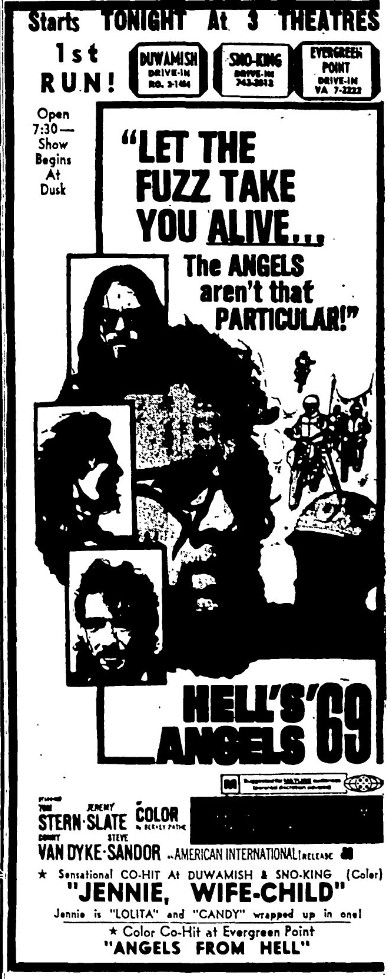
August 27, 1969 ad (Seattle)
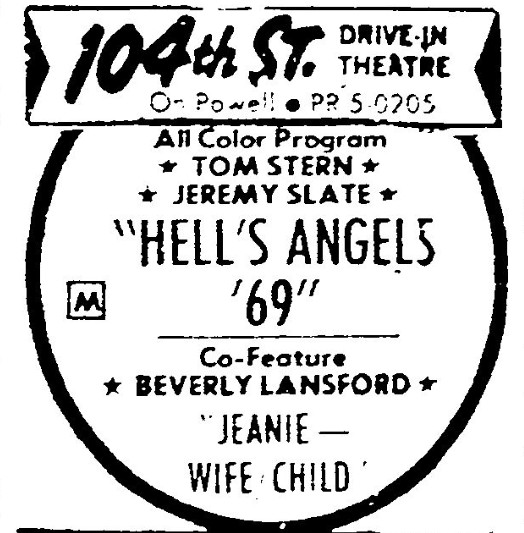
August 28, 1969 ad (Portland)
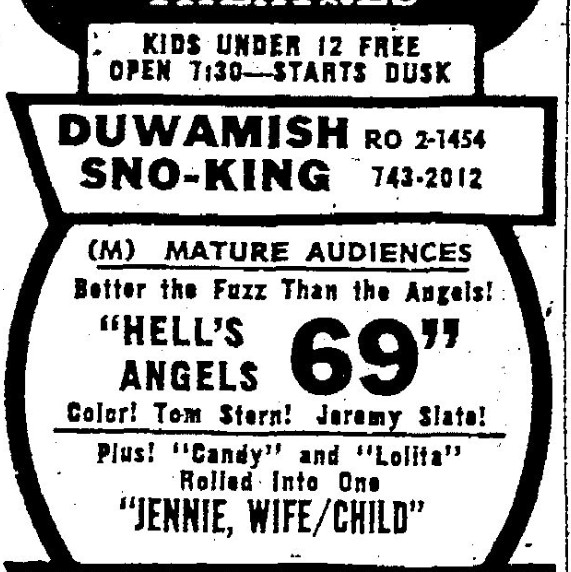
August 28, 1969 ad (Seattle)
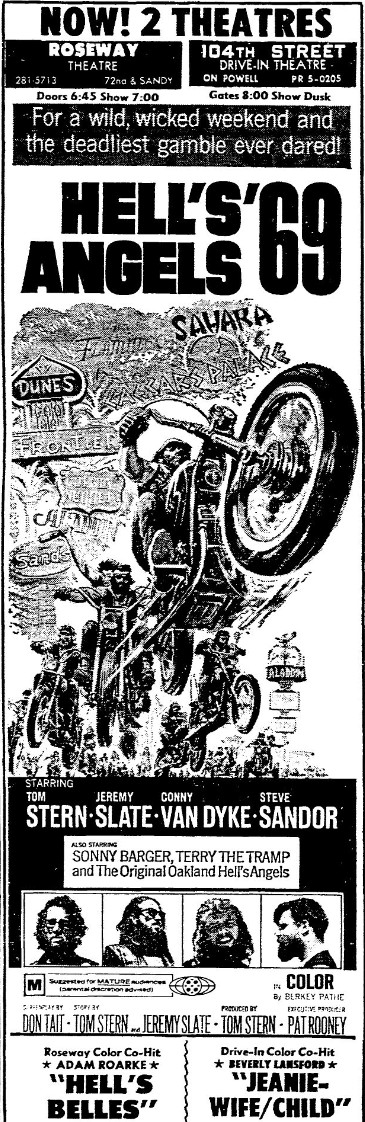
August 29, 1969 ad (Portland)
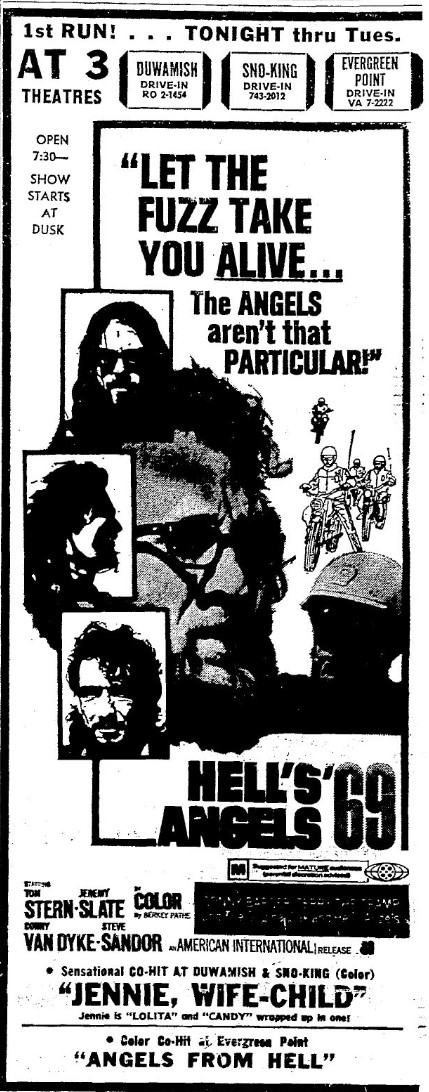
August 29, 1969 ad (Seattle)
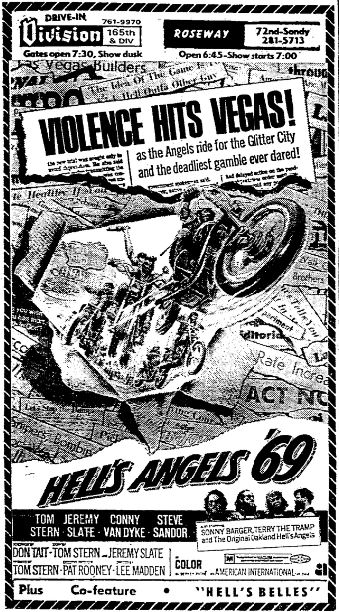
September 03, 1969 ad (Portland)
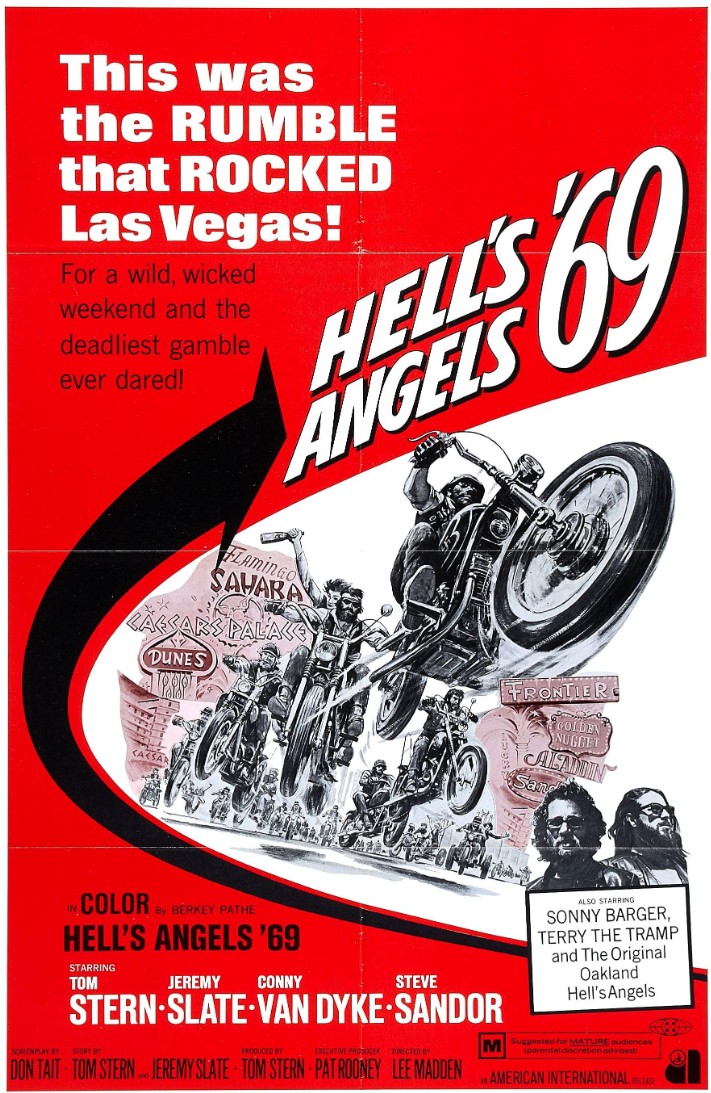
Hell's Angels '69 (1969) poster
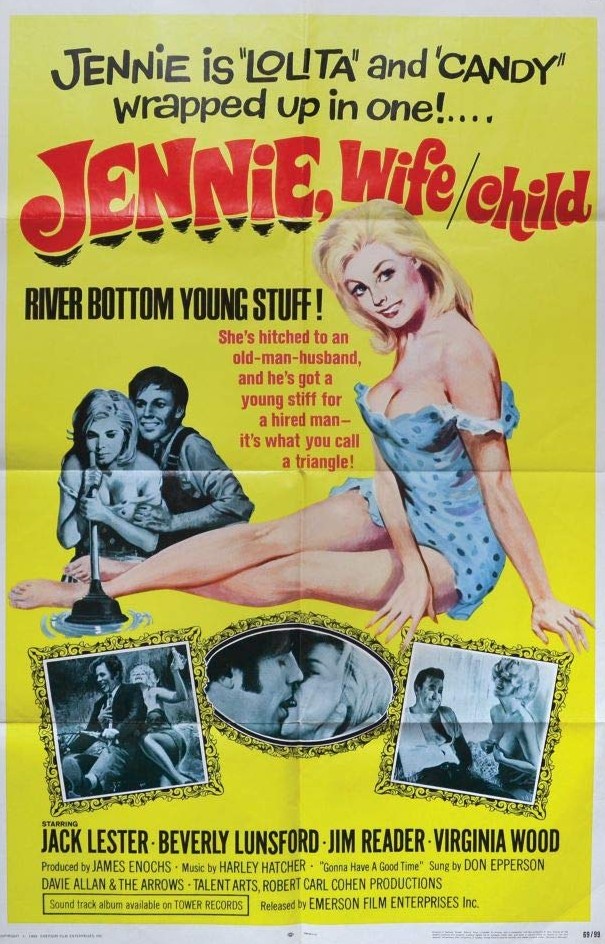
Jennie: Wife/Child (1967) poster
Hell's Angels '69 (1969) trailer
