This is a collection of media from the initial runs of "The Green Slime" (1968) in the Pacific Northwest.
Click on images for larger versions.
The Green Slime (1968)
“The Green Slime” arrives at the tail end of the 1960s space‑race imagination, and part of its charm is how boldly it embraces the era’s blend of futurism, pulp adventure, and moral certainty. Directed by Kinji Fukasaku, the film occupies a fascinating crossroads between Japanese special‑effects craftsmanship and American genre sensibilities, resulting in a hybrid that feels both earnest and flamboyantly stylized. Its premise—astronauts inadvertently bringing a dangerous extraterrestrial organism back to their orbital station after destroying an Earth‑bound asteroid is simple, but the execution leans into spectacle, melodrama, and the anxieties of technological overreach.
What stands out most is the film’s commitment to a heightened, almost comic‑book aesthetic, from its vivid color palette to its theatrical performances. The production design, created by a Japanese crew working with a largely American cast, gives the space station an artificial, hyper‑modern sheen that feels less like a realistic future and more like an imaginative projection of one. This artificiality becomes part of the film’s texture, reinforcing its tone as a piece of pop science fiction rather than hard sci‑fi. The alien threat itself—born from a small sample of irradiated slime that mutates into lethal creatures reflects Cold War‑era fears of contamination, escalation, and the unforeseen consequences of scientific ambition. Yet the film treats these themes with a kind of exuberant sincerity, never descending into cynicism.
Fukasaku’s direction adds an unexpected layer of energy. Even though the film is often remembered for its camp qualities, there’s a genuine sense of momentum in how it stages conflict and crisis. The interpersonal tensions among the station’s leadership, hinted at in the film’s setup, give the story a human anchor amid the chaos. At the same time, the creature effects—primitive by modern standards—carry a tactile, handmade charm that underscores the film’s place in the lineage of mid‑century sci‑fi cinema. They’re not meant to terrify so much as to embody the era’s fascination with the unknown, the radioactive, and the mutational.
Ultimately, “The Green Slime” is less about realism and more about the thrill of imaginative possibility. It’s a film that revels in its own artifice, offering a snapshot of a moment when science fiction was shifting from sober speculation to exuberant spectacle. Its blend of international production, bold visuals, and thematic simplicity makes it a distinctive artifact of late‑1960s genre filmmaking—one that rewards viewers who appreciate the intersection of camp, creativity, and cultural history. If you’re drawn to mid‑century sci‑fi aesthetics or cross‑cultural genre filmmaking, this film offers a surprisingly rich space to explore.
Director: Kinji Fukasaku
Writers: Ivan Reiner, Charles Sinclair, Bill Finger
Stars: Robert Horton, Luciana Paluzzi, Richard Jaeckel
Buy "The Green Slime" (1968) bluray on Amazon (SPONSORED)
Buy "The Green Slime" (1968) DVD on Amazon (SPONSORED)
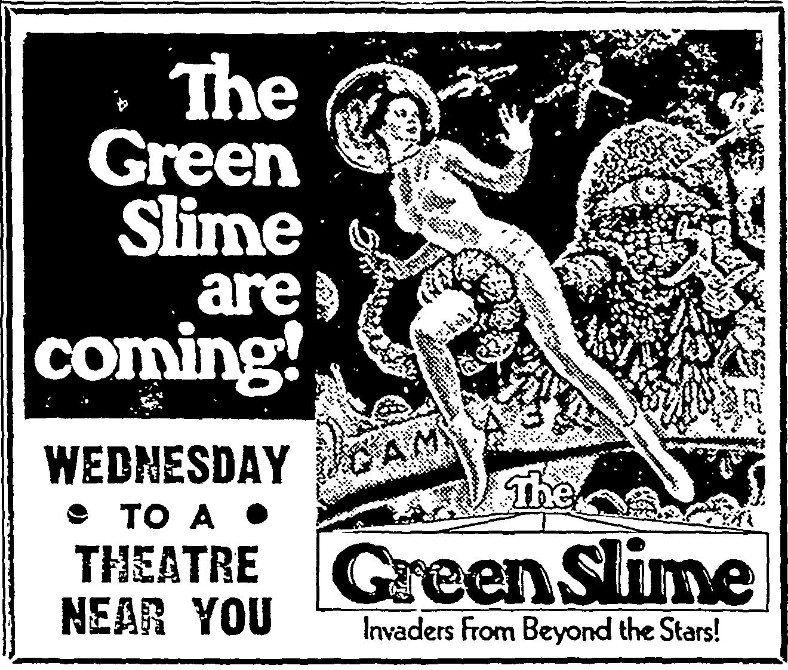
June 1, 1969 ad (Seattle)
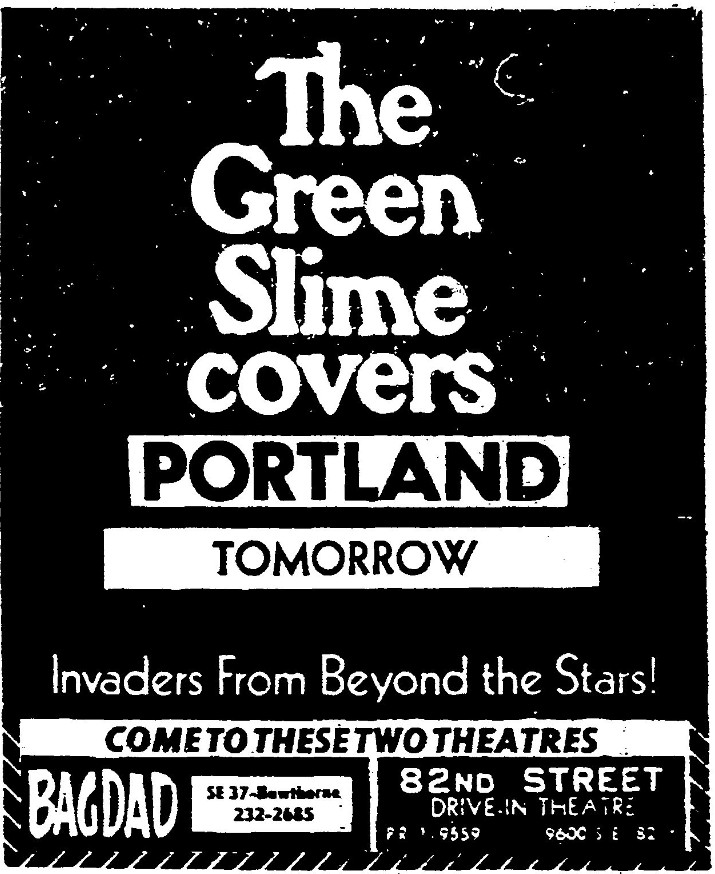
June 3, 1969 ad (Portland)
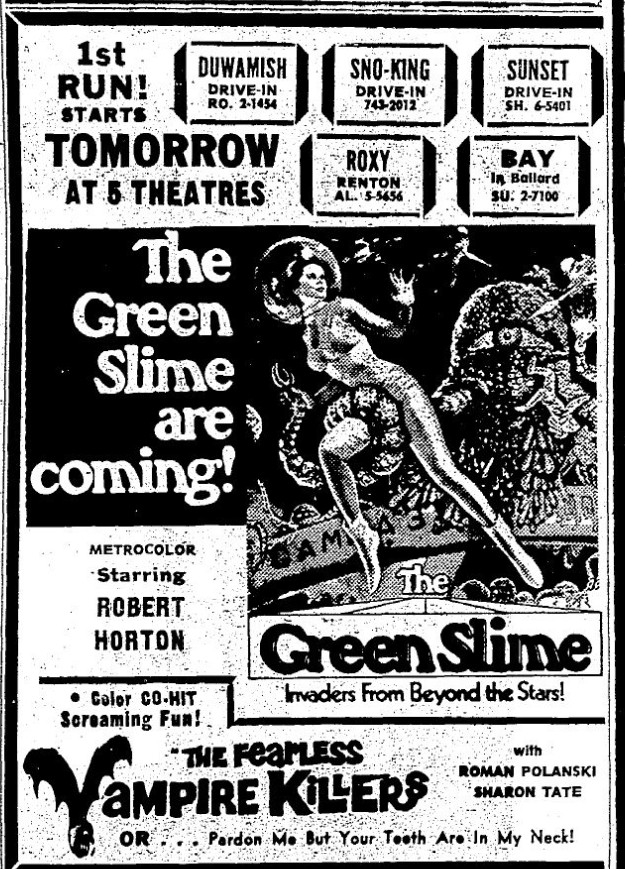
June 3, 1969 ad (Seattle)
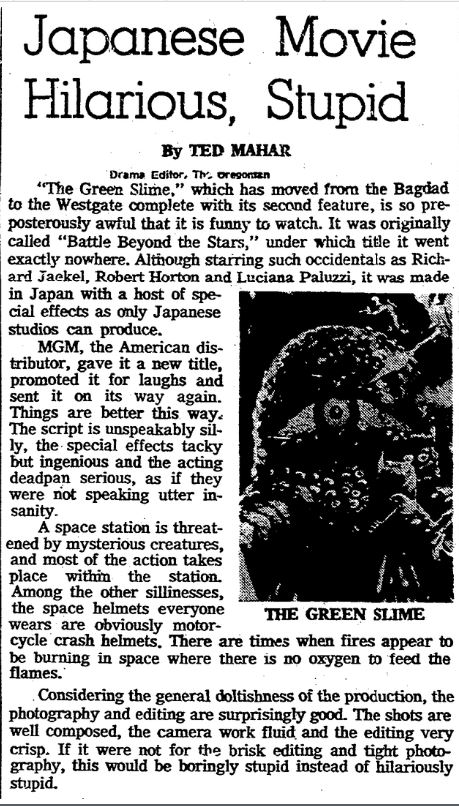
June 4, 1969 review (Seattle)
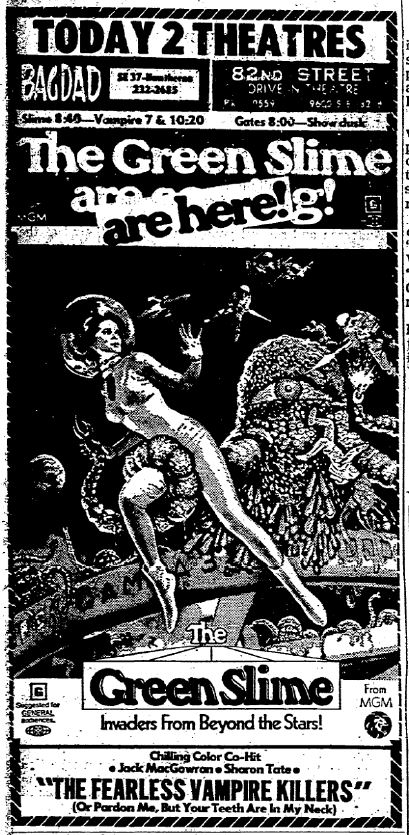
June 4, 1969 ad (Portland)
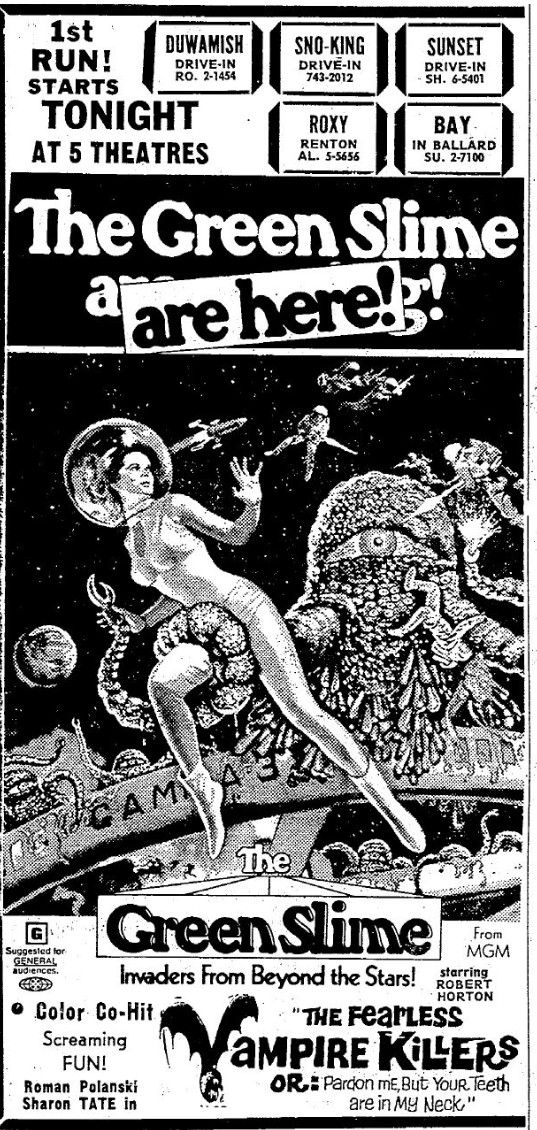
June 4, 1969 ad (Seattle)
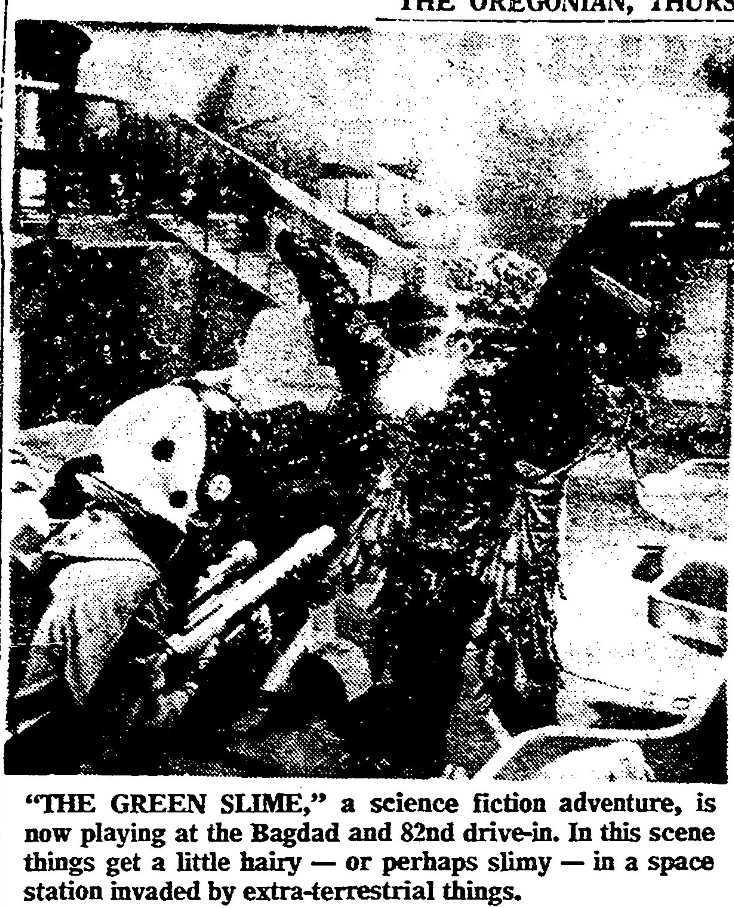
June 5, 1969 photo (Portland)
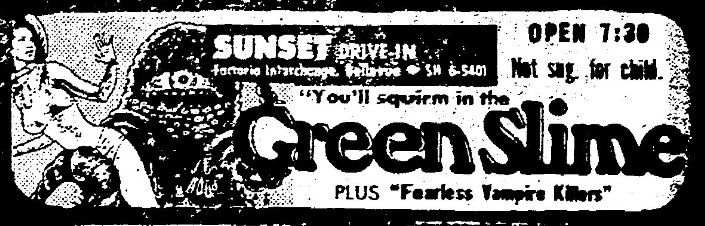
June 5, 1969 ad (Seattle)
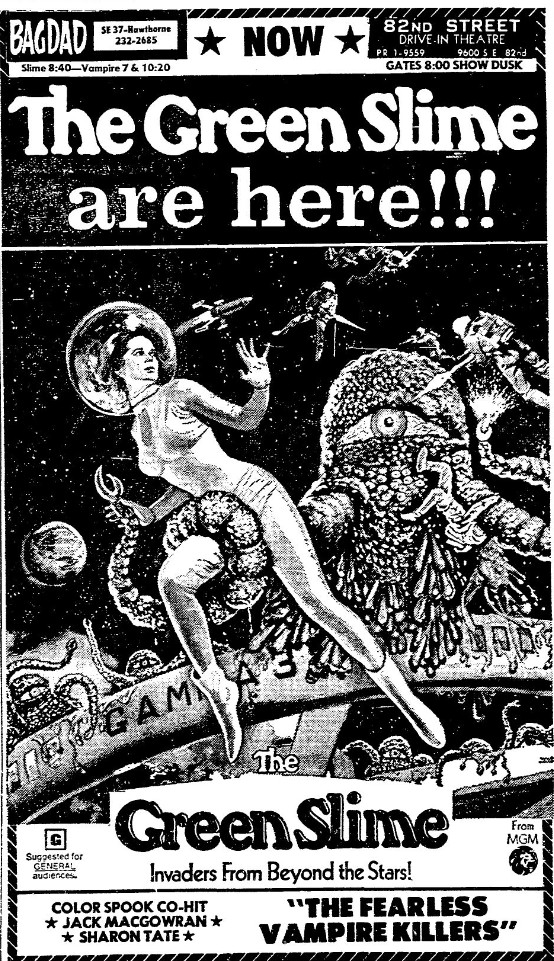
June 6, 1969 ad (Portland)
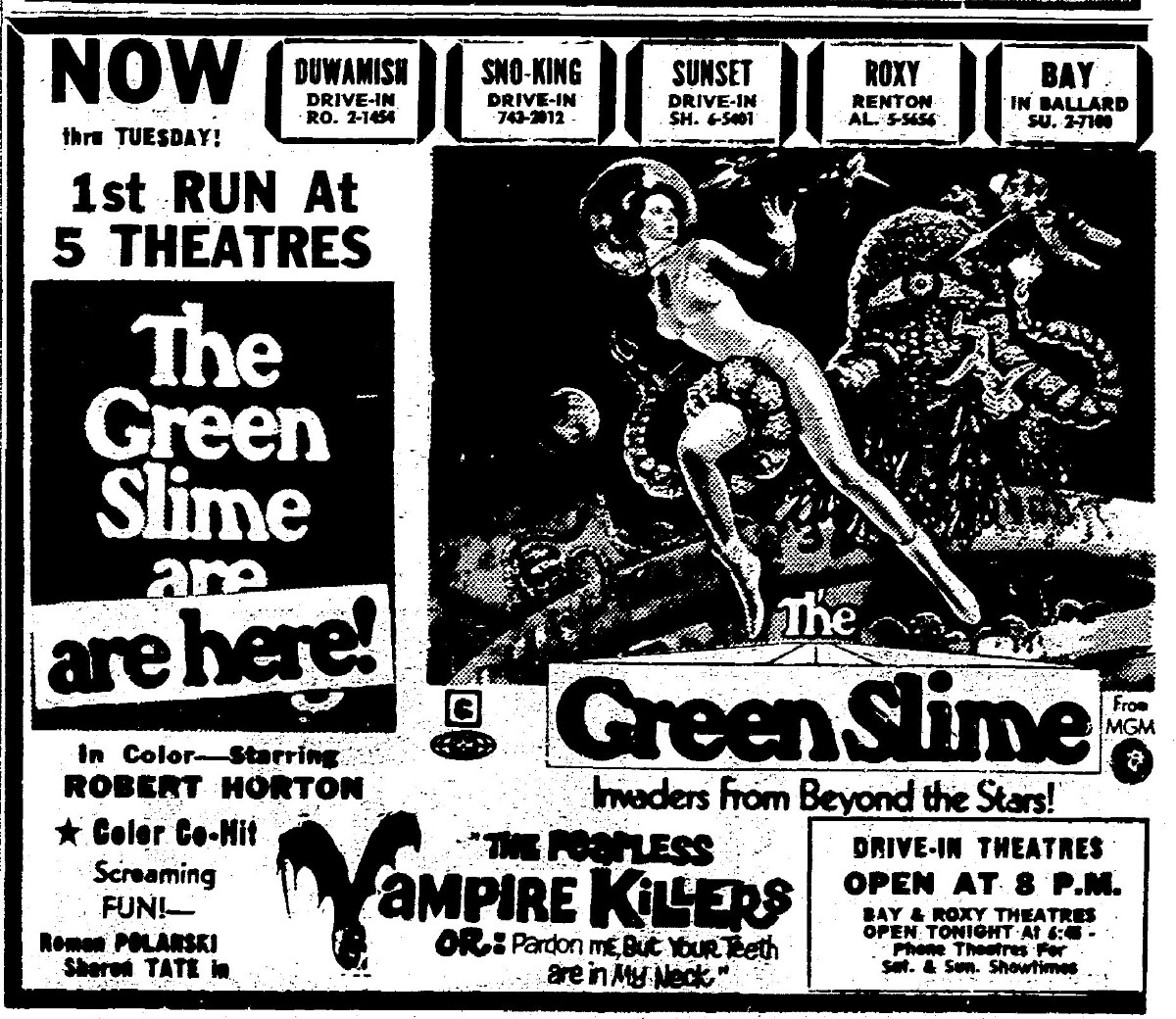
June 6, 1969 ad (Seattle)
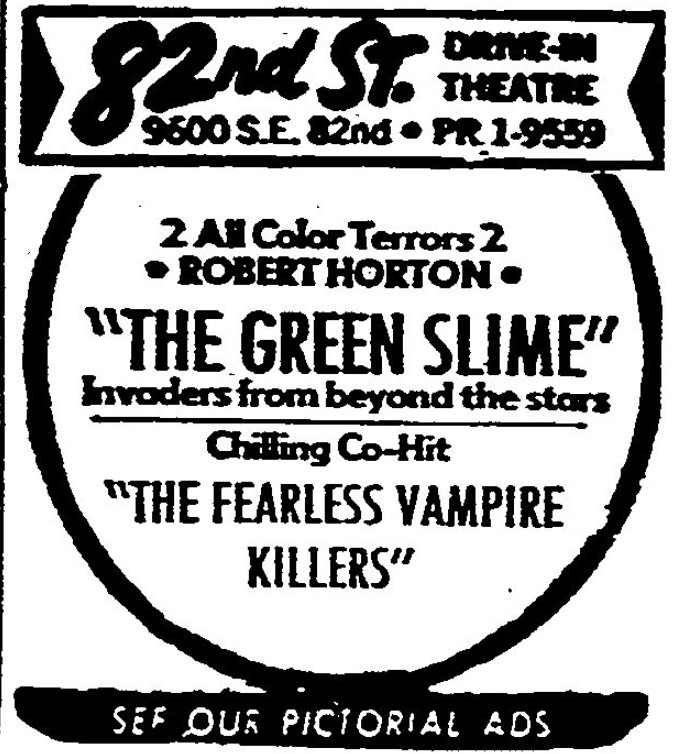
June 8, 1969 ad (Portland)
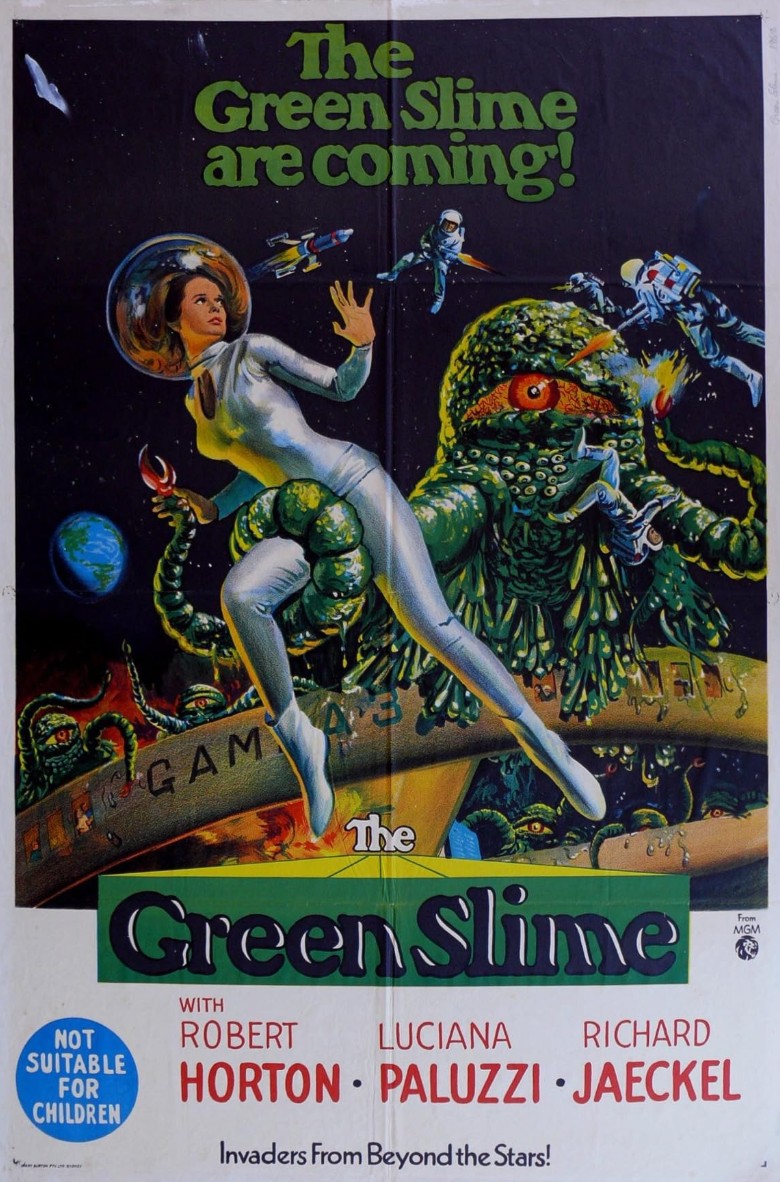
The Green Slime (1968) poster
The Green Slime (1968) trailer
Buy "The Green Slime" (1968) bluray on Amazon (SPONSORED)
Buy "The Green Slime" (1968) DVD on Amazon (SPONSORED)
