This is a collection of media from the initial runs of Brides of Blood (1968)/Blood Fiend (1967) in the Pacific Northwest.
Click on images for larger versions.
Brides of Blood (1968)
"Brides of Blood" is a lurid and atmospheric entry in the Filipino-American horror cycle of the late 1960s, notable for its fusion of jungle exotica, Cold War-era anxieties, and exploitation tropes. Directed by Eddie Romero and Gerardo de León, the film unfolds on a remote island steeped in superstition and ritual, where Western outsiders—scientists and idealists—encounter a community gripped by fear and bound to a mysterious, violent tradition. The narrative is structured around the clash between modern rationalism and primal belief systems, with the island serving as a microcosm of postcolonial tension and ecological unease.
Visually, "Brides of Blood" leans into its low-budget origins with a mix of garish color palettes, shadowy jungle compositions, and grotesque creature effects that evoke both pulp horror and the surrealism of fever dreams. The film’s tone oscillates between camp and menace, often using melodrama and eroticism to heighten the sense of moral decay and impending doom. Its creature design—though crude by contemporary standards—functions symbolically, representing both repressed desires and the consequences of unchecked scientific meddling.
Thematically, the film explores the legacy of colonial intrusion and the fragility of cultural boundaries. The Western characters, particularly the American scientist, embody a kind of naive optimism about progress and control, which is gradually eroded by the island’s resistance to rational explanation. This tension is underscored by the film’s treatment of gender and sacrifice, where women are both victims and symbols of a deeper, cyclical violence tied to nature and myth. "Brides of Blood" doesn’t shy away from sensationalism, but beneath its exploitation veneer lies a critique of imperial hubris and the dangers of ignoring indigenous knowledge systems.
As part of the so-called "Blood Island" trilogy, "Brides of Blood" helped establish a cult legacy for Filipino horror cinema, blending Gothic tropes with tropical settings and a distinctly Southeast Asian sensibility. Its enduring appeal lies not in narrative sophistication but in its ability to conjure a world where science, superstition, and sexuality collide in vivid, unsettling ways.
Director: Gerardo de Leon, Eddie Romero
Writer: Cesar Amigo
Stars: John Ashley, Kent Taylor, Mario Montenegro
Blood Fiend (AKA "Theater of Death," 1967)
"Blood Fiend" (also known as "Theatre of Death") is a moody, stylized British horror film from 1967 that blends Grand Guignol theatrics with psychological intrigue and occult overtones.
Set in a shadowy Parisian theater that specializes in macabre stage productions, "Blood Fiend" centers on the enigmatic figure of Philippe Darvas, a domineering director whose flair for horror seems to bleed into real life. The film’s atmosphere is steeped in theatricality—both literal and figurative—as it explores the porous boundary between performance and reality, illusion and truth. The theater itself becomes a character, a gothic labyrinth of velvet curtains, secret passageways, and flickering gaslight, evoking a sense of claustrophobic dread and voyeuristic tension.
Christopher Lee’s performance as Darvas is commanding and ambiguous, his presence oscillating between charismatic mentor and sinister manipulator. The film plays with the idea of hypnotic control, not just in the literal sense—through Darvas’s eerie influence over his performers—but also in how art can seduce, distort, and consume. As a series of bloodless murders unfolds in the city, suspicion begins to circle the theater, and the narrative tightens into a whodunit laced with occult suggestions and psychological unease.
Visually, "Blood Fiend" is rich in chiaroscuro and stylized compositions, with cinematographer Gilbert Taylor crafting a visual language that recalls both Hammer horror and Italian giallo. Elisabeth Lutyens’ score adds a layer of dissonant menace, reinforcing the film’s sense of disorientation and dread. The use of voodoo motifs and ritualistic imagery—though sensationalized—adds to the film’s exoticism and its flirtation with taboo.
Beneath its lurid surface, "Blood Fiend" engages with themes of artistic obsession, gendered power dynamics, and the seductive danger of spectacle. It critiques the exploitative nature of horror entertainment while reveling in its aesthetic pleasures, creating a self-reflexive tension that is both unsettling and compelling. Though the plot occasionally falters under the weight of its own theatricality, the film remains a fascinating artifact of 1960s genre cinema—one that captures the era’s fascination with psychological horror, eroticism, and the occult.
"Blood Fiend" may not be widely celebrated, but its blend of gothic mood, theatrical excess, and cultural anxiety makes it a compelling watch for those drawn to horror that interrogates its own artifice.
Director: Samuel Gallu
Writer: Ellis Kadison, Roger Marshall
Stars: Christopher Lee, Julian Glover, Lelia Goldoni
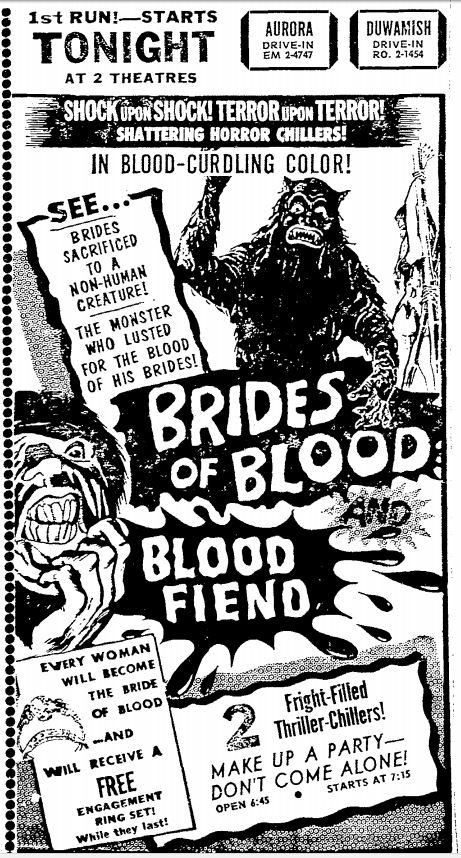
December 4, 1968 ad (Seattle)
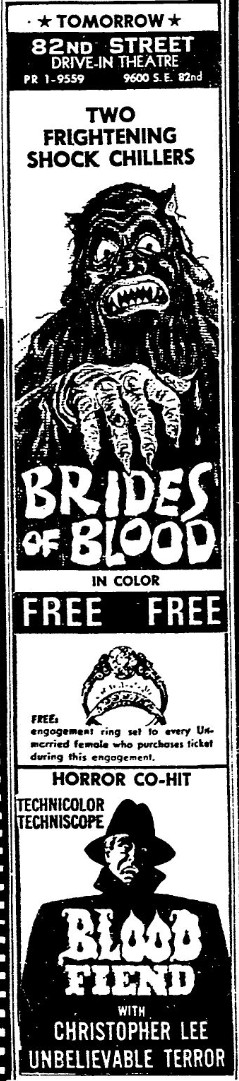
November 19, 1968 ad (Portland)
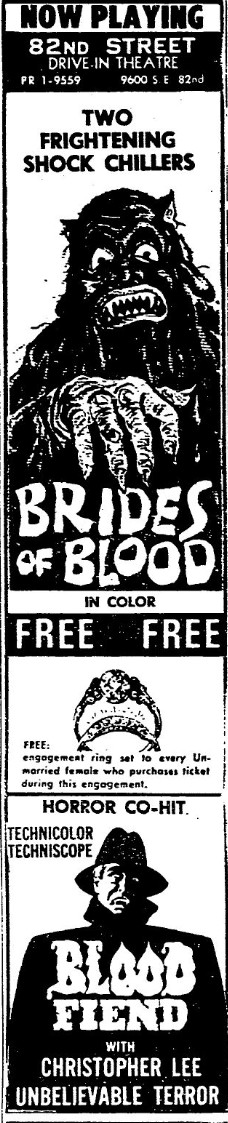
November 20, 1968 ad (Portland)

December 3, 1968 ad (Seattle)
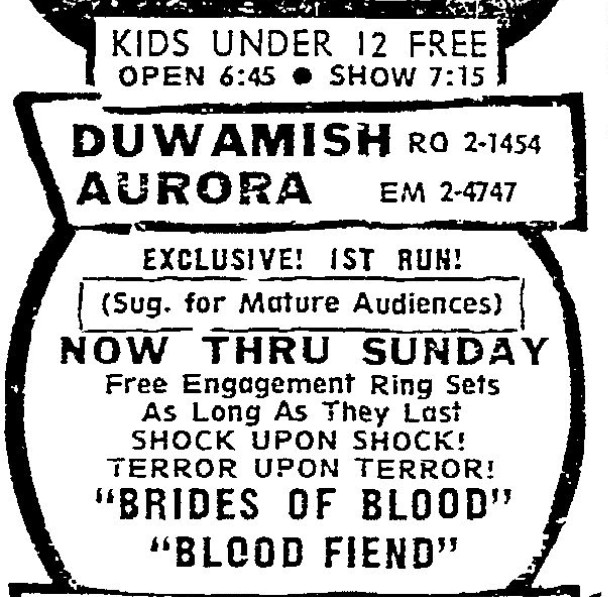
December 7, 1968 ad (Seattle)
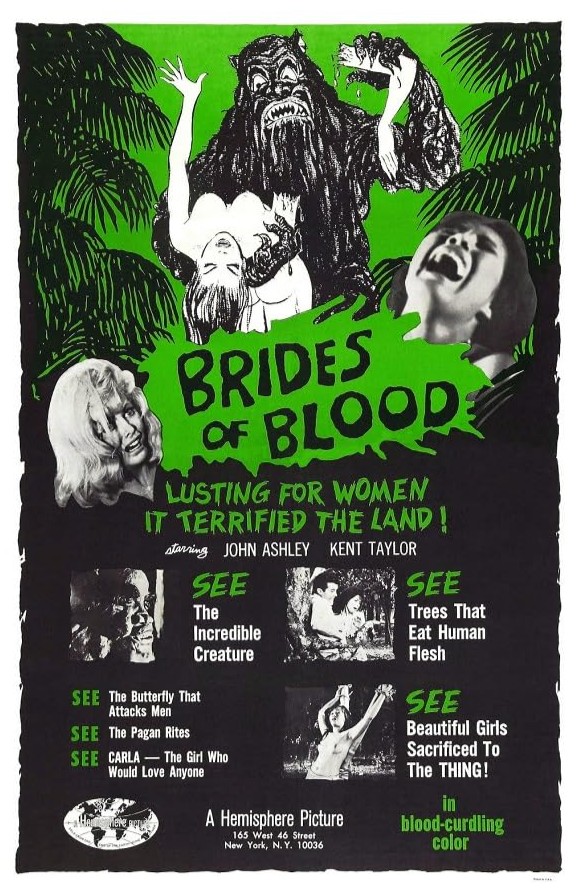
Brides of Blood (1968) poster
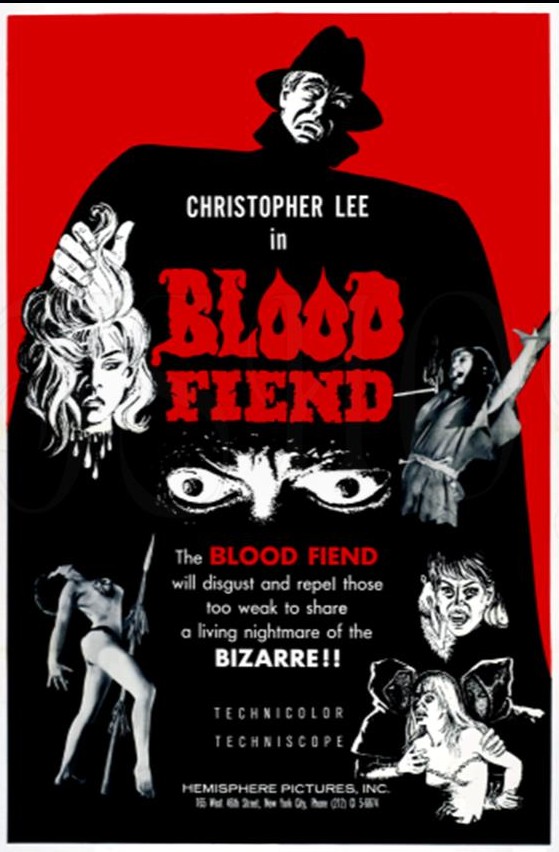
Blood Fiend (1967) poster
Brides of Blood (1968) trailer
Blood Fiend (1967) trailer
