This is a collection of media from the initial runs of "Barbarella" (1968) in the Pacific Northwest.
Click on images for larger versions.
Barbarella (1968)
"Barbarella" (1968) is a kaleidoscopic plunge into the psychedelic imagination of late-1960s European cinema, blending science fiction, erotic fantasy, and satirical camp into a singularly surreal experience. Directed by Roger Vadim and based on Jean-Claude Forest’s French comic series, the film stars Jane Fonda as the titular space adventurer—a figure who oscillates between wide-eyed innocence and subversive sensuality. Set in a distant future where Earth has embraced peace and pleasure, "Barbarella" is dispatched to locate the rogue scientist Durand Durand, whose invention threatens galactic harmony. What unfolds is less a linear quest than a series of episodic encounters with bizarre civilizations, eccentric characters, and elaborate set pieces that evoke both pop art and fetishistic dreamscapes.
The film’s aesthetic is its most immediate and enduring triumph. Costumes, designed by Paco Rabanne, are flamboyant and futuristic, often functioning as visual metaphors for transformation and vulnerability. The production design revels in tactile excess—velvet spacecraft interiors, lava-lamp landscapes, and surreal torture devices—creating a universe that feels both artificial and intoxicatingly alive. Cinematographer Claude Renoir bathes scenes in soft-focus pastels and saturated hues, reinforcing the film’s dreamlike tone and its detachment from conventional realism.
Tonally, "Barbarella" is a paradox. It satirizes the sexual liberation movement while simultaneously indulging in its fantasies, presenting its heroine as both object and agent of desire. Fonda’s performance is deliberately stylized, her line delivery often deadpan or breathless, which amplifies the film’s ironic detachment. Yet beneath the camp, there’s a subtle critique of authority, repression, and the absurdity of moral absolutism. The film’s episodic structure allows for allegorical vignettes that touch on themes of innocence corrupted, pleasure weaponized, and the fragility of utopia.
"Barbarella" resists easy categorization. It’s not a traditional science fiction narrative, nor is it a straightforward erotic fantasy. Instead, it operates as a cinematic collage—part comic strip, part avant-garde theater, part pop-cultural artifact. Its influence can be felt in everything from glam rock aesthetics to postmodern feminist readings of genre cinema. Though often dismissed as kitsch, the film’s deliberate artifice and playful subversion invite deeper reflection on the cultural anxieties of its era, particularly around gender, technology, and the politics of pleasure.
Ultimately, "Barbarella" is a film that rewards viewers willing to embrace its contradictions. It’s a celebration of excess and imagination, a time capsule of countercultural aesthetics, and a sly commentary on the very fantasies it appears to indulge. Its legacy endures not because it conforms to genre expectations, but because it gleefully dismantles them.
Director: Roger Vadim
Writers: Jean-Claude Forest, Terry Southern, Roger Vadim
Stars: Jane Fonda, John Phillip Law, Anita Pallenberg
Buy "Barbarella" (1968) 4K UHD on Amazon (SPONSORED)
Buy "Barbarella" (1968) bluray on Amazon (SPONSORED)
Buy "Barbarella" (1968) DVD on Amazon (SPONSORED)
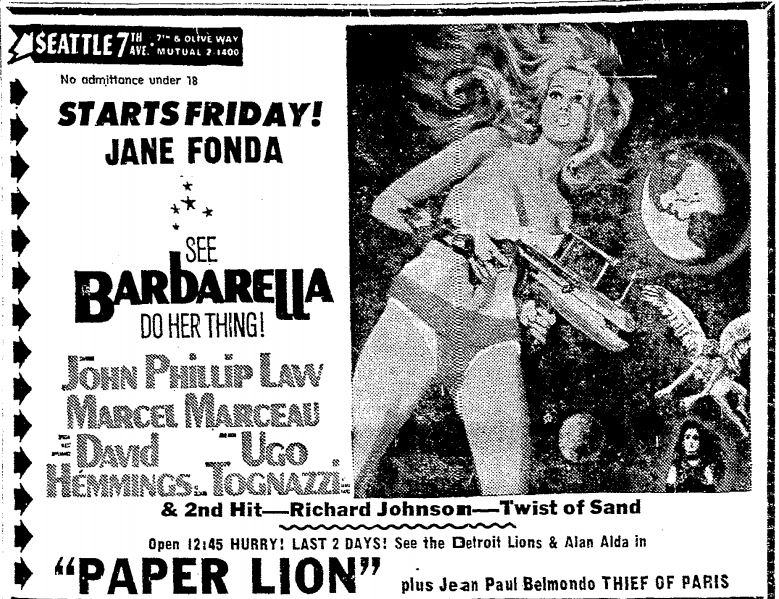
November 13, 1968 ad (Seattle)
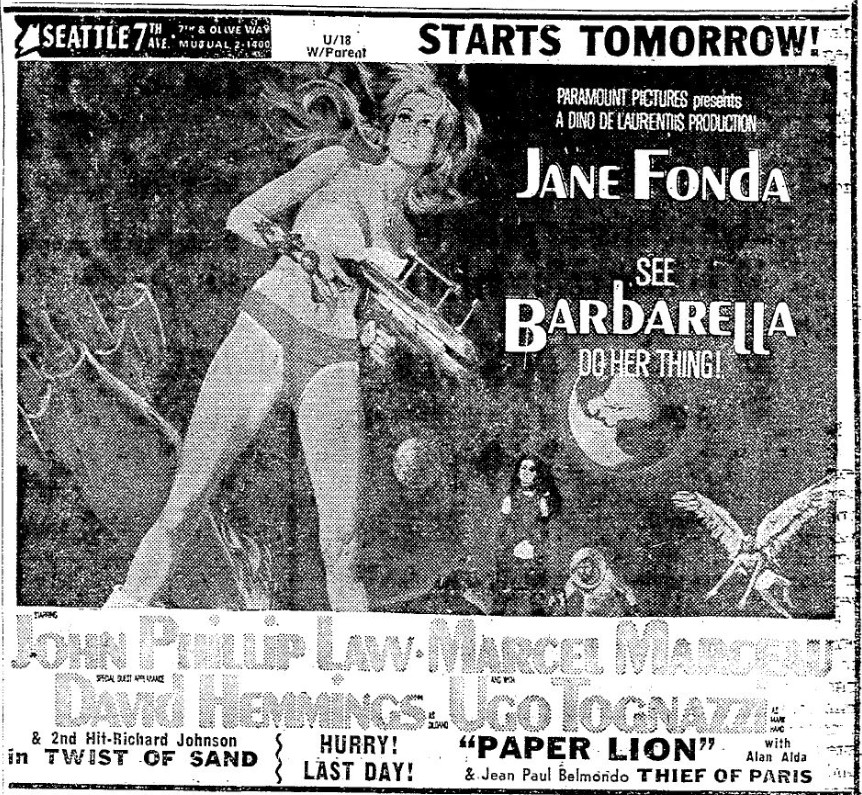
November 14, 1968 ad (Seattle)
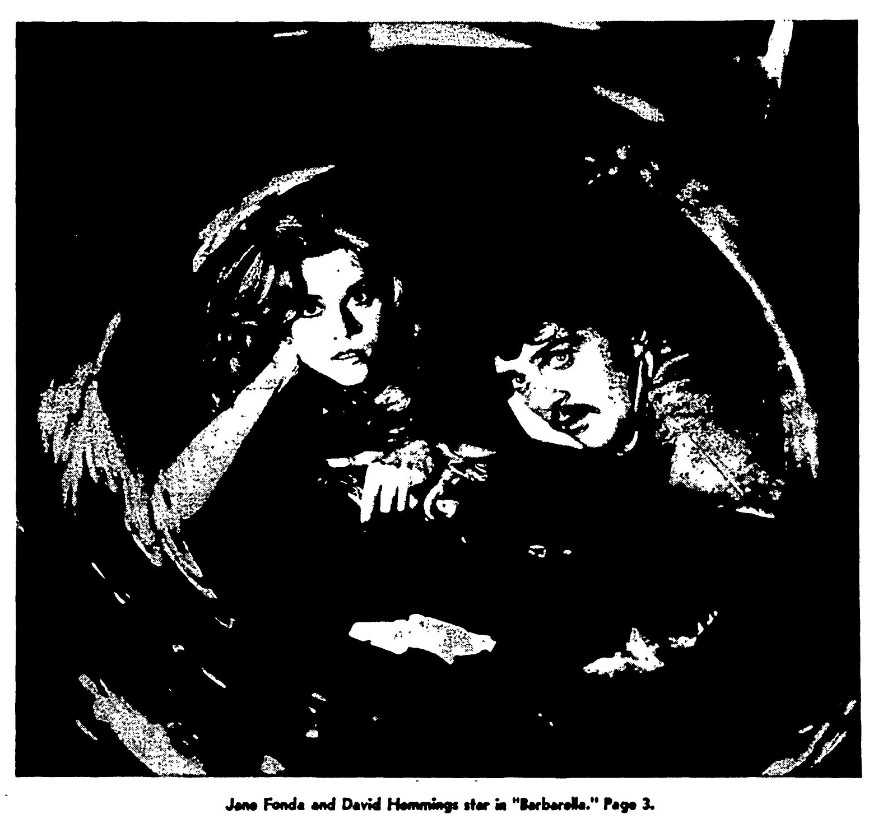
November 15, 1968 photo (Seattle)
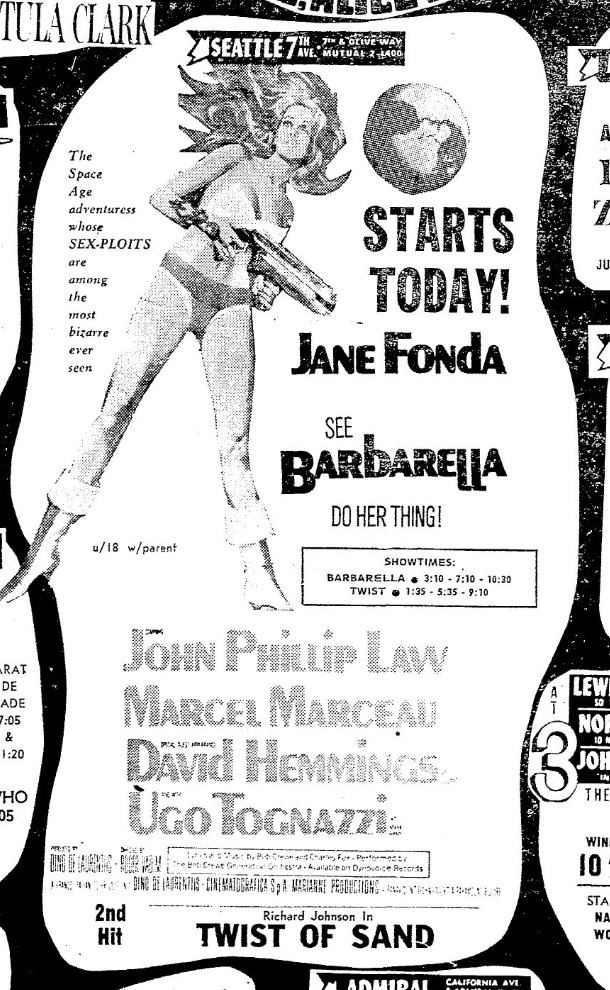
November 15, 1968 ad (Seattle)
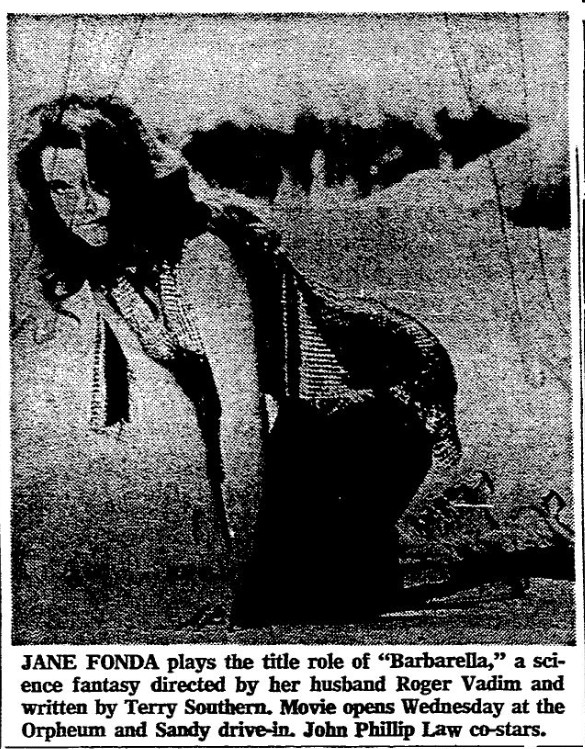
November 17, 1968 photo (Portland)
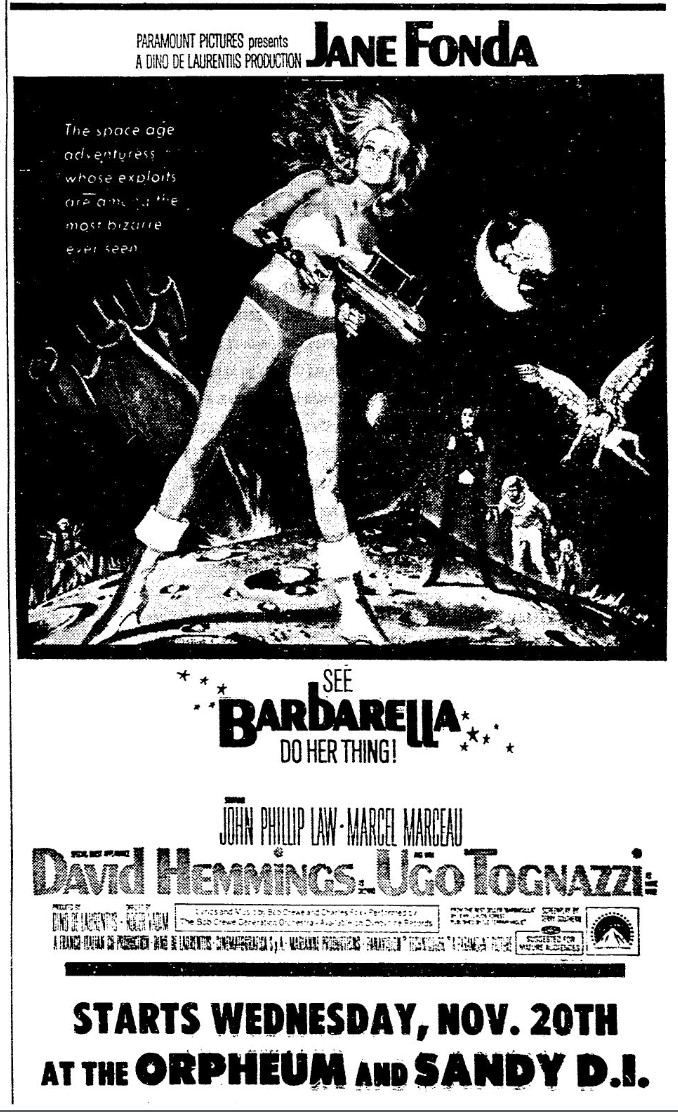
November 17, 1968 ad (Portland)
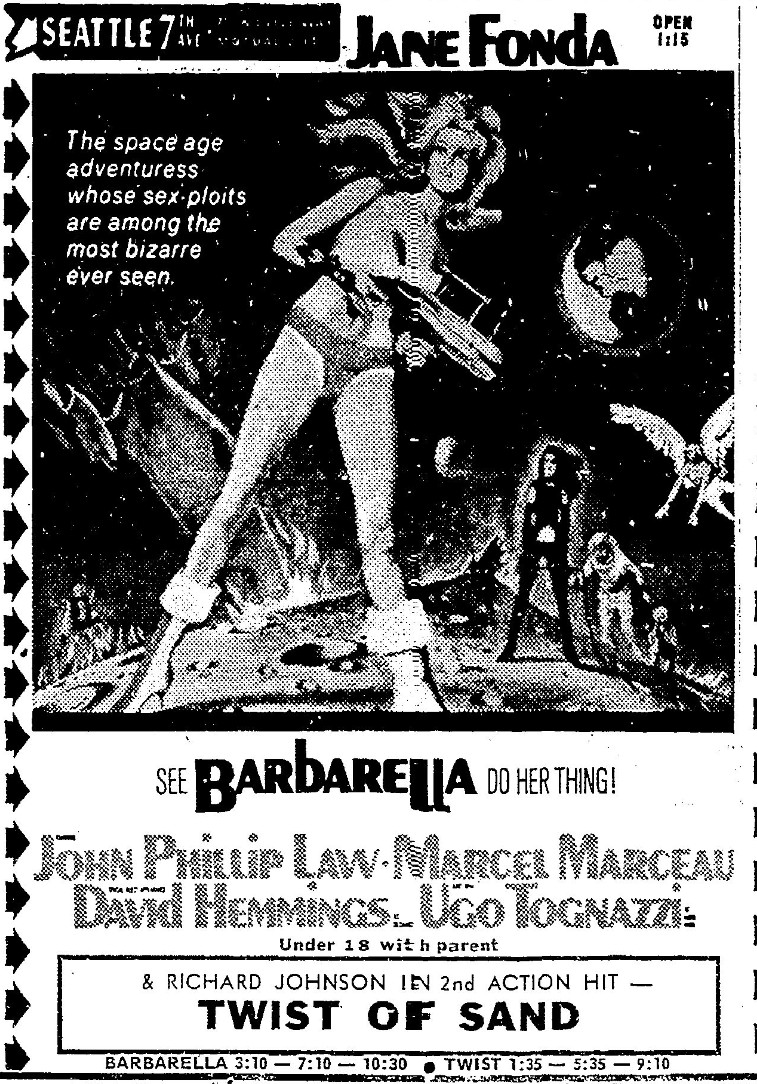
November 17, 1968 ad (Seattle)
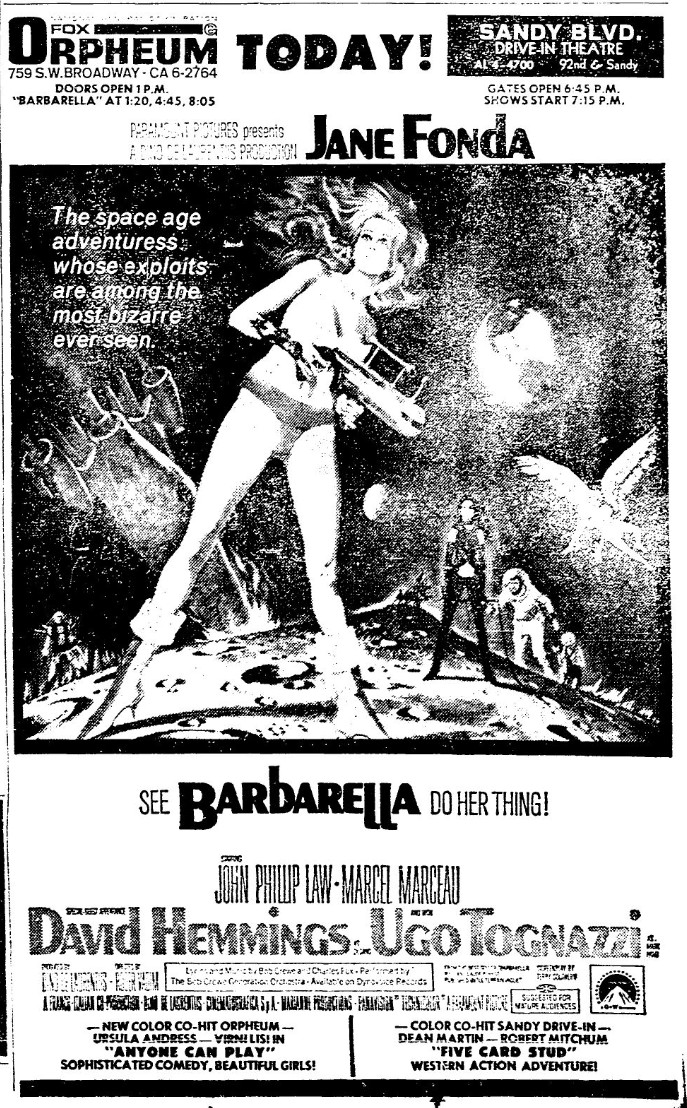
November 20, 1968 ad (Portland)
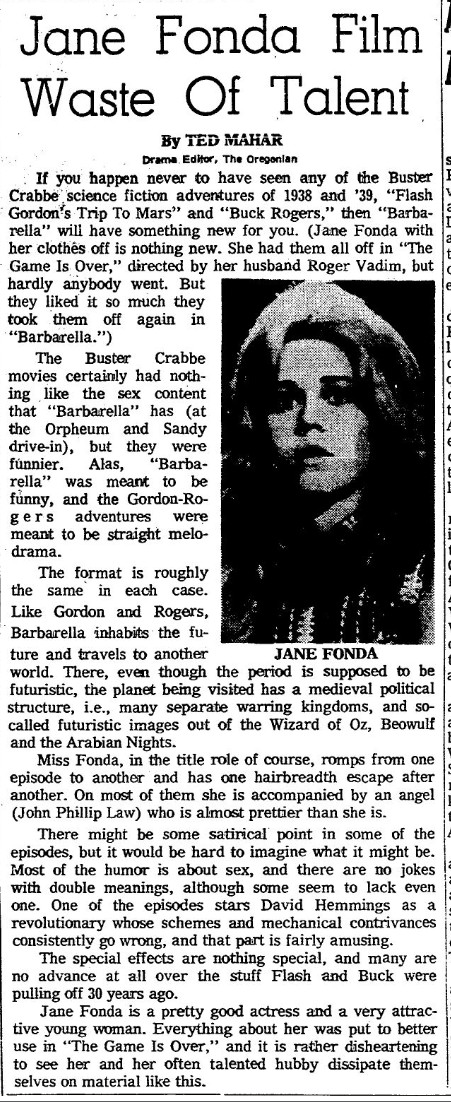
November 21, 1968 article (Portland)
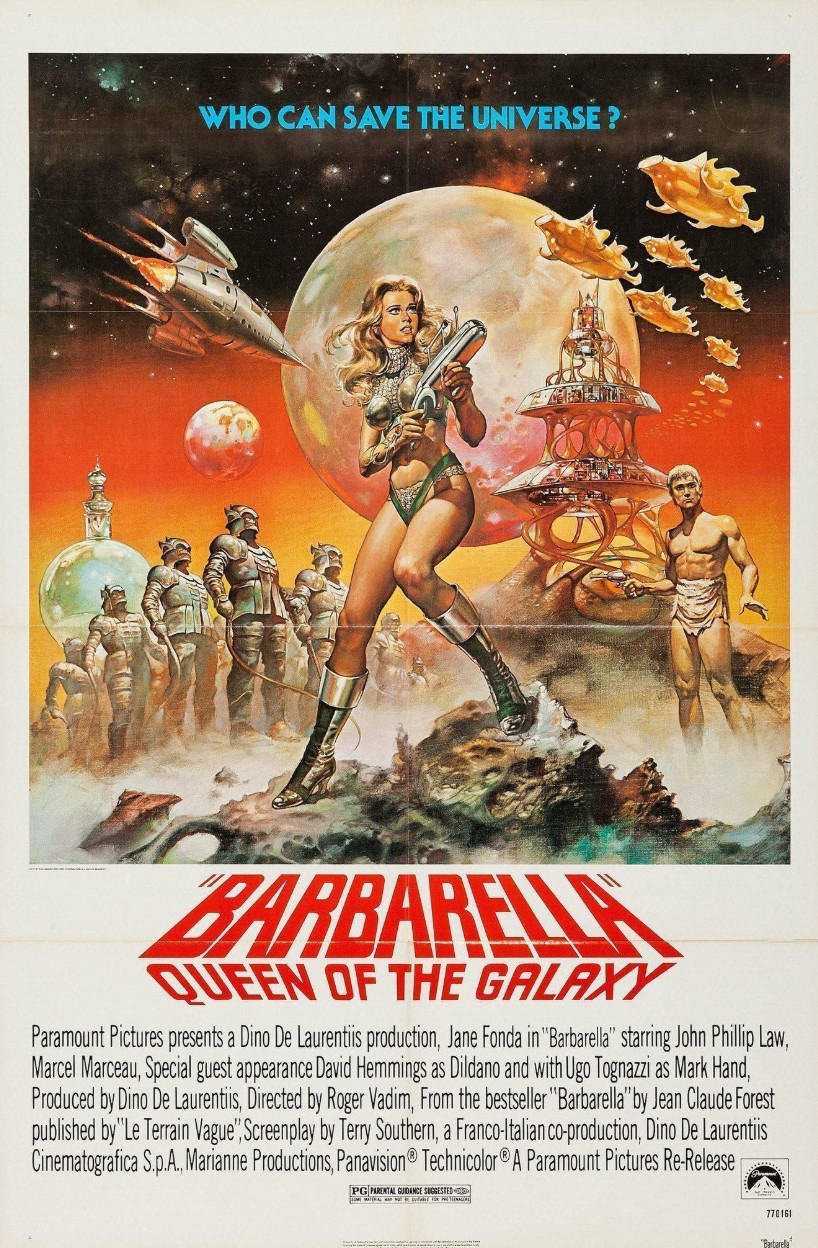
Barbarella (1968) poster
Barbarella (1968) trailer
Buy "Barbarella" (1968) 4K UHD on Amazon (SPONSORED)
Buy "Barbarella" (1968) bluray on Amazon (SPONSORED)
Buy "Barbarella" (1968) DVD on Amazon (SPONSORED)
