This is a collection of media from the initial runs of "Paranoia" and "Color Me Dead" (both 1969) in the Pacific Northwest.
Click on images for larger versions.
Paranoia (1969)
“Paranoia” unfolds as a stylish yet unsettling psychological drama that uses its sun‑drenched Italian setting to heighten a sense of emotional claustrophobia. The film follows an American widow who retreats to a luxurious villa after her wealthy husband’s death, only to be drawn into an intoxicating but increasingly disorienting relationship with a young man and the woman he introduces as his sister. What begins as a seductive escape from grief gradually morphs into a destabilizing emotional trap, with shifting loyalties and ambiguous motives creating a constant undercurrent of unease.
The film’s tension comes less from overt action and more from the psychological erosion of its protagonist. Her vulnerability—rooted in loneliness, privilege, and a desire for connection—makes her an easy target for manipulation, and the narrative leans into this dynamic with deliberate ambiguity. The glamorous surfaces of her new life contrast sharply with the moral decay beneath them, creating a tone that is both alluring and oppressive. The seductive couple who enter her world embody a kind of youthful freedom that initially feels liberating, but their presence soon becomes a catalyst for paranoia, blurring the line between desire and danger.
Stylistically, the film reflects director Umberto Lenzi’s interest in psychological tension over traditional thriller mechanics. Its pacing is languid, its atmosphere charged with sensuality and dread, and its emotional stakes escalate through subtle shifts rather than dramatic revelations. The result is a film that critiques the fragility of self‑perception and the ease with which intimacy can become a weapon. Even contemporary critics noted its unevenness, with some finding its excesses unintentionally amusing, yet its thematic core—centered on exploitation, vulnerability, and the seductive pull of danger—remains compelling.
Taken as a whole, “Paranoia” is less about plot twists than about the psychological unraveling of a woman who mistakes desire for safety. Its power lies in how it turns a seemingly idyllic escape into a study of emotional manipulation and the perilous consequences of misplaced trust.
Director: Umberto Lenzi
Writers: Umberto Lenzi, Ugo Moretti, Marie Claire Solleville
Stars: Carroll Baker, Lou Castel, Colette Descombes
Buy "Paranoia" (1969) DVD on Amazon (SPONSORED)
Color Me Dead (1969)
“Color Me Dead” reimagines a classic noir premise through the lens of late‑1960s Australian filmmaking, creating a thriller that feels both familiar and subtly dislocated. The story follows a man who learns he has been fatally poisoned and has only a short time left to uncover who targeted him and why. This ticking‑clock structure drives the film’s momentum, but its real tension comes from the way it frames mortality as both a mystery to solve and a psychological burden that reshapes every interaction. The protagonist’s desperation infuses even mundane moments with unease, turning the investigation into a portrait of a man racing not just against time but against the erosion of his own sense of self.
The film’s atmosphere leans heavily on noir traditions—moral ambiguity, shadowy motivations, and a protagonist whose life unravels as he digs deeper—but its Australian setting and late‑’60s sensibilities give it a distinct texture. The world around him feels slightly off‑balance, as though the familiar beats of American noir have been transplanted into a new environment where the cultural rhythms are different. This displacement adds an undercurrent of estrangement that mirrors the character’s own disorientation. The supporting figures he encounters often seem to exist at the edges of trustworthiness, and the film uses their shifting tones and loyalties to reinforce the protagonist’s growing uncertainty.
As a remake of D.O.A., the film inherits a narrative built on inevitability, but it approaches that inevitability with a more modern emotional palette. Rather than relying solely on plot mechanics, it emphasizes the protagonist’s internal unraveling—his fear, anger, and fleeting moments of resolve. The pacing is brisk, yet the emotional weight lingers, creating a tension between urgency and reflection. The film’s visual style and performances contribute to this duality, balancing genre conventions with a sense of personal tragedy that feels more intimate than sensational.
Taken together, “Color Me Dead” becomes a study in how a familiar story can be reshaped by context, tone, and cultural perspective. It remains rooted in noir fatalism, but its emphasis on psychological strain and its subtly altered setting give it a distinct identity. The result is a thriller that critiques the fragility of control and the unsettling clarity that can emerge when time is running out.
Director: Eddie Davis
Writers: Russell Rouse, Clarence Greene
Stars: Tom Tryon, Carolyn Jones, Rick Jason
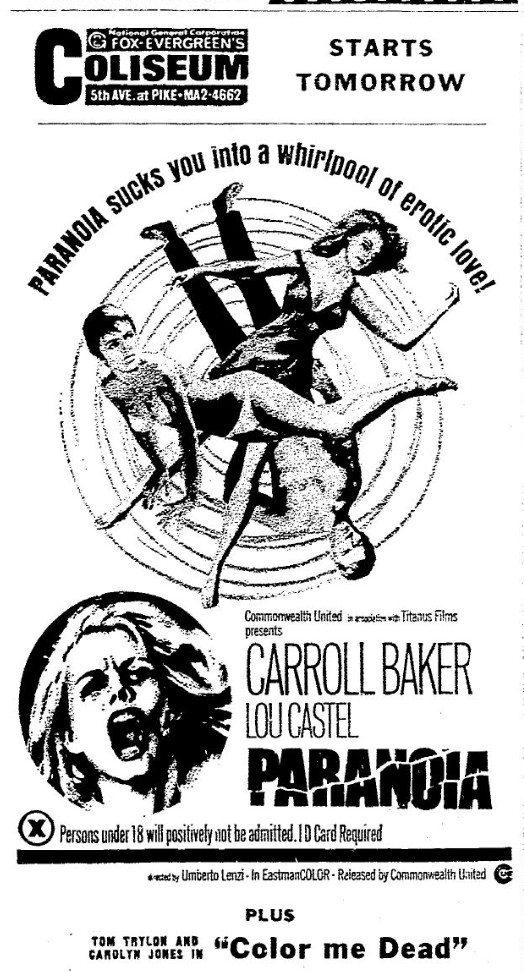
September 9, 1969 ad (Seattle)
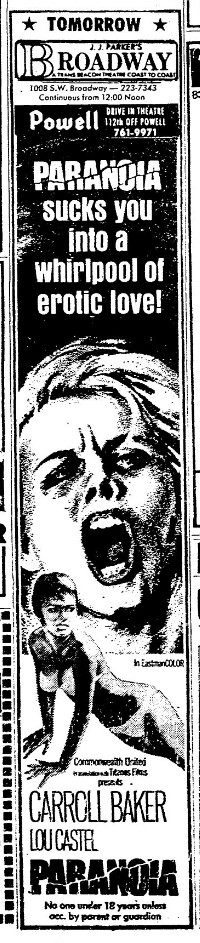
September 9, 1969 ad (Portland)
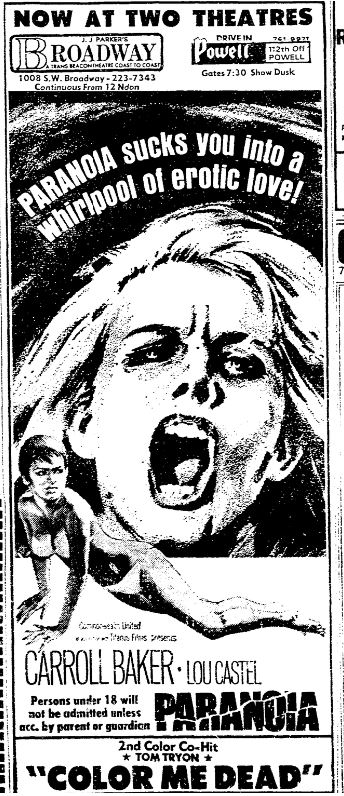
September 10, 1969 ad (Portland)
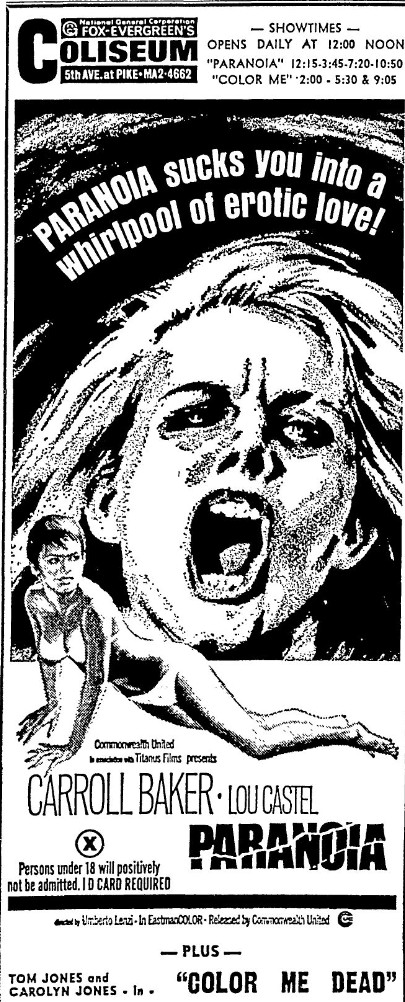
September 10, 1969 ad (Seattle)
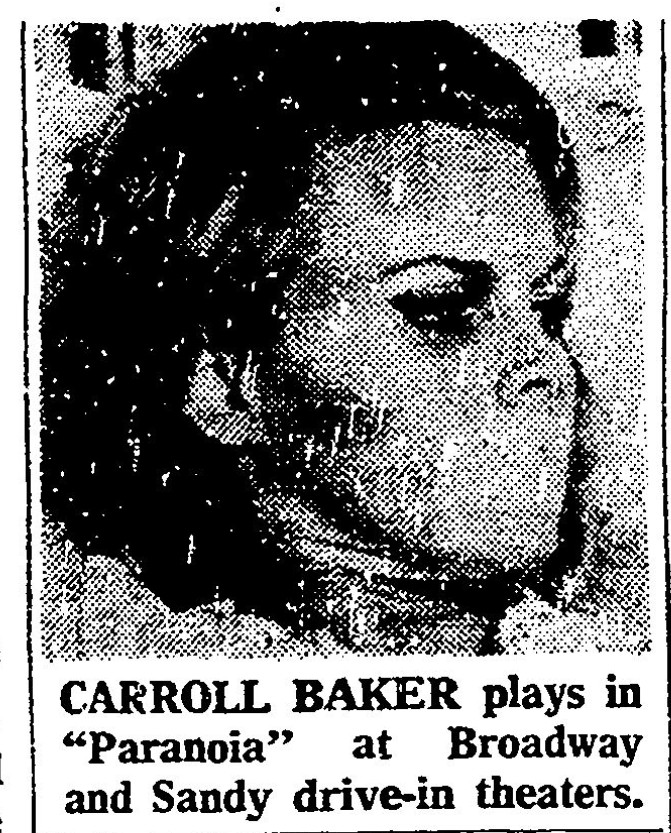
September 11, 1969 photo (Portland)
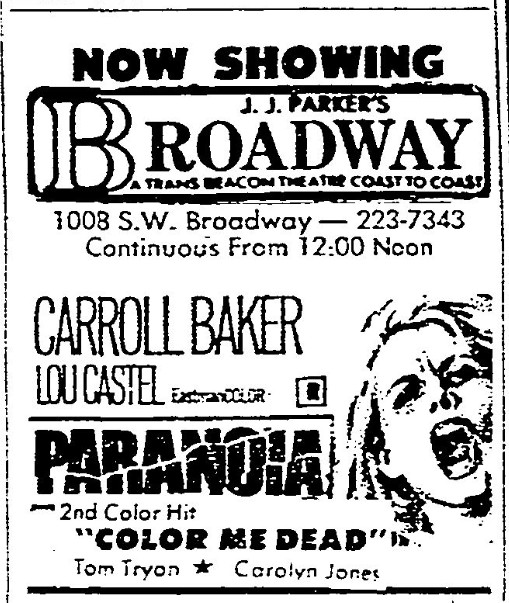
September 11, 1969 ad (Portland)
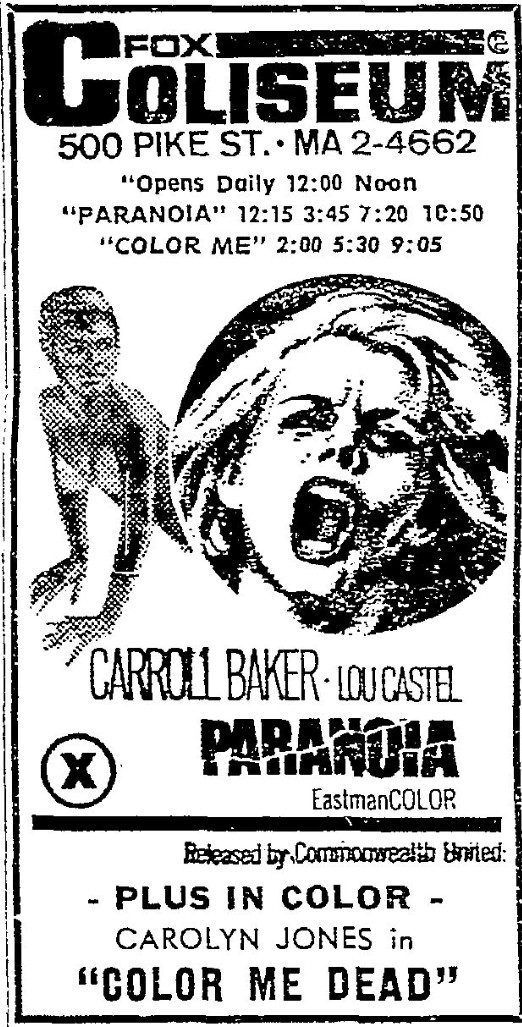
September 11, 1969 ad (Seattle)
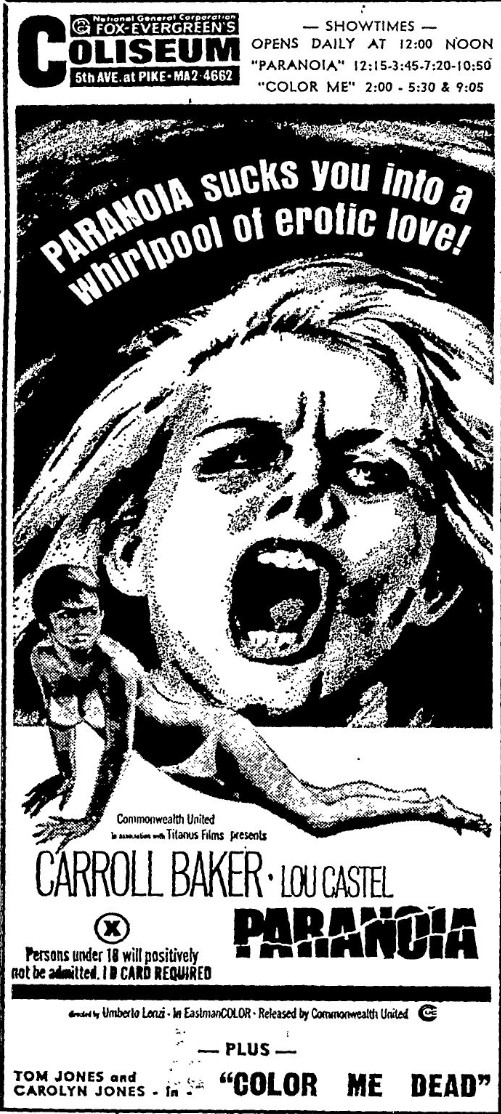
September 12, 1969 ad (Seattle)
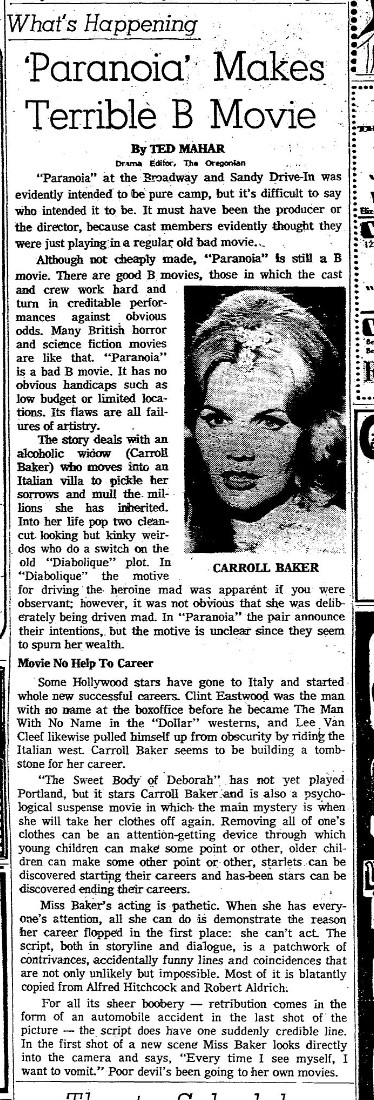
September 15, 1969 article (Portland)
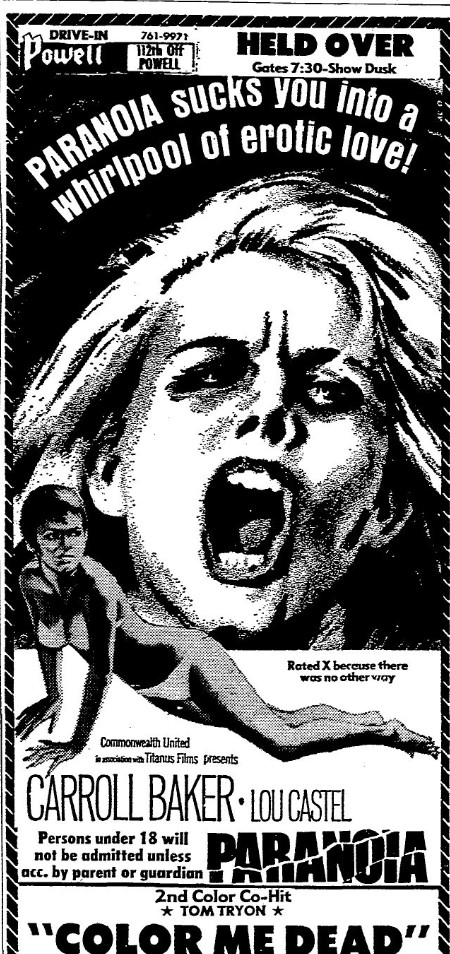
September 17, 1969 ad (Portland)
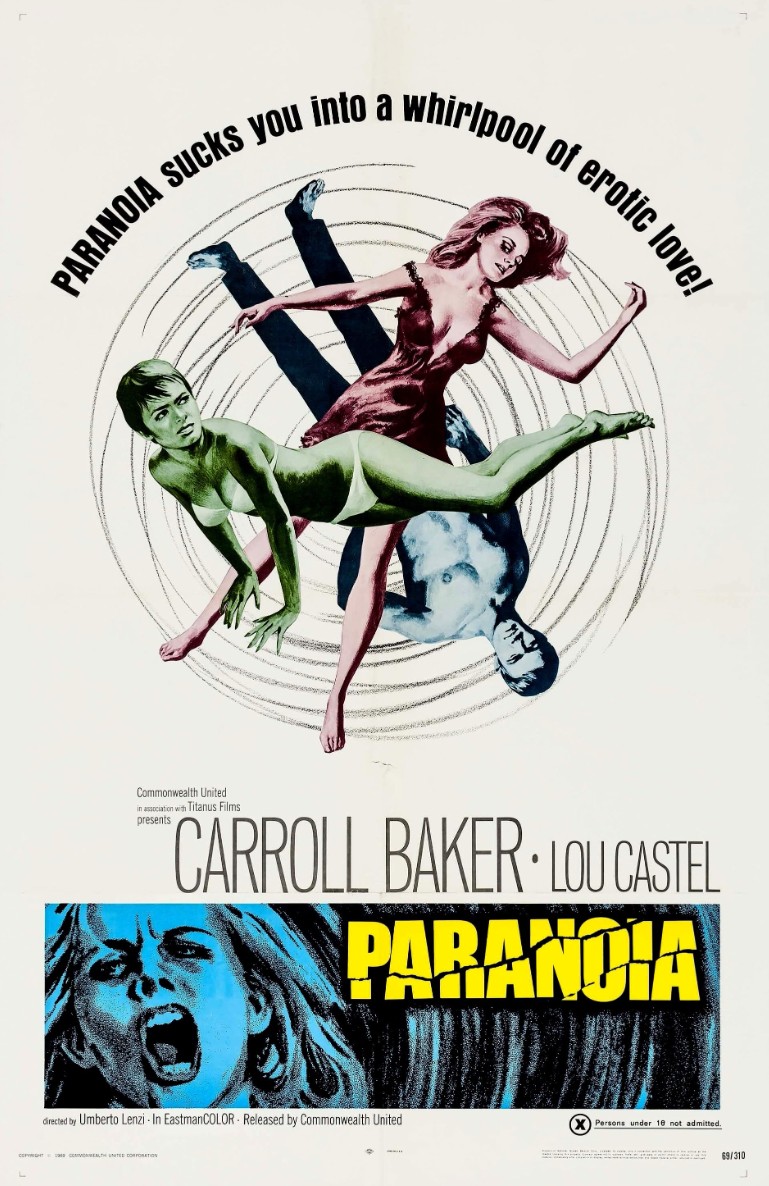
Paranoia (1969) poster
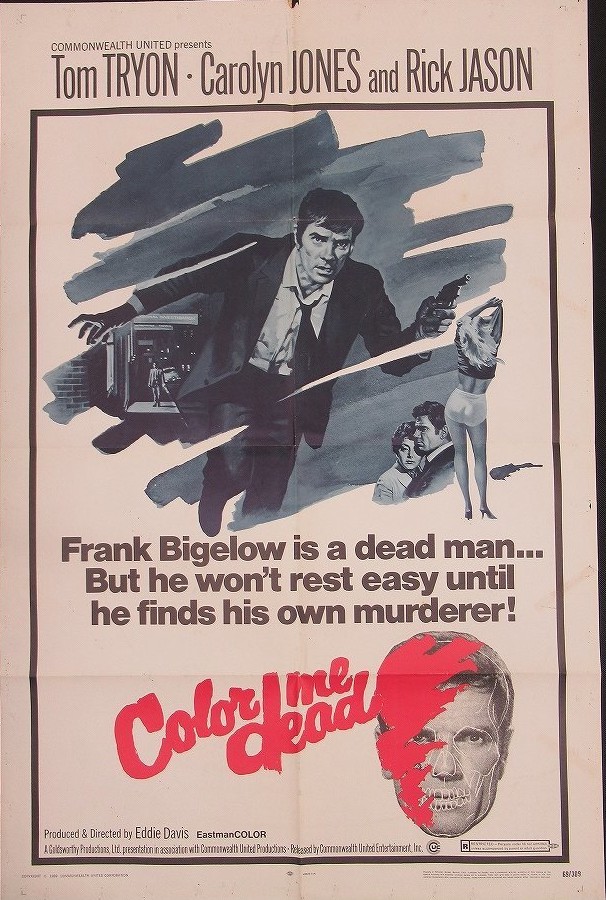
Color Me Dead (1969) poster
Paranoia (1969) trailer
Buy "Paranoia" (1969) DVD on Amazon (SPONSORED)
