This is a collection of media from the initial runs of "Midnight Cowboy" (1969) in the Pacific Northwest.
Click on images for larger versions.
Midnight Cowboy (1969)
“Midnight Cowboy” moves through late‑1960s New York with a kind of bruised poetry, following two men who cling to each other not out of sentiment but out of sheer human necessity. The film frames the city as both a glittering promise and a grinding machine, a place where dreams are advertised in neon but rarely delivered. At its center is Joe Buck, a young man who arrives in Manhattan convinced that charm, good looks, and a carefully curated cowboy persona will open doors. What he finds instead is a metropolis indifferent to fantasy, where identity becomes a performance one must constantly renegotiate to survive.
The film’s power lies in how it strips away Joe’s illusions without ever mocking them. His optimism is treated as something fragile and almost sacred, a remnant of a culture that taught him to believe in simple myths about masculinity, sexuality, and success. As those myths collapse, the story shifts into a portrait of urban alienation, where the city’s noise and crowds only heighten the sense of isolation. The film uses its visual language—gritty street photography, fragmented flashbacks, and hallucinatory editing—to evoke a world where memory and desire blur, and where the past intrudes on the present with unsettling force.
Joe’s unlikely bond with Ratso Rizzo becomes the emotional spine of the narrative. Their relationship is not romanticized; it’s shaped by desperation, mutual exploitation, and a slowly emerging tenderness neither man fully understands. Ratso, with his sharp instincts and failing body, embodies the city’s contradictions: cunning and vulnerability, bravado and decay. Together, the two form a makeshift partnership that exposes the film’s deeper concern with the ways people construct family out of circumstance rather than blood.
“Midnight Cowboy” ultimately becomes a study of survival in a society that measures worth through appearance and performance. It critiques the hollow promises of American aspiration while finding moments of grace in the smallest gestures of loyalty and care. The film’s refusal to offer easy redemption or tidy resolutions gives it a lingering emotional weight. It captures a moment when the country’s cultural fabric was fraying, and it channels that uncertainty into a story about two outsiders who, for a brief time, manage to hold each other up against the world’s indifference.
Director: John Schlesinger
Writers: Waldo Salt, James Leo Herlihy
Stars: Dustin Hoffman, Jon Voight, Sylvia Miles
Buy "Midnight Cowboy" (1969) bluray on Amazon (SPONSORED)
Buy "Midnight Cowboy" (1969) DVD on Amazon (SPONSORED)
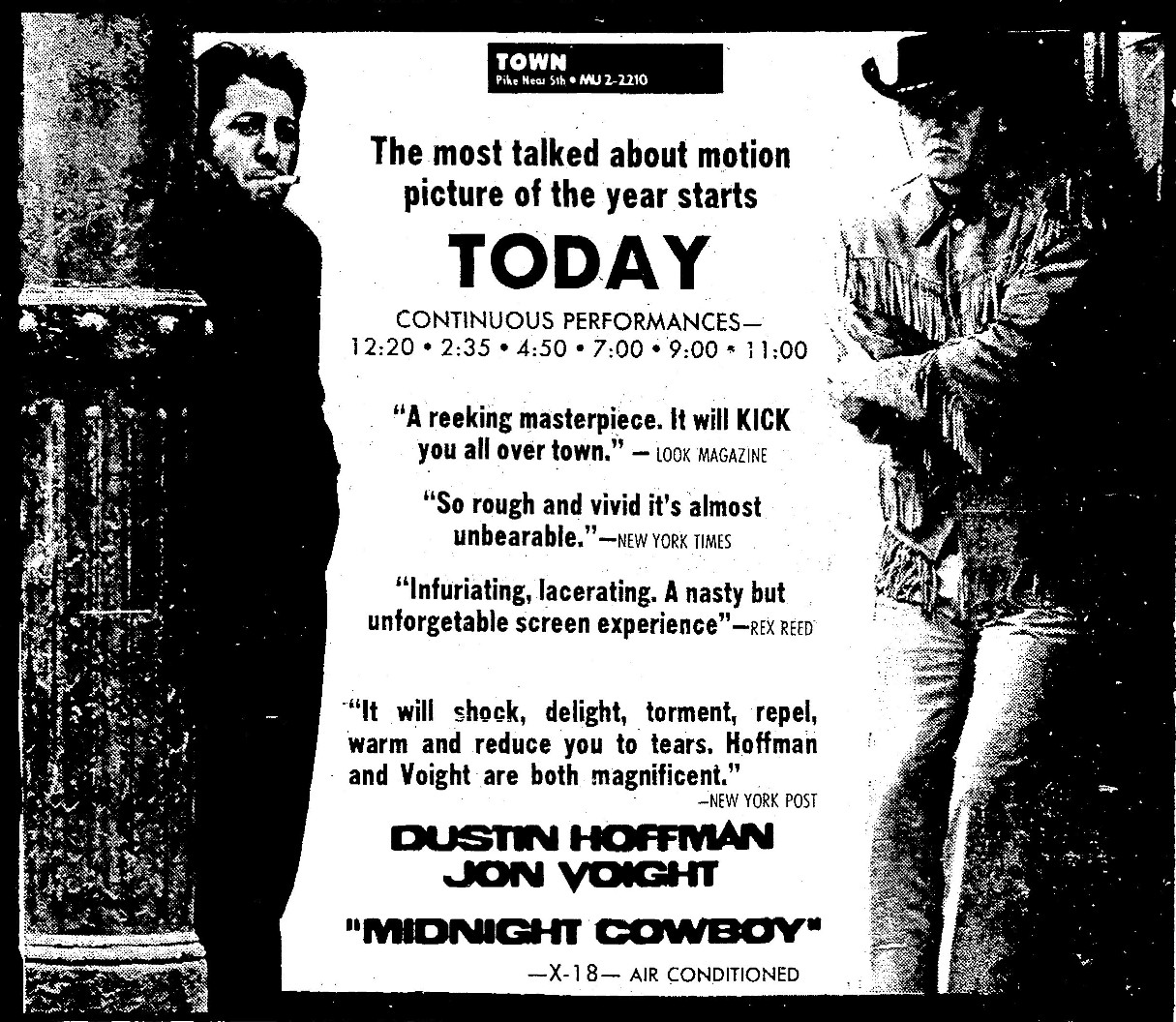
July 30, 1969 ad (Seattle)
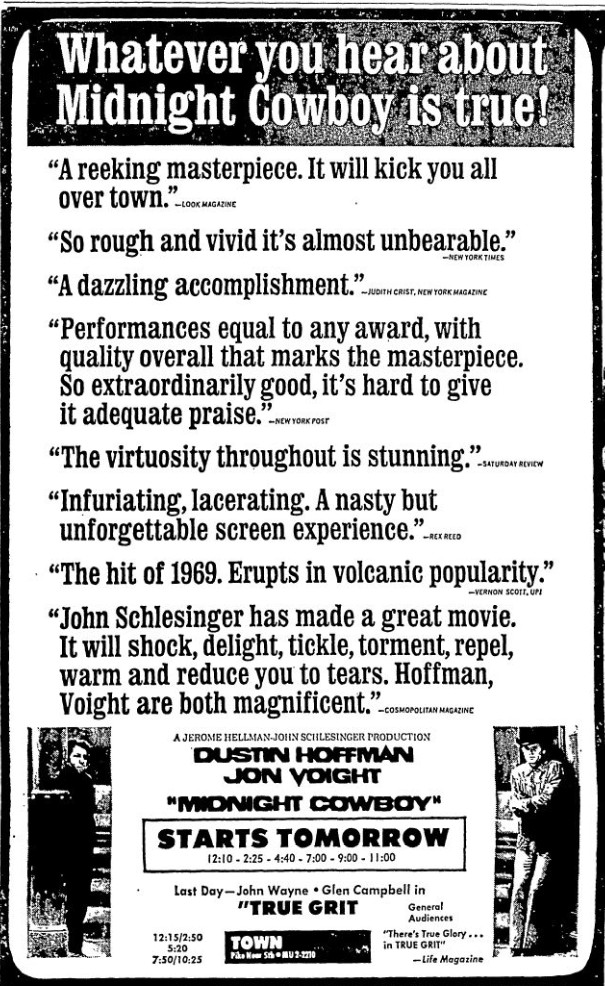
July 29, 1969 ad (Seattle)
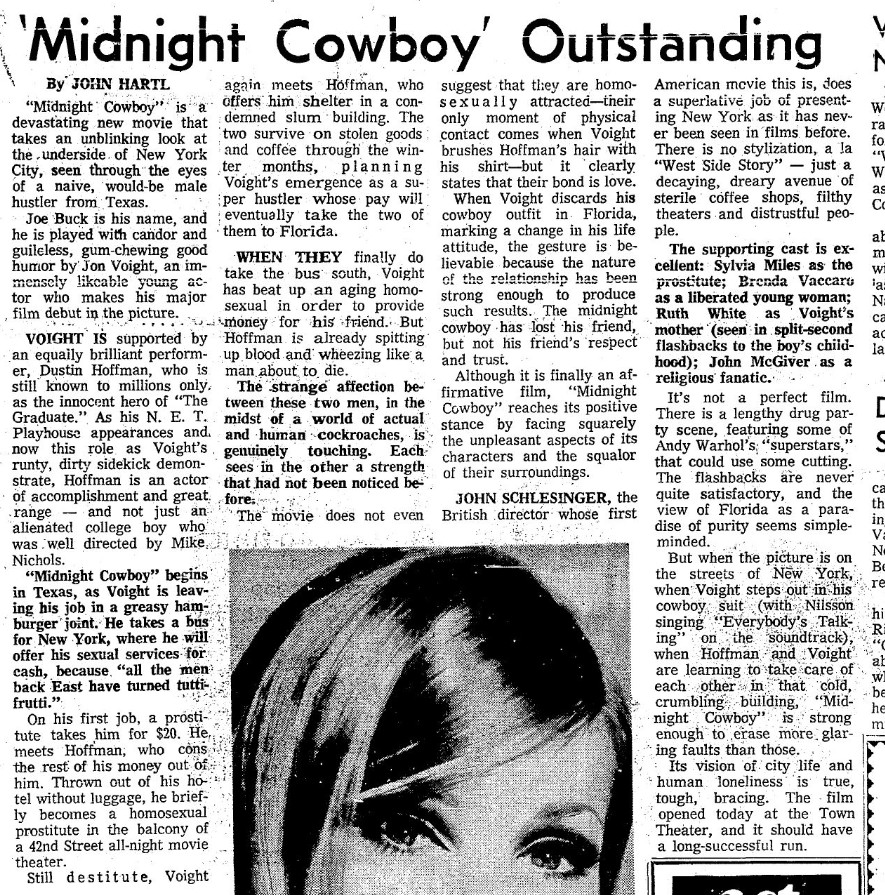
July 30, 1969 article (Seattle)
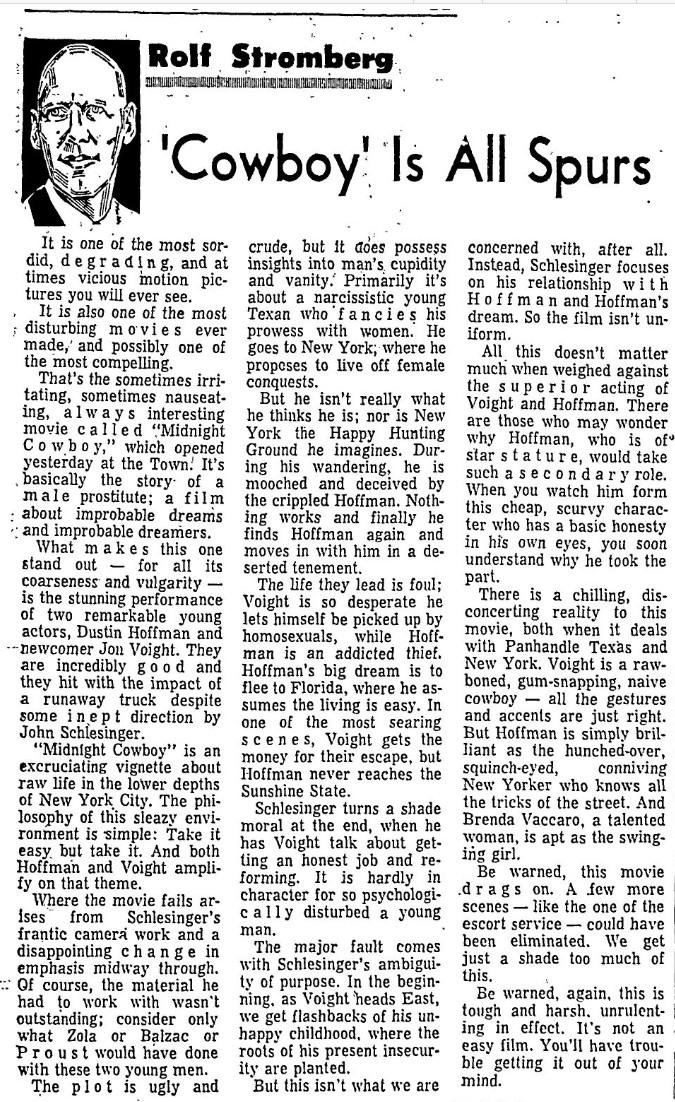
July 31, 1969 article (Seattle)
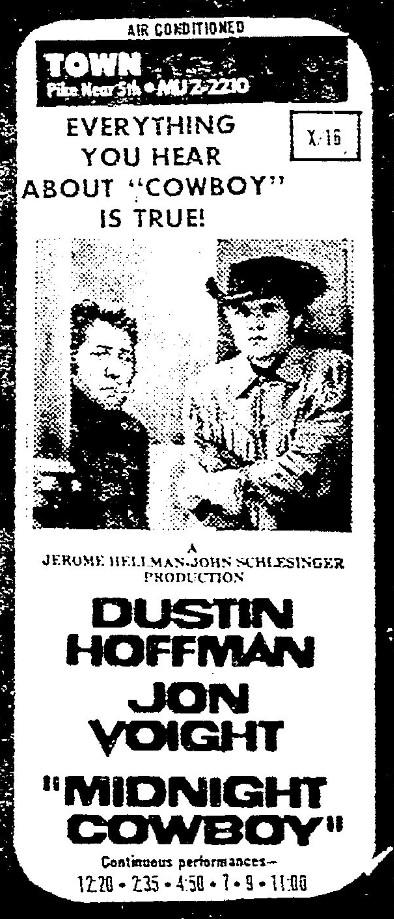
July 31, 1969 ad (Seattle)
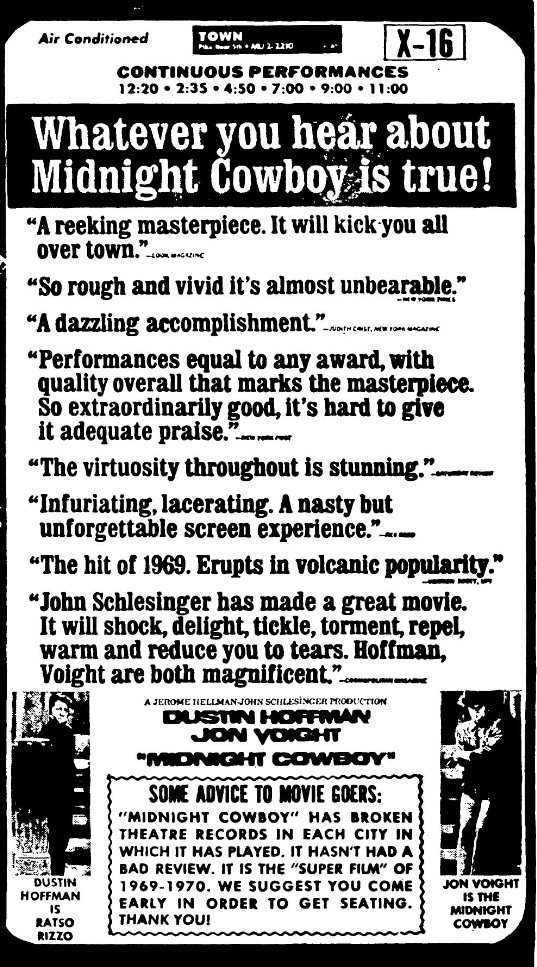
August 1, 1969 ad (Seattle)
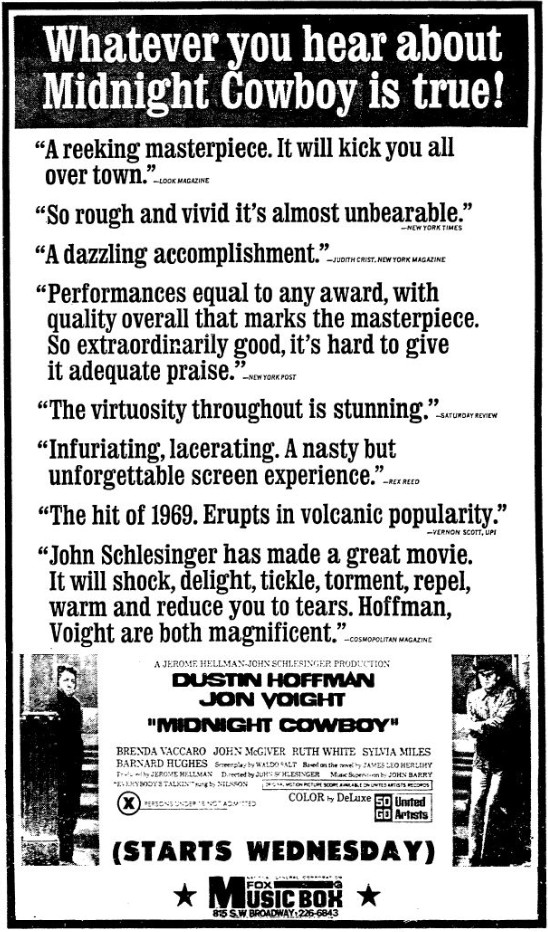
August 5, 1969 ad (Portland)
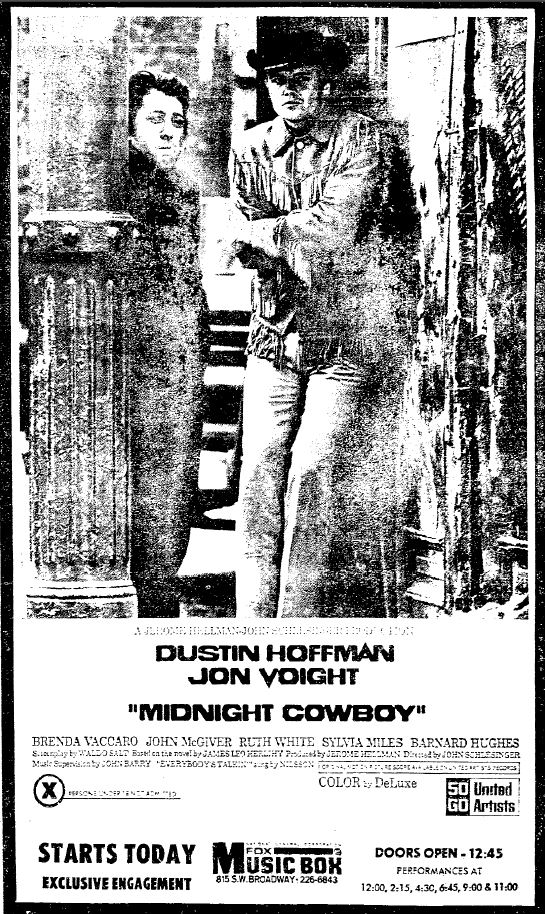
August 6, 1969 ad (Portland)
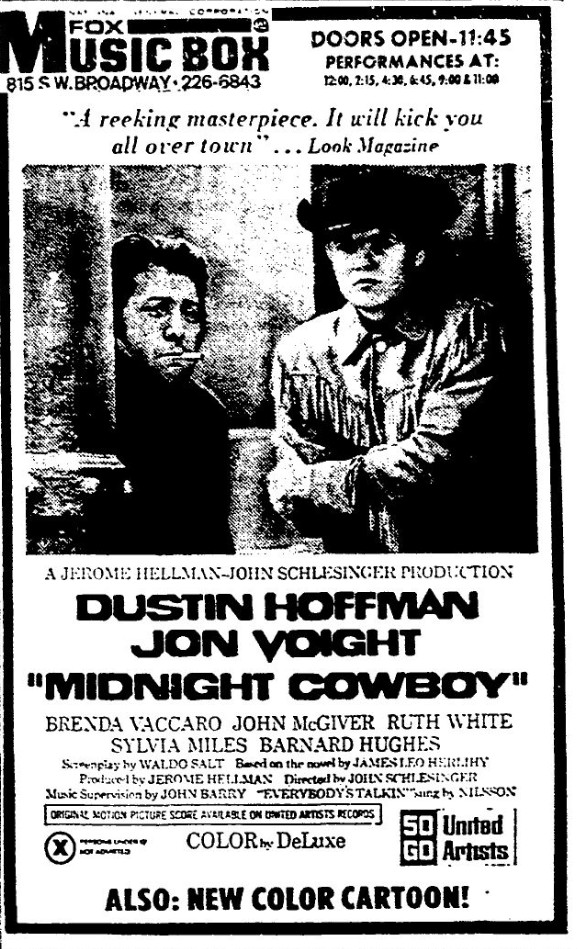
August 7, 1969 ad (Portland)
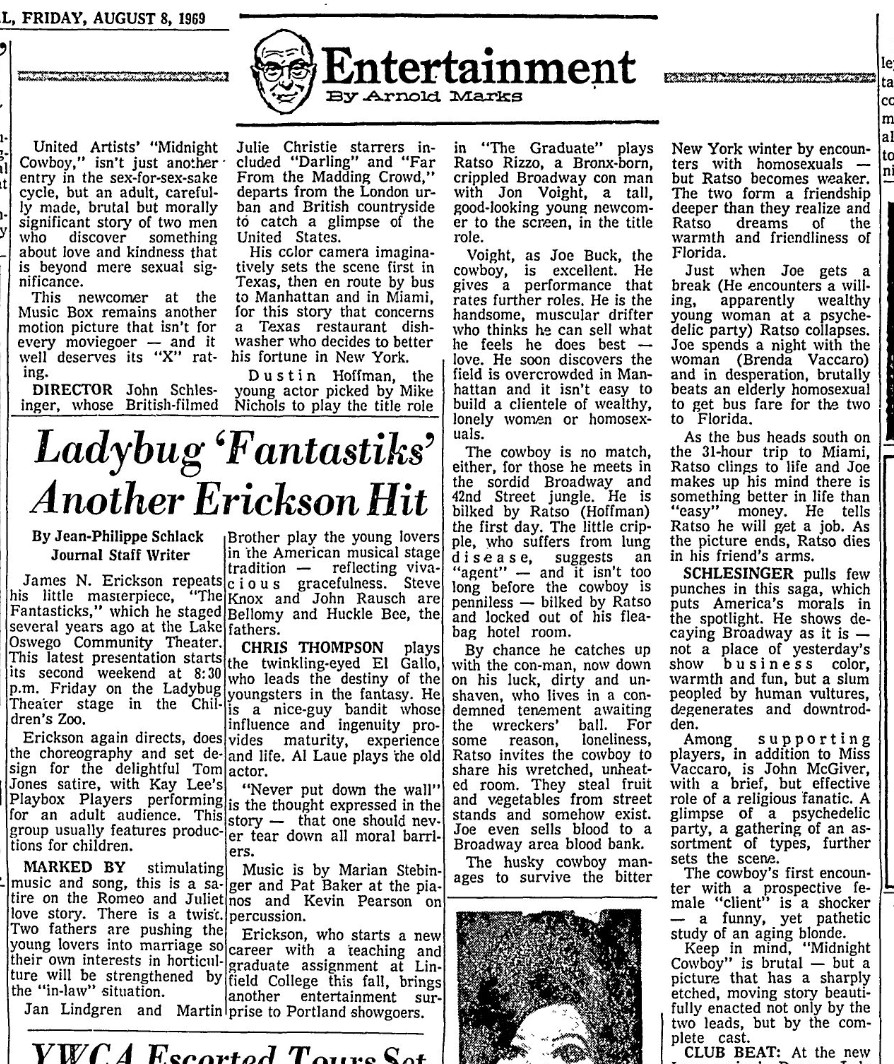
August 8, 1969 article (Portland)
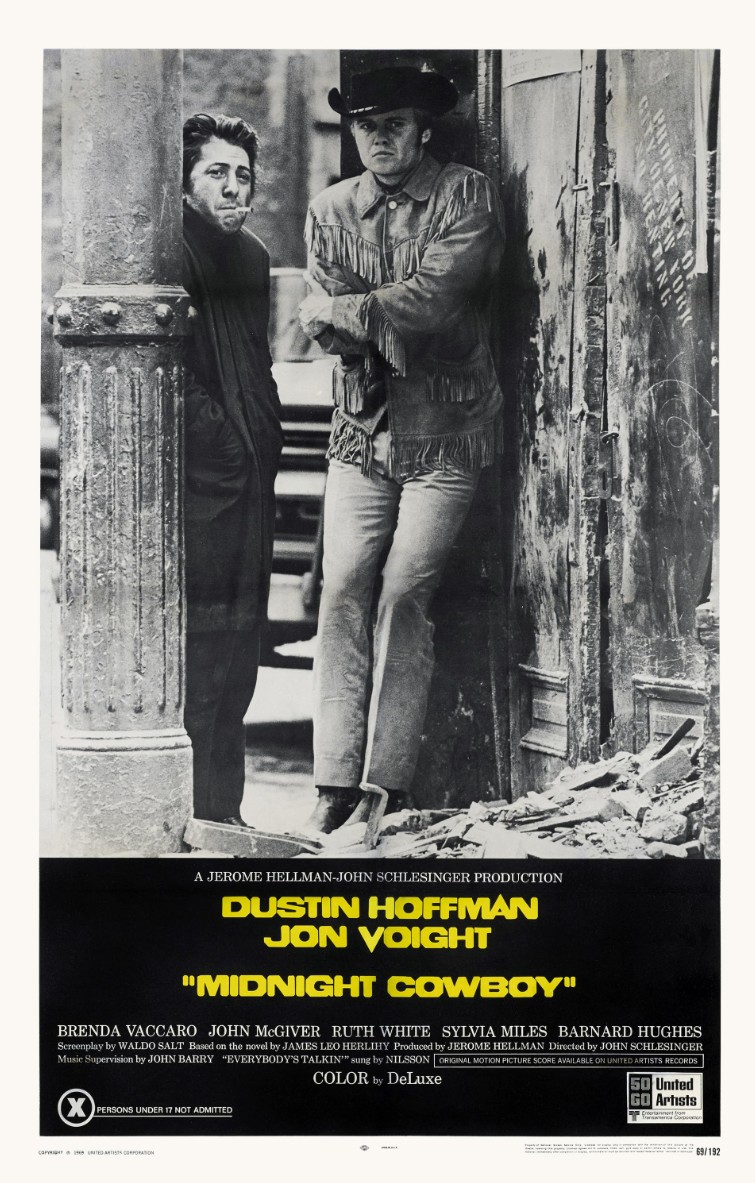
Midnight Cowboy (1969) poster
Midnight Cowboy (1969) trailer
Buy "Midnight Cowboy" (1969) bluray on Amazon (SPONSORED)
Buy "Midnight Cowboy" (1969) DVD on Amazon (SPONSORED)
