This is a collection of media from the initial runs of "The Mad Room" (1969) in the Pacific Northwest.
Click on images for larger versions.
#Horror #Drama #StellaStevens #ShelleyWinters #ColumbiaPictures #misleading #misinformation
The Mad Room (1969)
"The Mad Room" (1969) is a gothic-tinged psychological drama that situates itself at the intersection of domestic melodrama and suspense thriller. The film unfolds within an atmosphere of claustrophobic tension, where the seemingly genteel trappings of a wealthy household conceal layers of unease and repression. Its narrative is less concerned with overt shocks than with the gradual erosion of trust and the unsettling ambiguity of memory, creating a mood that is both restrained and deeply disquieting.
What makes "The Mad Room" distinctive is its deliberate pacing and emphasis on psychological uncertainty. Rather than relying on spectacle, it builds its unease through suggestion, silence, and the subtle interplay of characters whose motives remain opaque. The film’s visual style reinforces this sense of instability: interiors are framed to emphasize confinement, while shadows and muted tones evoke a world where appearances are fragile and truth is elusive. The camera lingers on faces and spaces, inviting the audience to question what lies beneath the surface.
Thematically, "The Mad Room" reflects late-1960s anxieties about generational conflict, the fragility of family structures, and the lingering specter of trauma. It explores how the past intrudes upon the present, destabilizing relationships and eroding the veneer of civility. In this way, the film resonates with broader cultural currents of its era, when traditional authority and domestic ideals were being challenged by social upheaval. Its gothic sensibility—rooted in the idea of the home as a site of dread rather than comfort—aligns it with a lineage of psychological horror that critiques the very institutions meant to provide stability.
Ultimately, "The Mad Room" is less about resolution than about atmosphere and implication. It thrives on ambiguity, leaving viewers unsettled by the suggestion that madness and repression are not confined to isolated individuals but are woven into the fabric of family and society itself. This makes it a compelling artifact of its time, one that uses gothic tropes to probe deeper cultural fears while maintaining a restrained, haunting tone.
Director: Bernard Girard
Writers: Reginald Denham, Edward Percy, Garrett Fort
Stars: Stella Stevens, Shelley Winters, Skip Ward
Buy "The Mad Room" (1969) bluray on Amazon (SPONSORED)
Buy "The Mad Room" (1969) DVD on Amazon (SPONSORED)
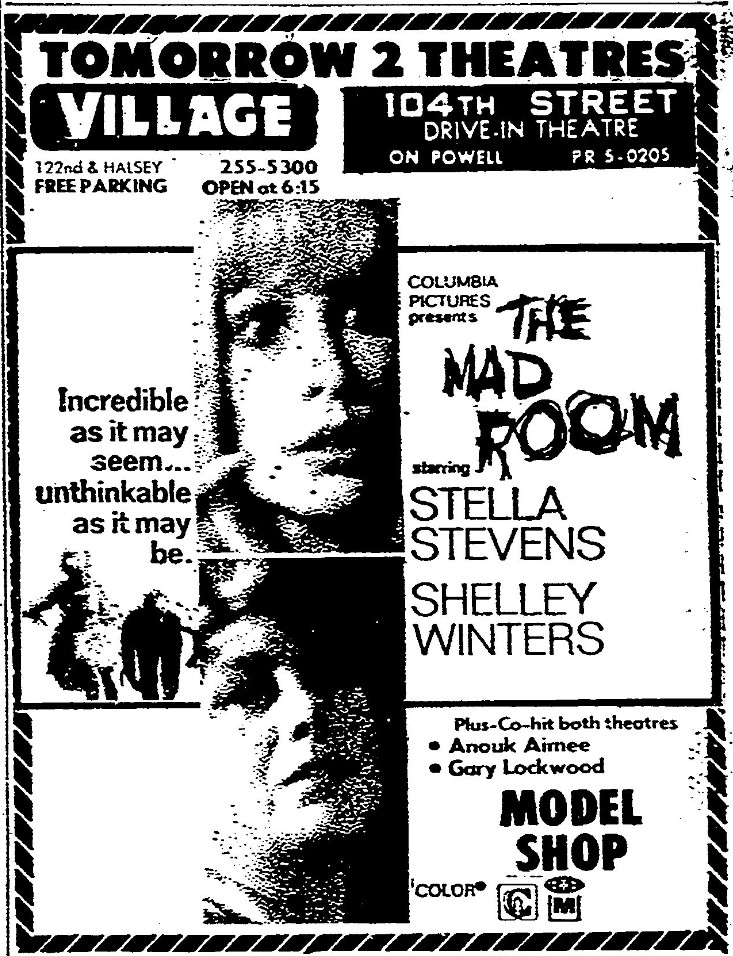
April 29, 1969 ad (Portland)
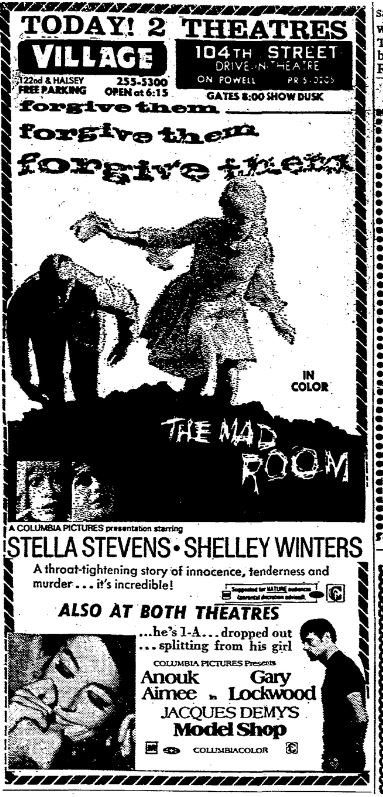
April 30, 1969 ad (Portland)
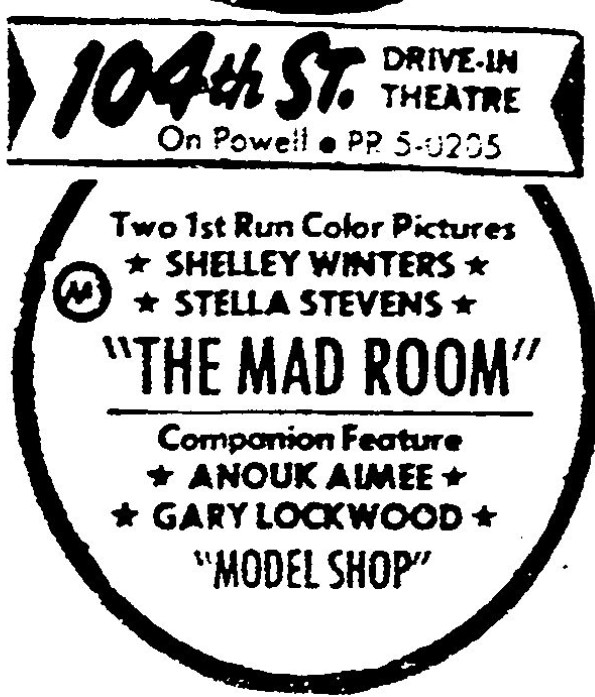
May 1, 1969 ad (Portland)
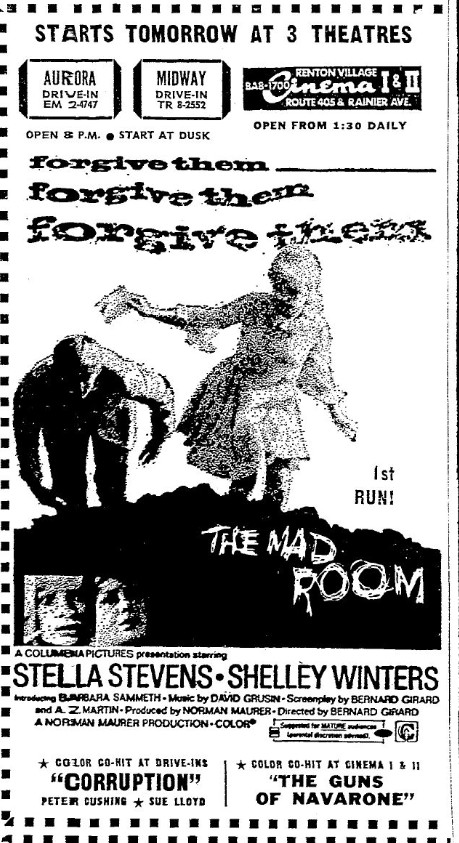
May 6, 1969 ad (Seattle)
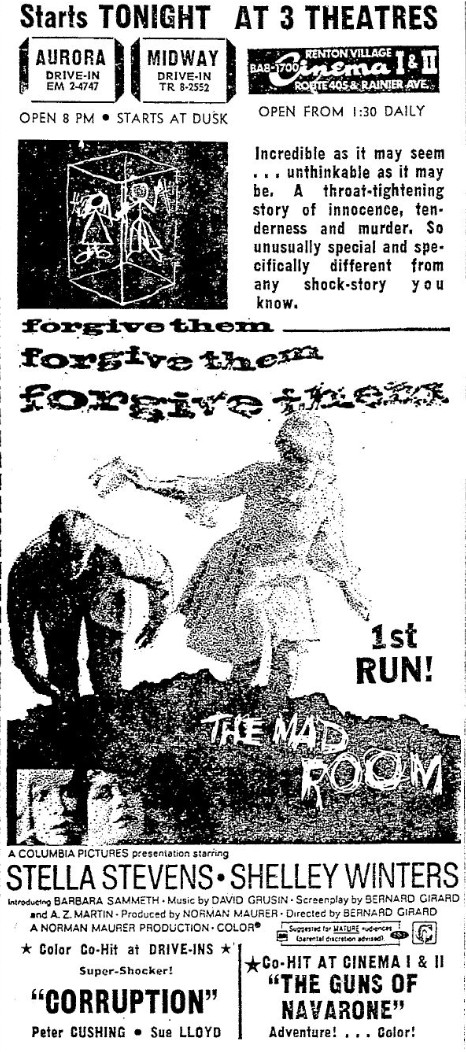
May 7, 1969 ad (Seattle)
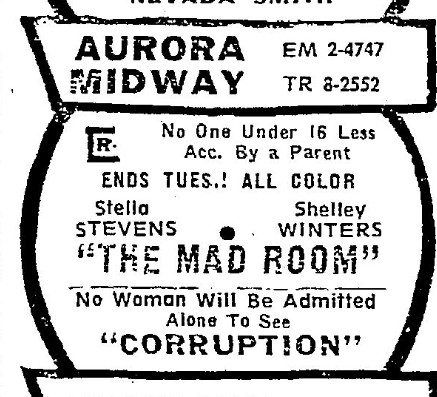
May 8, 1969 ad (Seattle)
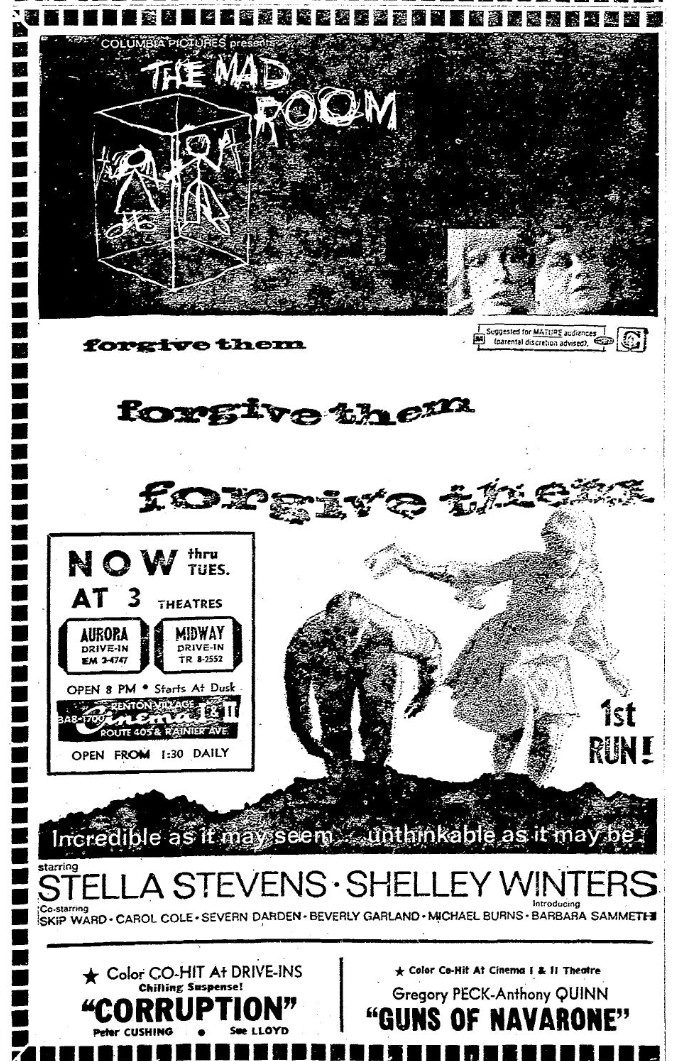
May 9, 1969 ad (Seattle)
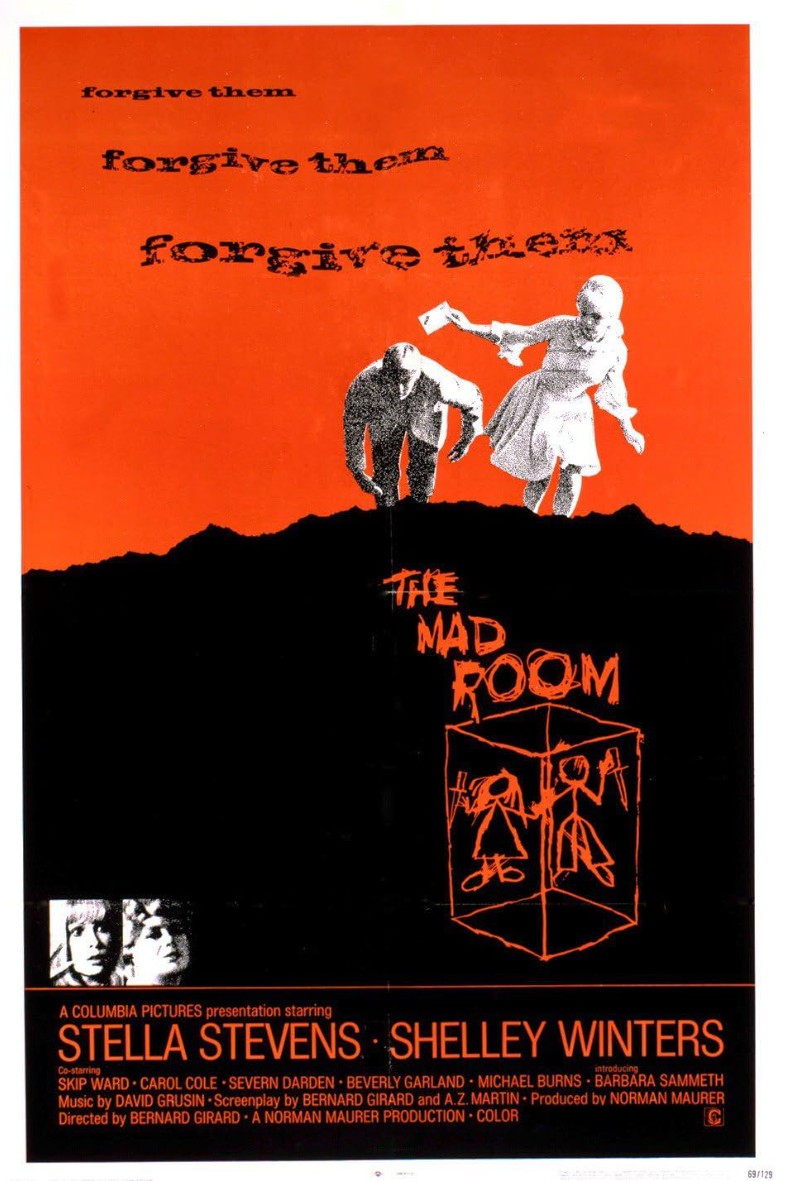
The Mad Room (1969) poster
