This is a collection of media from the initial runs of "If He Hollers, Let Him Go!" (1968) in the Pacific Northwest.
Click on images for larger versions.
If He Hollers, Let Him Go! (1968)
"If He Hollers, Let Him Go!" is a tense, racially charged neo-noir that blends pulp thriller mechanics with a searing critique of systemic injustice in late-1960s America.
Directed by Charles Martin and adapted from Chester Himes’s 1945 novel, "If He Hollers, Let Him Go!" reimagines its source material’s psychological realism into a stylized, suspense-driven narrative. The film follows James Lake, a Black man wrongfully convicted of murder, who escapes from prison and becomes entangled in a morally murky plot involving a wealthy white couple. What begins as a desperate bid for freedom quickly spirals into a labyrinth of manipulation, betrayal, and racial power dynamics, as Lake is offered a Faustian bargain that tests his integrity and survival instincts.
The film’s noir sensibilities are evident in its shadowy cinematography, morally ambiguous characters, and fatalistic tone. Yet it diverges from classic noir by centering a Black protagonist whose plight is not merely existential but deeply rooted in the racial hierarchies of American society. Raymond St. Jacques delivers a compelling performance as Lake, imbuing the character with a quiet intensity that underscores the psychological toll of being perpetually hunted and dehumanized. His interactions with the Whitlocks—particularly the icy, enigmatic Ellen and her calculating husband Leslie—reveal the insidious ways race, class, and gender intersect in the film’s moral economy.
"If He Hollers, Let Him Go!" is also notable for its atmospheric score by Harry Sukman and the inclusion of original songs performed by Barbara McNair, which lend the film a smoky, nightclub-inflected texture that contrasts with its more suspenseful sequences. These musical interludes, while stylized, deepen the emotional resonance of Lake’s backstory and his connection to a past life that now feels irretrievably distant.
While the film retains the trappings of a crime thriller, its true power lies in its subtext. It uses genre conventions to expose the structural violence embedded in the American legal system and the limited avenues available to Black men seeking justice. The narrative’s twists and reversals are not merely plot devices but metaphors for the shifting, often treacherous terrain of racial identity and social mobility. In this way, "If He Hollers, Let Him Go!" anticipates the blaxploitation wave of the 1970s while maintaining a more somber, introspective tone.
Ultimately, the film stands as a provocative artifact of its era—one that channels the paranoia and disillusionment of the late 1960s into a story that is both gripping and politically resonant. Its refusal to offer easy resolutions or moral clarity makes it a haunting meditation on guilt, innocence, and the price of survival in a world rigged against you.
Director: Charles Martin
Writers: Charles Martin, Chester Himes
Stars: Dana Wynter, Raymond St. Jacques, Kevin McCarthy
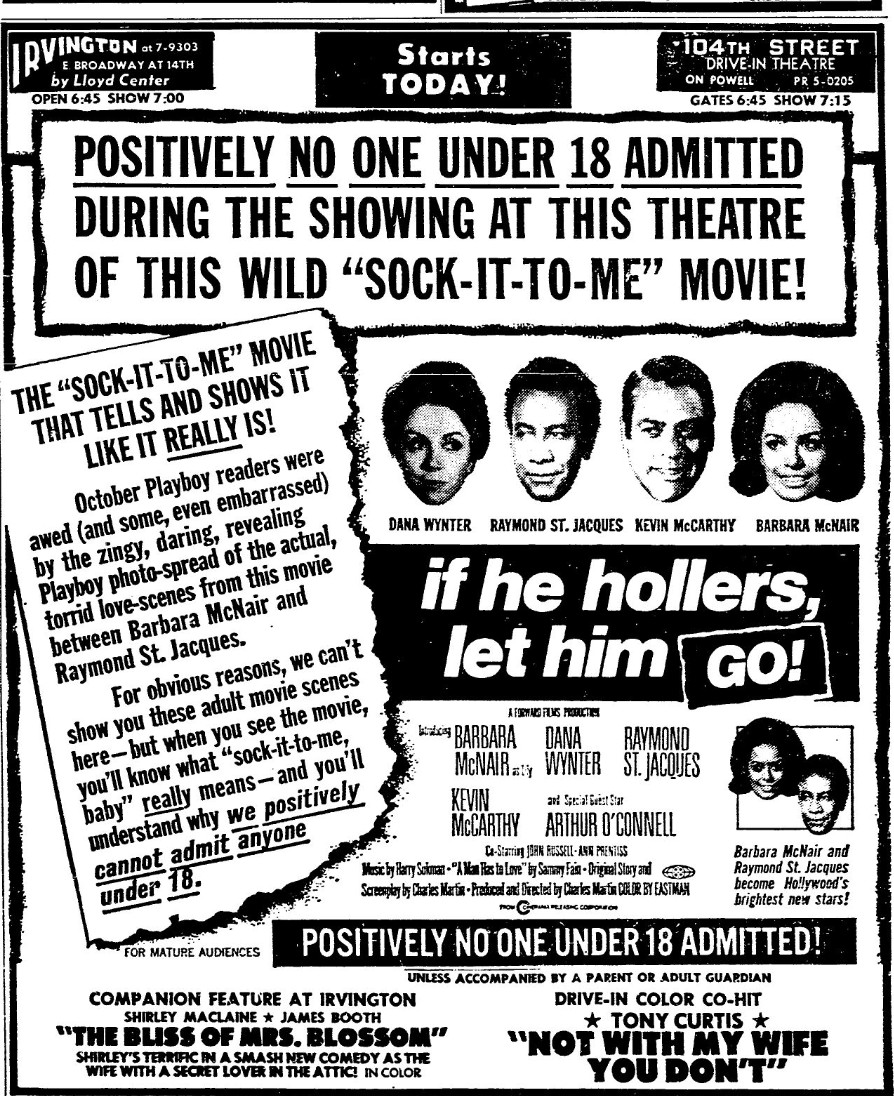
November 6, 1968 ad (Portland)
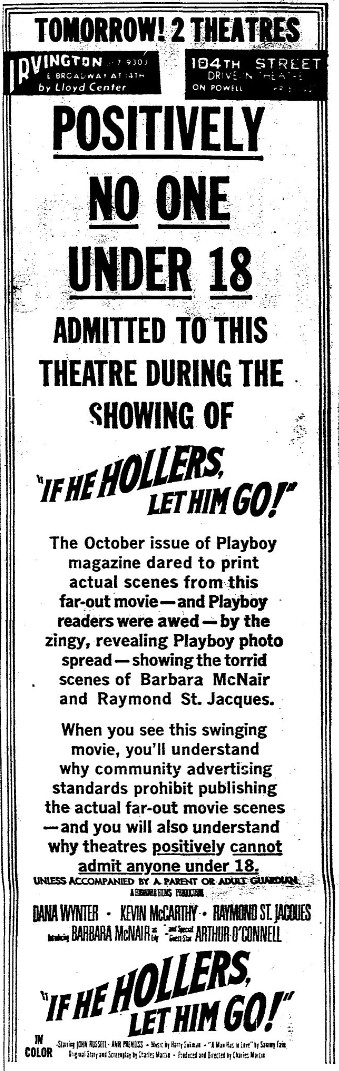
November 5, 1968 ad (Portland)
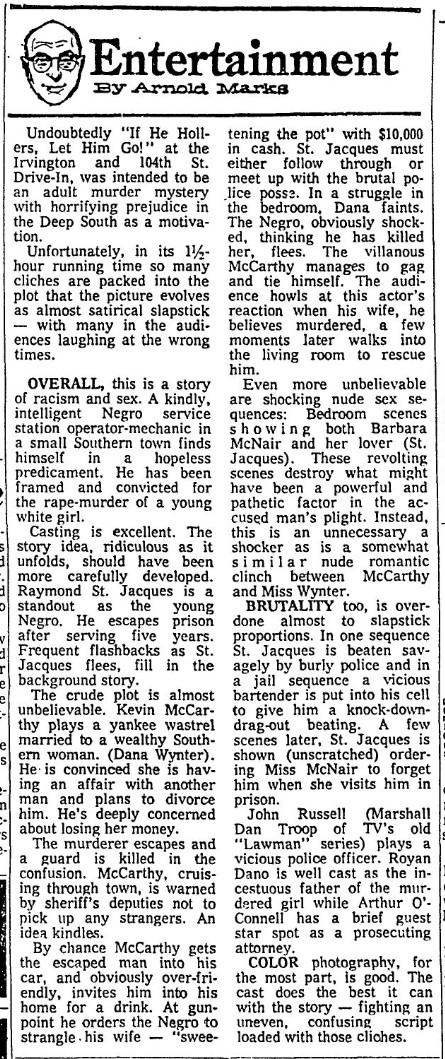
November 9, 1968 article (Portland)
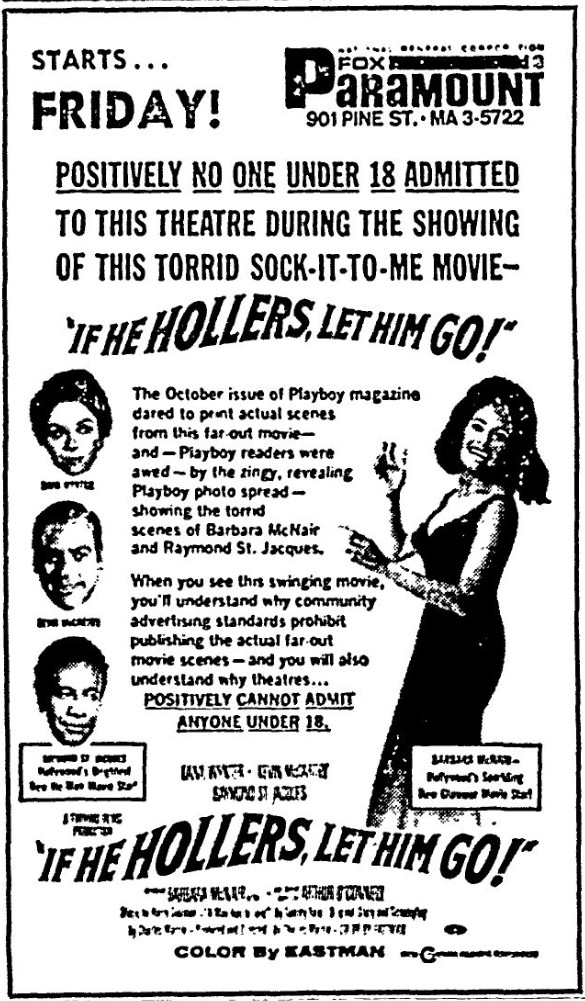
November 13, 1968 ad (Seattle)
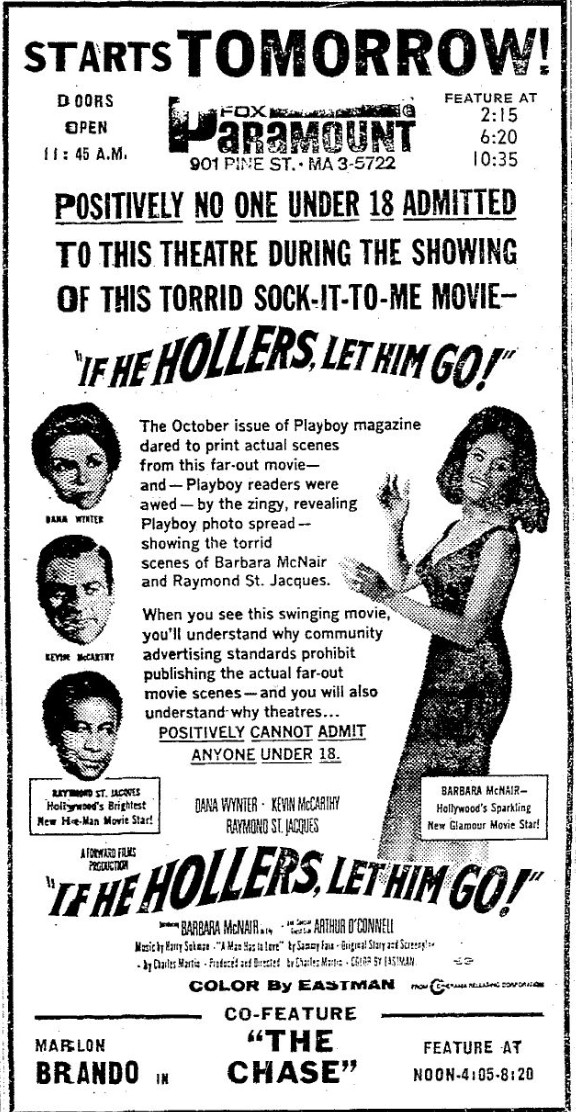
November 14, 1968 ad (Seattle)
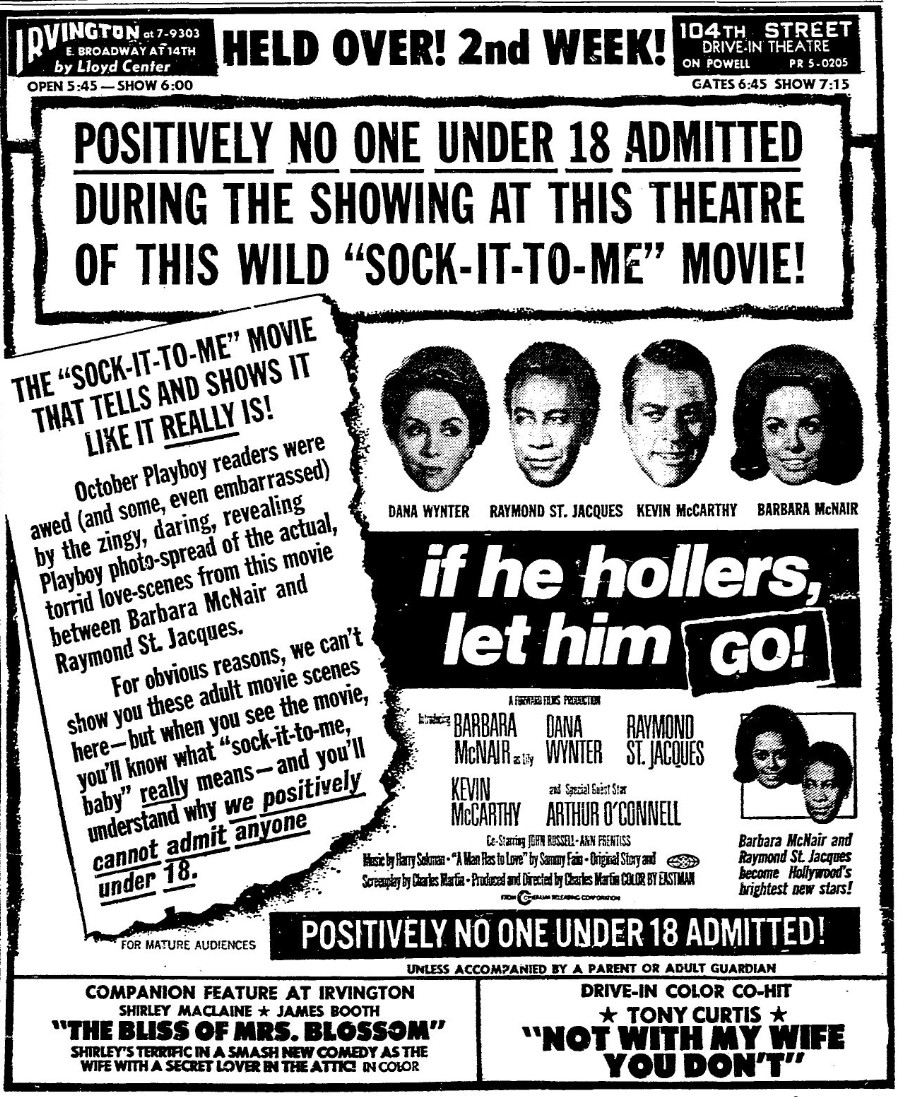
November 15, 1968 ad (Portland)
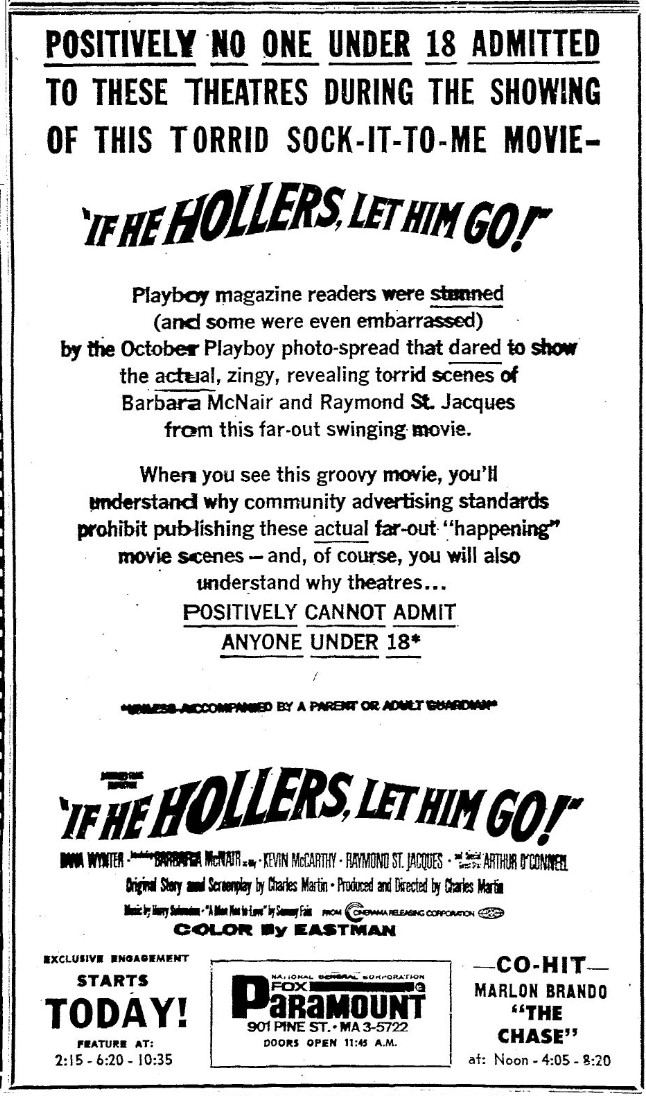
November 15, 1968 ad (Seattle)
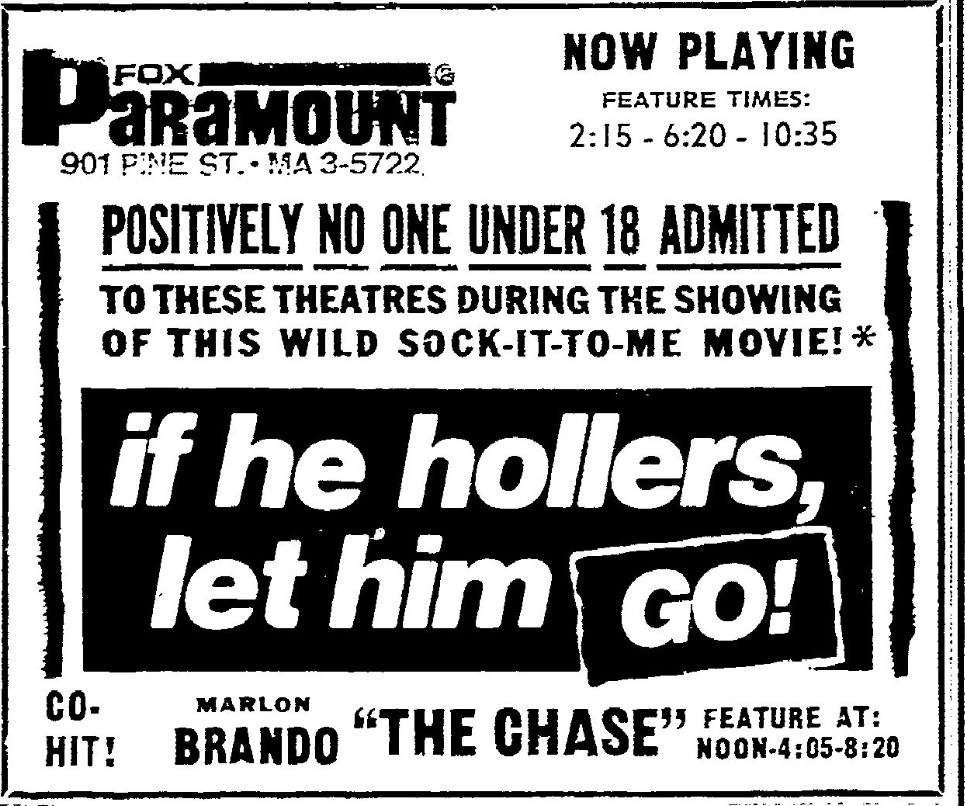
November 16, 1968 ad (Seattle)
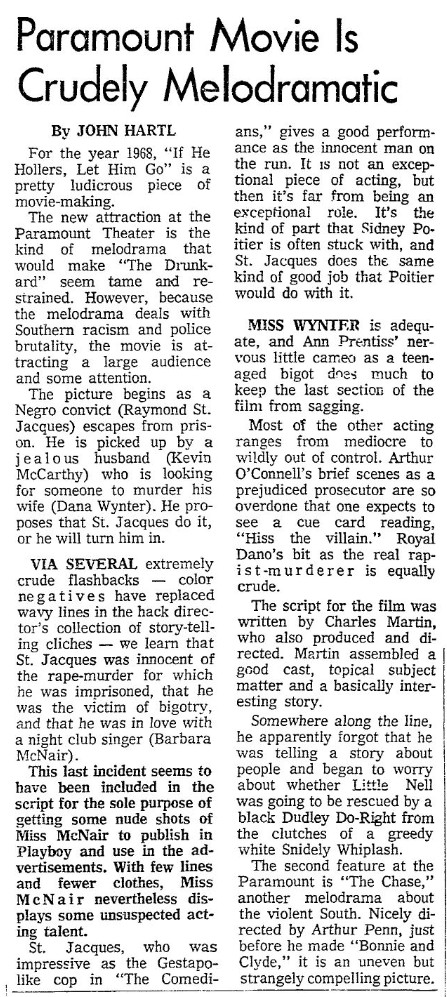
November 19, 1968 article (Seattle)
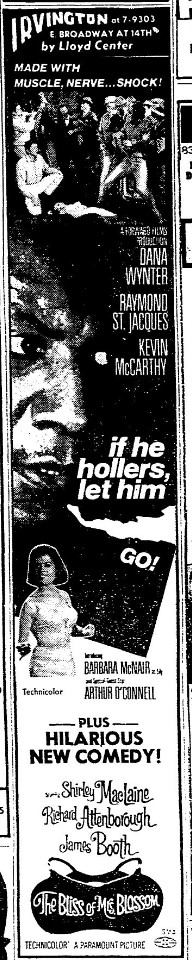
November 20, 1968 ad (Portland)
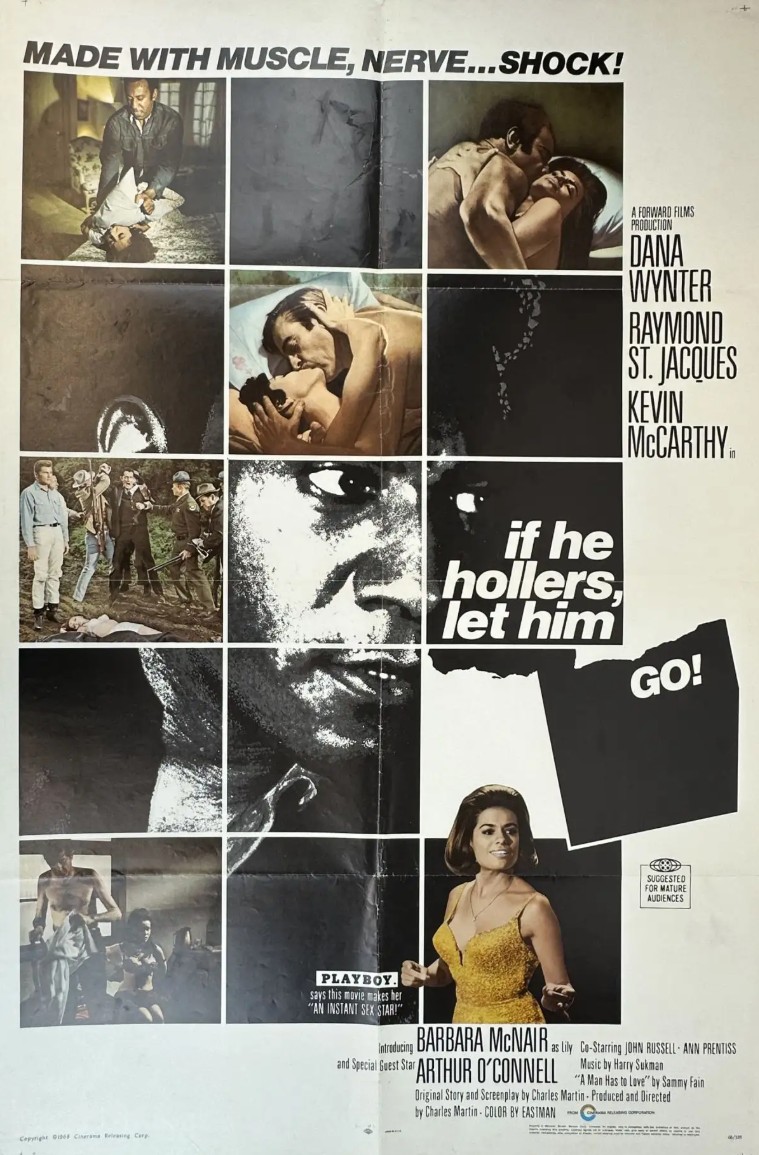
If He Hollers, Let Him Go! (1968) poster
trailer
Buy "If He Hollers, Let Him Go!" (1968) bluray on Amazon (SPONSORED)
Buy "If He Hollers, Let Him Go!" (1968) DVD on Amazon (SPONSORED)
