This is a collection of media from the initial runs of "The Young Animals" (1968) in the Pacific Northwest.
Click on images for larger versions.
The Young Animals (1968)
"The Young Animals" (1968), directed by Maury Dexter, is a potent and surprisingly raw entry in the American International Pictures catalog, blending the aesthetics of teen exploitation cinema with a socially conscious narrative that reflects the racial tensions and generational unrest of its era. Set in a sun-drenched Arizona high school, the film pivots around the arrival of Tony, a charismatic Mexican-American student whose presence disrupts the status quo maintained by a clique of affluent white students. What begins as a romantic rivalry soon escalates into a broader confrontation over systemic discrimination, institutional apathy, and the volatile dynamics of youth identity.
Dexter’s direction, while modest in scope, captures the simmering hostility beneath the surface of suburban Americana. The cinematography by Kenneth Peach uses the arid landscape and schoolyard settings to evoke both isolation and confrontation, underscoring the emotional stakes of the students’ struggle. Les Baxter’s score adds a layer of tension and melancholy, reinforcing the film’s mood without overwhelming its message.
What distinguishes "The Young Animals" from more formulaic teen dramas of the period is its willingness to engage with the political consciousness emerging among young people in the late 1960s. The film explores themes of racial solidarity, the limits of peaceful protest, and the generational divide between students and the adults who fail to understand or address their grievances. It portrays the school as a microcosm of American society, where power, privilege, and resistance collide in increasingly violent and tragic ways.
While the performances vary in nuance, Tom Nardini’s portrayal of Tony brings a quiet intensity and moral clarity to the film’s central conflict. Patty McCormack, as Janet, offers a compelling counterpoint—a white student caught between loyalty to her peers and a growing awareness of injustice. Their relationship becomes a lens through which the film examines cross-cultural empathy and the personal cost of political awakening.
"The Young Animals" is not without its limitations. Its narrative occasionally veers into melodrama, and its depiction of violence—though impactful—can feel abrupt. Yet these flaws are offset by its earnestness and its historical value as a cinematic reflection of the Chicano movement’s early stirrings and the broader youth-led calls for equity and reform. The film’s ending, while offering a gesture toward reconciliation, leaves lingering questions about the durability of change and the price of progress.
In sum, "The Young Animals" stands as a compelling artifact of its time—part exploitation, part social critique—capturing the turbulence of a generation grappling with identity, injustice, and the urgent need to be heard.
Director: Maury Dexter
Writer: James Gordon White
Stars: Tom Nardini, Patty McCormack, Joanna Frank
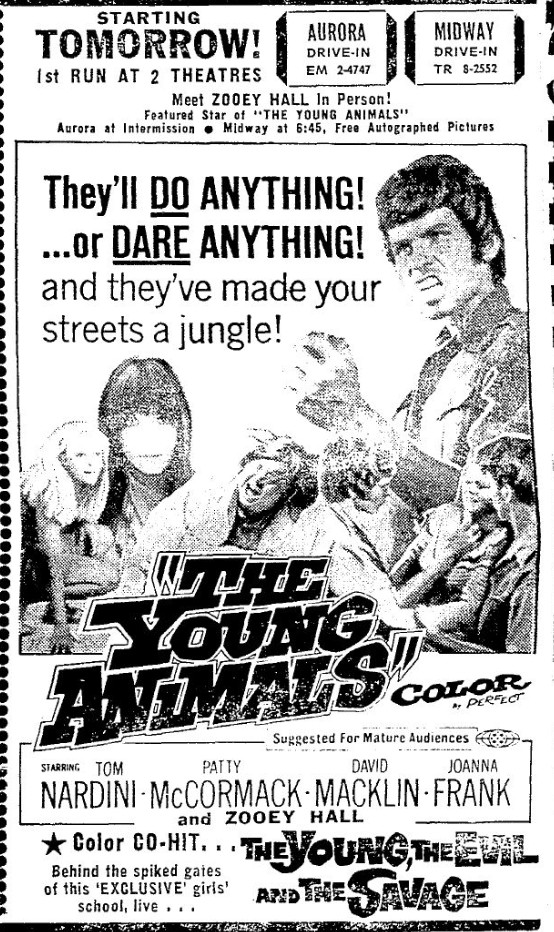
September 24, 1968 ad (Seattle)
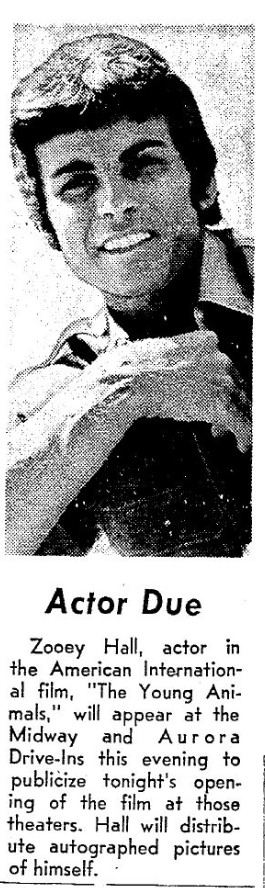
September 25, 1968 ad (Seattle)
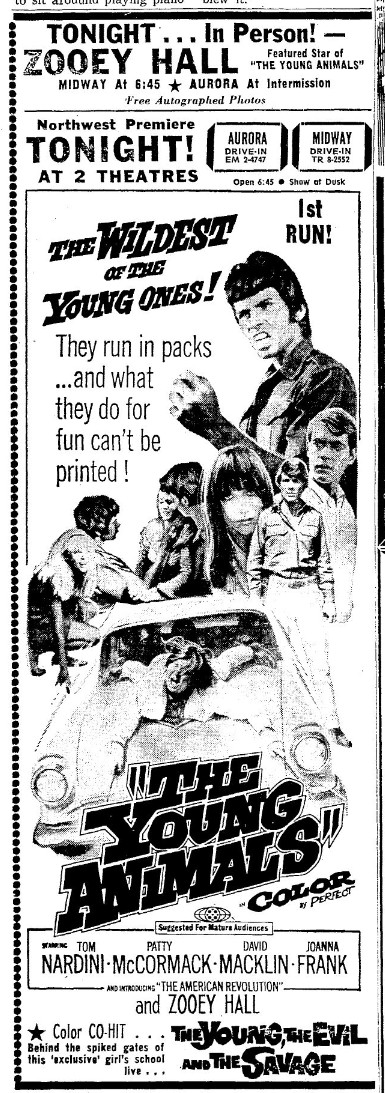
September 25, 1968 ad (Seattle)
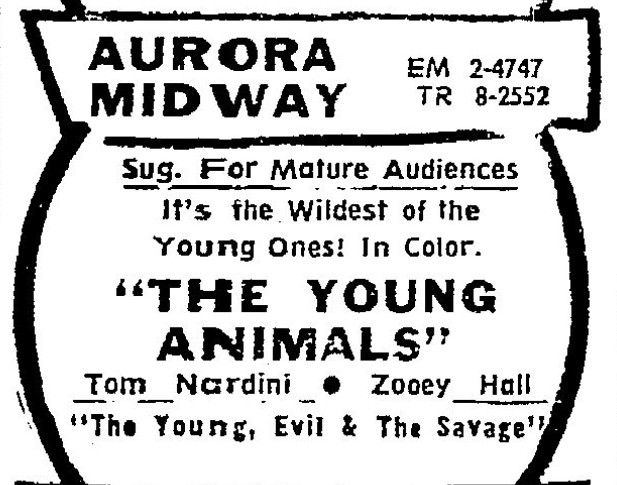
September 26, 1968 ad (Seattle)

September 29, 1968 ad (Portland)
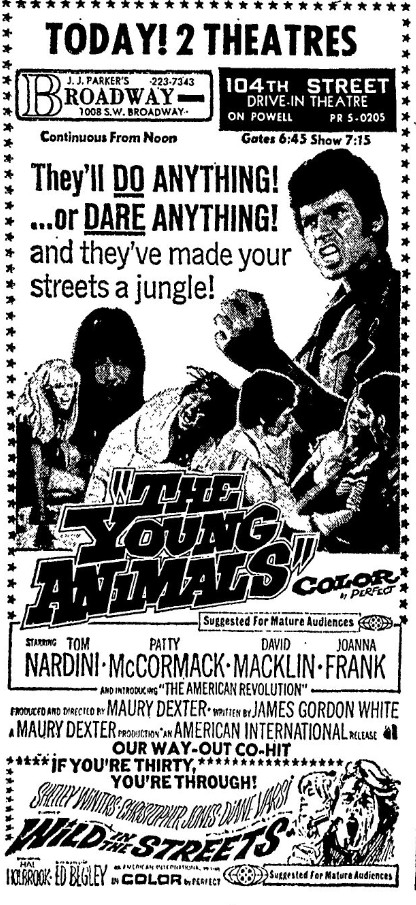
September 29, 1968 ad (Portland)
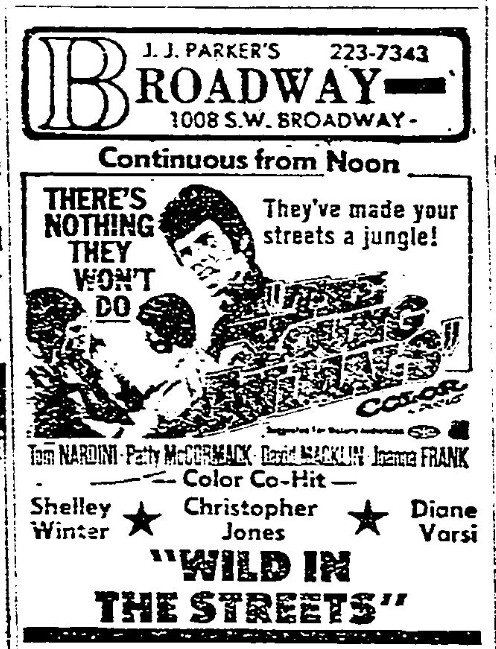
September 29, 1968 ad (Portland)
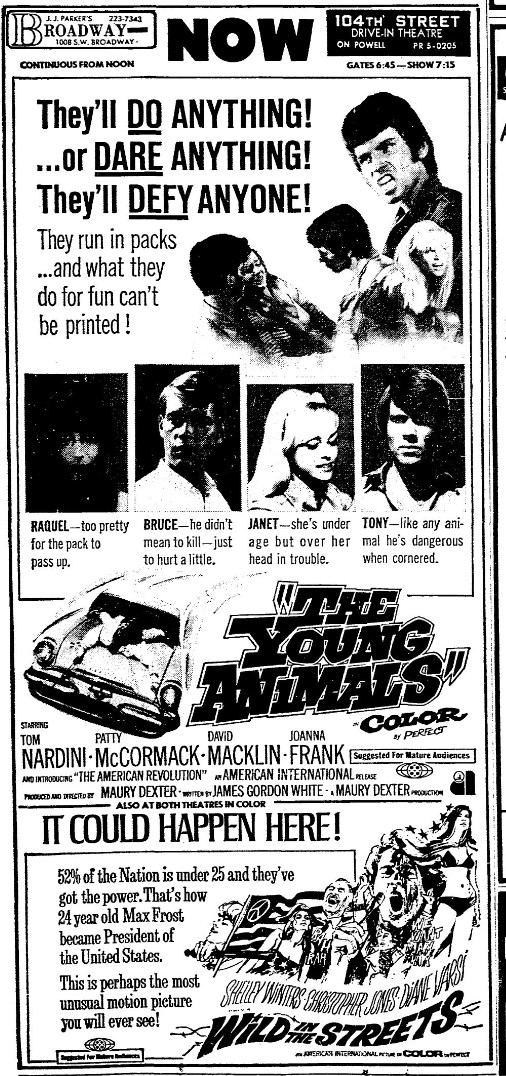
September 29, 1968 ad (Portland)
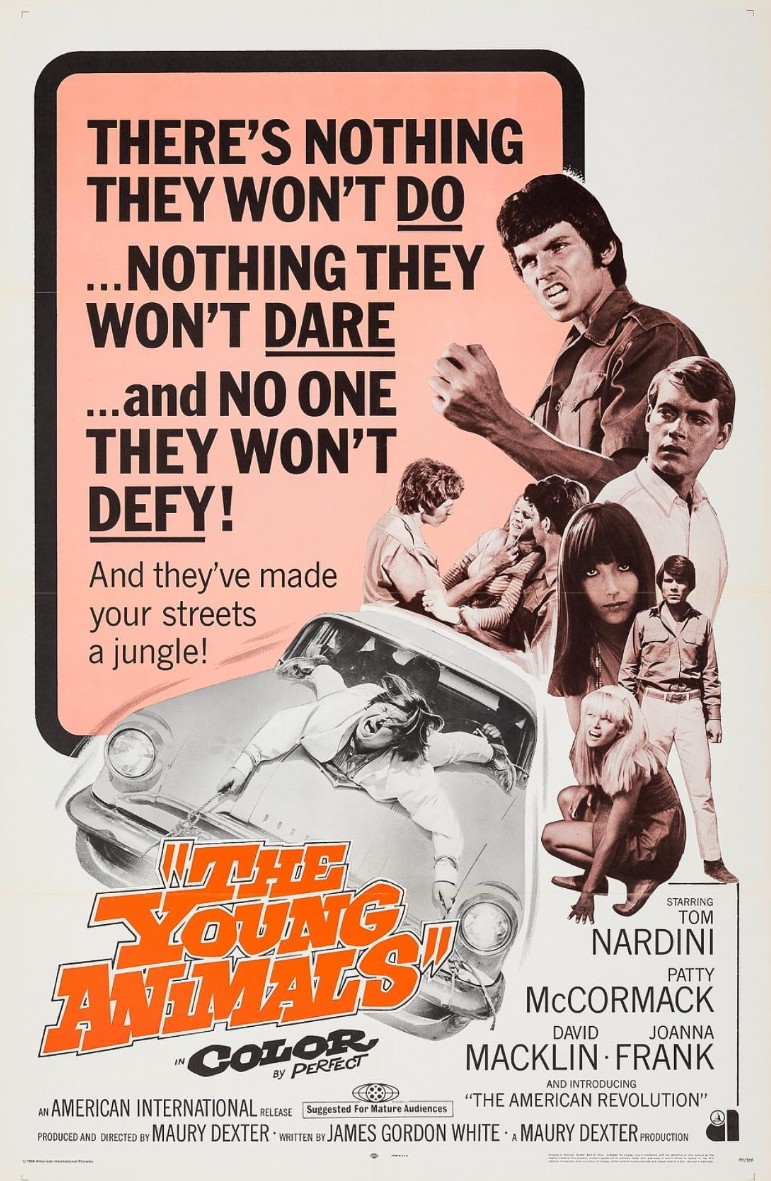
The Young Animals (1968) poster
